Unlocking Curiosity: The Right Time for Parents to Invest in Science Kits
Introduction
In an age where screens dominate children’s attention, many parents seek hands-on activities that can spark genuine curiosity and foster critical thinking. Science kits—ranging from simple volcano eruption sets to sophisticated robotics modules—have become a popular choice. However, a common dilemma emerges: *when* should parents actually buy them? Purchase too early, and the child may lack the motor skills or attention span; too late, and the window of wonder might narrow. This article explores the developmental, educational, and psychological factors that help parents determine the optimal timing for introducing science kits, ensuring that the investment yields both enjoyment and lasting learning.
—
1. Considering Developmental Readiness: Age-Appropriate Milestones
The first and most fundamental factor is the child’s physical and cognitive development. Science kits are not one-size-fits-all; they demand fine motor control, reading comprehension, and the ability to follow multi-step instructions.
Ages 3–5: The “Sensory Exploration” Phase
For preschoolers, the goal is not to explain chemical reactions or electrical circuits but to engage their senses. Kits designed for this age group typically involve mixing colors, growing crystals in a jar, or using safe, non-toxic substances to create simple reactions. At this stage, parents should look for kits that require minimal adult setup but allow for maximum tactile exploration. The key indicator is whether the child can hold a spoon, pour a liquid without major spills, and show interest in cause-and-effect (e.g., “What happens if I add more baking soda?”). If a three-year-old enjoys playing with sand and water, a basic sink-or-float kit might be perfect. However, forcing a child who still mouths objects could be unsafe. A good rule: buy when the child can follow simple two-step verbal instructions and has stopped putting non-food items in their mouth.
Ages 6–9: The “Why” Stage
Elementary school children begin asking “why” relentlessly. This is a golden window for science kits that involve basic chemistry sets (with adult supervision), weather stations, or magnifying glass observation kits. At this age, children can read short instructions, use scissors safely, and have the patience to wait for a seed to sprout over several days. Parents should consider purchasing when the child shows a sustained interest in natural phenomena—like asking why the sky is blue or why ice melts—rather than just fleeting curiosity. For example, if a child repeatedly experiments with mixing food coloring in water during bath time, a color-mixing science kit will likely be a hit.
Ages 10–13: The “Systematic Investigation” Stage
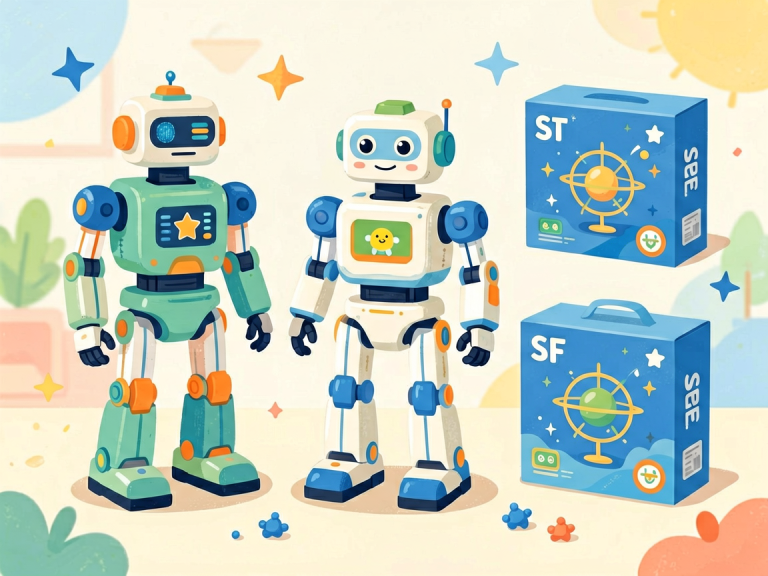
Pre-teens develop abstract thinking and can handle longer, more complex projects. Kits for this age include robotics, electronic circuits, crystal radios, or DNA extraction sets. The right time to buy is when the child demonstrates frustration with simple toys and seeks real challenges. A parent might notice their child trying to take apart old electronics or asking for tools to build something. At this juncture, a kit that aligns with school science curricula (e.g., a solar-powered car kit during a unit on energy) can reinforce classroom learning. However, parents must also gauge whether the child can manage frustration—if they give up easily, a highly complex kit may lead to tantrums rather than growth.
—
2. Recognizing Intrinsic Interest Signals: When Curiosity Becomes Self-Directed
Beyond age brackets, the most powerful indicator of readiness is the child’s own behavior. Buying a science kit before a child shows genuine interest often results in an unused box gathering dust. Parents should watch for these signs:
- Repeated questions about how things work: If a child asks about the mechanics of a flashlight or why plants need sunlight, it suggests a cognitive itch that a science kit can scratch.
- Spontaneous “experiments”: Children who mix shampoo with salt in the bathroom are already conducting informal experiments. Channeling that creativity with a proper kit reduces mess and increases safety.
- Engagement with nature: A child who collects leaves, observes bugs, or tries to grow seeds from fruit scraps is ready for a biology or ecology kit.
A specific example: My own nephew, at age seven, spent an hour watching a YouTube video about erupting volcanoes. The next day, he crafted his own volcano from playdough and baking soda. That was the clear signal for his parents to buy a “Volcano Science Kit.” The timing was perfect because the interest was self-generated, not imposed.
Parents should avoid the trap of using science kits as a “filler activity” during rainy days. Instead, wait for a teachable moment—a sudden fascination with magnets, a question about stars, or a failed attempt to build a paper airplane that launches far. When the child’s own frustration or curiosity leads the way, the kit becomes a tool for empowerment.
—
3. Aligning with School Curriculum and Extracurricular Timing
Another pragmatic consideration is the school calendar. While science kits should not be tied rigidly to exams, they can complement what a child is learning in class, reinforcing concepts through hands-on practice.
Before a new science unit – If a teacher announces a unit on electricity next month, buying a snap-circuit kit a few weeks in advance allows the child to explore circuits at a relaxed pace. This preview builds background knowledge and vocabulary, making classroom lessons more meaningful.
During school breaks – Summer vacation and winter holidays offer extended time for in-depth projects. A rocket kit or a microscope set can transform idle hours into productive exploration. However, parents should avoid buying kits during the last week of school when children are exhausted; instead, purchase at the start of a break when energy is high.
After a science fair – Science fairs often spark competitive motivation. After the fair, children may want to dive deeper into a topic. For instance, a child who built a simple electromagnet for a school project might appreciate a more advanced electromagnetism kit that allows for variable voltage experiments.
The key is to avoid “curriculum cramming.” If a child is already struggling with reading or math, a complex science kit might add stress. In such cases, delay until the child has more bandwidth, or choose a very simple kit that builds confidence rather than anxiety.
—
4. Avoiding Common Pitfalls: Too Early, Too Late, or Too Many
Parents often fall into three traps when it comes to purchasing science kits:
The “Too Early” Trap
Buying a crystal growing kit for a four-year-old who cannot wait 48 hours for crystals to form leads to frustration and a messy kitchen. Similarly, a chemistry set with small, swallowable pieces is a safety hazard for toddlers. The result: the kit is either put away or used incorrectly, turning a potential love of science into a negative experience. Solution: always check the manufacturer’s age recommendation, but also trust your observation of your child’s impulse control.
The “Too Late” Trap
By age 14 or 15, many children have already formed strong opinions about what they enjoy. If they never explored science hands-on earlier, they may be intimidated by kits that feel “childish.” A teenager who missed the early wonder years might benefit from a more sophisticated kit, such as a micro:bit (microcontroller) kit or a chemistry set with real lab equipment. However, parents should frame the kit as a tool for a specific project—like building a weather station—rather than a “toy.” Timing here is about respecting the adolescent’s desire for autonomy.
The “Kit Overload” Trap
Some parents buy multiple kits at once, hoping one will stick. This overwhelms children and reduces the sense of accomplishment from completing a single project. A better strategy: buy one kit, let the child finish it (with help if needed), and then discuss what they learned before buying another. This builds perseverance and depth of understanding.
—
5. Quality over Timing: How to Choose and How to Guide
Timing is meaningless if the kit itself is poorly designed. Parents should evaluate kits based on:
- Clarity of instructions – Can the child (or parent) understand the steps without a degree in engineering?
- Open-endedness – The best kits allow for multiple experiments, not just one pre-determined outcome. For example, a simple pulley set that lets the child adjust the weight and angle is better than a kit that only builds one fixed model.
- Safety – Check for non-toxic materials, age-appropriate tools, and clear hazard warnings.
Once the kit is purchased, the parent’s role shifts from buyer to facilitator. The optimal purchase time is not an isolated event; it is the beginning of a guided journey. Parents should:
- Sit down for the first session – Especially for younger children, co-experimenting builds bonding and ensures safety.
- Ask open-ended questions – Instead of saying “Look, it turned red!” ask “What do you think caused the color change?”
- Embrace failure – If the rocket doesn’t fly, treat it as a learning opportunity. “Why do you think it didn’t work? What could we change?” This teaches the scientific method better than any kit.
—
Conclusion
There is no single “magic age” for buying a science kit. The right time emerges from a combination of developmental readiness, authentic interest, curriculum alignment, and parental guidance. A two-year-old may enjoy a sensory water table kit, while a twelve-year-old may thrive with a soldering iron and circuit board. The common thread is that the purchase should follow a child’s innate curiosity, not precede it. By paying attention to individual signals—rather than comparing to peers or falling for marketing—parents can transform a simple box of test tubes and wires into a gateway for lifelong learning. When that moment arrives, the investment is not just in a toy, but in a mindset. Buy the kit when the question “why?” becomes louder than the question “what’s next on TV?” That is the moment science becomes an adventure.