From Tummy Time to Tiny Triumphs: How Puzzle Toys and Board Games Shape Your Baby’s Mind
—
Introduction
The first two years of life are a whirlwind of growth—neurologically, physically, and emotionally. Every rattle, every peek-a-boo, every squeaky toy is more than mere entertainment; it’s a building block for the brain. Among the vast sea of infant products, two categories stand out for their unique ability to combine fun with foundational learning: puzzle toys and board games designed for babies. While traditional board games might seem too complex for a one-year-old, modern iterations—soft, chunky, and rule-light—are perfectly tailored for tiny hands and curious minds. This article explores why these early playthings matter, how to choose them safely, and what parents can do to turn playtime into a powerful developmental tool.
—
Why Puzzle Toys Matter for Infant Development
The Cognitive and Motor Benefits of Puzzle Play
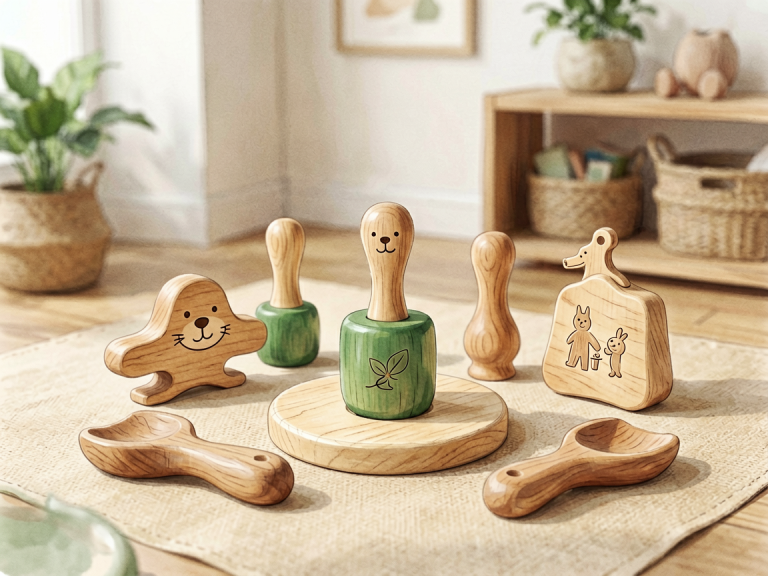
Puzzle toys for babies are far removed from the thousand-piece jigsaws adults wrestle with. Think large, wooden shape sorters, foam blocks that fit into matching cutouts, or simple two-piece puzzles with knobs. These toys are designed to challenge without overwhelming.
Fine motor skills blossom as babies grasp, turn, and push pieces into place. The pincer grip—used to pick up a small puzzle handle—is a major milestone that directly supports later skills like holding a crayon or using a spoon. Simultaneously, hand-eye coordination gets a rigorous workout: the brain must process where the piece is, where it needs to go, and how to guide the hand there.
Cognitively, puzzles introduce cause and effect (“If I push this triangle into the round hole, it won’t fit—I need the circle!”). Babies learn to categorize shapes, colors, and sizes long before they can name them. This early classification ability underpins mathematical thinking and problem-solving. Moreover, completing a puzzle—even a two-piece one—gives an infant a sense of accomplishment, fostering persistence and self-confidence. Researchers note that repeated puzzle play in the first year correlates with stronger spatial reasoning later in childhood.
Key recommendation: Offer puzzles with large, chunky pieces (at least 1.5 inches in any dimension to prevent choking) and bright, contrasting colors. Start with single-shape sorters around 6 months, then progress to simple picture puzzles around 12 months.
—
Board Games for Babies: A New Frontier of Fun and Learning
Interactive Play: Building Bonds and Brain Connections
When we say “board games for babies,” we aren’t talking about Monopoly. Instead, picture soft fabric “boards” with attached pieces, large memory cards with vivid images, or floor mats with colored circles that babies can crawl to. These games share the core elements of board games—turn-taking, simple rules, and a shared goal—but adapted for pre-verbal players.
Social-emotional development is the star here. Even a game as simple as “roll a soft dice and find the matching animal on a mat” teaches a baby to look to a parent for cues, wait for their turn (with help), and react to success or failure in a safe environment. This early exposure to turn-taking is the foundation of conversation and cooperation.
Language skills also get a boost. As you narrate the game—“You rolled the red square! Can you find the red square on the mat?”—you are modeling vocabulary, descriptive language, and question-asking. Babies absorb the rhythm of dialogue long before they can produce words. Furthermore, games that involve hiding objects (like a simple “Where’s the bunny?” under a cup) support object permanence and memory.
Board games for babies are also a wonderful tool for emotional regulation. When a baby “loses”—perhaps they don’t find the hidden toy—they experience a tiny frustration. With a parent’s comforting presence and redirection (“Let’s try again!”), they learn that setbacks are manageable. This resilience is priceless.
Examples of baby-friendly board games:
- A soft cloth “game board” with detachable felt pieces that match shapes or animals.
- A large-format memory game with 4–6 pairs of sturdy cardboard cards (12 months+).
- A “crawling race” board where parent and baby take turns rolling a large foam die and moving a plush character forward.
—
Choosing Safe and Age-Appropriate Toys
Safety First: What to Look for When Buying Baby Puzzle and Game Sets
The market is flooded with colorful toys, but not all are safe for babies under two. Infants explore with their mouths, so choking hazards are the primary concern. Puzzles and game pieces must be large enough not to fit through a toilet paper tube (a standard industry gauge). Avoid any toy with magnets, button batteries, or long strings.
Materials matter. Opt for solid wood with non-toxic, water-based paint (look for certifications like ASTM, EN71, or CPSIA). Soft fabric puzzles should be machine-washable and free of loose threads. Avoid brittle plastics that can splinter. For board games, choose thick cardboard with rounded corners—baby-proof cardboard, often labeled “extra-durable.”
Age labeling is helpful, but use common sense. A toy marked “12 months+” may still have small details suitable for a 15-month-old, not a 9-month-old. When in doubt, conduct the “choke test” with a toilet paper tube. Also check that all pieces are securely attached; for example, mirror pieces in some toys can fall off.
Cleaning is another factor. Babies drool and dribble on everything. Puzzles and game pieces should be easy to wipe down with a mild soap solution. Avoid toys with felt or fabric that cannot be spot-cleaned.
Top recommended types:
- Shape sorters (e.g., Melissa & Doug’s First Shapes Jumbo Knob Puzzle).
- Soft block puzzles (e.g., Bright Starts Oball with shapes).
- Memory cards with real-life photos (e.g., Mudpuppy’s mini memory games for ages 1+).
- Floor puzzles made of foam or thick cardboard (e.g., The Learning Journey’s My First Puzzle Sets).
—
Tips for Parents: How to Play Effectively
Making Playtime Productive: Strategies for Engaging Your Baby
Buying the perfect puzzle or game is only half the battle. How you play makes all the difference. Babies learn best through responsive, back-and-forth interaction—not by being left alone with a toy.
Start short and sweet. A 10-month-old’s attention span may last only 3–5 minutes. Follow their lead. If they show interest in the puzzle knob instead of the board, let them explore the knob itself—that’s learning too.
Model the behavior. Show your baby how a shape fits into its slot, then hand the piece to them. Use exaggerated facial expressions and excited tones: “You did it! The square went in!” Your enthusiasm reinforces their effort.
Introduce variations. Once a baby masters a simple puzzle, try rotating the board or mixing pieces from different sets. For board games, change the rules slightly—race to find the red square quickly, or sing a silly song when the dice lands on a certain color. Novelty keeps the brain engaged.
Add multisensory elements. Place the puzzle board on a textured mat. Use scented markers (non-toxic) on game cards. Play soft background music that matches the game’s theme—e.g., animal sounds for a farm puzzle. The more senses involved, the stronger the neural connections.
Focus on process, not outcome. A baby does not need to “win” a board game. The goal is the shared joy of interaction. If your 14-month-old throws the game pieces across the room, laugh, pick them up, and start over. This teaches that play is safe and fun, not stressful.
Don’t overschedule. One or two puzzle or game sessions per day, lasting 5–10 minutes each, is plenty. Babies need free exploration, crawling, and unstructured play too. Puzzle and game time should feel like a treat, not a chore.
—
Conclusion
Puzzle toys and board games designed for babies are far more than charming nursery decorations. They are sophisticated tools that promote motor precision, cognitive flexibility, language development, and emotional resilience—all wrapped in the joy of play. By choosing age-appropriate, safe products and engaging thoughtfully with your little one, you transform simple objects into catalysts for growth. The next time you see your baby triumphantly slot a triangle into its matching hole, remember: that tiny victory is one of the first steps on a long, wonderful journey of learning. And you get to be there for every single one.