The Paradox of Plenty: Why Buying Toys with Too Many Pieces for Babies Harms More Than Helps
Introduction
Every parent wants the best for their child, especially when it comes to nurturing early development. In a world flooded with brightly colored, multi‑piece toys marketed as “educational” or “stimulating,” it is tempting to believe that more pieces equal more learning. Yet the reality is far more nuanced. For babies—infants and toddlers under the age of two—toys with an abundance of small parts can pose serious risks to safety, cognitive development, and emotional well‑being. This article explores the hidden dangers of such toys, the developmental science that argues against them, and practical alternatives that truly support a baby’s growth.
The Allure of Complexity: Why Parents Buy Multi‑Piece Toys
The toy industry is a master of illusion. A box containing 50 colorful blocks, 30 interlocking rings, or 100 plastic animals promises endless hours of engagement. Advertisements often show smiling babies surrounded by a sea of pieces, implying that more variety equals more intelligence. Moreover, parents are bombarded with messages that “early stimulation” is crucial. They fear that if they do not provide complex toys, their child will fall behind. This anxiety, combined with the aesthetic appeal of elaborate sets, drives the purchase of toys with far too many components. What is overlooked, however, is a fundamental truth of infant development: less is often more.
Developmental Risks: Overstimulation and Fragmented Attention
Babies’ brains are not miniature versions of adult brains. Neural pathways are still forming at an astonishing rate, but the immature prefrontal cortex cannot yet filter out irrelevant stimuli. When a baby is presented with a toy containing dozens of pieces, the visual and tactile overload can lead to overstimulation. Instead of focusing on one object to explore its texture, sound, or function, the baby’s attention is scattered. Research in developmental psychology has shown that infants learn best through repeated, focused interactions with a small number of objects. A toy with too many pieces encourages a “grabbing and discarding” cycle—the baby picks up one piece, then immediately drops it for another, never pausing to investigate any single item deeply. This fragmented play does not build sustained attention, problem‑solving, or cause‑and‑effect understanding.
For example, a simple wooden rattle allows a baby to shake, mouth, and manipulate it for minutes, learning that movement creates sound. In contrast, a set of 20 plastic stacking shapes often leads to frustration: the baby cannot stack them, they roll away, and the sheer number overwhelms the child’s limited working memory. The result is not learning but confusion. Over time, habitual exposure to high‑piece‑count toys may even contribute to attention difficulties later in childhood.
Safety Hazards: Choking, Ingestion, and Small‑Part Syndrome
The most immediate and frightening risk of multi‑piece toys for babies is safety. Babies explore the world through their mouths—it is their primary sensory tool. Any toy intended for a child under three must pass strict regulations regarding small parts, but many toys marketed for “toddlers” or “12 months+” still include components that are dangerously small. Infants’ tracheas are roughly the diameter of a straw; a plastic wheel, a button, or even a snapped‑off piece of a larger toy can cause fatal choking in seconds. According to the U.S. Consumer Product Safety Commission, thousands of emergency room visits each year involve toys with small parts.
Beyond choking, babies can ingest pieces that are not immediately lethal but cause internal damage. Magnets are a particular nightmare: if a baby swallows two small magnets from a building set, they can attract each other through intestinal walls, causing perforations, sepsis, or death. Batteries in toy remotes or sound modules pose similar risks. The more pieces a toy has, the greater the likelihood that one will break off, be lost, and find its way into a baby’s mouth. Even if the parent is vigilant, one moment of distraction can lead to tragedy.
The Myth of “Educational Value” in Abundance
Toy manufacturers often claim that multi‑piece sets teach counting, colors, shapes, and fine motor skills. While these are valuable outcomes, they are not developmentally appropriate for babies. A six‑month‑old cannot count nor distinguish between shades of green and blue; they benefit more from cause‑and‑effect toys like a ball that rolls when pushed. Even for an 18‑month‑old, the key developmental task is not categorization but sensorimotor exploration. A set of 100 colored balls may teach color names if an adult explicitly labels them, but the baby will simply be overwhelmed.
Furthermore, research on “open‑ended” play—where children create their own uses for toys—shows that simpler objects foster creativity better than complex ones. A single cardboard box can become a car, a house, or a boat. A set of 50 plastic animals, each with a fixed shape and face, leaves little room for imagination: the cow is a cow, the horse is a horse. Babies and toddlers need toys that invite manipulation, not instruction manuals.
Emotional and Behavioral Consequences: Frustration and Dependency
Toys with many pieces also affect a baby’s emotional development. When a toy is too complex, the baby cannot master it. A tower of blocks that collapses every time they place a block incorrectly can lead to tears, tantrums, and a sense of failure. While mild frustration can be productive, chronic failure is damaging to an infant’s emerging sense of autonomy. The baby learns that play is something that happens to them, not something they control.
Conversely, a simple toy like a wooden egg that fits perfectly in a baby’s hand gives the child a sense of power and predictability. They can hold it, drop it, pick it up—they are the agent of the action. Multi‑piece toys often require adult assembly or constant adult intervention to prevent scattering, which creates dependency. The parent becomes the “toy organizer,” and the baby never learns to self‑entertain. This can breed impatience and a low tolerance for independent play later in life.
Environmental and Practical Considerations
From a purely practical standpoint, toys with too many pieces create chaos in the home. Pieces are lost under sofas, stepped on by parents, and sucked into vacuum cleaners. The constant clean‑up adds stress to caregivers who are already exhausted. Moreover, the environmental impact is significant: plastic pieces are rarely recycled, and cheaply made sets break quickly, ending up in landfills. A baby’s toy collection should ideally be minimal, durable, and made from natural materials.
The Case for Simple Toys: What Babies Really Need
So what should parents buy instead? Developmental experts advocate for toys that are open‑ended, single‑piece or few‑piece, and sensory‑rich. Here are archetypal examples:
- A large ball (too big to swallow) for rolling, chasing, and cause‑and‑effect.
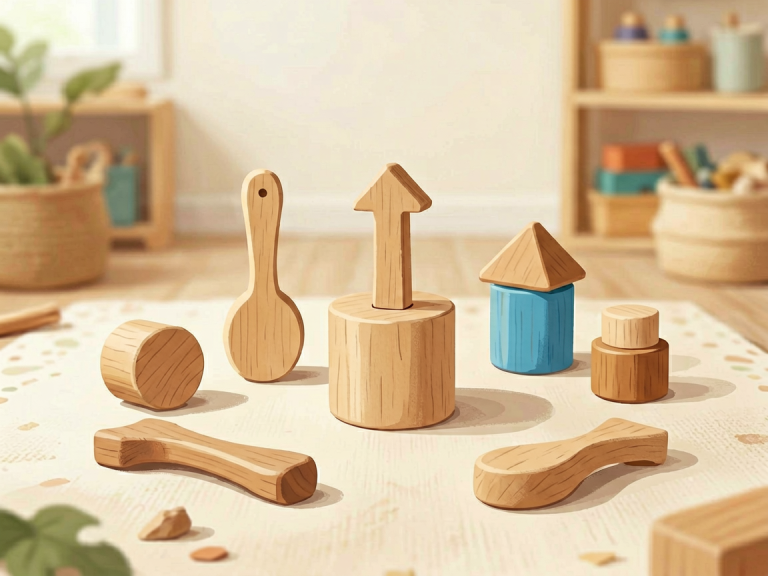
- A wooden rattle for sound, grip, and mouthing.
- A set of nesting cups (usually 3–5 pieces) that stack, nest, and can be used for water play.
- Soft fabric books with crinkly pages and textures.
- A simple push‑or‑pull toy on wheels (no detachable parts).
These toys encourage focused exploration, fine‑motor practice, and independent play without overwhelming the baby’s senses. They also allow for incremental challenge: as the baby grows, the same toy can be used in different ways. A nesting cup becomes a hat, a drum, or a scoop—imagination is limitless.
Practical Advice for Parents: How to Choose Wisely
When shopping for a baby, use the following criteria:
- Check the age label carefully. Even if a product says “12 months+,” test with a small‑parts tester (a toilet paper tube—anything that fits through is a choking hazard).
- Count the pieces. A good rule of thumb: for a baby under 18 months, the toy should have no more than five pieces that cannot be lost or swallowed.
- Avoid electronic toys with removable batteries or small buttons.
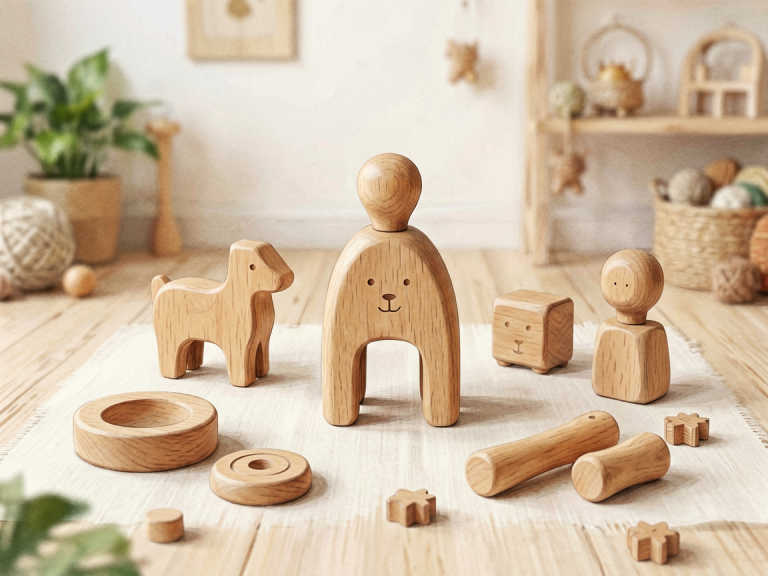
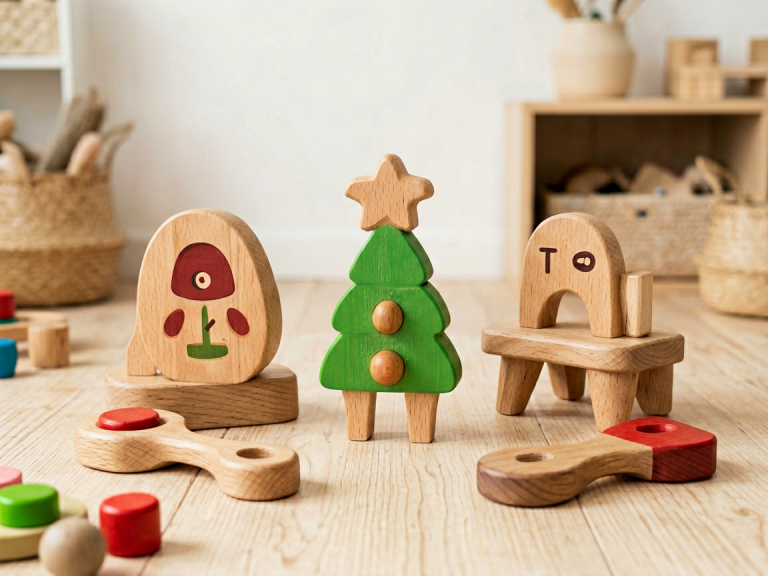
- Prefer wood over plastic. Wooden toys are heavier, sturdier, and often made without toxic paints.
- Think about longevity. Will this toy still be interesting in six months? Simple toys outlast trendy, complicated ones.
Conclusion
The instinct to provide babies with abundant, stimulating toys is born from love and good intentions. Yet the evidence is clear: toys with too many pieces do not accelerate development; they hinder it. They pose safety risks, overwhelm immature nervous systems, and rob infants of the deep, focused play that builds cognitive and emotional foundations. In an age of consumer excess, the most radical gift a parent can give their baby is simplicity. A single, well‑chosen toy—safe, tactile, and inviting—offers more learning, more joy, and more connection than a hundred pieces scattered across the floor. Let us buy fewer pieces, and give our babies the gift of true play.