Quiet Alternatives to LEGO Style Bricks: Building Without the Clatter
Introduction: The Noise Problem in Modern Play
For decades, LEGO bricks have reigned supreme as the quintessential construction toy. Their click-fit precision, endless versatility, and ability to turn a flat tabletop into a miniature city have captivated children and adults alike. Yet anyone who has stepped on a stray brick in the dark, or sat in a room where a child is enthusiastically building—and disassembling—a castle, knows that the signature sound of LEGO is a sharp, repetitive *click-clack*. For parents working from home, educators in quiet classrooms, or families living in apartments with thin walls, the constant noise can be a source of stress. This has sparked a growing curiosity: what are the quiet alternatives to LEGO style bricks? Fortunately, there is a rich universe of building materials that encourage creativity, spatial reasoning, and fine motor skills without the acoustic assault. From the warm silence of wood to the soft hush of foam, these alternatives prove that construction play can be just as engaging—and far more peaceful.
—
Why Seek Quiet Construction Toys?
Before exploring specific alternatives, it is worth understanding the value of quiet play itself. Noise pollution affects concentration, mood, and even physiological stress levels. In a study on classroom environments, researchers found that excessive ambient noise can hinder language development and learning. For children with sensory sensitivities, such as those on the autism spectrum, the sharp sound of plastic bricks hitting a wooden floor can be overwhelming. Quiet alternatives offer a calmer sensory experience, allowing children to focus more deeply on their creations. They also make it easier for siblings to play simultaneously without competition for auditory attention. Moreover, many quiet building sets are made from natural or recycled materials, which appeal to eco-conscious families. In short, the shift toward quieter toys is not just about convenience—it is about fostering a more mindful and inclusive play environment.
—
Wooden Building Blocks: The Timeless Silence of Nature
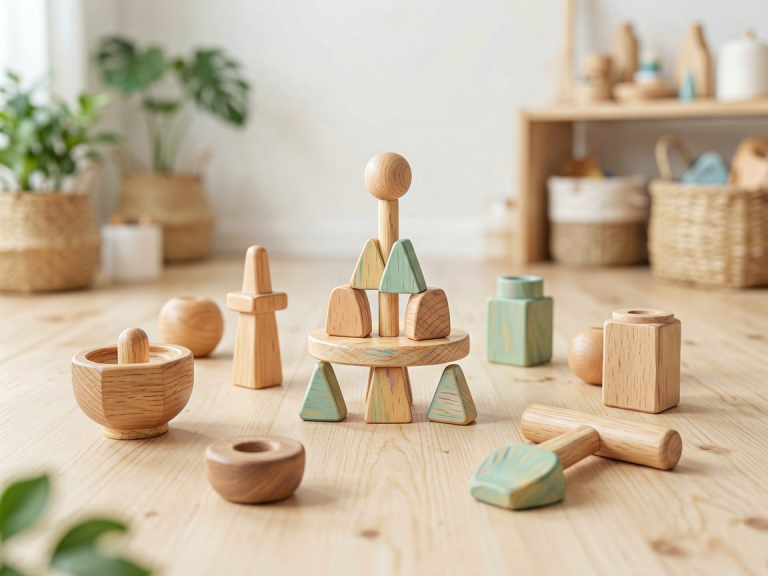
Perhaps the most obvious and time-honored alternative to plastic bricks is a simple set of wooden blocks. Unlike LEGO, which rely on precise interlocking studs, wooden blocks are typically stackable only through gravity and friction. This means that the primary sound is a soft *thud* when two pieces meet, rather than a sharp *snap*. High-quality wooden blocks are often made from sustainably harvested hardwoods like beech, maple, or birch, and are sanded to a smooth finish with non-toxic oils or water-based paints.
Types of Wooden Block Sets:
- Unit Blocks: Standard rectangular prisms, cubes, arches, and cylinders. These are the classic “kindergarten blocks” used in Montessori and Waldorf education. Their plain surfaces invite open-ended play, and the quiet of wood encourages children to experiment with balance and weight.
- Tinker Toy Style: Some wooden sets include dowel rods and spools that connect via holes, producing a gentle *pop* rather than a sharp click. Brands like *Melissa & Doug* offer “Bolts and Boards” where children fasten wooden nuts onto bolts, creating a low-rumbling sound.
- Customizable Planks: Inspired by the popular “KEVA Planks” (which are actually maple wood), these identical slats can be stacked without any locking mechanism. The only noise is the whisper of plank against plank—perfect for library or bedtime play.
Wooden blocks have the added benefit of longevity; they rarely break, and their neutral colors reduce visual clutter. While they lack the minifigures and specialized pieces of LEGO, they compensate by promoting pure structural engineering and imaginative storytelling.
—
Magnetic Building Tiles: The Silent Snap of Magnets
If you want the structural capability of LEGO but with a softer acoustic profile, magnetic building tiles are an excellent choice. Products like *Magna-Tiles*, *PicassoTiles*, and *Connetix* feature square, triangular, and rectangular pieces with embedded magnets. When two pieces are brought close, they connect with a quiet *thwack* rather than a hard click. Disassembly is equally silent—a gentle tug releases the magnetic bond.
Why They Are Quieter:
- The magnets exert a slow, steady pull; there is no need to press down with force.
- The plastic used is often slightly flexible, absorbing impact rather than amplifying it.
- Tiles are typically hollow, so even if dropped, they land with a muffled rattle instead of a hard crack.
Magnetic tiles are especially popular for teaching geometry and symmetry, because children can easily create 3D shapes like cubes, pyramids, and geodesic domes. The translucent colors catch light beautifully, adding a visual reward to the tactile satisfaction. Moreover, because the magnets are hidden inside sealed edges, there is no risk of tiny magnets being swallowed—a safety concern that parents should always check. For a truly silent experience, some brands offer wooden magnetic tiles (e.g., *Motich*), where the frames are made of wood and the magnets are embedded, combining the warmth of nature with modern engineering.
—
Soft Building Blocks: Foam, Silicone, and Fabric
For the youngest builders—toddlers and preschoolers—soft building blocks are the ultimate quiet solution. These come in three main materials:
1. Foam Blocks: Lightweight and squishy, foam blocks (like those from *B. toys* or *Skip Hop*) produce no sound when stacked or knocked over. They are often cut into brick shapes, arches, and numerals. The texture is soft enough to prevent injury if a child falls onto them, making them ideal for active play. The downside is that foam can dent over time, and some cheaper versions may shed particles.
2. Silicone Blocks: Food-grade silicone is flexible, non-toxic, and dishwasher-safe. Brands like *Oli & Carol* or *Tegu* (the latter actually uses wood with magnets, but some silicone options exist) offer blocks that grip each other slightly due to surface friction. They produce a quiet *squish* when pressed. Silicone is also chewable, which makes it great for teething toddlers.
3. Fabric and Stuffed Blocks: Cloth blocks filled with cotton or polyfill are the definition of silent. They can be stacked into low towers but lack rigidity, so they are best for sensory exploration rather than complex architecture. Some sets incorporate crinkle paper, zippers, and squeakers for tactile variety, but these are optional and can be removed if true silence is desired.
Soft blocks are not suitable for intricate builds; a child cannot make a four-foot-tall skyscraper with foam. However, they excel in teaching safe exploration, hand-eye coordination, and color recognition. For caregivers who value peace above structural accuracy, soft blocks are indispensable.
—
Alternatives for the Older Builder: Metal, Paper, and More
As children grow, they may crave the mechanical complexity of LEGO Technic—the gears, axles, and pulleys. Fortunately, quiet alternatives exist even for advanced construction.
Metal Construction Sets: Classic *Erector Set* (also called *Meccano*) uses metal strips, bolts, and nuts. The sound of a metal screw turning into a nut is a soft *scrape* rather than a click, and the final structure is rigid. Because metal is heavy, it tends to stay in place without rattling. For a modern twist, *Eitech* offers sets with quieter plastic-coated parts.
Cardboard and Paper: *Makedo* is a construction system that uses a safe cardboard saw (no blade) and reusable screws that punch holes into corrugated cardboard. The building process involves sawing, folding, and screwing—all of which produce low, muffled sounds. Cardboard is incredibly cheap and can be recycled from packages. Similarly, *PAPERKLIP* and *Cricut* allow children to design and fold 3D paper shapes; the only noise is the rustle of paper.
Click-less Connectors: Some newer toys use silicone or rubber connectors that join rods without a snap. For example, *Strawbees* are plastic straws and flexible connectors that simply push together and apart with a gentle friction fit. They are nearly silent and can create enormous kinetic structures.
—
Educational and Creative Benefits of Quiet Building
It might seem that silent construction toys are merely a convenience for adults, but research suggests they offer distinct developmental advantages. When a child builds with quiet materials, they are less likely to be distracted by the sounds of their own play, which can foster deeper concentration—a state often called “flow.” Moreover, because wooden blocks or magnetic tiles do not lock together with the same irreversible force as LEGO, children learn to balance, adjust, and collaborate. A tower that wobbles can be tweaked without a noisy collapse; a misaligned magnetic tile can be gently rotated. This reduces frustration and encourages trial-and-error learning.
From a classroom perspective, quiet alternatives enable teachers to integrate construction play into reading time or group discussions without disrupting the entire room. In open-plan offices or co-working spaces that have family areas, parents can supervise their children without earplugs. And for children with auditory processing disorders, the absence of sharp noises can make building a calming, joyful activity rather than an overwhelming one.
—
Conclusion: The Quiet Revolution in Construction Play
LEGO bricks are not going away—they remain a beloved, innovative toy brand with decades of cultural impact. However, the modern world is increasingly aware of the value of quiet spaces. Whether it is a teething infant squishing a silicone cube, a kindergartener balancing wooden arches, or a middle-schooler assembling a magnetic model of a molecule, quiet alternatives to LEGO style bricks prove that creativity does not need to be loud. By choosing wooden, magnetic, soft, or paper-based building systems, families and educators can cultivate patience, focus, and imagination—all while preserving the precious silence that is so rare in today’s world. So the next time you reach for a construction set, consider the quiet option. Your ears—and your child’s developing brain—will thank you.