Nurturing Creativity: A Guide to Selecting Toys for 18-Month-Olds
Introduction
At 18 months old, a child stands at a remarkable crossroads. Walking has become more confident, vocabulary is beginning to blossom, and an insatiable curiosity about the world drives every waking moment. This is not merely a phase of physical growth; it is a critical window for cognitive and creative development. The toys that populate a toddler’s environment during this period can either ignite the spark of imagination or, unfortunately, dampen it with passive, overstimulating gadgets. Choosing the right toys for an 18-month-old is not about following trends or buying the most expensive items—it is about understanding how a young mind learns and what tools best support open-ended exploration. This article offers a research-backed framework for selecting toys that actively cultivate creativity, while also discussing pitfalls to avoid and the essential role that parents and caregivers play in transforming simple objects into catalysts for innovation.
Understanding the 18-Month-Old Mind: The Foundation of Creative Play
Before diving into specific toy recommendations, it is important to appreciate the developmental landscape of an 18-month-old. At this age, children are in what psychologist Jean Piaget called the sensorimotor stage, transitioning into the early preoperational period. They learn primarily through their senses and motor actions. Repetition is their teacher—they will stack a block, knock it down, and stack it again, not out of boredom but because each iteration deepens their understanding of gravity, balance, and cause-and-effect. Additionally, 18-month-olds are beginning to engage in symbolic thinking. A wooden spoon can become a microphone; a cardboard box can transform into a rocket ship. This nascent ability to represent one object with another is the very root of creativity. Therefore, toys that invite symbolic use, rather than dictating a single function, are invaluable. Also, attention span at this age is brief—usually two to five minutes—so toys that allow for quick shifts in activity without requiring constant adult redirection are ideal. Finally, their fine and gross motor skills are developing rapidly: they can scribble with a crayon, push a toy cart, and manipulate large puzzle pieces. Toys that challenge these motor abilities while leaving room for personal interpretation will best support creative growth.
The Core Principles of Toy Selection for Creativity
Effective toy selection for an 18-month-old rests on four key principles: open-endedness, simplicity, sensory richness, and safety with challenge. Open-ended toys, such as blocks, play dough, or stacking cups, have no predetermined outcome. A set of nesting cups can be piled into a tower, used as a drum, filled with water at bath time, or worn as a funny hat. Because the child decides the purpose, the toy becomes a canvas for imagination. Simplicity is equally critical. Toys with flashing lights, pre-recorded songs, and automated movements often do the “playing” for the child. Research in early childhood development shows that such passive toys reduce the number of interactions and problem-solving opportunities, thereby limiting creative engagement. A simple wooden train without batteries, in contrast, requires the child to push it, make sounds, and invent stories around its journey. Sensory richness means engaging multiple senses—not only sight but also touch, sound, smell (if appropriate), and proprioception. Textured balls, shakers, and safe clay offer diverse tactile feedback that stimulates neural connections. Safety with challenge means the toy should be robust enough to withstand rough toddler handling but also present just enough difficulty to encourage persistence—for example, a shape sorter where the shapes are large enough not to be swallowed but the matching process requires concentration.
Top Toy Categories That Boost Creativity in 18-Month-Olds
1. Building and Construction Sets
Simple wooden blocks of various shapes and sizes are arguably the gold standard. They require no instructions, no batteries, and no right or wrong way to play. An 18-month-old can learn to stack two blocks, then three, then watch them tumble. Over time, they begin to create simple structures—a bridge for a toy car, a wall for a stuffed animal. Magnetic building tiles with rounded edges are also excellent, as the magnets provide satisfying clicks and allow structures to stay together with minimal frustration. These toys develop spatial reasoning, motor control, and the creativity to envision something that does not yet exist.
2. Art and Sensory Materials
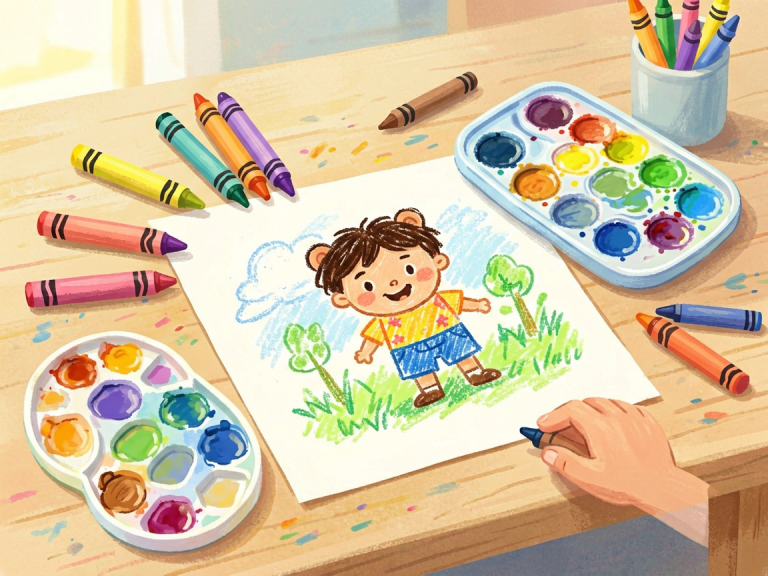
At 18 months, finger painting with non-toxic, washable paint is messy but magnificent. The sensation of cool, squishy paint between tiny fingers, the explosion of color, and the freedom to smear without a template—all nourish creative expression. Similarly, play dough (homemade or store-bought) provides a malleable medium that can be poked, rolled, flattened, and shaped. Crayons that are chunky and easy to grip allow for scribbling, and while an adult may see only chaotic lines, the child sees a story, a sunset, or a monster. Offer a large sheet of paper taped to a low table, and let the child lead. Avoid coloring books that demand staying within lines—they impose constraints that are developmentally inappropriate and can stifle exploration.
3. Pretend Play Accessories
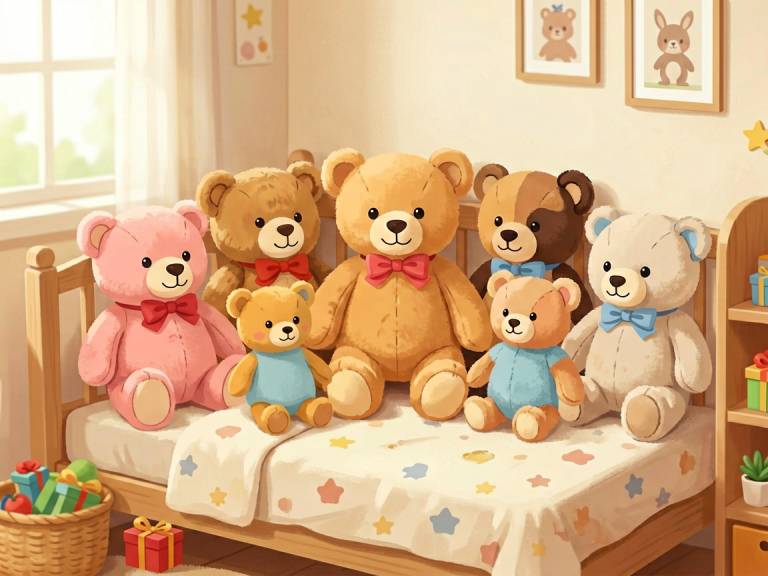
Pretend play blossoms around this age. A play kitchen with simple pots, pans, and plastic vegetables can lead to endless scenarios—cooking a meal for a teddy bear, washing dishes, or organizing the pantry. Dolls with soft bodies and simple faces (no exaggerated features) encourage nurturing behaviors and storytelling. Animal figurines, especially those that are durable and realistic-looking, allow a toddler to create mini habitats: the cow lives on a block, the horse jumps over a crayon. The key is to keep these items realistic enough to be recognizable but simple enough to allow the child’s imagination to fill in the gaps.
4. Music and Sound Makers
Creativity is not limited to visual art. Musical instruments designed for toddlers—such as maracas, a small xylophone, jingle bells, and drums—introduce rhythm, cause-and-effect (shaking makes sound), and emotional expression. An 18-month-old can create their own melodies and feel a sense of agency. Avoid electronic keyboards with pre-programmed songs; instead, choose an instrument where the child produces the sound through their own action. Singing along with the child as they bang a drum also models joyful creative participation.
5. Loose Parts and Household Items
Often the most creative play comes from items not sold as toys. A set of large, clean plastic bottle caps can become sorting objects, stacking pieces, or pretend coins. Cardboard boxes of various sizes become caves, cars, or castles. Scarves and fabric scraps can be draped, twirled, or worn as capes. These “loose parts” have no prescribed function, so they demand invention. Parents can put together a basket of safe household objects (with supervision) and rotate them weekly to maintain novelty.
Toys to Avoid: What Hinders Creative Development
Equally important as knowing what to choose is knowing what to avoid. Toys that are highly rigid and task-specific—such as a shape sorter that only accepts one shape in one hole (though a basic shape sorter is fine, those with electronic feedback that corrects the child can be frustrating)—may teach a skill but do little for creativity. Toys with screens, including tablets designed for toddlers, are especially problematic. The American Academy of Pediatrics recommends no screen time for children under 18 months other than video chatting. Screens offer passive, fast-paced stimuli that overstimulate the developing brain and reduce opportunities for hands-on manipulation and imagination. Similarly, toys that talk or sing automatically (e.g., a plush animal that says “I love you” when squeezed) replace the child’s own vocalizations and narrative. The child does not need to invent a voice for the toy because the toy already has one. Overly complex toys that require adult assembly or constant help also discourage independent problem-solving. Remember: a bored toddler will eventually invent their own game if given open-ended resources; a toddler with a “smart” toy will merely watch it perform.
The Role of Parents and Environment: Setting the Stage for Creativity
No toy, no matter how brilliantly designed, can foster creativity in a vacuum. The environment in which a child plays is equally influential. For an 18-month-old, a safe, clutter-free play space that allows for movement is essential. Too many toys at once can overwhelm choices and lead to shallow play. A better approach is to rotate a small selection of toys—perhaps six to eight items—every few days. This maintains novelty without overstimulation. Additionally, the parent’s role is not to instruct or correct but to observe, follow the child’s lead, and engage in parallel play. When a child puts a block on their head, instead of saying, “No, blocks go on the floor,” the parent can say, “You made a hat! Can I try?” This validates the child’s creative thinking. Narrating what the child is doing (“You are stacking the red block on the blue one”) builds language while honoring the child’s effort. Creativity flourishes when the child feels safe to experiment without fear of “getting it wrong.” Finally, incorporate outdoor play. A stick in the garden can be a magic wand, a digging tool, or a drawing instrument in the dirt. Nature provides the ultimate loose parts: leaves, pebbles, sand, and water. These elements cost nothing and offer infinite creative possibilities.
Conclusion
Choosing toys for an 18-month-old is an act of profound trust in the child’s own capacity to learn and imagine. The best toys are not the loudest, the most interactive, or the most educational in a narrow sense—they are the quietest, the simplest, and the most inviting of interpretation. A set of wooden blocks, a lump of dough, a collection of scarves, and a parent who is willing to sit on the floor and wonder aloud—these are the ingredients that nurture a creative mind. As the toddler grows into a preschooler, the seeds planted during this sensorimotor stage will blossom into flexible thinking, problem-solving, and a lifelong love of exploration. So the next time you find yourself in a toy store, resist the flashy displays. Reach instead for the unassuming objects that whisper, “What can you make of me?” That whisper is the beginning of creativity.