Introduction
Title: Are STEM Kits Good Christmas Gifts? A Thoughtful Analysis of Science, Technology, Engineering, and Math Under the Tree
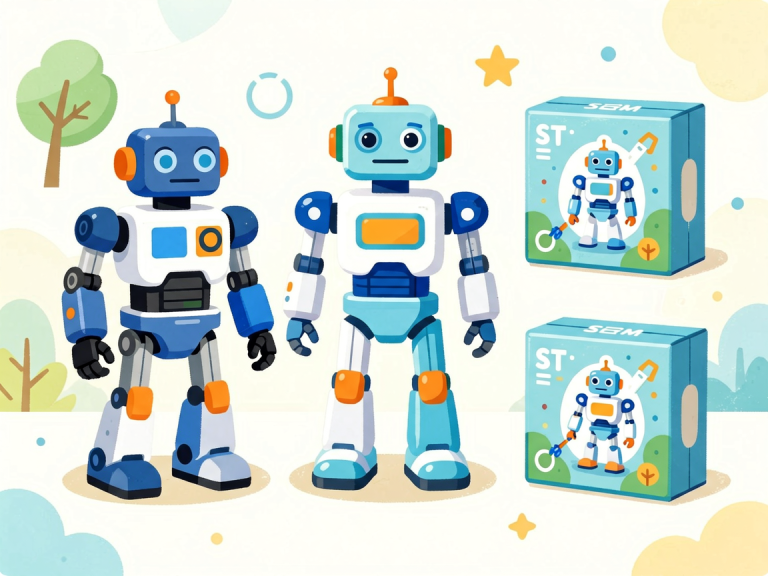
Every December, shoppers face the same seasonal dilemma: what to put under the Christmas tree that will delight, educate, and not end up forgotten in a corner by New Year’s. In recent years, STEM kits—boxes packed with components for building robots, conducting chemistry experiments, coding games, or exploring physics—have surged in popularity as gift options. Parents, aunts, uncles, and even grandparents are drawn to the promise of blending fun with learning. But are STEM kits truly good Christmas gifts? The answer, as with most thoughtful presents, is not a simple yes or no. It depends on the child, the kit, and the expectations surrounding the gift. This article explores the multifaceted nature of STEM kits as holiday presents, weighing their educational merits against potential pitfalls, and offering guidance to help you decide whether to wrap one this year.
—
The Rise of STEM Kits in the Holiday Gift Market
The acronym STEM (Science, Technology, Engineering, Mathematics) has become a cornerstone of modern education policy and parenting philosophy. Governments and educators worldwide emphasize the importance of these fields for future careers, and toy manufacturers have responded accordingly. STEM kits are no longer niche products sold in specialty science stores; they now occupy prominent shelves in big-box retailers, online marketplaces, and even boutique gift shops. According to industry reports, the global STEM toys market was valued at over $30 billion in 2023 and continues to grow, with Christmas being the peak sales season.
This surge reflects a cultural shift: parents increasingly want gifts that entertain and simultaneously build skills. Unlike traditional toys that might be purely recreational, STEM kits promise tangible outcomes—a working volcano, a solar-powered car, a functioning circuit board. They align with the modern desire for “productive play,” where every minute of fun also cultivates cognitive abilities. Yet this very promise can become a double-edged sword, as expectations of learning may overshadow the simple joy of receiving a present.
—
The Case for STEM Kits as Excellent Christmas Gifts
Educational Value That Lasts Beyond the Holiday
One of the strongest arguments in favor of STEM kits is their enduring educational impact. Unlike a video game that may be completed in a weekend or a plush toy that loses its appeal, a well-designed STEM kit introduces concepts that can resonate for years. For instance, a robotics kit that teaches basic programming logic doesn’t just provide a few hours of assembly—it builds foundational understanding of algorithms, sensors, and mechanics. Children who engage with such kits often develop problem-solving strategies, patience, and resilience when their first attempt at building a circuit fails. According to research from the Joan Ganz Cooney Center, hands-on STEM activities significantly boost children’s interest in science and technology, especially when introduced in a playful, low-pressure context. A Christmas morning spent unwrapping a chemistry set could spark a lifelong passion for medicine or environmental science.
Encouraging Creativity and Critical Thinking
STEM kits are often misunderstood as purely rigid, instruction-following exercises. In reality, many high-quality kits encourage open-ended exploration. For example, a magnetic building set allows children to construct bridges, towers, or abstract sculptures, blending engineering principles with artistic expression. A coding kit might let kids customize a game, change variables, and see immediate visual feedback. This combination of structure and freedom cultivates critical thinking: children learn to hypothesize, test, and revise—a process that mirrors the scientific method. During the holiday season, when children have extended time off from school, such kits can transform idle hours into productive experimentation.
Screen-Free Engagement in a Digital World
Christmas gifts increasingly come with screens: tablets, smartphones, gaming consoles. While these have their merits, many parents worry about overexposure to digital media. STEM kits offer a compelling alternative that is tactile, hands-on, and often collaborative. Building a marble run, assembling a snap-circuit kit, or growing crystals requires physical manipulation, spatial reasoning, and often teamwork with siblings or parents. This screen-free quality is particularly valuable during the holidays, when families gather and seek shared activities. A STEM kit can become the centerpiece of a rainy afternoon, bringing grandparents and grandchildren together around a common project.
Long-Term Value and Reusability
Unlike fashion items that quickly become outdated or consumable toys that are used once, many STEM kits are designed for repeated use. A telescope, for instance, can be used for years of stargazing. A microscope kit comes with prepared slides but allows children to collect their own specimens. Some kits include modular components that can be reconfigured into different projects—a single box of building blocks or electronic components can yield dozens of experiments. This reusability makes STEM kits a cost-effective gift in the long run, especially when compared to single-purpose toys.
—
Potential Drawbacks to Consider Before Buying
The Risk of Mismatched Interests and Skill Levels
The biggest criticism of STEM kits as gifts is that they can fail spectacularly if they don’t align with the recipient’s interests or abilities. A child who loves drawing and storytelling may feel frustrated or bored by a soldering kit. A ten-year-old who is already adept at coding might find an entry-level robotics kit patronizing, while a younger child might become overwhelmed by complex instructions. The holiday gift exchange is often a one-shot opportunity—unlike a classroom where a teacher can adjust the difficulty, a poorly chosen kit can lead to disappointment rather than discovery. It is crucial to research the child’s current hobbies, reading level, and prior exposure to STEM concepts before purchasing.
Quality and Complexity Issues
Not all STEM kits are created equal. The market is flooded with cheaply assembled products that contain flimsy parts, unclear instructions, or experiments that fail to work as advertised. A frustrated child (and parent) on Christmas morning is not the memory anyone wants. Some kits promise ambitious results but require adult assistance at every step, turning a child’s independent play into a parent-led chore. Others may assume prior knowledge (e.g., “solder the wires to the board”) that a young recipient simply doesn’t have. Reading reviews, checking age recommendations closely, and choosing reputable brands (such as Thames & Kosmos, Snap Circuits, Lego Education, or KiwiCo) can mitigate this risk, but it adds an extra layer of effort for the gift-giver.
Potential for Frustration and Abandonment
Even high-quality STEM kits can lead to frustration if the child expects instant gratification. Unlike a video game that rewards every click, a physical project may require patience through multiple failed attempts. Some children, especially younger ones, may lack the fine-motor skills or concentration to complete a complex build. If the kit is perceived as “homework” rather than a toy, it may be abandoned after one attempt. Parents can help by participating—but that requires time and energy, which may be scarce during the holiday chaos. The gift-giver should be honest about whether the child has a support system (parents, older siblings) willing to engage with the kit.
The “Gift of Learning” Can Feel Like an Obligation
One subtle downside of STEM kits is the implicit message they send: “Here is a present that will make you smarter.” While well-intentioned, this can put pressure on a child to perform or learn. Holidays are traditionally a time for joy, relaxation, and unconditional love. A gift that feels like a lesson can sometimes dampen the spirit of giving. This is especially true if the child already receives pressure to excel academically. The best STEM kits are those that prioritize play over pedagogy—where learning happens almost by accident, in the midst of fun.
—
How to Choose the Right STEM Kit for a Christmas Gift
Selecting a successful STEM gift requires thoughtful consideration. First, match the kit to the child’s genuine interests. Does the child love dinosaurs? A paleontology dig kit or fossil-casting set would be perfect. Are they obsessed with outer space? A model rocket or a star projector with astronomy activities would excite them. Second, consider the level of adult involvement required. For a child who enjoys independent play, look for kits with clear, illustrated instructions and minimal need for parental assistance. For a family that enjoys doing projects together, a more complex kit can be a bonding experience. Third, prioritize open-ended kits over one-time projects. A subscription box that delivers new experiments each month can extend the gift’s life beyond Christmas. Fourth, check for safety certifications—especially for chemistry kits or those with small parts for younger children. Finally, include a note or a promise of shared time. A simple card saying, “I can’t wait to build this with you” transforms the kit from an impersonal object into a social invitation.
—
Conclusion: A Balanced Verdict
So, are STEM kits good Christmas gifts? They can be, provided they are chosen with care and empathy. The best STEM kits are not just educational tools; they are gateways to curiosity, perseverance, and joy. They offer a rare combination of hands-on creativity and cognitive development, all while providing a screen-free alternative for the holiday break. Yet they are not a one-size-fits-all solution. A poorly matched kit can cause frustration, while an overly didactic one can steal the magic of Christmas morning. Ultimately, the success of a STEM gift depends on the child’s personality, the family’s culture, and the quality of the product itself.
If you know a child who loves to build, tinker, ask “why,” or solve puzzles, a carefully chosen STEM kit can be one of the most memorable gifts they receive. It may even ignite a spark that lasts a lifetime. But if you are unsure, consider pairing a STEM kit with a more traditional, purely fun gift—a board game, a book, or a cozy sweater—so the child does not feel the weight of expectation. After all, the true spirit of Christmas lies not in what the gift teaches, but in the love and thought behind it. When that love is woven into a kit that respects a child’s curiosity, the answer is a resounding yes: STEM kits can be wonderful Christmas gifts.
—
*Word count: 1,437 words*