Should I Buy STEM Kits? A Comprehensive Guide for Parents, Educators, and Lifelong Learners
—
Introduction
In an era where technology and science dominate nearly every facet of our lives, the acronym STEM—Science, Technology, Engineering, and Mathematics—has become a household term. Parents, teachers, and even adult hobbyists are increasingly turning to STEM kits as a hands-on way to cultivate critical thinking, problem-solving, and creativity. But with hundreds of options flooding the market, ranging from simple circuit boards to complex robotics, the question lingers: *Should I buy STEM kits?* The answer is not a simple yes or no. It depends on your goals, the age of the learner, the quality of the kit, and your willingness to engage with the material. This article will dissect the pros and cons, explore different types of kits, and provide a structured decision-making framework to help you determine whether investing in STEM kits is the right move for you or your child.
—
What Exactly Are STEM Kits?
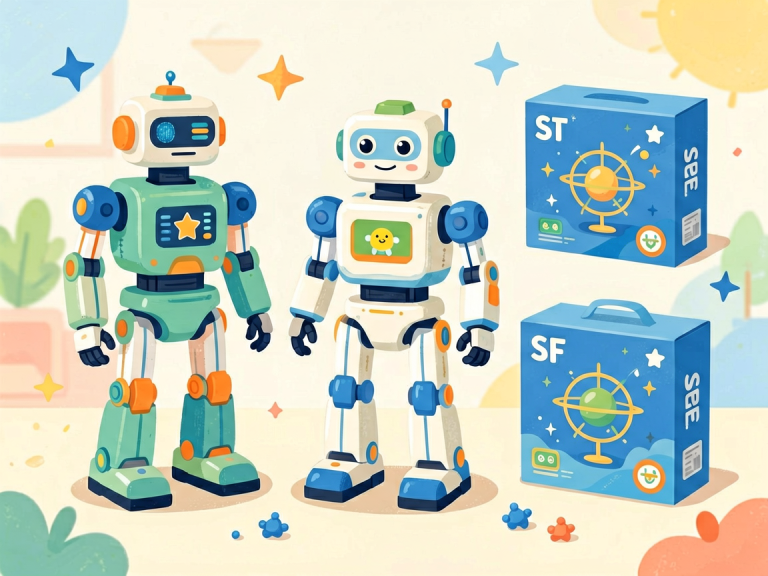
Before diving into the decision, it is important to clarify what STEM kits are. At their core, STEM kits are packaged sets of materials, instructions, and sometimes software designed to teach specific concepts through hands-on projects. They can include everything from snap-together electronics and chemistry lab sets to coding robots and 3D puzzle models. The best kits move beyond simple assembly; they encourage experimentation, failure, iteration, and discovery. Unlike a passive textbook or a short online video, a good STEM kit demands active engagement, making abstract concepts tangible. For example, building a simple motor from a kit teaches electromagnetism far more memorably than reading about it. However, not all kits are created equal—some are glorified toys with minimal educational value, while others are serious learning tools used in classrooms and maker spaces.
—
The Compelling Benefits of STEM Kits
1. Hands-On Learning and Retention
Research in educational psychology consistently shows that active, experiential learning leads to higher retention rates than passive instruction. When a child (or adult) wires a circuit and watches an LED light up, the cause-and-effect relationship is imprinted on the brain. STEM kits provide this tactile feedback loop. They transform abstract equations and theories into concrete experiences. For instance, a physics kit that demonstrates Newton's laws with catapults or roller coasters makes the subject come alive. If you value deep, lasting understanding over rote memorization, a well-chosen STEM kit is an excellent investment.
2. Development of Essential 21st-Century Skills
STEM kits are not just about science; they are about process. Building a robot from scratch requires planning, troubleshooting, patience, and adaptability. When a project fails—and it often does—the learner must diagnose the problem, hypothesize a solution, and try again. This cycle mirrors real-world engineering and scientific research. Skills such as critical thinking, creativity, collaboration (if done in a group), and digital literacy are all naturally fostered. In a world where automation is reshaping jobs, these competencies are increasingly valuable.
3. Building Confidence and a Growth Mindset
Completing a challenging STEM project—like programming a drone to fly a specific path or building a working hydraulic arm—provides a powerful sense of accomplishment. This success can be particularly impactful for children who struggle with traditional academic subjects. STEM kits offer a low-stakes environment where mistakes are part of the learning process. The iterative “fail forward” approach helps cultivate a growth mindset, teaching learners that intelligence and ability can be developed through effort. For parents wondering *should I buy STEM kits?*, this alone can be a persuasive reason.
4. Bridging the Gender and Diversity Gap in STEM
For decades, STEM fields have suffered from a lack of diversity. Many modern kits are intentionally designed to appeal to a broad range of interests, using inclusive imagery and themes that go beyond stereotypical “boys’ toys.” A well-designed chemistry kit with real-world applications (like making soap or edible slime) can spark interest in girls and underrepresented groups. By making science accessible and fun, STEM kits can help level the playing field early on.
5. Quality Screen-Free Time
In an age of excessive screen use, STEM kits offer a refreshing alternative. While some kits include coding or app integration, the core activity is physical: building, connecting, testing, and manipulating objects with your hands. This tactile engagement is not only good for brain development but also provides a balanced break from digital devices. For parents concerned about screen time, a STEM kit can be a guilt-free, productive activity.
—
Potential Drawbacks and Limitations
1. Cost vs. Value
STEM kits vary wildly in price—from $10 for a simple snap circuit to $500 for a programmable drone kit. The high-end options can be a significant financial commitment, and not all deliver equivalent educational value. Some expensive kits are essentially preassembled toys with a few snap-in accessories, offering little challenge or learning opportunity. Conversely, some budget kits are surprisingly rich in concept and durability. Therefore, before buying, you must evaluate whether the cost aligns with the depth of learning. A single-use kit that produces one project and then sits in the closet is a poor investment. Look for kits that are reusable, expandable, or compatible with open-ended exploration.
2. Risk of Frustration and Abandonment
Not all learners are naturally drawn to hands-on building or troubleshooting. A child who struggles with fine motor skills may find intricate assembly overwhelming. Similarly, a kit that requires extensive adult preparation or advanced reading skills can lead to frustration and will likely be abandoned after the first failed attempt. This is particularly common with lower-quality kits that have vague instructions or missing components. The question *should I buy STEM kits?* becomes more complex if you are not prepared to sit alongside the learner, scaffolding their experience and encouraging persistence.
3. One-Size-Fits-All Problem
Many kits claim to be for ages 8–14, but this range is far too broad. A 9-year-old and a 13-year-old have vastly different cognitive abilities, attention spans, and prior knowledge. A kit that is too simple will bore an older child; one that is too complex will demoralize a younger one. Without proper age-specific design, the kit may miss its educational mark entirely. Additionally, some kits assume prior knowledge that the learner does not have—for example, expecting basic soldering skills or understanding of algebra. Always read reviews and check the recommended age range carefully.
4. Lack of Long-Term Engagement
Most STEM kits are designed around a single, fixed project. Once the robot is built or the volcano erupts, the kit loses its purpose. Unless it is modular or supports creative modification, it becomes a one-hit wonder. For sustained learning, you might need a series of kits or a platform that grows with the user (like subscription boxes). This can become expensive. Moreover, the initial excitement may fade quickly if the kit does not offer opportunities for extension—such as additional challenges, alternate builds, or online communities.
5. Parental Involvement Required
Let’s be honest: many STEM kits are not truly child-led. They require an adult to read instructions, help with tricky steps, explain concepts, and supervise potentially messy or dangerous materials (like chemicals or small batteries). If you are a busy parent hoping that a kit will occupy your child independently for an hour, you may be disappointed. Some kits are indeed designed for independent use, but they are the exception. The best outcomes come from collaborative learning, where parent and child explore together. If you cannot commit time and patience, a kit might end up as an expensive dust collector.
—
Key Factors to Consider Before Buying
To answer the question *should I buy STEM kits?* with confidence, evaluate the following criteria:
- Learner’s Age and Skill Level – Choose a kit that is slightly above the learner’s current ability, but not so hard that it causes frustration. Look for a “just-right” challenge zone.
- Interests – Does the learner love space? Animals? Coding? Building? Match the kit to their passions. A dinosaur-obsessed child will engage more deeply with a fossil-digging kit than a generic electronics one.
- Educational Depth – Read the kit’s description carefully. Does it teach actual science principles, or just offer assembly instructions? Check for learning guides, extension activities, or online resources.
- Reusability – Can the components be repurposed for other projects? Kits that include generic parts (motors, gears, sensors) that can be used in open-ended inventing are far more valuable.
- Quality and Safety – Check for non-toxic materials, durable construction, and safety certifications. Avoid kits with fragile parts that break easily, especially for younger children.
- Budget – Decide how much you are willing to spend per project. subscription boxes can spread cost over time, while a single large kit might be a better value if it offers many builds.
- Your Own Role – Are you ready to be a co-learner or facilitator? If not, consider kits with video tutorials, step-by-step guides, and strong customer support.
—
Types of STEM Kits for Different Ages and Goals
For Early Learners (Ages 3–6)
Focus on simple cause-and-effect, fine motor skills, and basic number/letter concepts. Examples: wooden block engineering sets, magnetic tile sets, simple snap circuits with large parts, and nature exploration kits (bug viewers, plant growing). These should be safe, non-toxic, and require minimal reading.
For Elementary Students (Ages 7–11)
This is the sweet spot for many STEM kits. Look for programmable robots (like LEGO Boost or Sphero), beginner coding kits (Scratch-based), chemistry sets with safe experiments, and mechanical engineering kits (pulleys, gears, linkages). At this age, the ability to follow instructions and persist through challenges is developing, but adult supervision is still helpful.
For Middle and High School (Ages 12–18)
More complex kits are appropriate: Arduino or Raspberry Pi starter kits, advanced robotics kits, soldering stations, oscilloscope electronics labs, and bioengineering kits (DNA extraction, bacterial growth). These can be genuinely challenging and often link to real-world STEM careers. Teens may also enjoy subscription services like KiwiCo’s Tinker Crate or MEL Science.
For Adults and Hobbyists
Never underestimate the appeal of STEM kits for grown-ups. Adult learners can benefit from advanced robotics, 3D printing kits, microcontrollers, or even rocket-modeling kits. These provide a creative outlet, stress relief, and an opportunity to acquire new technical skills. The same decision criteria apply, but with more emphasis on personal interest and time availability.
—
Recommendations and Final Verdict
So, *should I buy STEM kits?* The answer is yes, if:
- You have a clear learning goal or want to spark curiosity in a specific field.
- You are willing to invest time in the activity alongside the learner.
- The kit is age-appropriate, high-quality, and offers depth beyond a single project.
- You are looking for a hands-on alternative to screen time.
- The learner shows interest in building, experimenting, or problem-solving.
The answer is no, if:
- You are looking for a purely independent activity that requires zero adult involvement.
- The kit is overly expensive for a one-time use with limited educational value.
- The learner is not interested or is easily frustrated by hands-on challenges.
- You cannot commit to following through on the project (finishing it within a reasonable time).
Ultimately, STEM kits are powerful tools when used intentionally. They are not magic solutions—they require engagement, patience, and sometimes a bit of mess. But for those willing to embrace the process, they can open doors to a lifelong love of learning and discovery. Before making a purchase, read reviews from other parents or educators, watch unboxing videos, and consider starting with a single, well-regarded kit to test the waters. The journey of a thousand circuits begins with a single snap.
—
*Word count: approximately 1,480 words (including title and subheadings, excluding this note)*