Should I Buy Science Kits for 12-Year-Olds? Unlocking Potential or Wasting Money?
Introduction
As a parent or guardian of a 12-year-old, you’ve probably noticed the shift: your child is no longer a little kid, but not quite a teenager. This age is a sweet spot for learning—curious, capable of abstract thinking, yet still playful and hands-on. So when you see those colorful boxes labeled “Science Kits” in stores or online, the question naturally arises: *Should I buy science kits for my 12-year-old?* It’s a decision that involves cost, space, time, and—most importantly—your child’s engagement. In this article, we’ll explore the benefits, potential downsides, key factors to consider, and specific recommendations to help you make an informed choice.
The Cognitive and Educational Benefits
Fostering Curiosity and a Love for Science
At 12, children are at a developmental stage where they can grasp cause-and-effect relationships, hypothesize, and test ideas. Science kits provide structured but open-ended activities that ignite curiosity. For instance, a chemistry kit that lets them grow crystals or create a volcano eruption doesn’t just demonstrate chemical reactions—it invites questions like “Why does the color change?” or “What if I add more vinegar?” This hands-on exploration is far more memorable than reading a textbook.
Developing Critical Thinking and Problem-Solving Skills
Science kits often require following multi-step instructions, troubleshooting failed experiments, and interpreting results. When a 12-year-old’s crystal-growing experiment yields no crystals, they must ask: Did I use the right amount of water? Was the temperature correct? This process mirrors the scientific method: observe, question, hypothesize, experiment, conclude. These skills transfer beyond science—they improve logical reasoning in math, reading comprehension, and even daily decision-making.
Building Confidence and Independence
Completing a project—whether building a working robot or extracting DNA from a strawberry—gives a powerful sense of accomplishment. Unlike passive screen time, science kits demand active participation. A 12-year-old who successfully constructs a simple circuit feels a surge of mastery: “I did this myself!” That confidence can motivate them to tackle more complex challenges in school or hobbies.
Complementing School Curriculum
Many middle school science topics (physics, chemistry, biology, earth science) are introduced in textbooks but rarely practiced hands-on due to limited lab time. Science kits bridge this gap. For example, a kit about electricity helps a student visualize circuits before they encounter the concept in class. This real-world connection deepens understanding and often leads to higher grades.
Potential Challenges and Limitations
Risk of Boredom or Disengagement
Not all science kits are created equal. Some are too simplistic (e.g., “magic” tricks that reveal no real science) while others are frustratingly complex. A 12-year-old who already excels in science might find a basic volcano kit childish; conversely, a child who struggles with reading may give up if instructions are dense. The key is matching the kit’s difficulty to the child’s current interest and ability level.
Cost vs. Value
Quality science kits can range from $20 to over $100. A cheap kit might contain low-quality materials (e.g., a plastic microscope that barely magnifies) or single-use components, leading to disappointment. On the other hand, expensive robotics kits may require additional purchases (batteries, sensors). Parents often worry about spending money on something that collects dust after one use.
Mess and Supervision Requirements
Many experiments involve mess—spilled liquids, powders, or small parts. Parents may need to designate a specific workspace (kitchen table, garage) and supervise to ensure safety. For busy families, this added responsibility can be a deterrent. However, this can also become a bonding opportunity if both parent and child engage together.
Digital Distractions
In an age of instant gratification from video games and social media, some children may view a science kit as “too much work.” The delayed reward of a successful experiment (which might take hours or days) competes with the instant dopamine hits of a smartphone. To combat this, consider limiting screen time before introducing the kit, or frame it as a fun challenge rather than schoolwork.
Key Factors to Evaluate Before Purchasing
Assess Your Child’s Interests and Personality
Does your child love building with LEGOs, asking “why” questions, or watching science YouTube channels? If so, a kit aligned with their passion (e.g., robotics for builders, chemistry for tinkerers, astronomy for dreamers) is likely to engage them. However, if they show no interest in science at all, a poorly chosen kit could reinforce their dislike. Start with a simple, low-cost project to test the waters.
Consider the Kit’s Age Range and Skill Level
Most kits indicate an age range, but beware: many “for ages 10+” are too easy for a mature 12-year-old. Look for kits labeled “12+”“teen” or those that mention “advanced” or “STEM challenge.” Also check reviews from other parents of similarly aged children. A kit that allows for multiple experiments (not just one trick) offers longer-term value.
Check for Safety and Materials
Safety is paramount. Avoid kits with toxic chemicals, sharp tools, or small parts that could be ingested (especially if there are younger siblings). Reputable brands (Thames & Kosmos, Snap Circuits, National Geographic, 4M) adhere to safety standards. Also prefer kits with reusable components—for instance, a microscope that can be used for many samples, not just one prepared slide.
Review the Instruction Quality
Clear, well-illustrated instructions (preferably with color photos) are crucial. Some kits rely solely on online videos, which can be problematic if Wi-Fi is limited. A 12-year-old should be able to follow most steps independently, but occasional adult guidance is normal. Look for kits that include background science explanations—these turn a “toy” into a learning tool.
Recommended Types of Science Kits for 12-Year-Olds
Chemistry Sets with Real Experiments
Avoid the “play” chemistry sets aimed at younger kids. Instead, look for kits that cover pH testing, chemical reactions, and crystal growing with safe household chemicals. *Thames & Kosmos Chem C2000* (for ages 12+) offers 250 experiments—from chromatography to electrolysis—and includes a lab notebook. It’s a long-term investment.
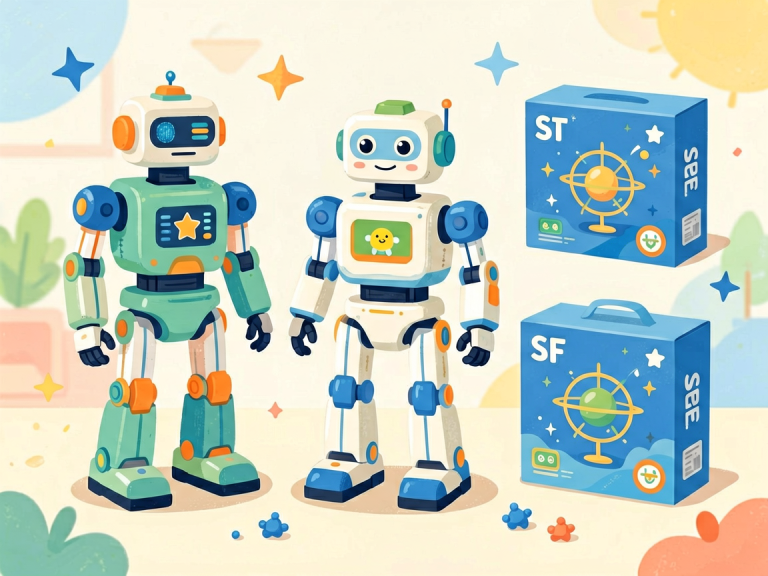
Robotics and Electronics Kits
For tech-savvy 12-year-olds, building a robot or circuit board fosters engineering thinking. *Snap Circuits Pro SC-500* allows over 500 projects, from a doorbell to a lie detector, without soldering. *LEGO Mindstorms*, though pricey, teaches programming and mechanical design. These kits grow with the child as they tackle more complex builds.
Biology and Earth Science Kits
A quality microscope kit (e.g., *Thames & Kosmos Biology STEM Experiment Kit*) with prepared slides and blank slides lets kids explore pond water, plant cells, or even their own cheek cells. For geology lovers, a rock-tumbling kit or fossil excavation set provides hands-on discovery.
Physics and Engineering Kits
Kits focusing on forces, magnetism, or hydraulics—like *Thames & Kosmos Physics Workshop* or *KiwiCo Crate* (monthly subscription)—offer projects that demonstrate Newton’s laws or simple machines. These are especially good for visual and kinesthetic learners.
Environmental or DIY Science Kits
Some kits encourage outdoor exploration, like a weather station or water-testing kit. Others combine science with craft (e.g., making soap or lip balm). These appeal to creative children who might not consider themselves “science kids.”
Conclusion: A Yes, With Caveats
Should you buy science kits for a 12-year-old? The answer is a resounding “yes”—provided you choose wisely and align the kit with your child’s interests, maturity, and your family’s time. Science kits are not a magic bullet; they won’t turn every child into an Einstein. But when selected thoughtfully, they can spark curiosity, build essential problem-solving skills, and create memorable, screen-free experiences. Start with one well-reviewed kit that matches your child’s favorite subject—maybe a chemistry set for the kitchen tinkerer, a robotics kit for the tech lover, or a microscope for the nature enthusiast. And if the first kit gathers dust, don’t despair. Sometimes it takes two or three tries to find the right fit. Ultimately, what matters is giving your 12-year-old the opportunity to discover that science isn’t just facts in a book—it’s an adventure waiting to happen.