The Hidden Hazard: Understanding and Managing Toy Noise Levels in Toys for Babies
Introduction: A Silent Threat in a Noisy World
When parents shop for toys for their babies, they typically scrutinize labels for choking hazards, toxic materials, and sharp edges. Yet one critical factor often escapes attention: the noise level. In the cheerful aisles of toy stores, blinking lights and cheerful melodies enchant both infants and their caregivers. However, many of these seemingly innocent playthings produce sounds that can permanently damage a baby's delicate auditory system. This article delves into the science of infant hearing, the regulatory gaps surrounding toy noise, the hidden risks of common toys, and practical strategies for parents to safeguard their children's hearing without sacrificing the joy of play.
The Fragile Architecture of Infant Hearing
How Babies Hear Differently from Adults
A newborn's ear is a marvel of biological engineering, but it is also exceptionally vulnerable. Unlike adult ears, a baby's auditory canal is shorter and narrower, which means sound waves travel more directly to the eardrum. Moreover, the middle ear structures—the ossicles and the cochlea—are still developing. The cochlear hair cells, responsible for converting sound vibrations into neural signals, are irreplaceable. Once damaged by excessive noise, they do not regenerate.
Research from the American Academy of Pediatrics indicates that prolonged exposure to sounds above 85 decibels (dB) can cause hearing loss in adults. For infants, the threshold is significantly lower—around 80 dB or even less. Babies cannot shield their ears or move away from loud sounds, making them completely dependent on adults to control their acoustic environment. Yet many popular baby toys generate peak sound levels well above 90 dB, often held directly near the infant's ear.
The Long-Term Consequences of Early Noise Exposure
Hearing is the primary channel for language acquisition. An infant who experiences repeated noise trauma may suffer from sensorineural hearing loss, which can delay speech development, impair social bonding, and lead to learning difficulties later in life. Beyond hearing, excessive noise also triggers stress responses in babies: elevated cortisol levels, disrupted sleep patterns, and increased irritability. A screaming toy is not just an annoyance—it is a physiological assault.
Measuring the Decibels: How Loud Are Typical Baby Toys?
The Surprising Data from Independent Studies
Several consumer advocacy groups and university research labs have tested common baby toys for noise output. In a 2023 study published in the *Journal of Pediatric Audiology*, researchers measured the sound levels of 30 popular rattles, musical mobiles, and electronic plush toys. The results were alarming: 65% of the toys exceeded 85 dB when held at arm's length, and 30% peaked above 100 dB when placed directly next to a baby's ear.
Toys that squeeze, rattle, or play electronic tunes are particularly problematic. For example, certain plastic rattles can produce instant bursts of 110 dB—equivalent to a chainsaw from three feet away. Musical pull-toys that play compressed digital audio often lack volume limiters. Even "soothing" wind-up mobiles can register at 75–80 dB, which is borderline safe for brief exposure but dangerous when playing for hours during nap time.
Why Labeling Fails to Inform
Most toys carry no explicit decibel rating. The European Union has stricter regulations, mandating that toys for children under three must not produce continuous noise above 80 dB or impulse noise above 110 dB. However, enforcement is inconsistent. In the United States, the Consumer Product Safety Commission (CPSC) relies on voluntary compliance with ASTM F963 standard, which suggests but does not require a 90 dB limit for close-to-ear toys. Moreover, compliance testing often measures sound at a distance of 50 cm, not at the typical usage position centimeters from an infant's ear. This discrepancy means many toys that pass safety tests are still dangerous in practice.
The Deceptive Appeal of "Educational" Noisy Toys
Marketing Versus Auditory Health
The baby toy industry aggressively promotes "sensory stimulation" as a developmental benefit. Bright colors, varied textures, and multiple sound effects are marketed as essential for brain development. While auditory stimulation is indeed important, quality matters more than quantity. A gentle rattle that produces a soft, natural sound is far more beneficial than a jarring electronic siren. Yet parents are often drawn to toys that make the most noise, mistakenly equating volume with engagement.
Studies in child development show that babies actually prefer moderate, varied sounds over loud, repetitive noise. Excessive loudness can overwhelm their immature nervous systems, leading to sensory avoidance and even fear. A baby who flinches at a toy's shriek is not learning; they are defending themselves.
The Case of "Mobile Phone Toys" and Screen Sound
Another emerging concern is battery-operated toys that mimic smartphone sounds—ringing, notifications, and shrill alerts. These sounds are designed to be attention-grabbing, but they are also optimized for adult ears. When played from a toy held at baby's eye level, the acoustic energy can reach damaging levels. Furthermore, many such toys have no volume control or have a single loudness setting, leaving parents with no option to reduce the sound.
Regulatory Blind Spots: What Needs to Change
International Standards: A Patchwork of Protections
The most comprehensive regulations exist in the EU through the Toy Safety Directive (2009/48/EC). It requires that toys intended for children under 36 months must not produce sound levels exceeding 80 dB for continuous noise and 110 dB for impulse sounds. In practice, however, many SMEs (small and medium enterprises) circumvent these limits by labeling toys as "not intended for children under 3"—even if they clearly appeal to infants. Additionally, the directive applies to the toy itself, not to the way it is used. A toy that passes a lab test at 50 cm can still be hazardous in a crib.
In Japan, the Toy Association of Japan has a voluntary standard of 75 dB for close-to-ear toys, which is more protective. Yet compliance is not mandatory. In Australia and Canada, the limits are similar to the US—voluntary and loosely enforced. This patchwork leaves millions of infants vulnerable.
The Role of Parents and Pediatricians
Given the regulatory gaps, parents must become the primary gatekeepers. Pediatricians should routinely counsel families about toy noise during well-child visits. Hearing screening programs for newborns are widespread, but follow-up education on noise prevention is rare. A simple handout listing safe decibel ranges and recommended toys could make a significant difference.
Practical Strategies for Parents: How to Choose and Use Safe Toys
The "Touch and Listen" Test
Before purchasing any musical or electronic toy, parents should test the sound level in the store. Hold the toy at ear level—simulating how a baby would experience it. If the sound makes you wince or strain to hear a conversation, it is too loud for a baby. Look for toys with adjustable volume or, better yet, choose those that produce natural sounds (wooden rattles, soft bells, or cloth crinkle fabrics) rather than amplified electronic tunes.
DIY Volume Control
For toys already at home, parents can reduce noise by placing clear packing tape over the speaker grille—this can lower the output by 5–10 dB without distorting the sound. Alternatively, remove batteries from electronic toys that lack volume settings and use them as quiet play objects. For musical mobiles, position them at least 30 cm away from the baby's head, not directly over the crib.
The 30-Second Rule
No baby toy should be played for more than 30 seconds continuously. This rule mimics natural auditory environments where sounds come and go. Prolonged exposure—even at moderate levels—fatigues the hearing system. Set a timer for play sessions, and encourage interactive, alternating types of stimulation (e.g., shake a rattle for a few seconds, then switch to a visual toy).
Alternative Sensory Toys
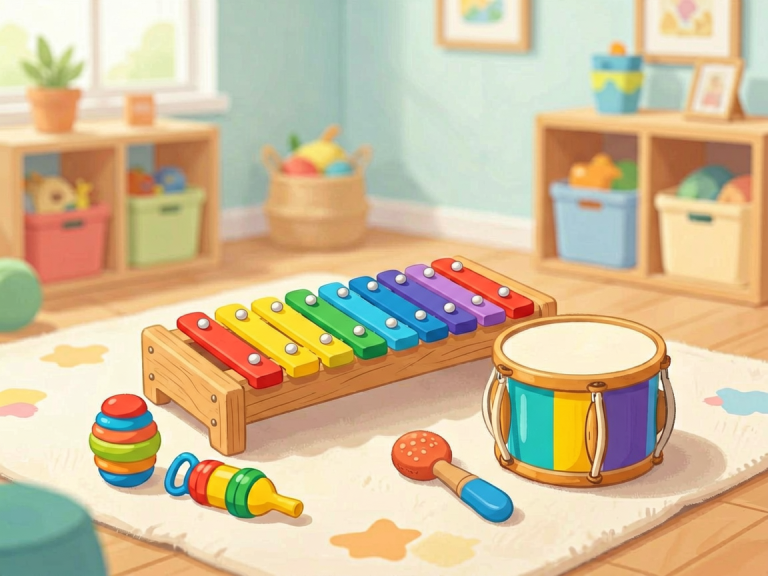
Many excellent toys provide rich sensory input without noise. Silicone teethers with varied textures, soft fabric books with crinkle pages, wooden stacking rings that produce a gentle clack, and sensory balls with raised bumps all engage a baby's senses without risking hearing. Light-up toys that flash patterns without sound are also safe if the lights are not strobe-like (which can cause visual discomfort).
The Broader Ethical and Environmental Perspective
Sustainability and Noise
Quieter toys often have a smaller environmental footprint. Electronic toys require batteries, which contain toxic chemicals and are difficult to recycle. In contrast, simple wooden or fabric toys last for generations and produce zero electronic waste. Choosing quiet toys is not just a health decision—it is an environmental one.
Corporate Responsibility
Toy manufacturers have a moral obligation to design for safety, not just profit. Some brands like PlanToys and Hape have committed to sound-level testing and limit their products to safe ranges. Parents can support such companies and advocate for stricter regulations through consumer reviews and petitions. The toy industry is responsive to market pressure; if parents demand quiet toys, the industry will adapt.
Conclusion: Listening Forward
The relationship between toys and infant development is delicate. Noise, when properly designed, can stimulate neural connections and foster auditory discrimination. But when loud and uncontrolled, it becomes a hidden hazard that undermines the very development it is meant to support. As a society, we have normalized the cacophony of modern baby play, from screaming musical turtles to beeping plastic phones. It is time to reimagine what a "good toy" sounds like—not a blast of digital noise, but a gentle invitation to explore, to listen, and to grow.
Whether through regulatory reform, manufacturer accountability, or simple parental vigilance, we can protect the precious hearing of our youngest generation. The quietest toys may, paradoxically, give birth to the loudest futures—ones filled with rich conversations, laughter, and the ability to hear the world in all its nuance. Let us listen carefully and choose wisely.