The Essential Age-Appropriate Play Checklist: A Developmental Guide for Parents and Educators
Play is the language of childhood, a dynamic and essential activity through which children explore the world, develop skills, and build relationships. However, not all play is created equal. The concept of age-appropriate play is critical because children at different developmental stages have distinct physical, cognitive, emotional, and social needs. An age-appropriate play checklist serves as a practical tool to ensure that the toys, activities, and environments we provide align with a child’s current abilities, fostering growth without causing frustration or posing safety risks. This article presents a comprehensive, research-based checklist that breaks down play considerations by age group, offering clear guidance for parents, caregivers, and educators.
Why an Age-Appropriate Play Checklist Matters
An age-appropriate play checklist is more than a simple shopping guide; it is a developmental roadmap. When children engage in play that matches their capabilities, they experience success, build confidence, and are motivated to explore further. Conversely, toys that are too advanced can lead to frustration and disengagement, while those that are too simple may bore the child and fail to stimulate growth. Additionally, safety is a paramount concern. Small parts, sharp edges, batteries, and cords pose choking or injury risks that vary with age. A checklist helps adults systematically evaluate these factors. It also encourages intentionality—instead of buying the latest trending toy, the checklist prompts reflection on what the child actually needs to develop critical skills such as fine motor coordination, problem-solving, empathy, or language.
The Age-Appropriate Play Checklist by Developmental Stage
The following checklist is organized into four broad age ranges, recognizing that every child develops at their own pace. Use these as guidelines, not rigid rules. The goal is to observe the child’s unique interests and abilities while using the checklist to scaffold their learning.
Infants (0–12 Months): Sensory Exploration and Bonding
During the first year, play is primarily about sensory stimulation and attachment. Infants learn through their senses—tasting, touching, seeing, hearing, and moving. The checklist for this stage emphasizes safety, simplicity, and adult interaction.
- Safety First: Avoid toys with small parts (diameter less than 1.75 inches), sharp edges, or strings longer than 12 inches. Check for non-toxic materials (BPA-free, phthalate-free). Ensure toys are easily washable.
- Sensory Variety: Provide toys that engage multiple senses: soft fabric books, rattles with different sounds, teething rings with varied textures, and high-contrast black-and-white cards for visual tracking.
- Motor Development: Offer unbreakable mirrors for self-discovery, grasping toys that fit little hands, and activity gyms with hanging items to encourage reaching and kicking.
- Social-Emotional Play: Face-to-face interaction is paramount. Use finger rhymes, peek-a-boo, and gentle tickling. Sing lullabies and talk to the baby throughout the day.
- Avoid Overstimulation: Limit toys with loud noises or flashing lights. One or two items at a time are sufficient.
Checklist Action Item: When selecting a toy, ask yourself: Can the baby safely mouth it? Does it respond to their actions (e.g., a rattle that shakes when moved)? Does it invite interaction with a caregiver?
Toddlers (1–3 Years): Active Exploration and Pretend Play
Toddlers are on the move—crawling, walking, climbing, and running. Their play becomes more intentional, and they begin to engage in simple pretend play. The checklist shifts toward gross motor skills, language development, and early social concepts like sharing.
- Gross Motor Skills: Push and pull toys (e.g., wagons, shopping carts), ride-on toys without pedals, balls of various sizes for rolling and kicking, and low climbing structures with soft landing surfaces.
- Fine Motor Skills: Large wooden beads for threading, stacking blocks, simple puzzles with knobs, chunky crayons or washable markers, and shape sorters.
- Language and Cognitive: Board books with familiar objects, simple matching games, toys that produce cause-and-effect responses (e.g., pop-up toys), and pretend play props like toy telephones or baby dolls.
- Social Play: Encourage parallel play (playing alongside others) with duplicates of popular toys to reduce conflict. Practice taking turns with an adult. Avoid competitive games.
- Safety Updates: Ensure climbing toys are stable and have rounded edges. Avoid toys that require batteries or have small magnets. Check for splinters in wooden toys.
Checklist Action Item: Does the toy allow for open-ended play (e.g., blocks that can become a tower, a house, or a road)? Can the child manipulate it independently? Is it durable enough to withstand throwing and dropping?
Preschoolers (3–5 Years): Imaginative Play and Rule Learning
Preschoolers are bursting with imagination and language. They begin to understand rules, cooperate in simple group activities, and ask endless “why” questions. The checklist now emphasizes creativity, social cooperation, and early academic concepts disguised as play.
- Imaginative Play: Dress-up clothes, play kitchens, tool sets, puppets, and dolls with accessories. Provide simple props (cardboard boxes, fabric scraps) to spark creativity. These activities build narrative skills and empathy.
- Collaborative Play: Board games with simple rules (e.g., Candyland, memory games), cooperative games where everyone wins together, and group art projects (e.g., a large mural). Focus on turn-taking and managing emotions when losing.
- Cognitive Skills: Simple jigsaw puzzles (12–24 pieces), pattern blocks, sequencing cards, and counting toys (e.g., buttons to sort by color and size). Introduce alphabet and number toys as concrete manipulatives, not worksheets.
- Physical Activity: Tricycles or balance bikes, jump ropes (short), balls for throwing and catching, and obstacle courses with tunnels and hoops. Ensure active play every day.
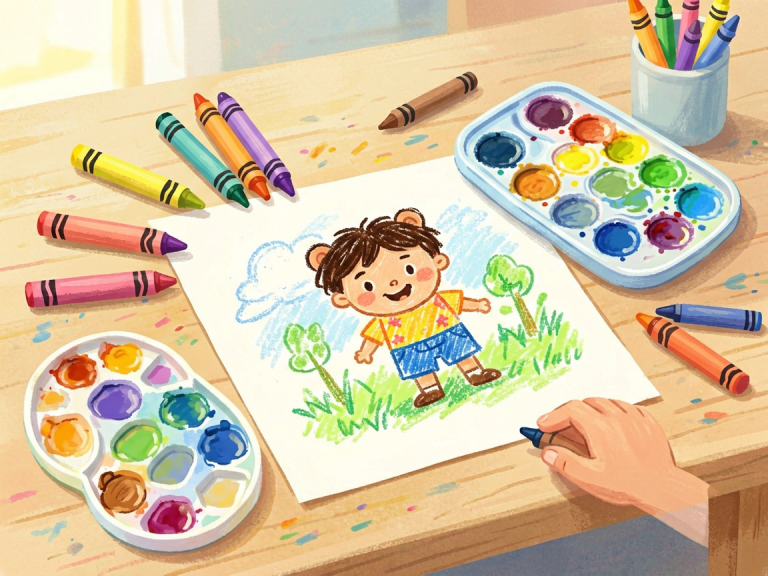
- Creative Arts: Washable paints, play dough with safe tools, safety scissors with blunt tips, glue sticks, and an easel. Process art (focus on doing, not final product) is ideal.
- Safety and Boundaries: Teach safe play practices (e.g., no running with scissors). Ensure art supplies are non-toxic. Supervise water and sand play closely.
Checklist Action Item: Does the toy encourage storytelling or role-play? Can it be used in multiple ways? Does it require minimal adult direction? Is it designed to be used with peers?
School-Age Children (6–12 Years): Strategy, Hobbies, and Peer Connection
As children enter elementary school, play becomes more structured, rule-based, and social. They develop interests in specific subjects, hobbies, and sports. The checklist focuses on building competence, fostering independence, and supporting complex thinking.
- Strategic Games: Board games with more rules (chess, checkers, Settlers of Catan Junior), card games (Uno, Go Fish), and strategy puzzles (Rubik’s Cube, logic grids). These teach planning, patience, and critical thinking.
- STEM and Construction: Building sets like LEGO or K’NEX, simple coding toys (e.g., programmable robots like Botley or Sphero), science kits (crystal growing, volcano), and model-building. These nurture curiosity and problem-solving.
- Outdoor and Sports: Team sports (soccer, basketball, baseball), individual activities (swimming, martial arts, cycling), and unstructured outdoor play (climbing trees, building forts). Physical play builds gross motor skills and social teamwork.
- Hobbies and Special Interests: Craft kits (knitting, jewelry-making, woodworking), musical instruments, photography, or nature exploration tools (binoculars, magnifying glass). Encourage mastery and persistence.
- Social Play: Complex pretend play (e.g., running a pretend store together), card games, and cooperative video games (with limits). Focus on negotiation, compromise, and handling winning/losing gracefully.
- Digital Play (with Boundaries): Educational apps, creative software (digital drawing, music composition), and coding platforms. Set time limits and ensure content is age-rated. Co-play with parents to discuss media literacy.
- Safety Considerations: For outdoor play, ensure safety gear (helmets, knee pads). For digital play, use parental controls and teach online safety. Avoid toys with unsafe chemistry (e.g., slime kits with borax—use safer alternatives).
Checklist Action Item: Does the activity encourage sustained focus and deep engagement? Can the child adapt the rules or create their own variations? Does it provide opportunities for mastery and recognition of effort?
Implementing the Checklist in Daily Life
Using an age-appropriate play checklist is not about restricting children but about empowering them. Here are practical ways to integrate it:
- Conduct a Toy Audit: Every few months, go through the child’s toy collection. Remove items that no longer match their developmental level, are broken, or are rarely used. (Keep them for younger siblings or donate.)
- Observe Play: Watch how the child interacts with toys. Are they frustrated? Bored? Engaged? Adjust the environment accordingly. Sometimes the best “toy” is a cardboard box or a set of wooden spoons.
- Rotate Toys: Offer a limited number of choices (e.g., 5–7 items at a time) and rotate them weekly. This maintains novelty and prevents overwhelm.
- Prioritize Open-Ended Play: Toys that can be used in many ways (blocks, art supplies, loose parts like stones and sticks) grow with the child and encourage creativity.
- Model Play: Join the child in their play world. Follow their lead. This not only strengthens your bond but also helps you assess whether the activity is truly age-appropriate.
- Balance Screen Time: The American Academy of Pediatrics recommends avoiding screens for children under 18 months (except video calling) and limiting to 1 hour per day of high-quality programming for ages 2–5. For older children, co-view and discuss content.
- Embrace Unstructured Play: The best play often has no toys at all—mud puddles, piles of leaves, empty boxes. The checklist should not replace free, child-led exploration.
Conclusion
An age-appropriate play checklist is a living document that evolves as children grow. It helps us remember that play is not a luxury but a fundamental right of childhood—the primary vehicle through which children learn to think, feel, and relate to others. By being intentional about the toys, activities, and environments we provide, we can nurture a love of discovery that lasts a lifetime. The next time you walk into a toy store or prepare a play space, pull out this checklist. Ask yourself: Does this support where my child is right now? Does it challenge them just enough? Is it safe, joyful, and meaningful? If the answer is yes, you are giving the greatest gift of all: the gift of thoughtful, age-appropriate play.