Are Educational Tablets Safe for Babies? A Closer Look at the Evidence
Introduction: The Allure of the Smart Screen
Walk into any modern nursery, and you are likely to see a tablet propped up on a stand, playing cheerful animations or alphabet songs. Parents, desperate to give their children a head start in a hyper-competitive world, have embraced "educational tablets" as a convenient tool for early learning. The marketing is persuasive: bright colors, catchy tunes, and apps promising to turn your six-month-old into a mini-genius. But beneath the glossy surface lies a troubling question that every caregiver must confront: are educational tablets safe for babies? This is not merely a question of physical safety, such as whether a baby might drop a device on their face. It is a deeper inquiry into neurological development, visual health, emotional bonding, and the very nature of how infants learn. In this article, we will dissect the evidence from pediatric research, cognitive science, and child development experts to provide a balanced yet honest answer.
The Neurological Reality: How Babies Actually Learn
To understand safety, we must first understand the infant brain. During the first two years of life, the brain grows at an astonishing rate, forming more than one million new neural connections per second. These connections are not built by passive screen viewing; they are forged through multisensory, interactive experiences. When a baby touches a textured block, tastes a safe toy, hears their mother’s voice, and watches her smile, their brain integrates touch, taste, sound, and sight into a unified understanding of the world. A tablet, by contrast, offers only two-dimensional sights and sounds, with limited tactile feedback.
Dr. Jenny Radesky, a developmental behavioral pediatrician at the American Academy of Pediatrics, has noted that infants learn best through "serve and return" interactions—back-and-forth exchanges with caregivers. When a baby babbles and a parent responds, the child learns the rhythm of conversation. A tablet, no matter how "responsive" its app claims to be, cannot replicate the unpredictable, emotionally nuanced responses of a human being. The device might say "great job!" when a baby taps a shape, but it does not see the baby’s proud smile, nor does it adjust its tone to match the baby’s mood. This lack of true reciprocity is not just a minor limitation; it fundamentally undermines the learning process.
Consequently, when researchers ask whether educational tablets are safe for babies, the evidence points to a risk of "displacement." Every minute spent staring at a screen is a minute not spent crawling, exploring, stacking blocks, or engaging in face-to-face play. These real-world activities are not merely fun; they are the essential building blocks of spatial awareness, motor coordination, and social-emotional intelligence. A 2019 study published in *JAMA Pediatrics* found that higher screen time at age one was associated with poorer performance on developmental screenings at ages two and four, particularly in communication and problem-solving. The authors were careful to note that not all screen time is equal, but the pattern is worrying.
Visual Health and Physical Strain: Beyond the Blue Light
One of the most immediate physical concerns is vision. Babies are born with farsightedness, and their eyes are still learning to focus on objects at varying distances. Staring at a close, bright screen for extended periods can lead to digital eye strain, characterized by dry eyes, blurred vision, and headaches. More alarmingly, some optometrists worry about the long-term impact on myopia rates, which have skyrocketed in East Asian countries where tablets and phones are ubiquitous in early childhood. The human eye evolved to scan distant horizons, not to fixate on glowing rectangles for hours. While no study has definitively proven that educational tablets cause myopia in babies, the American Optometric Association recommends limiting screen time for young children and encouraging outdoor play, which exposes eyes to natural light and distant focus.
There is also the issue of blue light exposure. Tablets emit high-energy visible blue light, which can suppress melatonin production if used before bedtime. For babies, whose sleep-wake cycles are still maturing, disrupted sleep is particularly harmful. Sleep is the brain’s critical window for memory consolidation and neural pruning. A baby who is overstimulated by a tablet at 7 p.m. may struggle to fall asleep, leading to a cascade of irritability, reduced attention, and impaired growth. Thus, even if an app is "educational," using it in the evening might be more harmful than helpful. Parents who ask, "Are educational tablets safe for babies?" often overlook this timing factor, yet it is arguably one of the most concrete risks.
Physical safety also extends to posture. An infant or toddler perched on a couch, hunched over a tablet, may develop poor neck and shoulder alignment. While babies are resilient, repetitive strain from awkward postures can contribute to early musculoskeletal discomfort. Furthermore, tablets are not designed as teething toys. The glass screens can crack, the batteries can overheat, and small detachable parts can become choking hazards. A baby who gnaws on a tablet case may ingest microplastics or harmful chemicals like phthalates, which are often used to soften plastics. These are not hypothetical scenarios; emergency rooms regularly treat infants for injuries involving electronic devices.
Content Matters: Not All "Educational" Apps Are Created Equal
Even if we set aside the physical concerns, the content itself poses a hidden danger. The educational app market is a wild west, largely unregulated and filled with claims that are not backed by science. Many apps labeled "educational for babies" are little more than digital pacifiers, featuring flashing lights, repetitive sounds, and shallow rewards to keep a baby tapping. They may teach basic cause-and-effect (tap the screen, hear a noise), but this is not the same as learning language or mathematics. In fact, a landmark 2014 study published in *Science* found that infants who watched a popular baby DVD did not learn more words than those who did not watch it; in some cases, they learned fewer, because the DVD replaced live adult speech.
Moreover, the interactive nature of tablets can be deceptive. Interactive apps—those that require swiping or tapping—might capture a baby’s attention for longer, but attention is not comprehension. A baby may be delighted by the colorful changes on screen, but they are not necessarily mapping those changes to real-world concepts. For example, an app that shows a cartoon cow saying "moo" does not help a baby understand that a cow is a large, furry animal that lives on a farm and smells like grass. The abstract representation is too far removed from the concrete, embodied experience that infants need. Even worse, some apps feature aggressive advertisements, pop-ups, and in-app purchases. A curious baby can accidentally order a $99 subscription or navigate to inappropriate content, exposing them to unmoderated stimuli.
The American Academy of Pediatrics currently recommends avoiding screen use (except video-chatting) for children younger than 18 to 24 months. For children aged 2 to 5, they recommend limiting screen use to one hour per day of high-quality programming with co-viewing. The key word is *co-viewing*. A tablet is safest when it is used *with* a caregiver, not as a babysitter. When a parent sits beside a baby, points at the screen, names the objects, and connects them to physical toys, the tablet becomes a shared visual aid rather than a solitary escape. But in reality, most parents use educational tablets to buy themselves a few minutes of quiet time. This is entirely understandable—parenting is exhausting—but it changes the risk-benefit equation.
The Emotional and Social Toll: What a Screen Cannot Give
Perhaps the most subtle yet profound danger is emotional. Babies are hardwired to attach to caregivers. The foundation of secure attachment is developed through eye contact, touch, and the frequent, sensitive responsiveness of an adult. When a parent is physically present but mentally absorbed in a tablet, the baby experiences what psychologists call "still face" or "digital distraction." In a classic experiment, when mothers were asked to show a blank, unresponsive face, infants quickly became distressed, turning away and then attempting to re-engage. A parent scrolling through their own tablet while the baby plays with an educational tablet is, in essence, mimicking that still face. The baby learns that they are not the center of attention, that their babbling and gestures do not elicit meaningful responses. Over time, this can erode the child's sense of security and trust.
Moreover, tablets can become a shortcut for emotional regulation. A fussy baby is handed a glowing screen, and instantly they are calmed. This is powerfully reinforcing for both the baby and the parent. But what is the baby actually learning? They are learning that distress is soothed by an external gadget, not by human connection or by self-soothing techniques like sucking a thumb or cuddling a blanket. As the child grows, they may struggle to tolerate frustration, boredom, or sadness without a screen. This is not an exaggeration; a growing body of research links heavy early screen use to poorer executive function and increased difficulty with emotional regulation in preschool years.
Socially, a tablet does not teach turn-taking, empathy, or reading facial cues. These skills require live, messy, unpredictable human interaction. A baby who spends an hour a day with an educational tablet loses an hour of practice in the subtle art of being human. They may still learn letters and numbers earlier, but early academic knowledge is a poor predictor of long-term success compared to social-emotional competence. Indeed, many education systems now emphasize "soft skills" precisely because they are the true determinants of achievement and well-being.
Practical Guidelines: If You Must Use a Tablet, Do It Safely
Given the overwhelming evidence, the most honest answer to the question "Are educational tablets safe for babies?" is a cautious "No, not on their own and not in excess." But life is nuanced, and absolute avoidance is not always possible. Families might use tablets for long flights, during illness, or as a bridge when a parent is unavailable. In such cases, harm can be minimized with deliberate strategies. First, delay introduction as long as possible—ideally past age two, and certainly past 18 months. When you do introduce a tablet, choose high-quality, non-repetitive, slow-paced content. Watch it *with* your baby, narrating what you see and asking questions. Keep sessions to 15–20 minutes maximum, and never use tablets within an hour of bedtime. Turn off autoplay, disable in-app purchases, and use airplane mode. Most importantly, ensure that screen time is balanced by abundant physical play, reading, and outdoor exploration.
Another effective approach is to use the tablet as a "collaborative tool" rather than a "reward." For example, you might use a tablet to look at photos of your family, video-chat with grandparents, or zoom into pictures of animals before visiting the zoo. This transforms the screen from a passive entertainment device into a window of shared conversation. The *content* becomes less important than the *context*. A baby who sees a tablet as a tool for connecting with loved ones will have a fundamentally different experience than one who uses it as a substitute for a caregiver.
Parents must also model healthy behavior. A baby watches everything you do. If you are constantly checking your phone, your child will perceive that devices are more important than people. Put your own phone in a drawer during meals and playtime. Designate screen-free zones, such as the bedroom and the dining table. By creating a home environment where screens are present but not dominant, you teach your baby the most valuable lesson of all: that the real world, with all its textures, sounds, and faces, is far richer than anything on a glowing glass rectangle.
Conclusion: The Bottom Line on Tablets and Babies
So, are educational tablets safe for babies? The short answer is that they are not inherently safe, nor are they inherently toxic. They are tools, and like all tools, their safety depends entirely on how they are used. The evidence consistently shows that for a baby, there is no educational substitute for a loving, attentive adult. The tablet cannot smile back, cannot hug, cannot anticipate a need, and cannot truly know the child. It is a poor stand-in for the most advanced learning processor ever devised: the human brain in relation to another human brain.
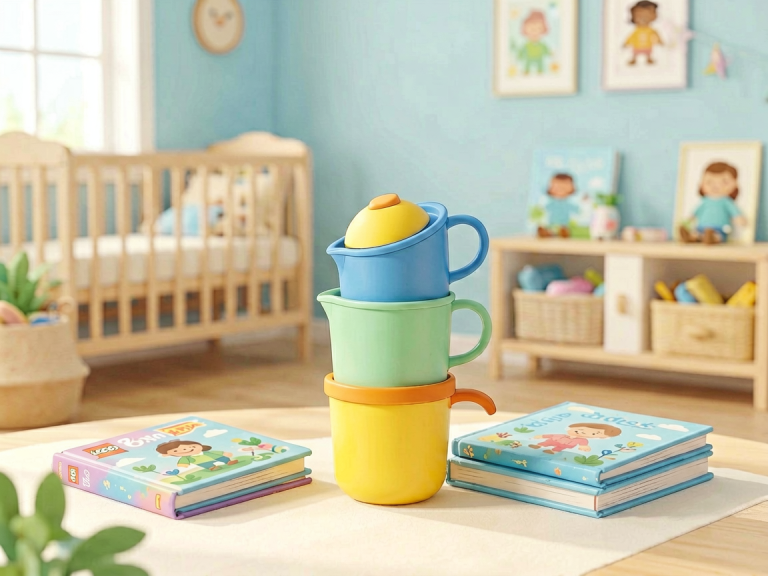
If you feel the pressure to use educational tablets, remind yourself that the best "brain games" are peekaboo, pat-a-cake, and rolling a ball back and forth. The best "literacy app" is a picture book read in a warm, lap-nestled position. The best "math tool" is stacking cups and counting toes. These may not have a backlit screen, but they have something far more powerful: the touch of a parent, the sound of a voice, and the shared spark of curiosity. In the end, the safest educational tablet for a baby is not a tablet at all—it is the world, experienced together with someone who loves them. And that is a lesson no app can teach.