Choosing Toys for Two-Year-Olds: A Guide to Playful Emotional Learning
At age two, children are not just walking and talking—they are feeling deeply, often without the words to explain what is happening inside. A two-year-old may laugh with joy at a picture book, then scream in frustration because a block tower fell over. This is the age when emotional life explodes into full color, and parents quickly realize that play is not simply about fun. It is how toddlers make sense of themselves and other people. Choosing toys for a two-year-old, therefore, is an emotional learning project as much as a shopping trip. The right toys can help a child name their feelings, practice empathy, calm down after a meltdown, and build confidence. The wrong toys can lead to frustration, overstimulation, and missed opportunities for connection. This article explores how to choose toys for two-year-olds with emotional learning in mind, offering practical principles and concrete categories that support a child’s growing heart and mind.
Why Emotional Learning Matters at Two
The “terrible twos” are often misunderstood. A two-year-old is not trying to be difficult; they are trying to become independent. They want to choose, to control, to do things themselves, but their language and motor skills cannot always keep up with their desires. This mismatch creates frustration, which often shows up as tantrums, hitting, or crying. This is exactly why emotional learning matters at this age. A two-year-old needs to discover that feelings are normal, that they can be expressed safely, and that adults will help them cope rather than punish them for feeling.
Emotional learning includes several core skills: recognizing one’s own feelings, expressing them in acceptable ways, understanding other people’s emotions, and recovering from distress. Toys can act as safe playgrounds for all of these skills. When a toddler feeds a stuffed bear because the bear looks sad, they are practicing empathy. When they knock over an instrument to make a loud crash, they are releasing anger physically. When they build a tower again after it falls, they are exercising resilience. These ordinary moments of play are emotional education in action.
What to Look for in Emotion-Friendly Toys
When choosing toys for a two-year-old, caregivers should look beyond bright colors and age labels. The best emotional-learning toys share a few important qualities.
First, toys should be safe and durable. A two-year-old explores by putting things in their mouths, throwing, and banging. Avoid small parts, sharp edges, and brittle plastic. Choose toys that can survive being flung across the room, because a child who feels frustrated may test limits by tossing a toy roughly. If the toy breaks easily, both child and parent feel more stressed.
Second, toys should be open-ended. Open-ended toys can be used in many different ways. Blocks can be a mountain, a phone, a cake, or a house. A simple scarf can become a blanket, a cape, or a pretend river. Open-ended toys encourage imagination and emotional expression because the child controls the story. In contrast, a battery-powered toy that only makes one specific sound often leaves no room for feelings to be projected onto it.
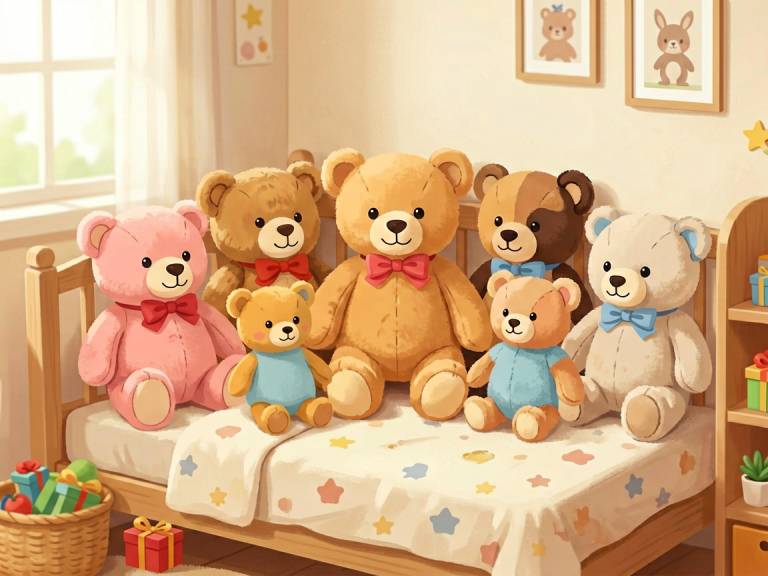
Third, toys should have expressive faces or relatable characters. Dolls and stuffed animals with simple, kind faces allow a child to “read” emotions. A teddy bear with sad eyes can invite the child to comfort it. A doll with a smiling mouth can invite a hug. These characters become friends, confidants, and mirrors for the child’s own emotional state.
Fourth, toys should provide sensory feedback without becoming overstimulating. Soft blankets, squishy balls, textured blocks, and gentle musical instruments help children regulate their bodies. But flashing lights, loud electronic noises, and rapid animations can overwhelm a two-year-old’s immature nervous system. When a child is overstimulated, emotional learning shuts down. Calmer toys allow calmer brains.
Top Toy Types That Nurture Emotional Growth
There is no single perfect toy, but certain categories are especially powerful for emotional development at age two.
Dolls, Stuffed Animals, and Soft Characters
A baby doll is one of the most emotionally rich toys a two-year-old can own. Toddlers are naturally drawn to caring for others because they themselves want to be cared for. By feeding a doll, wrapping it in a blanket, or giving it a kiss, a child practices empathy and caregiving. A stuffed animal can also receive all the feelings a child cannot say. If a child is angry, they might push the bear away; if they are sad, they might hug it tightly. Parents can join in by asking, “How does Teddy feel?” and then giving the bear a voice: “Teddy feels sad because he was left alone. Can you hug him?” This simple play helps children recognize emotions in others and link them to actions.
Puppets and Masks
Puppets are amazing emotional tools because they allow a child to distance themselves from difficult feelings. A two-year-old who refuses to talk about being scared of the dark may readily tell a puppet, “Dino is scared.” Puppets can also model positive behavior: the puppet can say, “I am frustrated. I need a deep breath,” while the child watches. This is how toddlers learn emotional scripts—they see a feeling, hear it named, and observe a calming strategy. Using a puppet made from a plain sock is enough; the child’s imagination does the rest.
Books About Feelings
Books are toys too, especially board books that can be handled and chewed. Look for books with clear pictures of faces showing happiness, sadness, fear, anger, and surprise. Read slowly and label the emotions: “Look, the baby is crying. He feels sad.” Ask simple questions: “Show me your happy face.” At two, children may not answer, but they are absorbing the vocabulary. Over time, being able to say “mad” instead of hitting is a direct result of this kind of reading-based emotional coaching.
Blocks, Nesting Cups, and Loose Parts
Construction toys are not just for fine motor skills; they are crucial for emotional resilience. When a tower falls, the child experiences a small loss. If a caring adult says, “Oh no, it fell. You look frustrated. Let’s try again together,” the child learns that failure is survivable and that adults are safe partners in repair. Nesting cups offer a similar lesson: the big one may not fit inside the small one, and the child must cope with the impossibility. This teaches an early form of frustration tolerance, which is a foundation of emotional health.
Art and Messy Play Supplies
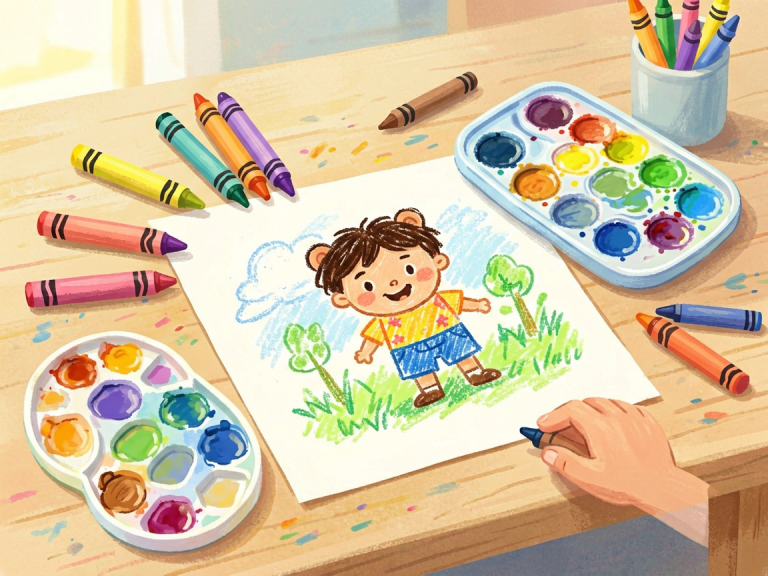
Crayons, finger paints, play dough, and water mats allow feelings to flow outward through the hands. A two-year-old does not need to make a recognizable picture; the joy is in the movement, the texture, and the satisfaction of making a mark. When children pound and flatten play dough, they are releasing stress. When they smear paint, they are expressing happiness or anger without words. Always frame art as process, not product. Never say, “What is it?” Instead say, “Tell me about your painting.” This keeps the emotional space open.
Simple Instruments and Noise Makers
Drums, shakers, bells, and tambourines give a toddler permission to be loud. Loudness can be a healthy outlet for strong emotions. A child who is feeling anxious may be trying to release tension. A child who is happy wants to share their energy. Music also helps children notice rhythms and moods. A slow song can calm, while a fast song can help burn off excess energy. Just choose instruments that are made for little hands and avoid anything that plays loud electronic music automatically; the child should be the one making the sound, not the toy.
Pretend Play Sets
Toy kitchens, doctor kits, tool benches, and shopping carts let children replay social situations that stir emotions. When a two-year-old puts a stuffed dog in a toy ambulance, they are exploring worry and rescue. When they cook a pretend meal and feed it to you, they are expressing love and generosity. These play sets need not be realistic or expensive. Empty boxes, old hats, plastic plates, and a towel can become a complete world. In this world, the child can be in control—a powerful emotional antidote to being small and powerless in real life.
The Role of Parental Involvement
The toy itself does not teach emotional skills; the caregiver does. A pile of beautiful wooden toys will do little if no adult engages with the child during play. On the other hand, even a cardboard box can become a profound emotional experience if a parent sits on the floor and follows the child’s lead.
When playing together, make it a habit to narrate feelings. If the child hugs a doll, say, “You are giving love to baby.” If they throw a block, say, “You seem angry. Can you show me with your face what mad looks like?” Naming feelings in real time is like giving a child a map of their inner landscape. Also, allow the child to lead. Too many questions—“Why did you do that?” “Are you happy?”—can feel overwhelming. Simple observant language is better: “You chose the red car. You are driving it fast.” This makes the child feel understood.
Another important role is to help children with the “repair” part of play. When a child breaks a toy or knocks something down, instead of scolding, model a calm response. Say, “Oh, let’s fix it together. I am here.” This teaches that relationships survive mistakes and that strong feelings can be soothed. The parent’s calm presence is the most valuable emotional learning tool in the room.
What to Avoid When Choosing Toys
Just as some toys encourage emotional growth, others can undermine it. Avoid toys that are too advanced for a two-year-old’s developmental stage. A toy with too many tiny pieces or complicated instructions will cause constant frustration. Avoid highly stimulating electronic gadgets that flash, shout, and play random music. These toys tend to make children passive. The child does not create; they watch. They do not express feelings; they only react. Research suggests that such toys reduce the quality and quantity of communication between parent and child, and that communication is essential for emotional learning.
Also avoid an overwhelming number of toys. When a playroom is overflowing, a two-year-old can feel overstimulated and unable to focus. A child cannot develop a deep relationship with a toy if there is always another one to distract them. Instead, rotate toys. Put away most of them and keep just a few accessible. Every few weeks, swap in “new” toys from the closet. This keeps interest fresh and encourages deep, imaginative play.
Finally, be cautious with toys that reinforce rigid gender stereotypes. A boy is not harmed by playing with dolls; in fact, playing with dolls may make him better at empathy. A girl is not harmed by playing with trucks; she may be exploring power and movement. Emotional learning includes understanding that all humans have feelings, regardless of gender. Restricting toys based on gender sends an early message that some feelings are only for some people, which is not true.
A Practical Checklist for Parents and Gift-Givers
When you are standing in a toy store or scrolling online, ask yourself these simple questions: Is this toy safe and washable? Can my child control it, rather than it controlling them? Does it invite imagination and storytelling? Will it allow my child to express strong feelings in a safe way? Can it be used together with me or other children? Does it have a face or character that can be hugged, comforted, or given a voice? If you answered yes to most of these, the toy is likely to support emotional learning.
Remember that the most emotionally intelligent toy does not need to be expensive. A homemade play dough, a collection of safe kitchen utensils, a few smooth stones, and a hand-sewn doll can outperform a fancy tablet. The best toy honors the child’s inner world. It gives them something to love, something to control, something to break and fix, and someone to pretend with. These experiences become the emotional memories that help a two-year-old grow into a five-year-old who can say, “I feel frustrated,” instead of throwing a block.
Final Thoughts
Choosing toys for two-year-olds is not about finding the latest educational trend. It is about creating an environment where feelings are welcome, expressible, and manageable. A two-year-old is learning how to be human, and play is their classroom. Dolls teach empathy. Blocks teach patience. Art teaches self-expression. Drums teach release. Books teach vocabulary for the heart. And every toy becomes much more powerful when a caring adult joins the play, names the feelings, and offers comfort.
The next time you select a gift for a two-year-old, look beyond the bright packaging. Imagine the toy in the hands of a frustrated, joyful, curious, and sometimes tearful little person. Choose something that can be hugged, knocked down and rebuilt, used in a hundred imaginary ways, and shared with a beloved caregiver. In that simple act of choosing, you are not just giving a toy. You are giving the child the tools to know themselves and to care for others—one of the most valuable gifts a human being can ever receive.