The Ultimate Guide: How to Choose LEGO Style Bricks for 9-Year-Olds
Introduction
At age nine, children stand at a fascinating crossroads of cognitive development. They have outgrown the simple, chunky Duplo blocks of toddlerhood, yet they are not quite ready for the intricate Technic sets that demand patience and mechanical understanding far beyond their years. Nine-year-olds possess improved fine motor skills, a growing attention span, and a thirst for creative problem-solving. This is the golden age for LEGO style bricks—the perfect medium to channel their imagination into tangible, rewarding structures. But with thousands of sets flooding the market, how do you pick the right ones? The wrong choice can lead to frustration, boredom, or a pile of forgotten pieces. This guide will walk you through every critical factor, from developmental suitability to budget considerations, ensuring that your gift not only entertains but also nurtures your child’s growth. Choosing LEGO style bricks for a 9-year-old is not just about buying a box of plastic; it is about unlocking a world of learning, confidence, and endless possibilities. Let’s dive in.
1. Understanding the 9-Year-Old Mindset: Why LEGO Bricks Matter
Before you browse store shelves, take a moment to appreciate what a nine-year-old brain craves. At this age, children are transitioning from concrete thinking to early abstract reasoning. They love following instructions to achieve a specific outcome, but they also enjoy modifying those creations or building entirely original designs from scratch. LEGO style bricks serve as a physical language for this duality. They offer structured challenges—like building a detailed castle or a working crane—while leaving room for improvisation. Psychologists often note that construction play at this stage strengthens spatial awareness, logical sequencing, and perseverance. A child who struggles to complete a complex set learns to break down problems into smaller steps, a skill that directly translates to academic success. Furthermore, nine-year-olds are highly social; they want to share their creations, compare designs, and sometimes build collaboratively. Therefore, the best LEGO style bricks for this age group are those that strike a balance between guided instruction and open-ended creativity. Avoid sets that are too simplistic (they will be dismissed as babyish) and those that require adult-level dexterity or abstract engineering concepts (which may lead to meltdowns). The sweet spot lies in sets with 300 to 800 pieces, featuring moderate mechanistic elements like gears or hinges, and themes that tap into their current obsessions—be it space exploration, medieval knights, or urban city life.
2. Key Criteria for Selecting the Right Set
2.1 Age Recommendation and Piece Count
Every LEGO box clearly states an age recommendation, but treat it as a guideline rather than a hard rule. For nine-year-olds, the 7–12 or 8–14 range is ideal. However, pay close attention to piece count. A set with 150 pieces might be too quick to build, offering little sense of accomplishment, while a 1,500-piece set could overwhelm even a dedicated builder. Aim for the “Goldilocks zone”: 300 to 700 pieces for a challenging yet achievable weekend project. For example, the LEGO City series often includes police stations or fire trucks with around 500 pieces—perfect for independent play. The Creator 3-in-1 sets also shine here, as they provide instructions for three different models using the same bricks, tripling the play value without requiring more pieces.
2.2 Theme and Interest Alignment
Nine-year-olds have strong, rapidly evolving preferences. A child obsessed with dinosaurs will likely ignore a space shuttle, no matter how well-reviewed. The beauty of LEGO style bricks is their thematic diversity. Popular categories for this age include:
- Action and Adventure: Ninjago, Harry Potter, and Marvel sets offer minifigures, weapons, and dramatic play scenarios.
- Vehicles and Engineering: City, Speed Champions, and Technic (entry-level) allow building cars, planes, and moving mechanisms.
- Fantasy and Medieval: The Creator Castle or Classic Knights themes encourage storytelling and fortress design.
- Science and Nature: Ideas sets like the Tree House or NASA Apollo Saturn V (though the latter might be slightly advanced) spark curiosity about the real world.
Observe your child’s current play patterns. Do they love drawing dragons? Look for fantasy sets. Do they spend hours watching construction vehicles? Grab a City bulldozer set. Matching the theme to their passion ensures they will invest time and emotional energy into building, rather than letting the bricks gather dust.
2.3 Complexity of Build: Step-by-Step vs. Open-Ended
LEGO instructions are famously clear, but the complexity of assembly varies. For a nine-year-old, the optimal set contains a mix of repetitive steps (building walls, stacking bricks) and unique challenges (assembling a rotating turret or a hinged door). Avoid sets that rely heavily on tiny, fragile pieces (e.g., some LEGO Architecture sets) which can break easily and cause frustration. Instead, look for sets labeled “Build & Play” or “3-in-1” that emphasize sturdy structures. Additionally, consider the presence of specialized pieces: gears, axles, and plates with holes. These introduce basic mechanical concepts, which are excellent for a nine-year-old’s developing logical thinking. For instance, the LEGO City “Stunt Show Truck” set uses a simple gear system that makes the truck’s ramp lift—a small but satisfying cause-and-effect lesson.
2.4 Educational Value: STEM and Beyond
LEGO style bricks are stealthy educators. They teach physics (how weight distributes), math (counting studs and symmetry), and design thinking (what happens if I remove this support?). However, for a nine-year-old, the educational payoff is highest when the set explicitly introduces a new concept. Look for sets that include moving parts, such as the LEGO Creator “Ferris Wheel” or the Technic “Race Car” (even the small ones). Many compatible brick brands also offer educational lines, like “STEM Explorers” sets that include pulleys or levers. Beyond STEM, there is social-emotional learning. A child who builds a detailed pirate ship and then shows it off gains confidence. A child who accidentally knocks over a half-finished tower learns resilience. When choosing LEGO style bricks, consider how the set encourages storytelling or role-play—minifigures with diverse roles, accessories that spark narratives. This combination of STEM and soft skills makes construction play invaluable.
3. Navigating Different Brands: Official LEGO vs. Compatible Bricks
3.1 The Case for Official LEGO
The original LEGO brand offers unmatched quality. The bricks clutch perfectly, color consistency is superb, and the instructions are meticulously tested. For a nine-year-old, this reliability matters: a misfitting brick can ruin the building experience. Official LEGO also provides extensive online support, replacement parts, and a thriving community of builders. Furthermore, many themed sets (like Star Wars or Disney) are only available from LEGO, capitalizing on their licensing agreements. If your child is deeply invested in a specific franchise, official LEGO is often the only path. However, the cost is significantly higher—sometimes $0.10 to $0.15 per piece—which can strain a budget, especially if you intend to buy multiple sets.
3.2 The Appeal of Compatible (LEGO-Style) Bricks
Third-party brick brands, such as Cobi, Enlighten, or Sluban, produce compatible bricks that mimic LEGO dimensions. Their advantages include lower price points (often half the cost) and unusual themes (military vehicles, historical landmarks, even licensed video game characters like Minecraft variants). For a nine-year-old who is more interested in quantity and creative mixing than perfect brick quality, these are excellent options. However, careful selection is essential. Some cheap brands use inconsistent plastic that either sticks too tightly or slides apart. Always read reviews focusing on clutch power. Also, many compatible sets lack numbered bags or clear instructions, which can be daunting for a child. If you choose this route, consider sets with fewer than 500 pieces to minimize confusion. An excellent middle ground is to mix official LEGO baseplates and minifigures with compatible bricks for scenery, allowing the child to expand their world without breaking the bank.
4. Practical Considerations: Storage, Expansion, and Longevity
4.1 Sorting and Storage Solutions
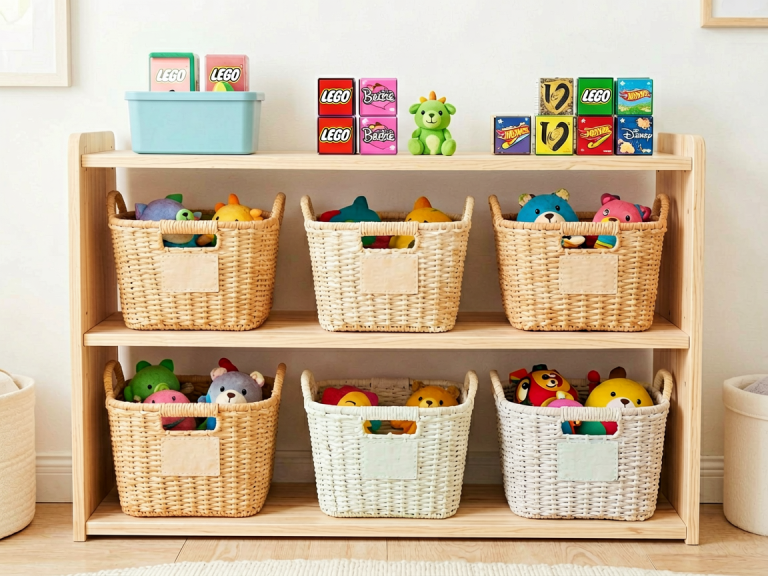
Once you start accumulating LEGO style bricks, chaos threatens. A nine-year-old can easily lose a rare piece under the couch. Invest in a clear storage system: small plastic bins with lids, or a divided organizer tray. Encourage the child to sort by color or type (plates, bricks, tiles, special pieces). This habit not only keeps the play area tidy but also trains categorization skills—a subtle cognitive boost. For larger collections, label boxes by set name or theme. Remember that building a set is just half the fun; rebuilding it months later requires keeping the instruction booklet and all pieces intact.
4.2 Building for Long-Term Play
Consider sets that offer “rebuildability.” The LEGO Creator 3-in-1 series is a champion here: a single box can transform into a robot, a jet, and a boat, each requiring a different construction sequence. Similarly, the Classic Brick Box (or any large tub of basic bricks) empowers the child to ignore instructions entirely and build whatever their imagination dictates. For a nine-year-old, owning a mix of themed sets and a stockpile of basic bricks is ideal. The themed sets provide guided achievement, while the bricks allow freeform creativity. Also, look for sets with modular designs—like the LEGO City street system—that can be combined with other sets to form a sprawling metropolis. This encourages long-term engagement and visionary thinking.
4.3 Budgeting Without Sacrificing Quality
The cost of LEGO style bricks can escalate quickly. A single large set may cost $100 or more. To maximize value, consider the “per piece” price. Budget-friendly options include LEGO Classic boxes (often $0.05–$0.08 per piece) and the aforementioned compatible brands. Another strategy: buy used sets from online marketplaces. Many families sell complete collections after their children outgrow them. For a nine-year-old who is not particular about “new” stickers, this can yield hundreds of dollars in savings. Just ensure all pieces are present by checking the set inventory list. Alternatively, set up a “brick subscription” where the child earns a new set after completing a certain number of reading minutes or household chores—this teaches delayed gratification and makes the building experience more meaningful.
5. Red Flags: What to Avoid When Choosing LEGO Style Bricks
5.1 Overly Complex Instructions
Some sets, especially in the Technic and Icons (formerly Creator Expert) lines, are designed for adults. They include hundreds of tiny pins, lengthy builds spanning multiple days, and abstract steps that require reading ahead. A nine-year-old left alone with such a set may become overwhelmed and give up. Always check the instruction complexity online. Look for sets that use numbered bags and clearly labeled steps. If the child is a first-time builder, start with sets that have fewer than 500 pieces and a single manual.
5.2 Excessive Repetition
Avoid sets that require building dozens of identical sections, like repetitive wall segments or endless train tracks. While some repetition is meditative, too much bores a nine-year-old who craves novelty. Instead, choose sets with a variety of sub-builds: a control tower, a runway, and a plane in one box. This keeps the mind engaged.
5.3 Tiny or Sharp Pieces
Some compatible brick brands produce pieces with rough edges or flash (excess plastic). These can cut small fingers or fail to connect properly. Always feel the bricks before buying, or rely on trusted reviewers. Similarly, sets with many 1×1 plates or tiles (tiny) are easily lost and frustrating to sort. For a nine-year-old, prioritize pieces that are at least 2×2 in size for the bulk of the structure.
Conclusion: Empowering the Builder Within
Choosing LEGO style bricks for a nine-year-old is an act of faith in their potential. The right set can ignite a passion for engineering, storytelling, or art—or all three. It can turn a quiet afternoon into a masterclass in patience and problem-solving. By considering the child’s developmental level, interests, and need for both structure and freedom, you can select a brick set that grows with them, not just one that occupies an hour. Whether you opt for an official LEGO castle with drawbridges and secret passages, or a budget-friendly space rocket from a compatible brand, the goal remains the same: to place a pile of plastic possibilities in front of a young mind and watch as they build something remarkable. Remember, the best LEGO style bricks are those that inspire the builder to look at the finished model and say, “I made this.” Then, inevitably, they will start pulling pieces off to make it even better. That is the magic of nine-year-old creativity—and the perfect reason to invest in these humble, versatile blocks. Happy building!