Beyond the Cute Phase: How to Avoid Choosing Toys Babies Outgrow Too Fast
—
Introduction: The Hidden Cost of a Baby’s Smile
Every parent knows the feeling. You walk into a brightly colored toy store, your baby cooing in the stroller, and your eyes land on that plush musical elephant with the twinkling lights. It is adorable. The baby reaches for it. You buy it. Three weeks later, the elephant sits untouched in a corner, and your child prefers the cardboard box it came in. This is the universal experience of choosing toys that babies outgrow fast — a phenomenon that is both emotionally and financially draining.
For infants and very young children, development happens at lightning speed. A toy that is perfect for a 3‑month‑old may be completely irrelevant by 6 months. Yet the market is flooded with single‑purpose, age‑specific gadgets designed to capture a fleeting moment of a baby’s attention. Understanding why babies outgrow toys so quickly, and learning how to select more enduring alternatives, can save parents money, reduce clutter, and — most importantly — support genuine developmental growth.
This article explores the reasons behind rapid outgrowing, identifies common toy categories that fail the test of time, and provides practical strategies for choosing toys that remain engaging well beyond the first year.
—
The Developmental Time Warp: Why Babies Outgrow Toys So Fast
1. Sensory and Motor Milestones Evolve Weekly
A newborn’s world is about contrast, sound, and texture. A black‑and‑white mobile works wonders at one month, but by three months the baby craves objects she can grasp and mouth. By six months, she wants to transfer items from hand to hand, and by nine months, everything must be banged, dropped, or thrown. Each new milestone renders the previous month’s favorite toy obsolete. This rapid progression means that any toy designed for a single, narrow skill set will be outgrown within weeks.
2. Cognitive Curiosity Outpaces Toy Complexity
Infants are natural scientists. They test cause and effect: “If I shake this rattle, it makes noise. If I drop it, it falls. What happens if I put it in my mouth?” A simple rattle satisfies this curiosity for about two weeks. Then the baby needs something that changes — maybe a ball that wobbles when pushed, or a stack of cups that can be knocked over. Toys that offer only one interaction (press a button, hear a sound) quickly become boring because the brain craves novelty. Babies outgrow toys not because they have lost interest in play, but because the toy has stopped challenging them.
3. Physical Growth Changes Interaction Needs
A small, lightweight teether that fits perfectly in a 4‑month‑old’s fist will be too small for a 10‑month‑old who wants to hold two objects at once. A playmat with dangling toys that a 2‑month‑old can barely see becomes a frustration once the baby can roll over and reach for the attachments — but by then, the baby may prefer to crawl off the mat entirely. Manufacturers create products for precise ages, but real life does not respect those labels. Physical size, grip strength, and mobility change so quickly that a “0–6 month” toy often feels mismatched by the fourth month.
—
The Culprits: Toys That Are Almost Guaranteed to Be Outgrown Fast
1. Single‑Function Electronic Gadgets
Battery‑operated toys that light up, play tunes, and move on their own are notorious for short lifespans. A baby may stare at a dancing robot for a few days, but once the novelty of the flashing lights fades, she realizes she cannot manipulate the toy in any meaningful way. She cannot pick it up, shake it, or chew it. These toys become passive entertainment, not active play. Children quickly lose interest because they have no role in the action — the toy does everything for them.
2. Overly Themed Playsets for Babies
Plastic farm sets, train tables, and miniature kitchen sets are often marketed to babies as young as six months. Yet a six‑month‑old cannot pretend to cook or push a train. These sets are designed for toddlers, and when given to babies, they are used as clumsy teethers or thrown across the room. By the time the child is developmentally ready for imaginative play (around 18–24 months), the pieces are often lost, broken, or forgotten. The gap between “safe for infants” and “interesting for toddlers” is simply too wide.
3. Fabric Books with Too Few Elements
Soft cloth books are a staple for newborns. They are safe, washable, and easy to grasp. However, many cloth books contain only two or three high‑contrast images with minimal texture variation. A four‑month‑old will mouth them, but by seven months, the baby craves flaps to lift, crinkle pages, and peek‑a‑boo surprises. A simple cloth book that cannot evolve — that does not include zippers, mirrors, or different fasteners — becomes a rag rather than a learning tool.
4. Crib Mobiles and Soothers
A musical mobile that plays lullabies and rotates soft animals is enchanting for a newborn. But once a baby can sit up (around 5–6 months), the mobile becomes a safety hazard — the baby can grab the dangling pieces. Moreover, the cognitive leap from “watch” to “interact” means the child no longer wants to lie still and stare; she wants to touch and explore. Mobiles are perhaps the fastest‑outgrown category of baby toys, often rendered useless by the fourth month.
—
Choosing Toys That Grow with Your Baby: A Strategic Approach
1. Prioritize Open‑Ended Toys
Open‑ended toys have no single intended outcome. They can be used in multiple ways and at different developmental stages. Examples include:
- Stacking cups or nesting bowls: A 4‑month‑old will mouth them. A 6‑month‑old will bang them together. A 9‑month‑old will stack them. A 12‑month‑old will fill them with blocks or water. These cups last for years.
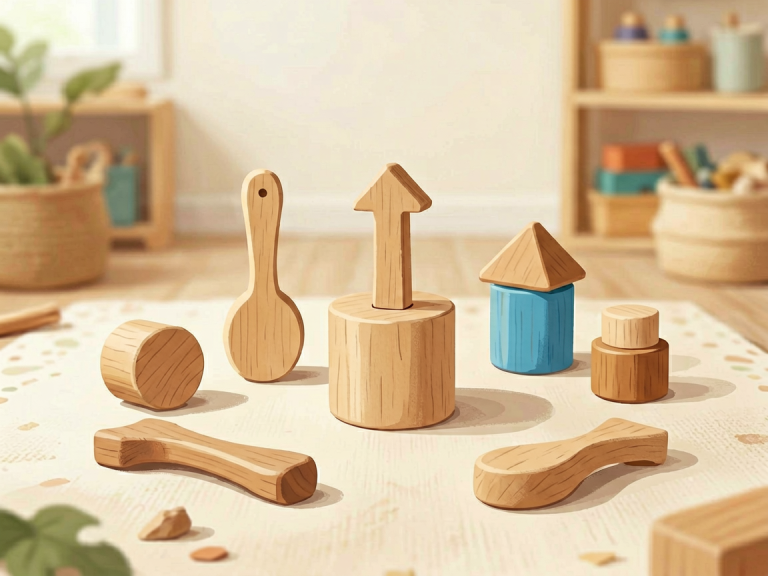
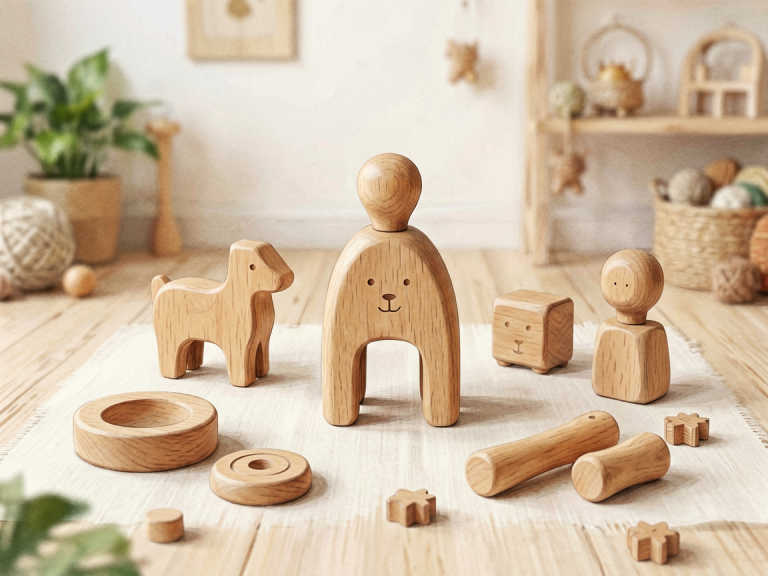
- Wooden blocks: Simple, unpainted blocks are safe for chewing, then for stacking, then for building towers, and later for pretend play. They never go out of style.
- Balls of different sizes and textures: A baby can hold a soft fabric ball at 3 months, roll a textured ball at 6 months, and chase a larger bouncy ball at 12 months. Balls are perhaps the most timeless toy of all.
Open‑ended toys delay the outgrowing problem because the baby decides how to use them, not the manufacturer.
2. Select Toys That Challenge Multiple Senses
Instead of a single‑purpose rattle, choose a multi‑sensory toy that offers sound, texture, weight, and movement. For example, a simple wooden ring with a bell attached can be grasped, shaken, chewed, and rolled. A silicone teether with different nubs and ridges can be explored with mouth and hands. The more ways a baby can engage with a toy, the longer it stays interesting. Look for toys that encourage cause and effect without being electric: a simple push‑and‑go car that moves when you push it forward teaches physics and stays relevant as the child learns to crawl after it.
3. Embrace the Power of Household Objects
No toy manufacturer can out‑engineer the appeal of a wooden spoon and a metal bowl. Babies are drawn to real‑world items because they mimic adult behavior. A set of plastic measuring cups, a wooden spatula, a clean shoebox with a hole cut in the top — these “toys” cost nothing and are rarely outgrown. A cardboard box can be a hiding place, a drum, a car, or a fort over many months. Parents should resist the urge to buy a specialized version of something they already have at home. The instant a baby outgrows a homemade toy, simply replace it with another household item — no waste, no expense.
4. Rotate Toys Strategically
Even the best open‑ended toy loses appeal if it is always available. Babies thrive on novelty, but novelty does not require new purchases. By dividing toys into two or three bins and rotating them every week, you can keep a 6‑month‑old engaged with the same “new” set of blocks and cups that she hasn’t seen for seven days. Rotation prevents the perception that a toy is “outgrown” — it simply looks fresh again. This technique also helps parents identify which toys truly hold long‑term interest and which can be donated or passed on.
—
Practical Tips for Parents: Making Smarter Buying Decisions
- Buy secondhand or borrow. Babies outgrow toys so fast that thrift stores and buy‑nothing groups are filled with nearly‑new playthings. Let other families absorb the initial cost; you can pass them on again later.
- Avoid “age‑range” labels as gospel. A toy labeled “6–12 months” may be perfect for a 4‑month‑old who is advanced in fine motor skills, or too simple for a 10‑month‑old who wants more challenge. Watch your baby, not the box.
- Invest in quality over quantity. A single, well‑made wooden toy that costs $20 will be used for many months, while five cheap plastic toys that cost $5 each will be discarded after two weeks apiece. The long‑term savings are substantial.
- Think about the next stage. When you buy a toy for a 6‑month‑old, ask yourself: “Will this still be safe and interesting when she starts to crawl? When she starts to walk?” If the answer is no, reconsider.
- Limit electronic toys to one or two. A musical instrument that your baby can play (like a xylophone) is better than a toy that plays music for her. Choose interactive over passive.
—
Conclusion: Less Stuff, More Meaningful Play
The problem of choosing toys that babies outgrow fast is not simply a matter of wasted money — it is a symptom of a consumer culture that sells us the illusion that babies need more and more objects to develop. In reality, a baby’s brain is wired to learn from everything, especially from loving interaction with caregivers. A rattle that is replaced after two weeks is not a failure; it is a sign that the baby has moved on to a new skill. The true goal is not to find a toy that never gets outgrown, but to select playthings that evolve alongside the child, that encourage active exploration, and that ultimately become treasured possessions rather than forgotten clutter.
By choosing open‑ended materials, embracing household items, rotating toys, and resisting the allure of single‑purpose gadgets, parents can create a play environment that supports rapid development without emptying the wallet or the nursery. The baby will still outgrow toys — that is natural. But the toys will be outgrown with love, use, and purpose, not with a sigh and a trip to the donation bin.
Long after the flashy plastic elephant is forgotten, a simple set of stacking cups will still be there, ready for a new game, a new stage, and a new smile.