How to Choose Building Blocks for 10-Year-Olds: A Comprehensive Guide for Parents and Educators
Building blocks are far more than simple toys. For a 10-year-old, they become tools for engineering, storytelling, mathematical reasoning, and even emotional regulation. By age ten, children have typically outgrown the chunky, oversized blocks of toddlerhood and are ready for kits that challenge their fine motor skills, spatial intelligence, and creativity. However, the market is flooded with options—from classic wooden sets to high-tech magnetic tiles and licensed LEGO themes. Choosing the right building blocks for a 10-year-old requires a careful balance between fun, educational value, complexity, and safety. This guide breaks down the key factors every parent, teacher, or gift-giver should consider.
Why Age 10 Is a Critical Milestone for Building Blocks
At ten, children are in a transitional phase of cognitive development. They can follow multi-step instructions, plan ahead, and think abstractly. Piaget’s theory of cognitive development places them at the “concrete operational” stage, where logical reasoning about physical objects becomes strong. They are also developing persistence—they can spend an hour or more on a single project without losing interest, provided the challenge is well-matched to their skills.
Building blocks at this age should therefore:
- Encourage problem-solving through intricate designs or mechanical functions.
- Support collaborative play (many 10-year-olds enjoy building with friends or siblings).
- Allow for open-ended creativity alongside structured models.
- Integrate STEM concepts such as gears, pulleys, or basic physics.
Avoid blocks that are too simplistic (e.g., large Duplo bricks) or too advanced (e.g., complex architectural kits with hundreds of tiny pieces that require adult-level patience). The sweet spot lies in kits designed for ages 8–14, where instructions are clear but the results are impressive.
Key Factors to Consider When Choosing Building Blocks
1. Type of Building Block Material
The material profoundly affects the building experience, durability, and safety.
- Plastic (ABS) bricks – Most commonly found in LEGO and compatible brands (Mega Construx, Cobi). They are durable, easy to clean, and allow for precise interlocking. For 10-year-olds, plastic bricks offer the widest range of themed sets (space, castles, vehicles) and the ability to create moving parts via axles, gears, and motors. The downside is that small pieces can be lost easily, and some cheaper off-brands may have poor clutch power (bricks don’t stay together tightly).
- Wooden blocks – Classic, timeless, and often more environmentally friendly. However, for a 10-year-old, standard wooden unit blocks (like those from Melissa & Doug) may feel too basic. Instead, look for wooden construction sets with interlocking notches, wheels, and connectors (e.g., Kapla planks or Tegu magnetic wood blocks). These encourage balance, symmetry, and architectural thinking without instructions.
- Magnetic blocks – Such as Magna-Tiles or PicassoTiles. While often marketed to younger children, larger and more complex magnetic sets (with ramps, balls, and translucent shapes) can still engage 10-year-olds. Magnetic tiles are excellent for teaching geometry, symmetry, and basic physics (magnetism, gravity). They are also quick to assemble, which appeals to children who become frustrated by traditional brick-building.
- Construction systems with moving parts – Examples include K’Nex, Meccano, or Erector sets. These use rods, connectors, and sometimes screws to build functional machines (cranes, cars, roller coasters). They demand higher fine motor skills and patience. For a 10-year-old who loves engineering or mechanics, these are ideal. However, they require more adult supervision initially because some parts are metal or have sharp edges.
2. Complexity and Piece Count
A 100-piece set might be perfect for a 6-year-old but will bore a 10-year-old in minutes. On the other hand, a 2000-piece set with tiny specialty pieces could overwhelm a child who is not yet a dedicated builder.
General guidelines for piece count:
- Beginner 10-year-old (little prior block experience): 300–600 pieces
- Intermediate builder (enjoys following instructions but may need help): 600–1200 pieces
- Advanced builder (can follow complex diagrams, builds for hours): 1200–2500+ pieces
Remember that piece count alone is not the sole measure of difficulty. A set with 500 pieces that includes many identical bricks (e.g., Classic LEGO boxes) is easier than a 500-piece set with highly specialized pieces (e.g., articulated joints, tiny tiles, stickers). Look for the recommended age on the box, but also consider your child’s temperament.
3. Themed vs. Open-Ended Sets
10-year-olds often develop strong interests in specific subjects—dinosaurs, space exploration, fantasy worlds, city planning, or robotics.
- Themed sets (e.g., LEGO Harry Potter, NASA Apollo rockets, Minecraft) provide immediate motivation. The child feels like they are building something meaningful from a beloved universe. These sets usually come with step-by-step instructions and produce a recognizable model. The downside: once built, the model may sit on a shelf and not be taken apart for creative rebuilding.
- Open-ended sets (e.g., LEGO Classic Creative Box, Magna-Tiles, wooden block collections) have no prescribed outcome. They encourage divergent thinking and repeated play. A 10-year-old can build a skyscraper today, a spaceship tomorrow, and a medieval castle next week. Open-ended sets are better for long-term engagement and developing creativity, but they require the child to supply their own inspiration.
A balanced approach: Buy one themed set (to build confidence and provide a satisfying project) and one open-ended set (for ongoing creative play). For example, a LEGO Technic car set (themed) plus a large container of assorted bricks (open-ended).
4. STEM and Educational Value
Many parents want building blocks that teach something beyond construction. For 10-year-olds, the best blocks integrate science, technology, engineering, and math in subtle or explicit ways.
- Gears and pulleys – Sets that include gear trains (e.g., LEGO Gear Bricks) teach mechanical advantage and rotational motion.
- Programmable blocks – LEGO Boost, LEGO Spike, or similar kits allow children to build robots and code simple programs using drag-and-drop interfaces. This is perfect for a 10-year-old interested in technology.
- Architecture and geometry – Blocks with unique shapes (arches, triangles, domes) teach structural principles. Kapla planks, for instance, require understanding of load distribution if you want to build tall towers.
- Math in disguise – Counting, symmetry, fractions (when using half-width bricks), and even basic algebra (figuring out which brick lengths fit together) happen naturally during building.
If your child shows a particular interest, choose a set that aligns with that discipline. For example, a future engineer might love a Meccano crane set, while a future artist might prefer colorful, symmetrical magnetic tiles.
5. Social and Collaborative Play
At age 10, many children enjoy building with friends or siblings. Consider whether the set is designed for multiple builders. Some kits come with two instruction booklets, allowing simultaneous building. Others are too small for two people to work comfortably.
Large building sets (like a LEGO Friends Heartlake City or a K’Nex roller coaster) can be split into sub-projects that different children work on. Alternatively, purchase two smaller complementary sets so children can build their own models and then combine them for interactive play (e.g., a race track and cars).
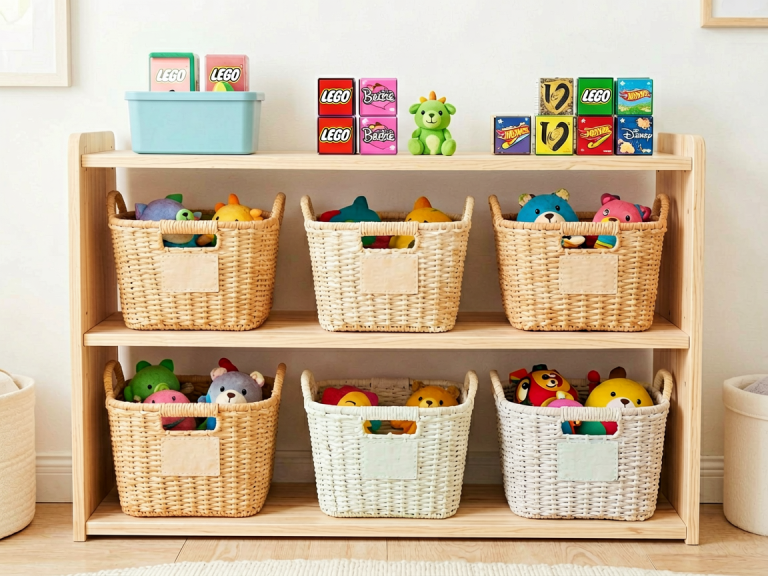
Also think about storage: a 10-year-old should be able to access the blocks independently. A clear, compartmentalized storage box makes cleanup and organization easier, which is important for children who want to keep sets intact.
6. Budget and Longevity
Building blocks can range from $10 for a small pouch of bricks to over $200 for massive, branded sets. Here’s how to make a smart investment:
- Value per play – A $30 set that is rebuilt 20 times offers better value than a $100 set that is built once and forgotten.
- Compatibility – If you already own LEGO, consider buying more LEGO or compatible brands (like Cobi or Sluban) so pieces can be mixed. Avoid incompatible systems that cannot be combined.
- Resale value – Brand-name sets, particularly limited editions, often retain value. However, for most families, the goal is not investment but enjoyment.
A practical tip: start with a medium-sized set (around $40–70) and observe how your child engages. If they lose interest quickly, the issue may be the type rather than the price. If they build obsessively, upgrade to a larger set.
Safety and Quality Considerations
Although 10-year-olds are less likely to put blocks in their mouths, safety remains important:
- Avoid sharp edges – Metal construction sets should be inspected for burrs. Some cheaper plastic sets have flash (rough edges) from molding.
- Non-toxic materials – Ensure paints and plastics are free from BPA, phthalates, and lead. Reputable brands meet ASTM and EN71 safety standards.
- Magnets – If using magnetic blocks, ensure magnets are securely encased (magnetic toys with loose magnets are dangerous if swallowed). Only buy from trusted manufacturers.
- Small parts – If there are younger siblings in the home, be aware that many building blocks for 10-year-olds contain tiny pieces (e.g., LEGO minifigure accessories, electronic components). Establish clear rules about keeping small parts away from toddlers.
Top Recommendations for 10-Year-Olds
Based on the criteria above, here are some specific suggestions across categories:
- Best for engineering-minded kids: LEGO Technic (e.g., 42122 Jeep Wrangler or 42141 McLaren Formula 1) – introduces gears, pistons, and suspension.
- Best for creative, open-ended play: LEGO Classic Medium Creative Brick Box (10696) plus a set of baseplates – endless possibilities.
- Best for group building: Magna-Tiles (100+ piece set) – quick to build, easy to share, and great for designing cities or castles together.
- Best for future coders: LEGO Boost Creative Toolbox (or its newer Spike Essential counterpart) – combines building with simple block-based coding.
- Best for architecture lovers: Kapla 200-piece wooden planks – requires no connectors, just balance and imagination. Teaches structural integrity.
- Best for fantasy/role-play: LEGO Creator 3-in-1 sets (e.g., 31120 Medieval Castle) – can be rebuilt into three different models, extending play life.
Conclusion: Let the Child Lead
Ultimately, the best building blocks for a 10-year-old are the ones they actually want to play with. Observe what captures their attention—do they stop to watch construction videos online? Do they design spaceships on paper? Do they take apart household gadgets? Use these clues to guide your purchase. Avoid forcing “educational” sets that feel like homework. Instead, frame the blocks as a tool for their own imagination.
Remember that building blocks are not just toys; they are laboratories for failure and success. A tower that collapses teaches more than a perfect model. Encourage your child to experiment, to deviate from instructions, and to combine different systems. With the right selection, you are giving a 10-year-old not just blocks, but a foundation for lifelong skills in creativity, logic, and perseverance.