Building Blocks for 9-Year-Olds: A Worthy Investment or a Passing Fad?
—
Introduction
Every parent or gift-giver has faced the same dilemma: standing in a toy aisle, staring at a wall of colorful boxes, and wondering whether the classic building set will actually engage a nine-year-old. At this age, children are no longer toddlers who simply stack bricks; they are on the cusp of pre-adolescence, with growing interests in video games, sports, and more complex hobbies. So, should you buy building blocks for a 9-year-old? The short answer is yes—but with nuance. The longer answer requires a thoughtful examination of developmental psychology, educational value, social dynamics, and practical realities. This article will guide you through the key considerations, supported by research and real-world insights, to help you make an informed decision.
—
I. Cognitive and Developmental Benefits That Go Beyond Fun
One of the strongest arguments for buying building blocks for a nine-year-old is their profound impact on cognitive development. At age nine, children are in what psychologist Jean Piaget called the “concrete operational stage.” They can think logically about concrete events, understand cause and effect, and grasp concepts like conservation and classification. Building blocks perfectly tap into these emerging abilities.
When a child constructs a tower, a bridge, or a vehicle, they are engaging in spatial reasoning—the ability to visualize and manipulate objects in three-dimensional space. Numerous studies have shown that spatial skills developed through block play predict later success in STEM fields such as engineering, architecture, and computer science. For a nine-year-old, the challenge is no longer just stacking (which they mastered years ago); it is about following complex instructions, creating symmetrical designs, or even improvising when a piece is missing. This requires executive function skills: planning, goal-setting, attention to detail, and self-correction. Unlike passive entertainment like watching videos, block play is an active, goal-oriented process that strengthens the prefrontal cortex.
Moreover, building blocks introduce intrinsic motivation. A child who spends an hour perfecting a model experiences the satisfaction of a self-set goal achieved. This is far more rewarding than external rewards like stickers or praise. The process also teaches frustration tolerance—when a structure collapses, the child must decide whether to give up or try a different approach. Such resilience is a life skill that no digital app can fully replicate.
—
II. Fostering Creativity, Problem-Solving, and Open-Ended Play
At nine, children are rapidly developing their imagination, but they also crave structure. Building blocks bridge these two worlds. Some sets come with detailed blueprints (e.g., a LEGO Technic car or a Creator castle), which teach following instructions and sequential thinking. Others, like basic wooden blocks or magnetic tiles, are completely open-ended. Both types have value.
Structured sets help children practice patience and precision. They learn that skipping a step leads to a wobbly result, a lesson applicable to coding, cooking, or any procedural task. Open-ended blocks, on the other hand, encourage divergent thinking—the ability to generate multiple solutions to a single problem. A nine-year-old might use the same set of blocks to build a house, a spaceship, or a dinosaur. This flexibility nurtures creative fluency, which psychologist Ellis Paul Torrance identified as a core component of creativity.
Furthermore, building blocks often spark interdisciplinary learning. A child trying to build a stable bridge must intuitively understand weight distribution and balance—a basic physics lesson. If the bridge fails, they may ask, “Why did it fall?” This leads to experimentation: adding supports, using heavier pieces at the base, or changing the span. Such “tinkering” is the foundation of the engineering design process: ask, imagine, plan, create, and improve. In an era where schools emphasize standardized tests, block play offers a rare opportunity for authentic, self-directed discovery.
—
III. Social and Emotional Growth Through Collaborative Play
While building blocks can be a solitary activity, they are also a powerful tool for social development. Nine-year-olds are increasingly interested in peer relationships, group dynamics, and shared experiences. Building together—whether with siblings, friends, or parents—teaches essential interpersonal skills.
When children build collaboratively, they must negotiate roles (Who will be the “architect”? Who will find the pieces?), communicate ideas (“No, the tower will be stronger if we put these larger blocks at the bottom”), and resolve conflicts (“I wanted to use that blue piece!”). These interactions are real-world practice for teamwork and emotional regulation. A child who successfully compromises learns that cooperation often leads to a better outcome than insisting on their own way.
Building blocks also offer a safe context for failure in front of peers. A structure that collapses during a group effort can be frustrating, but it is also a shared experience. The group can laugh, troubleshoot, and try again. This reduces the stigma of making mistakes and builds a growth mindset. For a nine-year-old who may already be self-conscious about performance in school or sports, block play provides a low-stakes environment where experimentation is the norm.
Additionally, parent-child block play can strengthen bonds. It offers a screen-free, uninterrupted time for conversation and collaboration. Parents can ask open-ended questions like, “What if we added a second floor?” or “How can we make this more stable?” This type of scaffolding—where adults gently guide without taking over—promotes both cognitive and emotional closeness. In a world of busy schedules, a box of blocks can be a portal to quality time.
—
IV. Practical Considerations: Age Appropriateness, Cost, and Safety
Despite the compelling benefits, a wise purchase requires practical evaluation. Not all building blocks are suitable for a nine-year-old. Sets designed for toddlers (large, chunky pieces) will be boring and offer no challenge. Conversely, some advanced LEGO sets with thousands of tiny pieces may overwhelm a child who lacks patience or fine motor control. The sweet spot lies in age-appropriate complexity.
Look for sets labeled for ages 8–12 or 9–14. LEGO Creator or LEGO Technic sets often have mechanisms like gears, pulleys, and axles, which appeal to a nine-year-old’s growing interest in how things work. For non-LEGO options, consider magnetic building tiles (e.g., Magna-Tiles or PicassoTiles) that allow for 3D geometric creations, or wooden unit blocks that encourage open-ended architectural design. Some brands, like K’NEX or Meccano, introduce simple engineering concepts through rods and connectors. The key is to match the set to the child’s current skills and interests—not to their age alone.
Cost is another factor. High-quality building blocks can be expensive, with some LEGO sets exceeding $100. However, the return on investment is high if the child actually uses them. A set that sits on a shelf is a waste of money, regardless of its educational potential. Before buying, consider the child’s temperament: do they enjoy following instructions, or do they prefer free play? Do they have a long attention span? If you are unsure, start with a smaller, moderately priced set to test the waters. Alternatively, look for second-hand blocks on sites like eBay or Facebook Marketplace—used LEGO is often just as good as new, at a fraction of the price.
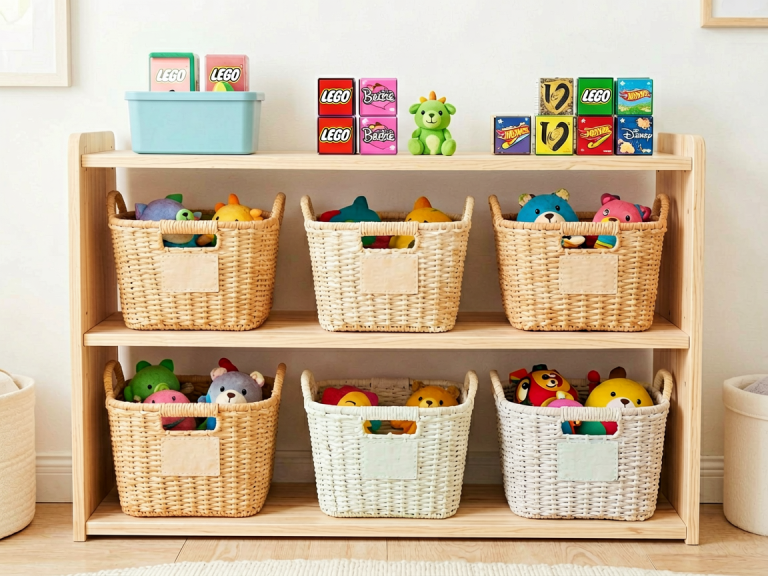
Safety is rarely a concern for nine-year-olds, but watch for small parts if there are younger siblings at home. Also, consider the storage solution. A chaotic pile of blocks can lead to frustration and loss of pieces. A simple storage bin with compartments or a dedicated tray can make clean-up easier and keep the play area organized.
—
V. Alternatives and Complementary Toys: How Blocks Compare
To fully answer the question “should I buy building blocks?”, it helps to consider what else is available for a nine-year-old. At this age, children are often drawn to video games (like Minecraft or Roblox), board games, science kits, or sports equipment. Building blocks hold their own against these alternatives for several reasons.
Unlike videos games, blocks offer tactile, physical interaction. The sense of touch—feeling the weight of a brick, hearing the click of two pieces locking—activates different neural pathways than swiping a screen. This is particularly important for kinesthetic learners who need to move and manipulate objects to understand them. Also, block play has no screen time limits, no blue light, and no algorithm-driven consumption.
Compared to board games, blocks allow for asynchronous play. A board game requires all players to be present and focused at the same time. A child can build alone, pause, and resume hours or days later. This flexibility fits busy family schedules. Board games also have fixed rules; blocks have no set ending. For a child who loves open-ended exploration, blocks are superior.
Science kits are excellent for teaching specific concepts, but they are often single-use. Once a chemistry experiment is done, the kit is often depleted. Blocks, on the other hand, are reusable infinitely. The same set can yield a thousand different creations. A single LEGO Classic box can entertain a child for years, adapting to their growing skills.
That said, blocks are not a replacement for physical activity or social interaction with live peers. A child who exclusively plays with blocks may miss out on team sports or outdoor play. The ideal scenario is a balanced play diet—blocks as one component among many. If the nine-year-old already has a well-rounded set of hobbies, adding blocks can enrich their cognitive and creative portfolio.
—
VI. Conclusion: A Resounding YES—With a Few Caveats
After examining the cognitive, creative, social, and practical dimensions, the answer to “should I buy building blocks for a 9-year-old?” is a clear yes—provided you choose the right set and set realistic expectations. Building blocks are not a magical solution to childhood development, but they are one of the most versatile, enduring, and educational toys available. They support STEM learning, nurture creativity, teach resilience, and facilitate meaningful social interactions. For a nine-year-old who is transitioning from concrete play to abstract thinking, blocks offer a perfect bridge.
However, success depends on matching the product to the child. A child who loves intricate detail might thrive with a 1,000-piece LEGO Architecture set; a child who hates following instructions might do better with a box of plain wooden blocks. Also, consider the child’s current interests: if they are obsessed with dinosaurs, buy a dinosaur-themed building set. If they love vehicles, a LEGO Creator car set will be a hit. Finally, remember that your own involvement matters. A gift of blocks comes with an implicit invitation to build together, at least occasionally. That shared time is the real gift.
In an age of disposable plastic toys and fleeting digital fads, building blocks stand out as a timeless investment. They do not require batteries, updates, or subscriptions. They simply wait—in their box, full of potential—for a child’s hands and imagination to bring them to life. So, should you buy building blocks for a 9-year-old? Absolutely. Just open the box, sit on the floor, and start building. The memories and skills that emerge will far exceed the price tag.
(Word count: approximately 1,280 words)