Building Blocks for a 10-Year-Old: A Wise Investment or a Passing Fad?
Introduction
Every parent or guardian faces the perennial question: “What toy should I buy for my child that is both engaging and beneficial?” When the child in question is a ten-year-old, the answer becomes more nuanced. At this age, children are no longer toddlers who need simple sensory stimulation, nor are they teenagers who might prefer digital gadgets and social media. They are at a pivotal developmental stage—often referred to as the “golden age” of middle childhood—where logical thinking, creativity, social skills, and self-regulation are rapidly evolving. Among the countless options on the market, building blocks (such as LEGO, wooden blocks, or magnetic tiles) frequently appear as a classic recommendation. Yet as a parent, you might wonder: *Should I buy building blocks for a 10-year-old?* This article provides a comprehensive, evidence-based analysis, exploring the cognitive, social, emotional, and educational benefits of building blocks for this specific age group, as well as potential drawbacks, to help you make an informed decision.
The Cognitive and Academic Advantages of Building Blocks
Enhancing Spatial Reasoning and Mathematical Thinking
One of the most well-documented benefits of playing with building blocks is the development of spatial reasoning. For a ten-year-old, the brain is highly receptive to understanding how objects relate to one another in three-dimensional space. When a child constructs a tower, a bridge, or a complex model, they must mentally rotate pieces, estimate distances, and balance forces. Research (e.g., studies by Dr. Susan Levine at the University of Chicago) has shown that early and continued exposure to construction play significantly improves spatial visualization skills. These skills are strong predictors of later success in STEM fields—science, technology, engineering, and mathematics—as well as in subjects like geometry, physics, and even art.
At age ten, children are typically learning multiplication, fractions, and basic geometry in school. Building blocks allow them to experience these concepts concretely. For instance, counting the number of studs on a LEGO brick, figuring out how many 2×4 bricks are needed to cover a 6×8 area, or understanding symmetry by mirroring a design all reinforce classroom learning. In an age where screen-based learning often overshadows hands-on experiments, blocks provide a tactile, kinesthetic pathway to understanding abstract ideas.
Fostering Problem-Solving and Resilience
Building blocks are not just about following instructions; they also invite open-ended exploration and problem-solving. A ten-year-old who attempts to build a structurally sound arch or a moving gear mechanism will inevitably face failures. The block tower collapses; the wheel doesn’t turn; the pieces don’t fit. These moments are golden opportunities for developing “grit” and resilience. The child learns to analyze what went wrong, revise the design, and try again. This iterative process mirrors the scientific method and engineering design cycle, teaching a growth mindset that values effort over innate ability. Unlike passive entertainment (e.g., watching videos), building blocks demand active engagement and persistence. Over time, a child who masters challenging builds gains self-confidence and a sense of accomplishment that no video game can replicate.
Supporting Executive Function and Attention Control
Executive functions—working memory, cognitive flexibility, and inhibitory control—are crucial skills for academic success and daily life. Building blocks challenge these functions. For example, when a ten-year-old follows a complex set of instructions (like a LEGO Technic set with hundreds of pieces), they must hold multiple steps in working memory, shift attention between different sub-assemblies, and inhibit the urge to rush ahead. Even free play requires planning and organization. A child who decides to build a castle must first visualize the structure, then gather the appropriate pieces, and then execute step by step. This deliberate planning strengthens the prefrontal cortex. Studies have shown that children who engage in regular construction play score higher on tests of executive function compared to those who engage primarily in passive or unstructured play.
Social and Emotional Benefits of Building Blocks for 10-Year-Olds
Encouraging Collaboration and Communication
While building blocks are often seen as a solitary activity, they can be powerfully social. Ten-year-olds are at a stage where peer relationships become increasingly important. When two or more children build together—whether siblings, friends, or classmates—they must negotiate roles, share resources, and communicate ideas. “I’ll build the base, you build the tower.” “That blue piece looks better on the side.” Such interactions teach compromise, active listening, and empathy. Moreover, collaborative building projects often require children to resolve conflicts without adult intervention, fostering social competence.
For a child who is shy or has difficulty making friends, blocks can serve as a “social bridge.” A shared interest in LEGO or magnetic tiles can spark friendships and create a common language. Many schools and after-school programs have incorporated building block clubs (e.g., FIRST LEGO League) that combine teamwork with engineering challenges, further amplifying these social gains.
Providing a Healthy Outlet for Emotional Expression
At age ten, children may experience a range of emotions—frustration with school, rivalry with siblings, or anxiety about upcoming changes. Building blocks offer a non-verbal, constructive way to process feelings. A child who is feeling angry or stressed might channel that energy into building a fortress or a race car. The repetitive, rhythmic act of snapping bricks together can be meditative, similar to how adults use knitting or gardening to decompress. Additionally, the sense of mastery from completing a build boosts self-esteem, providing a counterbalance to the inevitable setbacks of childhood.
Potential Drawbacks and Considerations
The Cost and Clutter Factor
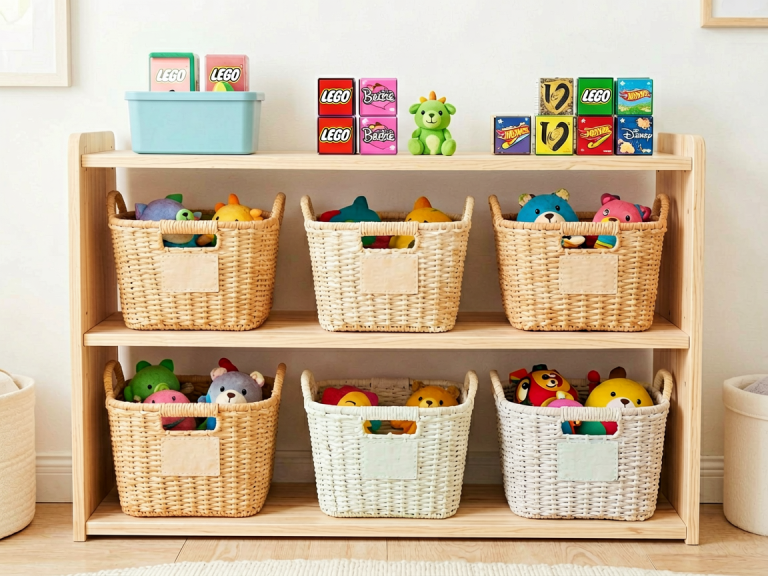
One legitimate concern is the cost. High-quality building block sets, especially branded ones like LEGO, can be expensive—a large Technic set or a themed castle can easily exceed $100. Over time, the accumulation of pieces can also lead to clutter. If your child loses interest quickly, the investment may feel wasted. However, unlike many other toys, building blocks have excellent resale value and durability. Many families pass down LEGO sets for generations. A more pragmatic approach is to start with a modest set and observe your child’s engagement. Alternatively, consider less expensive alternatives such as K’NEX, Mega Bloks, or even generic off-brand blocks that are compatible with LEGO.
Screen Competition and Changing Interests
Ten-year-olds are often drawn to screens—tablets, video games, and phones. Building blocks, by their physical nature, require time and patience, which can be a hard sell against the instant gratification of a digital game. Some children may reject blocks in favor of more passive entertainment. To overcome this, parents can try to integrate building with technology—for example, using apps that let kids design virtual models and then build them physically, or encouraging participation in robotics kits that combine programming with bricks. Even so, it is important to respect the child’s interests. If a child genuinely dislikes building, forcing it is counterproductive.
Safety and Age Appropriateness
While building blocks are generally safe, parents should consider the type of blocks. For a ten-year-old, standard small bricks (like LEGO) are fine, but micro-blocks or very small pieces could be a choking hazard for younger siblings. Also, some complex sets may require adult supervision, not for safety but for frustration management. The instructions can be dense, and a child might need occasional guidance. The key is to choose sets that match the child’s skill level—not so easy that they become bored, but not so hard that they give up. Many manufacturers label sets with age recommendations (e.g., 8–14 years), but individual abilities vary.
Conclusion: A Balanced Verdict
So, should you buy building blocks for a ten-year-old? Based on the evidence, the answer is a resounding *yes*—with some thoughtful caveats. Building blocks offer a unique combination of cognitive, social, and emotional benefits that few other toys can match. They promote spatial reasoning, problem-solving, creativity, and executive function, while also fostering collaboration and resilience. They are a low-tech antidote to screen overload and a gateway to lifelong interests in engineering, architecture, and design.
However, the decision should take into account your child’s specific personality and interests. If your ten-year-old already loves constructing, drawing, or tinkering, blocks will be a natural fit. If they are completely disinterested, forcing them will not yield the benefits. You can test the waters by borrowing a set from a friend or visiting a local library or maker space that offers block play. Alternatively, consider a more advanced building system like LEGO Mindstorms (which incorporates robotics and programming) to bridge the gap between physical and digital play.
Ultimately, building blocks are not just toys; they are tools for learning and growth. In a world that increasingly values innovation and problem-solving, the simple act of snapping two plastic bricks together may be one of the most profound investments you can make in your child’s future. Go ahead—buy the blocks. Your ten-year-old’s brain will thank you.