Are Card Games Safe for Babies? What Every Parent Should Know Before Dealing the First Hand
When you become a parent, the simplest everyday objects suddenly transform into potential hazards or learning tools. A deck of cards resting on the coffee table might seem harmless, but if you have a curious baby crawling around, the question naturally arises: *are card games safe for babies?* The short answer is: traditional card games are not safe for babies under one year old, but with the right modifications and supervision, certain card-like activities can be introduced in a controlled way. This article explores the risks, the myths, and the practical guidelines every caregiver should consider before letting a baby anywhere near a card.
Understanding the Physical Risks of Traditional Cards
The first and most critical concern is physical safety. A standard playing card is roughly the size of an adult hand, but it is surprisingly rigid and easy to rip. For babies who explore the world through their mouths—a stage known as oral exploration—cards pose a serious choking hazard. A baby can tear off a corner and swallow it, or worse, inhale a small piece into their airway. Even if a card remains intact, its glossy coating can contain chemical inks and varnishes that are not meant for ingestion. Babies who chew on a card will inevitably ingest microscopic amounts of these substances, which may cause stomach upset or allergic reactions in sensitive infants.
Another overlooked danger is the paper cut. While an adult might shrug off a paper cut, the same nick on a baby's delicate skin, especially around the lips or eyes, can be painful and prone to infection. Cards are also thin enough to become lodged in a baby's throat if folded accidentally, and their sharp edges can scratch the inside of a tiny mouth. Furthermore, if a baby is playing near a card's storage box, the box itself can be a suffocation or trapping hazard. The bottom line is clear: an ordinary deck of playing cards is simply not designed for infant safety.
The Hidden Dangers of Gameplay and Small Pieces
Beyond the cards themselves, consider what comes with a card game. Most traditional card games include tokens, dice, or a timer—all of which are small, hard, and extremely attractive to a baby's grasping fingers. Dice, in particular, are perfect choking hazards. A baby who is just learning to sit up may grab a die and immediately pop it into their mouth. Even if you think you have removed all accessories, a single forgotten chip can roll under a sofa cushion and be found later by a determined little explorer.
Moreover, the *gameplay* itself is not suitable for babies. Card games require sitting still, following sequential rules, holding a hand of cards, and taking turns—skills that typically develop between ages three and five. A baby under twelve months has neither the attention span nor the fine motor control to hold cards without crumpling them. Trying to force a card game on a baby will only lead to frustration for both of you. In fact, introducing complex rules too early can create a negative association with cards, making a child less interested in them later when they are developmentally ready.
When Card Games Can Be Safe: The Exception of Fabric Cards
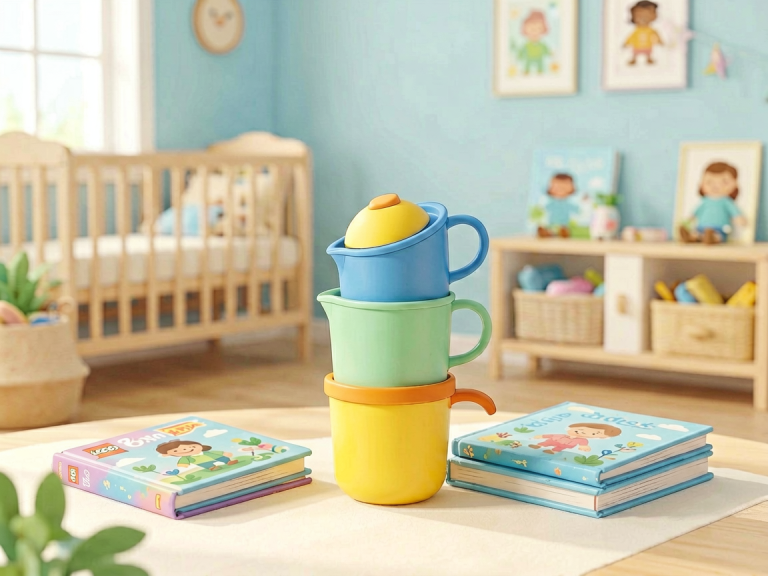
So, are there *any* circumstances where card games can be safe for babies? Yes, but only if you replace the physical medium entirely. Soft fabric cards, cloth flashcards, or snap-together plastic cards designed for infants are widely available. These products are made from non-toxic materials, have rounded corners, and are machine washable. They often feature high-contrast images, mirrors, or crinkle textures that stimulate a baby’s visual and tactile senses. With these baby-safe alternatives, you can introduce the *concept* of a card—such as showing a picture of an apple or a cat—without any of the hazards of a real playing card.
However, even with fabric cards, you must remain attentive. A teething baby can soak through a cloth card and eventually tear it, so inspect these items regularly for loose threads or broken seams. Some fabric cards contain internal plastic crinkle paper, which can become exposed if chewed aggressively. Always choose products that meet your country's safety standards for infant toys (e.g., ASTM F963 in the United States or EN 71 in Europe). And remember, "safe" does not mean "unsupervised"—no baby product can eliminate the need for adult vigilance.
Developmentally Appropriate Ways to Introduce Card Concepts
If your goal is not to play a game but to use cards as a learning tool, there are age-appropriate strategies. For babies aged six to twelve months, you can lay out a few large, soft cards face up on a play mat. Let your baby bat at them, pick them up (with your help), and explore the images. You can name the object on each card: "This is a ball. Can you touch the ball?" This activity supports vocabulary development, hand-eye coordination, and cause-effect thinking. It is not a card *game* in the traditional sense, but it plants the seeds for future card use.
Around twelve to eighteen months, some families transition to sturdy board book versions of flashcards. These thick cardboard blocks are too large to be swallowed and can withstand rough handling. You can play a simple "peek-a-boo" game by placing a board card under a blanket and revealing it with a cheerful "Ta-da!" This teaches object permanence and anticipation. None of these activities require shuffling, dealing, or scoring—they are purely sensory and interactive. The key is to match the activity to the baby's developmental stage, not to your desire to recreate a family game night.
Expert Recommendations and Clear Safety Guidelines
Pediatricians and child development specialists generally agree that babies should not play traditional card games. The American Academy of Pediatrics advises against any toys or games with small parts for children under three years old, and a regular playing card, while larger than a coin, can easily be torn into dangerous pieces. Speech therapists and occupational therapists often use cards, but only with older toddlers and only under direct supervision. For babies, the expert consensus is to favor age-rated toys and to avoid any item that is not explicitly marketed as safe for the infant's age group.
If you still want to introduce cards, follow these explicit safety guidelines: first, never leave a baby alone with any type of card, including fabric ones. Second, inspect every card before use—if it has a bent corner, peeling laminate, or small hole, discard it. Third, store all traditional playing cards in a high cabinet or a locked drawer, out of the baby's sight and reach. Fourth, avoid playing card games on the floor near the baby; use a table height that the baby cannot access. Fifth, wash your hands and the baby's hands before and after any card activity to minimize chemical exposure. Finally, observe your baby's interest. If they seem disinterested or agitated, stop immediately. Forcing a card session will not benefit development.
Conclusion: Playing It Safe Is the Winning Hand
So, are card games safe for babies? The honest answer is that traditional card games are not safe, and attempting to adapt them for an infant is rarely worth the risk. However, the *idea* of cards—pictures, colors, shapes, and textures—can be safely introduced through specialized baby-designed soft cards and board book cards, provided you supervise closely and follow basic safety rules. The best thing you can do for your baby's development is to give them simple, safe, and open-ended materials to explore. A crinkly fabric card with a bright red apple is infinitely better than a slippery paper seven of spades. Save the poker faces and Go Fish matches for when your child is three or four years old. By then, they will have the coordination, patience, and understanding to enjoy a real card game—and you'll have the peace of mind that comes from knowing you kept them safe when it mattered most. In the game of parenting, that is the only hand you need to win.