Building Blocks and Spatial Reasoning: Unlocking Cognitive Potential Through Play
Introduction
In an era dominated by screens and digital entertainment, the humble building block—a simple, often wooden or plastic toy—has endured as a childhood staple for generations. Parents and educators have long observed children’s fascination with stacking, aligning, and assembling these small pieces into towers, bridges, or imaginary structures. But beyond the immediate joy of creation lies a deeper question that cognitive scientists and developmental psychologists have been investigating for decades: Are building blocks good for spatial reasoning?
Spatial reasoning—the ability to visualize, manipulate, and navigate objects in two- and three-dimensional space—is a cornerstone of human intelligence. It underpins success in fields as diverse as architecture, engineering, surgery, and even mathematics. A growing body of research suggests that building blocks are not merely a pastime; they are a powerful tool for nurturing this essential cognitive skill. This article explores the science behind spatial reasoning, the mechanisms through which building blocks enhance it, the empirical evidence supporting their use, and practical implications for parents and educators.
The Science of Spatial Reasoning
Spatial reasoning is a multifaceted cognitive ability that enables us to mentally rotate objects, understand how parts fit together, navigate environments, and interpret diagrams or maps. Psychologists often break it down into subcomponents: mental rotation (the ability to imagine an object turning in space), spatial visualization (the capacity to manipulate complex, multi-step spatial information), and spatial perception (the ability to determine spatial relationships despite distracting information).
These skills are not merely academic curiosities. Longitudinal studies have shown that spatial reasoning in childhood is a strong predictor of later achievement in science, technology, engineering, and mathematics (STEM) fields. For instance, a landmark study by the University of Texas found that children who scored high on spatial reasoning tests at age 4 were more likely to pursue STEM careers as adults, even after controlling for general intelligence and socioeconomic background.
Despite its importance, spatial reasoning is not a fixed trait; it can be developed through targeted practice and experience. This is where building blocks enter the picture. Unlike passive entertainment, building blocks demand active engagement with physical space. Each time a child picks up a block and decides where to place it, they are implicitly reasoning about shape, size, angle, and balance.
How Building Blocks Enhance Spatial Reasoning
The mechanisms through which building blocks improve spatial reasoning are both intuitive and scientifically documented. First, they provide a hands-on, three-dimensional medium for exploring geometric principles. When a child attempts to create a stable tower, they must consider the center of gravity, the weight distribution, and the symmetry of the structure. These are not abstract concepts but tangible problems that require iterative problem-solving.
Second, building blocks foster mental rotation. A child who wants to fit a rectangular block into a specific slot must mentally rotate the block to determine whether its orientation is correct. Repeated practice strengthens the neural pathways associated with this skill. Neuroscientific studies using fMRI have shown that engaging in such spatial tasks activates the parietal lobe, a brain region central to spatial processing.
Third, blocks encourage spatial visualization—the ability to hold and manipulate multi-step spatial information in the mind. For example, a child following a picture to build a model must break the image down into component parts, remember the sequence, and translate a two-dimensional representation into a three-dimensional reality. This process is remarkably similar to the mental tasks required in fields like CAD design or anatomical dissection.
Finally, building blocks promote what psychologists call “transformational reasoning.” Children learn that a structure can be disassembled and reassembled in different ways, that a single set of blocks can yield infinite variations. This flexibility in thinking—understanding that space is not static but malleable—is a hallmark of advanced spatial intelligence.
Empirical Evidence: What Research Says
The question “Are building blocks good for spatial reasoning?” has been tested in numerous controlled studies, and the answer is a resounding yes—with some important nuances. One of the most influential experiments was conducted by Dr. Susan Levine at the University of Chicago. She observed 140 toddlers playing with blocks and found that those who engaged in more complex block play (e.g., stacking multiple blocks symmetrically) scored higher on spatial reasoning tests at age 3 and 4. Notably, the effect was strongest when parents or caregivers interacted with the children during play, asking questions like “Which block fits here?” or “Can you make it taller?”
Another study from the University of Colorado examined the impact of structured block building in kindergarten classrooms. Children who participated in weekly 30-minute block-building sessions for 12 weeks showed a 40% improvement on mental rotation tasks compared to a control group that engaged in free play without blocks. The researchers emphasized that the improvement was not just about spatial skills—it also transferred to mathematics, particularly geometry and measurement.
However, not all block play is equally effective. A 2019 meta-analysis of 24 studies found that the quality of interaction matters more than the quantity of blocks. Children who used blocks to replicate specific designs (e.g., following a blueprint or a photograph) demonstrated significantly greater gains than those who built freely without any reference. This suggests that combining open-ended exploration with guided challenges maximizes the cognitive benefits.
Interestingly, the benefits extend beyond childhood. A study with adult participants—university students—showed that just 20 minutes of block-building practice improved their performance on a subsequent mental rotation test by 15%. This result indicates that the spatial reasoning system remains plastic throughout life, and building blocks are a low-cost, accessible tool to tap into that plasticity.
Age Matters: Building Blocks for Different Developmental Stages
The effectiveness of building blocks depends on the developmental stage of the user. For infants and toddlers (ages 1–3), blocks serve as a sensory and motor foundation. They learn to grasp, stack, and knock down, which builds hand–eye coordination and early object permanence. While explicit spatial reasoning may not yet be measurable, these early experiences create the neural scaffolding for later skills. Large, soft, or oversized blocks are ideal for this age because they are safe and invite whole-body engagement.
For preschoolers (ages 3–5), building blocks become a platform for symbolic thinking and mental representation. At this stage, children begin to build “houses” or “castles” and may narrate stories about their creations. Researchers have found that children who engage in block play at age 4 produce more complex block structures—with bridges, enclosures, and symmetrical patterns—and that complexity correlates with spatial reasoning scores. Parents can support this by providing diverse block shapes (cylinders, triangles, arches) and by asking open-ended questions like “What happens if you put a big block on top of a small one?”
For school-age children (ages 6–12), building blocks can introduce more advanced spatial concepts such as symmetry, proportion, and rotation. Sets like LEGO or magnetic tiles offer precision and encourage children to follow instructions (which trains spatial visualization) or to invent original designs (which trains creative spatial problem-solving). At this age, group block play can also foster collaborative spatial reasoning—children negotiate how to distribute weight or align pieces, which deepens their understanding of spatial relationships.
Even adolescents and adults can benefit. Architectural students, for example, often use physical blocks as a prototyping tool to explore volume and negative space. Gamers who enjoy building in virtual worlds (e.g., Minecraft) are essentially engaging in digital block play, which has been linked to improved spatial reasoning in several studies. The key is that blocks provide a concrete, manipulable medium that bypasses abstraction and allows the brain to learn through movement and touch.
Beyond Blocks: Comparative Analysis with Other Toys
To fully answer the question “Are building blocks good for spatial reasoning?” it is helpful to compare them with other common toys and activities. Puzzles, for instance, also train mental rotation and spatial perception, but they are typically limited to two dimensions (jigsaw puzzles) or simple 3D shapes (like a Rubik’s Cube). Building blocks, in contrast, offer infinite combinatorial possibilities and require children to manage multiple spatial relationships simultaneously.
Construction sets with interlocking pieces (like LEGO) provide a similar benefit, but with a higher level of precision and structural constraint. Some studies suggest that LEGO play might be even more effective for developing fine motor skills and the ability to follow complex spatial instructions. However, magnetic building tiles (like Magna-Tiles) allow for easier assembly and disassembly, which encourages faster iteration and experimentation—an advantage for younger children who become frustrated with tightly snapping pieces.
Video games, especially those that require navigation in 3D environments (e.g., first-person shooters or open-world exploration), have also been shown to improve spatial reasoning. But they lack the tactile feedback and proprioceptive input of physical blocks. The act of touching, lifting, and balancing objects engages the somatosensory system, which reinforces spatial learning in a way that screens cannot fully replicate.
What about drawing or sketching? While certainly valuable for spatial visualization, drawing is a two-dimensional representation of three-dimensional space. Building blocks teach the child to reason in actual 3D, with real consequences for failure (the tower falls). This embodied learning—learning through physical action—is uniquely powerful for developing robust spatial intuitions.
Overall, building blocks are not necessarily superior to all other spatial activities, but they are exceptionally versatile, age-inclusive, and cost-effective. They combine the benefits of guided instruction (when following models) with open-ended creativity (when free-building), making them a comprehensive tool for spatial reasoning development.
Practical Implications for Parents and Educators
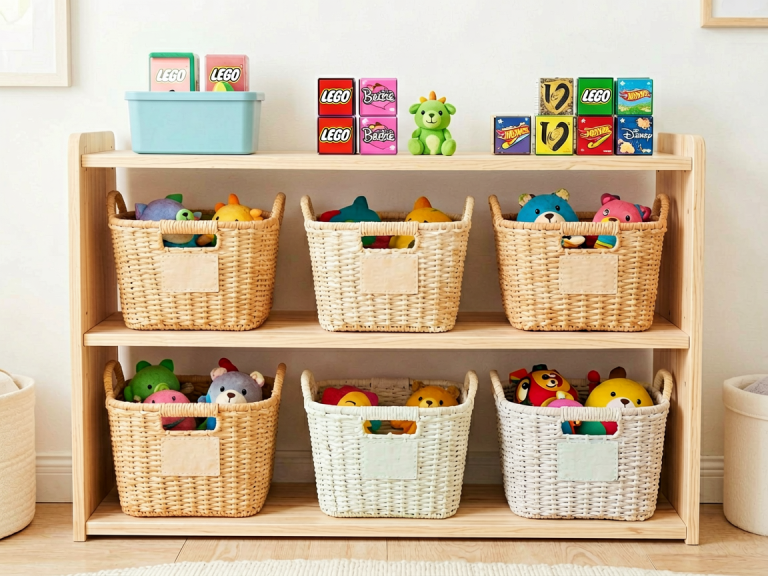
Understanding that building blocks are good for spatial reasoning is only half the battle. The more pressing question is: How can parents and educators maximize these benefits? First, the environment matters. Provide a variety of block shapes—cubes, rectangles, wedges, arches, cylinders—and at least one flat surface large enough to build upon. Avoid cluttered play areas where children might be distracted.
Second, the type of interaction is crucial. Studies consistently show that “spatial language” significantly boosts learning. When adults describe positions, comparisons, and movements (“Put the red block on top of the blue one,” “This triangle piece fits into the corner,” “Can you make your tower as tall as the picture?”), children internalize spatial vocabulary and concepts. Even simple prompts like “What shape is that?” or “How many blocks did you use?” encourage cognitive engagement.
Third, mix free play with structured challenges. Set aside time for children to build whatever they imagine—this fosters creativity and problem-solving ownership. But also introduce guided tasks: provide a photograph of a structure and ask the child to replicate it, or give a specific goal like “Build a bridge that can hold a toy car.” These challenges push children to apply spatial reasoning systematically.
Fourth, consider group play. Collaborative block building encourages children to verbalize their spatial strategies, negotiate positions, and learn from each other. A child who cannot figure out how to balance a block may watch a peer solve the problem, thereby observing spatial reasoning in action. In classrooms, teachers can organize block-building competitions or design challenges that require teamwork.
Finally, do not underestimate the value of repetition. Spatial reasoning, like any cognitive skill, strengthens with practice. A child who plays with blocks for 15 minutes a day over several months will accumulate far more spatial experience than one who plays sporadically. Consistency, not intensity, is the key.
Conclusion
So, are building blocks good for spatial reasoning? The evidence is clear: yes, unequivocally. From the toddler who learns to stack two cubes to the teenager who designs a cantilevered bridge with precision, building blocks provide a rich, multimodal training ground for the brain’s spatial processing systems. They foster mental rotation, spatial visualization, problem-solving, and creative thinking—all while being accessible, affordable, and universally appealing.
Yet the true power of building blocks lies not in the blocks themselves, but in the human interactions and intentions that surround them. When used thoughtfully—with varied shapes, guided challenges, spatial language, and social collaboration—they become a cognitive catalyst that prepares children for the spatially demanding world of STEM and beyond. In a society that often prizes abstract, symbolic learning over concrete, embodied experience, building blocks remind us that thinking with our hands is not a regressive activity but a profoundly effective way to train the mind.
As parents and educators, we would do well to invest in a box of quality blocks—and then join our children on the floor, stacking and toppling and rebuilding, knowing that every misshapen tower and every wobbly bridge is a lesson in space, matter, and possibility. After all, the child who learns to think in three dimensions today may be the one who designs the cities, surgeries, and spacecraft of tomorrow.