Building Blocks and Creativity: An Investment in Cognitive Play or a Gilded Cage?
Introduction
In an age saturated with digital entertainment, algorithm-driven content, and instant gratification, the humble building block remains a steadfast fixture in childhood bedrooms and educational settings. From the classic wooden cubes to the ubiquitous LEGO bricks with their interlocking studs, building blocks have long been hailed as tools for imaginative play. Yet a persistent question lingers in the minds of parents, educators, and researchers: are building blocks truly worth it for creativity? Do they genuinely foster divergent thinking, problem-solving, and original expression, or do their predetermined forms impose unspoken boundaries that stifle the very creativity they claim to nurture? This article explores the multifaceted relationship between building blocks and creativity, examining both the compelling evidence in their favor and the nuanced counterarguments. By delving into psychology, pedagogy, and play theory, we aim to provide a balanced answer that goes beyond simple affirmation or dismissal.
The Historical and Psychological Foundations of Block Play
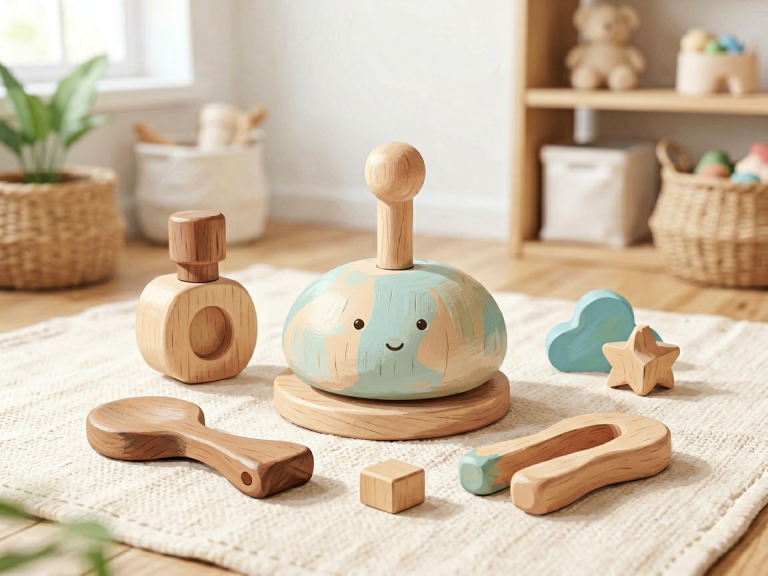
The use of building blocks dates back to the early educational philosophies of Friedrich Froebel, the father of kindergarten, who designed a series of “gifts” – geometric wooden shapes – to encourage children to understand form, symmetry, and structure through manipulation. Froebel believed that blocks served as a bridge between the child’s inner world and the external laws of nature. This idea was later echoed by Maria Montessori, who integrated block-like materials into her sensorial curriculum, emphasizing self-directed activity and hands-on learning. Psychologically, building blocks align with Jean Piaget’s theory of constructivism: children actively construct knowledge by interacting with their environment. When a child stacks blocks and watches them tumble, they are not merely playing; they are internalizing concepts of gravity, balance, and cause-and-effect. Vygotsky’s sociocultural theory further highlights that block play often involves collaboration, language negotiation, and the zone of proximal development, where a more capable peer or adult can scaffold the child’s creativity. These foundational theories suggest that blocks are not just toys but cognitive instruments. However, the question remains whether the specific affordances of modern, highly standardized building block sets (such as LEGO kits with step-by-step instructions) enhance or detract from creative potential.
The Case for Building Blocks as Creativity Catalysts
Proponents of building blocks argue that they are among the most versatile tools for nurturing creativity. First, blocks provide an open-ended medium. A simple set of plain wooden blocks can become a castle, a spaceship, a bridge, or a mathematical pattern – the only limit is the child’s imagination. This lack of prescribed outcome encourages divergent thinking, the ability to generate multiple solutions to a single problem. Research by developmental psychologist Doris Bergen found that children who engaged in more constructive play scored higher on measures of creative problem-solving and verbal fluency. Additionally, building blocks naturally involve spatial reasoning, a cognitive skill closely linked to creativity in STEM fields. A 2017 study published in *Psychological Science* demonstrated that preschool children’s block-building complexity predicted their later mathematical achievement and visuospatial skills. The iterative process of building – planning, testing, failing, rebuilding – mirrors the design thinking cycle used in engineering and art alike. Moreover, blocks allow for what psychologist Kenneth Rubin calls “epistemic play”: play that generates knowledge. When a child experiments with different configurations, they are essentially conducting mini-experiments. The tactile, physical nature of blocks also provides sensory feedback that digital screens cannot replicate, grounding creativity in real-world physics. For these reasons, many educators consider blocks indispensable for fostering what the OECD terms “creative agency” – the ability to produce original ideas that are valuable and actionable. From a motivational perspective, blocks offer a low-stakes environment where mistakes are reversible, encouraging risk-taking essential for creative breakthroughs.
The Counterargument: Constraints and Conformity in Modern Block Sets
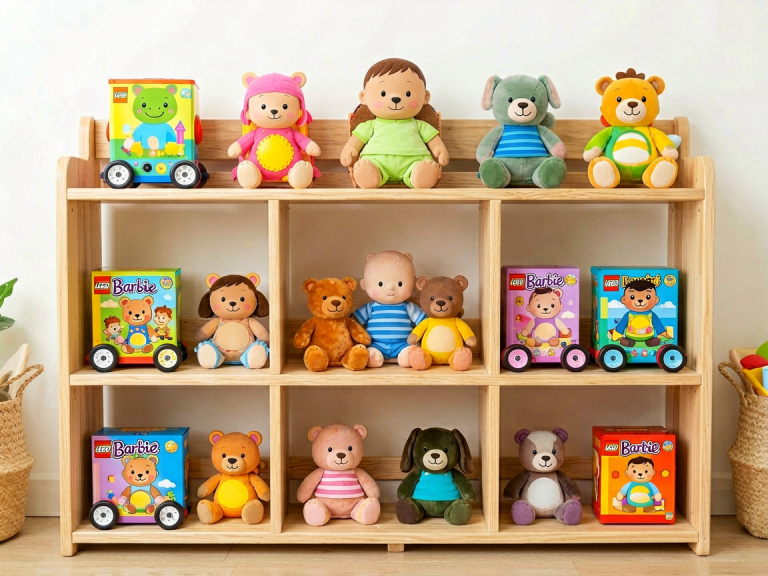
Critics, however, raise compelling concerns, particularly regarding modern commercial block systems like LEGO. LEGO’s themed sets – Harry Potter castles, Star Wars spaceships, technic cars – come with detailed instruction manuals. While building these sets may teach following directions and fine motor skills, it arguably undermines the core of creativity: generating one’s own ideas. Educational researcher Alison Gopnik has warned that overly structured toys can suppress curiosity and imaginative play in favor of narrow, goal-directed activity. A child who consistently builds according to a manual learns that there is a “correct” way to assemble, which may inhibit the kind of free-form exploration that leads to novel creations. This phenomenon is sometimes called the “tyranny of the brick”: the blocks themselves, with their standard sizes and interlocking shapes, impose physical constraints that may limit expression. A simple pinecone or a piece of cloth can become anything in a child’s mind, but a LEGO brick is always a brick. Furthermore, the commercial pressure to collect sets and “complete” them can shift the focus from process to product, from imaginative play to consumeristic achievement. A child who feels compelled to build exactly what the box shows may never discover the joy of creating something uniquely their own. Even in educational contexts, block play is sometimes guided by teachers who model specific structures, inadvertently narrowing the range of possibilities. These critiques do not suggest that blocks are worthless, but that their value depends critically on how they are used.
The Role of Scaffolding and Guided Play
The most nuanced perspective reconciles these opposing views by emphasizing the importance of scaffolding. Building blocks, like any tool, are neither inherently creative nor inherently restrictive; their impact depends on the context and guidance provided. Research on guided play – where an adult sets up an environment that invites exploration but does not dictate outcomes – shows that blocks used in a supportive, non-directive manner can significantly boost creativity. For example, a teacher might present a challenge: “Can you build a bridge that supports this small toy car?” without showing how. This provides constraints (the car must cross) while leaving the solution open, sparking productive creativity within a meaningful problem. Similarly, parents can alternate between free block play and more structured challenges to flex different cognitive muscles. The key is to avoid over-reliance on step-by-step instructions. When children are given time to tinker, combine blocks with other loose parts (like string, paper, or natural objects), and engage in storytelling around their creations, blocks become powerful vehicles for narrative and symbolic thinking. A longitudinal study from the University of Delaware found that children who used blocks in combination with pretend play showed more sophisticated creativity scores than those who used blocks alone or only engaged in structured building. This suggests that the worth of building blocks is amplified when they are part of a richer, multimodal play ecosystem. Moreover, the social dimension cannot be ignored; collaborative block building encourages children to negotiate, share ideas, and iterate on each other’s designs, which are essential creative skills in collaborative professions.
Practical Implications for Parents and Educators
Given the evidence, what should a parent or educator do? First, diversify the block collection. Include not only modern interlocking bricks but also simple wooden unit blocks, magnetic tiles, and even recycled materials like cardboard boxes. Variety in physical properties – weight, texture, shape – stimulates different types of creativity. Second, embrace imperfection. Allow children to build asymmetrical structures, to combine mismatched sets, and to deliberately break conventions. Celebrate the “weird” creations. Third, limit the use of prescriptive manuals. If a child receives a themed LEGO set, encourage them to build it once to follow instructions, then disassemble it and use the pieces for original creations. Turn the manual into a reference, not a script. Fourth, integrate blocks with other activities. Suggest building a habitat for a toy animal, constructing a vehicle for a story character, or recreating a real-world landmark after observing it. This contextual embedding deepens creative thinking. Fifth, ask open-ended questions during play: “What does your building feel?” “How does it stay up?” “Can you tell a story about who lives here?” These prompts shift the focus from product to process. For educators, block centers should be a permanent part of the classroom, not a reward or a fill-time activity. Teachers should observe and document children’s evolving building strategies, using them as assessment tools for cognitive development. Finally, be mindful of gender stereotypes; building blocks have historically been marketed to boys, but creativity is gender-neutral. Ensure all children have equal access and encouragement.
Conclusion: The Verdict on Building Blocks
So, are building blocks worth it for creativity? The answer is a qualified yes – but with important caveats. Building blocks are not a magic bullet. When used purely as prescribed kits with rigid instructions, they can inadvertently constrain creative thinking. When used as open-ended, flexible tools within a supportive environment that encourages exploration, collaboration, and failure, they are among the most potent catalysts for cognitive and creative development. Their worth lies not in the blocks themselves, but in the way we invite children to play with them. Blocks offer a unique balance of structure and freedom; they provide constraints that challenge the mind to find novel solutions, yet they remain infinitely reconfigurable. The greatest creative minds, from architects to inventors, often credit their early experiences with constructive play. As Seymour Papert, the MIT mathematician and LEGO Mindstorms pioneer, once said, “The best learning comes from making something that is personally meaningful.” Building blocks, when chosen and used with intention, empower children to make meaning on their own terms. Therefore, yes – building blocks are worth it, but only if we remember that the most creative building happens not when we follow the blueprint, but when we ask “What if?” and let the bricks fall where they may.