Beyond the Pieces: Educational Alternatives to Jigsaw Puzzles
For generations, the jigsaw puzzle has held a beloved place in homes and classrooms. It teaches patience, spatial reasoning, and the satisfaction of completing a cohesive image from scattered fragments. Yet as educators and parents seek to nurture a broader range of skills—critical thinking, creativity, collaboration, and digital literacy—the traditional jigsaw is no longer the only, or even the best, tool for the job. The very qualities that make jigsaws appealing, their fixed outcome and solitary nature, can also limit their educational potential. Fortunately, a rich landscape of educational alternatives to jigsaw puzzles exists, offering dynamic, flexible, and deeply engaging ways for learners of all ages to build minds. This article explores several of these alternatives, organized by the types of thinking and skills they cultivate.
Why Rethink the Jigsaw Puzzle?
Before examining alternatives, it is worth understanding what jigsaw puzzles do well and where they fall short. Assembling a puzzle exercises visual-spatial working memory, fine motor control, and the ability to recognize patterns and shapes. The calming, almost meditative rhythm of sorting pieces and testing connections can build focus and perseverance. However, a jigsaw puzzle has a single, predetermined solution. Once completed, its educational value largely evaporates; the puzzle can be dismantled and done again, but the cognitive challenge diminishes quickly. Moreover, jigsaw puzzles are typically a solo or passive group activity—one person may dominate while others watch. The feedback is binary: the piece fits or it does not. There is little room for divergent thinking, narrative creation, or open-ended problem solving. In a world that increasingly rewards adaptability, communication, and innovation, educators are looking for alternatives that share jigsaw benefits while adding richer, more transferable learning experiences.
Open-Ended Building Systems: From Blocks to Modular Kits
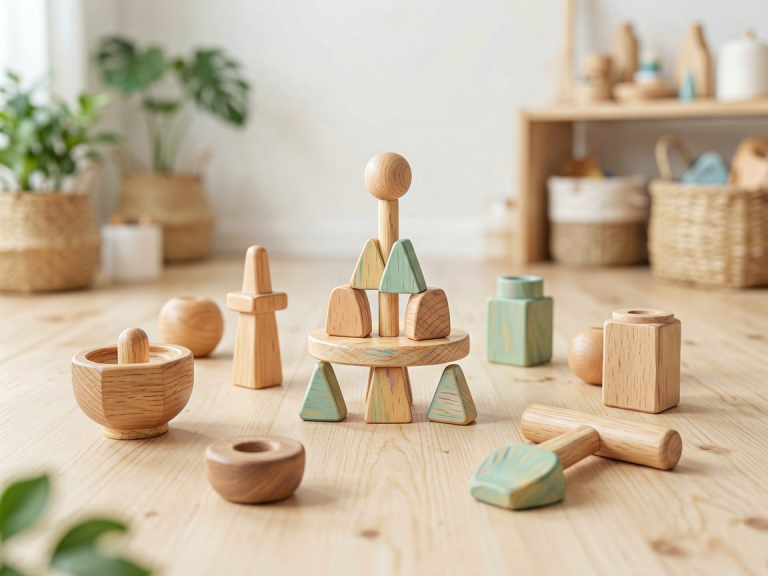
A direct and powerful replacement for jigsaws is the open-ended building set. Traditional wooden blocks, magnetic tiles, LEGO bricks, and modular construction kits all require spatial reasoning and manual dexterity, just like jigsaw puzzles. But unlike a fixed puzzle image, building toys allow children to imagine, design, fail, and rebuild infinitely. A child who constructs a tower must think about balance, gravity, and structural stability—concepts that are far more complex than matching a sky-blue piece to a sky-blue patch.
Modular kits that combine gears, pulleys, or rotating joints introduce mechanical principles. For example, a gear set lets a learner experiment with ratios and direction changes, turning abstract physics into tangible play. Open-ended building also encourages iteration: a bridge that collapses becomes a lesson in engineering, not a mistake. Because there is no “correct” final product, children must articulate their own goals and evaluate their own success. This fosters executive function skills such as planning, flexibility, and self-monitoring. For older students, architectural or robotics kits add computational constraints and design briefs, bridging the gap between play and professional practice. Thus, building systems offer the same hands-on satisfaction as jigsaws but with vastly greater cognitive and creative rewards.
Logic and Strategy Games: Puzzles That Think With You
For learners who enjoy the “fitting together” aspect of jigsaws but crave deeper intellectual engagement, logic and strategy games are outstanding alternatives. Games like *Rush Hour*, *Katamino*, *Tantrix*, and *Santorini* require players to manipulate physical pieces according to rules, often to achieve a specific arrangement or sequence. These games are essentially puzzles, but they are modular and replayable. A single set of *Rush Hour* cards offers hundreds of challenges, ranging from beginner to expert, allowing a learner to progress without needing new materials.
Strategy board games such as *Catan*, *Ticket to Ride*, and *Azul* go even further. They combine spatial planning with resource management, probability, and social negotiation. A player must weigh immediate moves against long-term goals, adapt to opponents’ actions, and recover from setbacks. This kind of game-based learning develops what psychologists call "fluid intelligence"—the ability to reason and solve novel problems. Unlike a jigsaw, where the picture is already known, strategy games present a dynamic problem space; every move changes the landscape, and success depends on flexible thinking. Moreover, playing with others builds communication and emotional regulation, as learners experience both victory and defeat in a safe, structured environment. For classrooms, cooperative logic games like *Forbidden Island* or *Pandemic* require teams to solve a shared puzzle with distributed knowledge, promoting collaboration and perspective-taking. These games retain the tangible, focused satisfaction of jigsaws while adding social, mathematical, and strategic depth.
Narrative and Role-Playing Games: Story as a Cognitive Tool
Another compelling category of educational alternatives to jigsaw puzzles involves narrative and role-playing games. Whereas a jigsaw presents a static picture, a story-based game invites learners to construct meaning, dialogue, and causality. Simple storytelling dice or cards—where rolled images must be woven into a coherent tale—exercise language skills, sequencing, and imagination. More structured tabletop role-playing games like *Dungeons & Dragons* or kid-friendly systems such as *No Thank You, Evil!* require players to solve problems collaboratively within a fictional world. A group facing a locked door must brainstorm solutions: pick the lock, find a key, break the door, or persuade a guard. There is no single answer, and the “puzzle” is embedded in a rich narrative context.
This narrative framing dramatically increases engagement and memory retention. When information is attached to characters, goals, and consequences, learners are more likely to internalize it. Role-playing also develops empathy, as players must understand different perspectives and motivations to succeed. For subject-specific learning, teachers can design quests around historical events, scientific phenomena, or literary themes. For instance, a “mission” to solve a water pollution mystery in a fictional town requires understanding chemistry, ecology, and local government—all woven into a story. These activities build critical literacy and systems thinking far beyond what a jigsaw can offer. Even a simple “escape room” style challenge, where participants decode clues and solve interlocking riddles to “escape” a fictional scenario, combines the piece-fitting logic of a jigsaw with time pressure, teamwork, and narrative urgency. Such experiences are not just fun; they train learners to synthesize disparate clues into a coherent solution—a skill at the very heart of complex problem solving.
Coding and Computational Thinking Toys
In the digital age, one of the most forward-looking alternatives to jigsaw puzzles involves coding and computational thinking. Physical coding kits, such as *Botley*, *Code-a-Pillar*, or *Cubetto*, allow even pre-readers to arrange command blocks into sequences, learning that order matters. These kits are procedurally similar to jigsaw puzzles—pieces must be placed in a correct sequence—but the “picture” is an algorithm that causes a robot to move, turn, or respond. The feedback is dynamic: the robot executes the program, and if the sequence is wrong, the learner sees the error and can debug it. This is a profound educational shift: instead of asking “What goes here?” the child asks “What happens if I put this here?” Computational thinking involves decomposition, pattern recognition, abstraction, and algorithmic design—all essential skills in modern education.
For older learners, block-based programming environments like Scratch or physical microcontrollers like micro:bit offer enormous flexibility. Students can create interactive games, simulations, or robots that respond to sensors. The iterative nature of coding—write, test, debug, improve—mirrors the trial-and-error of puzzle solving but with far greater creative agency. Coding also integrates seamlessly with other subjects. A student programming a virtual ecosystem must understand variables, conditions, and feedback loops, while also learning biology. Coding projects are naturally open-ended; two students may write entirely different programs that both solve a problem, promoting multiple solution paths. In this way, coding addresses the biggest weakness of jigsaws—their fixed outcome—while preserving the satisfaction of fitting logical pieces together.
Collaborative Maker Projects: Real-World Problem Solving
For a more hands-on, interdisciplinary approach, collaborative maker projects offer another powerful alternative. In a makerspace or classroom workshop, learners might be challenged to build a bridge from popsicle sticks, design a water filter, sew a stuffed animal, or construct a model of a sustainable city. These projects require planning, measurement, budgeting of materials, and iterative prototyping. They combine spatial reasoning (as in jigsaws) with creativity, research, and practical craftsmanship. Unlike a jigsaw, a maker project has no pre-printed result. The outcome is determined by the maker’s own choices, constraints, and ingenuity.
Collaboration is a key component. When students work in teams on a maker challenge, they must negotiate roles, share tools, and reconcile conflicting ideas. They learn to give and receive feedback, to document their process, and to present their final product. This mirrors modern workplace environments far more accurately than silent puzzle assembly. For example, a project to design a cardboard arcade game involves art, physics, mathematics, and persuasive writing—students must justify their design choices. Failure is not only permitted; it is encouraged as a stepping stone. The iterative design cycle—build, test, evaluate, improve—teaches resilience and a growth mindset. Maker projects also allow for differentiation; students with varying abilities can contribute in different ways, from sketching to building to narrating. Thus, they provide a rich, inclusive educational experience that jigsaws cannot match.
Nature-Based and Sensory Challenges
Finally, we should not overlook nature-based and sensory challenges as educational alternatives to jigsaw puzzles. While jigsaws engage the visual sense almost exclusively, outdoor and sensory activities engage touch, smell, hearing, and even taste. A nature scavenger hunt, for example, requires participants to match objects to descriptions: “something rough, something round, something that has changed color.” This is a real-world classification puzzle, but it demands observational skills and vocabulary building. Building a shelter from leaves and branches or creating a forest floor mosaic uses natural materials and spatial layout, but the surface is irregular and the design is ephemeral—teaching acceptance of imperfection and change.
Sensory bins, filled with sand, rice, or water, offer open-ended exploration for younger learners. A child can bury objects, dig them out, sort them by texture, or create patterns. Unlike jigsaw pieces, which have a prescribed fit, sensory materials respond to manipulation in infinite ways. This kind of play develops fine motor control and scientific curiosity. For older learners, a challenge like “map this area using only natural markers” combines spatial reasoning with navigation and ecological knowledge. Such activities ground learning in physical reality and promote mindfulness and environmental stewardship. They remind us that not all puzzles are made of cardboard; the world itself is the most complex and beautiful puzzle of all.
Conclusion: Choosing the Right Alternative
The movement away from jigsaw puzzles is not about discarding a classic, but about expanding our toolkit. Jigsaw puzzles will always have value for their simplicity and accessibility. However, the educational alternatives discussed here—open-ended building systems, logic and strategy games, narrative and role-playing games, coding and computational toys, collaborative maker projects, and nature-based sensory challenges—offer richer, more adaptive, and more socially meaningful learning experiences. They preserve the core benefits of puzzle solving, such as attention to detail, perseverance, and spatial thinking, while adding creativity, collaboration, and real-world relevance.
When selecting an alternative, educators and parents should consider the learner’s age, interests, and developmental needs. A child who loves structure might initially thrive with logic games; a child who hates sitting still might flourish with a nature challenge. The best approach is often to offer a variety of options, allowing learners to choose their preferred mode of thinking. Regardless of the choice, the goal remains the same: to engage minds in active, flexible, and joyful problem solving. In a rapidly changing world, the ability to see many possible pictures, not just one pre-cut image, is the ultimate educational achievement.