Beyond the Jigsaw: Top Alternatives to Puzzle Toys for 8-Year-Olds
At age eight, children are in a beautiful developmental sweet spot. Their fine motor skills are sharp, their logical thinking is expanding, and their curiosity about the real world is boundless. Traditional puzzle toys, while excellent for younger kids, often fail to hold an eight-year-old’s attention for long. Once a child has mastered a 500-piece landscape or a wooden brain teaser, the challenge fades quickly. The good news is that there is a rich universe of alternatives that offer equally valuable cognitive benefits—spatial reasoning, problem-solving, patience, and creativity—without the static nature of a puzzle. These alternatives go beyond simply fitting pieces together; they encourage open-ended play, collaboration, and real-world skill building. Below, we explore the best categories of puzzle toy replacements for eight-year-olds, each promising to engage their growing minds in fresh, exciting ways.
Building and Construction Kits: From Bricks to Geometric Marvels
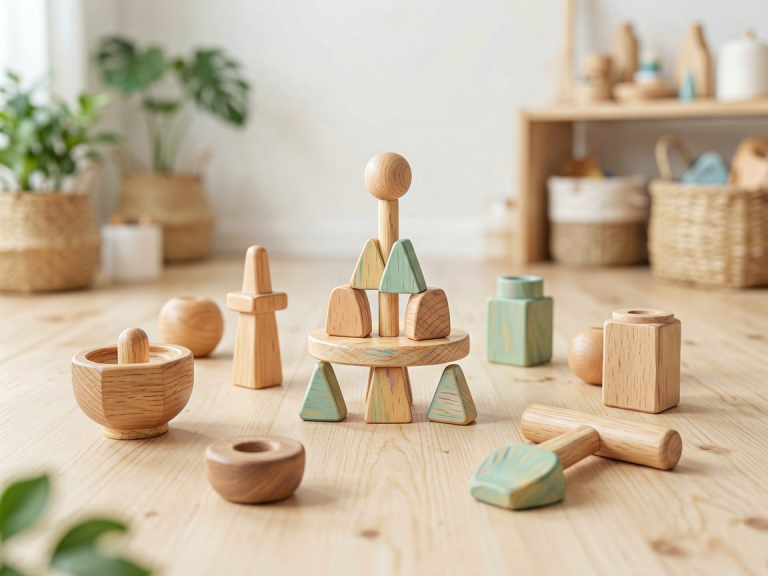
The most direct and powerful alternative to jigsaw puzzles is the building kit. While puzzles are about disassembling a whole picture into pieces and then reassembling it, construction kits start with abstract components and ask the child to imagine and create a structure from scratch. This reversed process is far more intellectually demanding and creatively rewarding. For an eight-year-old, advanced building sets like magnetic tiles, marble runs, or architecturally focused blocks provide endless hours of trial-and-error learning.
Consider magnetic rod-and-ball sets. Unlike standard plastic bricks, these kits allow children to build freeform structures—spheres, bridges, towers, and even geometric skeletons. The process of figuring out how to balance pieces, why a triangle is stronger than a square, and how to distribute weight gives a hands-on lesson in engineering and physics. Similarly, marble run kits challenge children to design a track that safely guides a marble from top to bottom. They must anticipate speed, momentum, and gravitational pull while troubleshooting whether the marble jumps the track or gets stuck. This is not a one-time puzzle; it is a constantly evolving experiment. What makes construction kits superior to puzzles is their reusability and adaptability. A child who finishes a puzzle feels closure; a child who finishes a marble run feels inspired to build a taller, twistier, or faster one. And because the pieces are open-ended, siblings and friends can collaborate, turning individual problem-solving into a shared social experience.
Strategy and Logic Board Games: The Social Brain Workout
Another excellent alternative to puzzle toys is a well-chosen board game focused on strategy and logic. Unlike puzzles, which are solitary and silent, board games introduce dynamic opponents, changing rules, and social reasoning. At age eight, children are ready for games that require planning several steps ahead, reading other players’ intentions, and adapting to unpredictable outcomes. Games like *Catan Junior*, *Ticket to Ride*, or *Hive* are perfect. These games require players to think spatially, manage resources, and evaluate trade-offs—all skills that traditional puzzles attempt to build in a more limited, static format.
Take *Hive*, a two-player game often described as a “bug-themed chess without a board.” Each piece is an insect with a different movement rule, and the goal is to surround your opponent’s queen bee. The game demands constant strategic reassessment, as every move changes the entire landscape. It is compact, durable, and, most importantly, replayable. Similarly, *Catan Junior* teaches negotiation and probability as children trade resources and build pirate hideouts. The social aspect is crucial: negotiating with a sibling or parent, forming temporary alliances, and gracefully accepting a loss are life skills that puzzles simply cannot teach. Moreover, the tactile nature of board game pieces—wooden tokens, cards, and miniatures—appeals to the sensory needs of an eight-year-old. Board games also turn screen time off, offering face-to-face interaction that is increasingly rare in modern play. For parents seeking a meaningful family activity that doubles as a cerebral challenge, strategy board games are a superior replacement for puzzle toys.
Science and Experiment Kits: Unleashing Curiosity Through Action
If a child is the type who asks “why” about everything, science experiment kits are the ultimate puzzle alternative. While a puzzle gives a predetermined answer, a science kit presents a question and guides the child toward discovery. At eight years old, children can handle chemistry sets with safe, everyday materials, crystal-growing kits, balloon-powered cars, or simple circuit-building sets. These kits transform abstract concepts into tangible, often messy, yet fascinating hands-on experiences. For example, a volcano eruption with baking soda and vinegar is not just a classic trick; it introduces chemical reactions, measurement, and prediction. A magnet kit with iron filings lets children see magnetic fields with their own eyes, sparking questions about invisible forces.
The key advantage here is active experimentation. Puzzles require fitting pieces, but science kits require hypothesizing, testing, and revising. If a child builds a simple electric motor and it does not spin, they must check the connections, reverse the battery, or adjust the coil—this is genuine troubleshooting. This process builds resilience and a scientific mindset. Moreover, many science kits are designed to be performed multiple times, encouraging children to vary the ingredients or conditions. Unlike a completed puzzle that is taken apart and shelved, a science experiment produces a memory and a deeper understanding of how the world works. For an eight-year-old who loves to tinker and explore, a well-chosen science kit offers an incomparable blend of fun and education, easily outshining the quiet monotony of a jigsaw.
Coding and Robotics Toys: Programming Play in the Digital Age
In an era where technology permeates every aspect of life, coding and robotics toys have emerged as profoundly engaging alternatives to puzzles. These toys teach sequential thinking, debugging, and computational logic—skills that are far more relevant to the modern world than fitting pieces into a frame. For eight-year-olds, there are excellent screen-free options like programmable robots with arrow-command buttons, as well as app-driven drones and coding blocks. One popular example is a robot mouse that children program to navigate a maze. The child must break down the path into small steps, guess the sequence, and then watch as the robot follows their instructions. When the robot bumps into a wall, the child learns to “debug” their commands—a skill that directly parallels fixing a mental puzzle.
Another fantastic category is story-based coding kits, where children use blocks or cards to control a character’s actions, solving challenges that increase in complexity. These kits often come with a physical storybook and a grid map, making the experience feel like a magical quest rather than a lesson. What sets coding toys apart from traditional puzzles is their interactive feedback: the toy responds instantly to the child’s logic, providing immediate rewards or gentle failures. This creates a loop of trial, error, and success that is highly motivating. Moreover, robotics toys can be modified and combined with other construction sets, allowing for open-ended inventions. A child who learns to code a robot to deliver a small toy across the living room has achieved something more dynamic than completing a picture. In today’s world, early exposure to coding through playful tools is not just an alternative to puzzle toys—it is an essential preparation for future problem-solving.
Creative Arts and Storytelling Kits: Building Worlds with Imagination
Not all eight-year-olds are drawn to logic and mechanics; many thrive on narrative and visual expression. For these children, the best alternative to a puzzle is a creative arts or storytelling kit that encourages them to construct their own narratives and worlds. Look for products like blank comic book templates with illustrated character stickers, 3D storybook kits, or clay modeling sets with prompts. These toys do not impose a single correct answer; instead, they offer open-ended possibilities. A puzzle says, “There is one way to finish me.” A storytelling kit says, “What story will you tell today?” That freedom is immensely powerful for a developing child.
A prime example is a “create your own adventure” board game where children draw cards with characters, settings, and conflicts, then must weave them into a coherent tale. This exercise strengthens language skills, sequencing, and emotional intelligence. Alternatively, a stop-motion animation kit, which includes a simple camera stand and clay figures, lets kids produce their own short films. This involves planning, storyboarding, and patience—similar to puzzle-solving but with a richer creative payoff. Even simpler, a giant roll of paper and a set of washable markers can become an ongoing mural project that evolves over days. The act of planning a picture, deciding what to add, and erasing or revising parts is a form of problem-solving that engages a different part of the brain than logic puzzles. Creative kits also foster a sense of ownership and pride, as the final product is unique rather than identical to a box image. For the imaginative eight-year-old, these are undeniably superior replacements for puzzle toys.
Conclusion: Matching the Toy to the Child’s Evolving Mind
Puzzle toys are not bad—they have their place. But for an eight-year-old, the static, solitary nature of puzzles often cannot keep pace with their energy, curiosity, and social development. The alternatives discussed above—construction kits, strategy board games, science experiments, coding robots, and creative storytelling sets—all share the core benefits of puzzles: they challenge the mind, require patience, and reward persistence. Yet they go further by adding elements of motion, collaboration, open-endedness, and real-world relevance. When choosing among them, consider the individual child’s preferences. A future engineer may love magnetic blocks; a future writer may adore a storytelling kit; a future scientist may beg for a chemistry set. The best toy is not necessarily the most educational or the most complex—it is the one that keeps the child fully engaged, because genuine learning happens through play. By offering these puzzle alternatives, we give eight-year-olds not just a toy, but a tool for thinking—and that is the ultimate gift for a growing mind.