Beyond the Bricks: Should You Buy Building Blocks for an 8-Year-Old?
As a parent, caregiver, or gift-giver, you stand in the toy aisle staring at a colorful box of interlocking plastic bricks. The child in question is eight years old—no longer a toddler who might swallow small parts, but not yet a teenager glued to a smartphone. The question “Should I buy building blocks for an 8-year-old?” is deceptively simple. On the surface, it seems like a yes-or-no choice. But beneath it lies a deeper inquiry about childhood development, screen time, creativity, and the kind of play that truly prepares a child for an unpredictable future. The answer, as with most things in parenting, is nuanced. Let us unbox the argument—literally and figuratively.
The Cognitive Case: Why Building Blocks Are More Than Toys
At age eight, a child’s brain is undergoing remarkable transformations. The prefrontal cortex—the seat of planning, impulse control, and complex problem-solving—is rapidly developing. Building blocks are not merely entertainment; they are a gymnasium for the executive functions.
When an eight-year-old sits down with a set of bricks, she must mentally visualize a structure, break it into manageable steps, and execute a plan. If the tower wobbles, she must diagnose the problem: Is the base too narrow? Are the bricks misaligned? This trial-and-error process teaches resilience and analytical thinking far more effectively than any worksheet. Research in educational psychology has consistently shown that construction play enhances spatial reasoning—a skill strongly correlated with later success in STEM fields. A 2017 study published in *Child Development* found that preschoolers who engaged in more block play scored higher on mathematical achievement tests in middle school. For an eight-year-old, the benefits are even more pronounced because their developing brains can grasp concepts like symmetry, balance, and structural integrity.
Moreover, building blocks offer something that many modern educational tools do not: immediate, tangible feedback. A video game might flash a “Level Complete” message, but a block structure that collapses in a heap teaches a lesson about gravity and physics that no screen can replicate. The child learns that consequences are real, that effort matters, and that sometimes you have to start over. In a world where instant gratification is the norm, that lesson is invaluable.
Social and Emotional Growth: The Hidden Curriculum
Play is rarely a solitary act. When an eight-year-old builds with blocks alongside a sibling or friend, a microcosm of society emerges. They must negotiate: Who gets the red bricks? Should we build a castle or a spaceship? How do we combine our ideas without fighting? These conversations are not trivial. They are the raw material of emotional intelligence.
Blocks also provide a safe space for failure. In many academic settings, mistakes are penalized with red ink. But when a block creation crumbles, the child can simply rebuild, often with improved understanding. This low-stakes environment encourages a growth mindset—the belief that intelligence and ability can be developed through effort. Carol Dweck’s groundbreaking research on mindset shows that children praised for effort rather than intelligence are more likely to take on challenges. Building blocks are a perfect arena for that praise: “I saw how you kept trying different ways to make the roof stay on. That was clever!”
Additionally, building can be a powerful tool for emotional regulation. An eight-year-old who has had a tough day at school may find solace in the rhythmic click of bricks snapping together. The repetitive motion, the focus on a small task, and the eventual satisfaction of creation can serve as a form of mindfulness. Unlike passive entertainment, which often numbs emotions, building blocks allow children to process feelings through action.
The Modern Dilemma: Screen Time vs. Traditional Play
We cannot ignore the elephant in the playroom: digital devices. The average eight-year-old in many developed countries spends over three hours per day on screens, according to Common Sense Media. Against this backdrop, the question of buying building blocks becomes a statement of values. Are you choosing to invest in unstructured, open-ended play? Or are you conceding to the dopamine-fueled allure of tablets and consoles?
Building blocks are the antithesis of the algorithm. A video game might offer infinite levels, but it also dictates the rules. Blocks, by contrast, have no instructions for life. A single set of bricks can become a castle, a robot, a rocket ship, or an abstract sculpture. This open-endedness is crucial because it fosters divergent thinking—the ability to generate many solutions to a problem. Divergent thinking is the wellspring of creativity, and it is precisely the skill that artificial intelligence struggles to replicate. An AI can build a perfect tower from a blueprint, but it cannot joyfully ignore the blueprint to create something never seen before.
That said, the choice is not binary. Many high-tech building sets now incorporate augmented reality or programmable motors. But I would argue that for an eight-year-old, the simplest sets—those with basic bricks and no prescribed outcome—are the most powerful. They force the child to become the architect, the engineer, and the storyteller. You are not buying a toy; you are buying a blank canvas.
Practical Considerations: Which Blocks to Choose?
If you have decided to buy building blocks, not all sets are created equal. For an eight-year-old, consider these factors:
- Complexity and frustration tolerance. Sets with too many tiny pieces can overwhelm, while sets that are too simple bore quickly. Look for sets that include a mix of standard bricks, specialty pieces (wheels, hinges, windows), and a few larger baseplates. The sweet spot is around 500 to 800 pieces.
- Theme versus open-ended play. A licensed set—like those featuring movie characters—can be motivating, but children often build the model once and then leave it on a shelf. Look for sets that also encourage free building, or supplement a themed set with a bucket of basic bricks.
- Quality and safety. Avoid cheap, off-brand bricks that may not fit together properly. Frustration over loose connections can kill the joy. Well-known brands like LEGO are expensive for a reason: consistent clutch power and non-toxic materials.
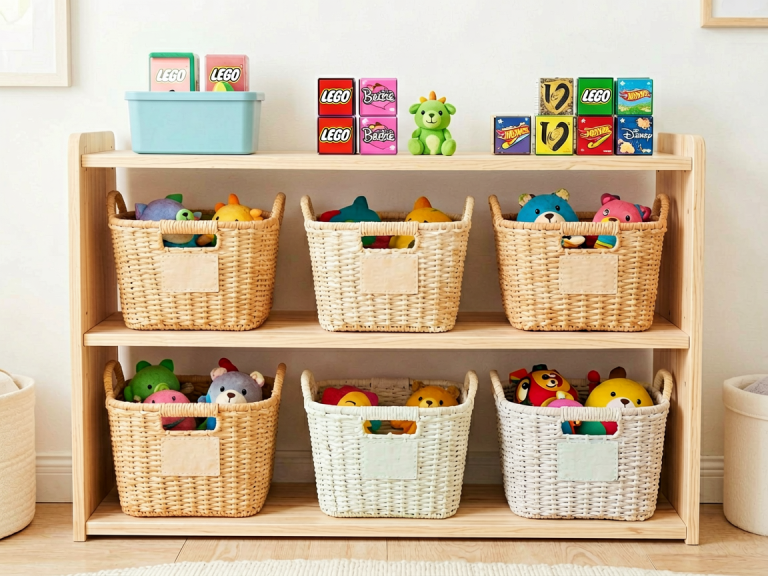
- Storage and organization. A child who cannot find the right brick will give up. Invest in a sorting tray or small bins. Encourage the child to organize by color or type—this itself is a learning exercise in categorization.
The Critic’s Counterargument: Isn’t Eight Too Old for Blocks?
You might hear that eight-year-olds should be moving on to more “advanced” activities: coding, sports, musical instruments. This perspective undervalues the role of imaginative play in middle childhood. Erik Erikson’s stages of psychosocial development place eight-year-olds in the “Industry vs. Inferiority” stage, where they are eager to create, produce, and master skills. Building blocks satisfy this drive perfectly. They are not a regression; they are a foundation.
Moreover, many adults are rediscovering the joy of building blocks. The adult LEGO community is thriving, with complex sets and even architecture lines. Introducing a child to blocks at age eight plants a seed that may grow into a lifelong hobby—one that reduces stress, sharpens the mind, and offers a tangible sense of accomplishment in a digital age.
Conclusion: A Blueprint for Decision-Making
So, should you buy building blocks for an eight-year-old? The evidence stacks up resoundingly in favor of “yes.” But let us add nuance: the answer depends on the child. If the child already has a deep passion for drawing or reading, blocks might complement those interests rather than replace them. If the child is reluctant to engage with non-digital activities, start small. Build alongside them. Show them that you, too, can get lost in the satisfying click of a brick.
Ultimately, buying building blocks is not about acquiring a product. It is about giving permission to play—to experiment, to fail, to rebuild, and to imagine. In a world that increasingly demands conformity and efficiency, blocks celebrate the messy, glorious process of creation. For an eight-year-old standing on the cusp of greater independence and reason, that gift is priceless. The tower may fall, but the skills it builds will stand for a lifetime.