Beyond the Brick: The Enduring Appeal of Screen-Free Alternatives to LEGO-Style Building Blocks
Introduction: Rethinking Play in a Digital Age
In an era dominated by screens—tablets, smartphones, gaming consoles, and endless streaming platforms—the simple joy of building with interlocking plastic bricks remains a nostalgic touchstone for many parents. LEGO-style bricks have long been celebrated for fostering creativity, fine motor skills, and spatial reasoning. Yet, as concerns over screen time escalate and environmental awareness grows, a parallel movement is gaining momentum: the search for screen-free alternatives that offer the same developmental benefits without the plastic dependence or digital entanglement. These alternatives are not merely retro throwbacks; they represent a thoughtful recalibration of what meaningful play can be. From natural materials to magnetic systems, from clay to cardboard, the world of hands-on construction is richer and more diverse than ever. This article explores the most compelling screen-free alternatives to LEGO-style bricks, examining their unique advantages, educational potential, and how they can reinvigorate a child’s (or an adult’s) relationship with creation.
Why Seek Alternatives? The Case Against Plastic and Pixels
Before diving into specific alternatives, it is worth understanding why many families and educators are looking beyond traditional LEGO bricks. The first concern is environmental: most LEGO bricks are made from ABS plastic, a petroleum-based material that is durable but not biodegradable. While LEGO has committed to using sustainable materials by 2030, the reality is that billions of tiny plastic pieces already exist in homes, landfills, and oceans. By choosing alternatives made from wood, bamboo, recycled cardboard, or biodegradable bioplastics, consumers can reduce their ecological footprint without sacrificing the building experience.
The second concern is developmental. While LEGO bricks are excellent for structured construction, they can also inadvertently encourage screen-based play through official apps, online videos, and branded media tie-ins. Many “LEGO alternatives” deliberately remain low-tech, forcing children to rely entirely on their imagination, physical dexterity, and problem-solving skills. This screen-free aspect is crucial: research consistently shows that hands-on, unstructured play improves executive function, emotional regulation, and social cooperation far more effectively than any digital equivalent. Finally, cost is a factor. LEGO sets have become prohibitively expensive for many families, whereas many alternatives—especially those using natural or recycled materials—are more affordable, modular, and easier to source locally.
Wooden Building Blocks: Timeless, Tactile, and Sustainable
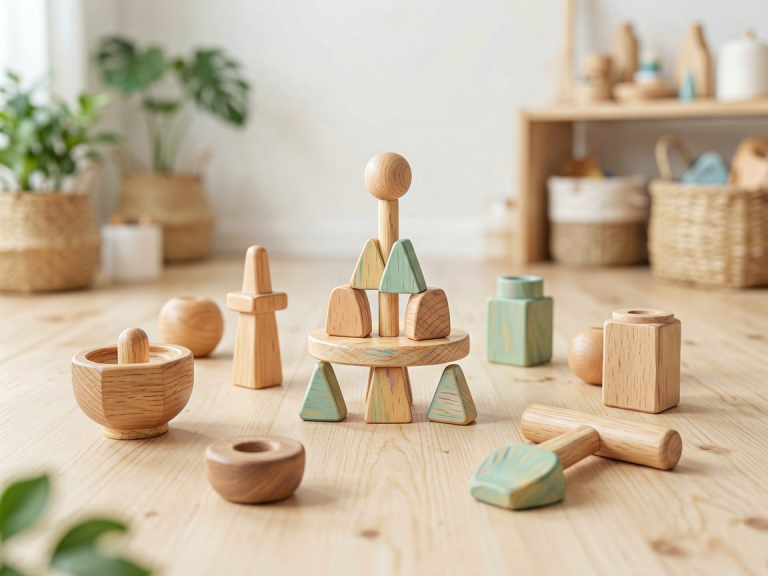
One of the most obvious and enduring alternatives to plastic bricks is the humble wooden block. Unlike the precision-molded studs of LEGO, wooden blocks rely on gravity, friction, and balancing—a fundamentally different physics experience. Brands like Unit Blocks (often found in Montessori classrooms) offer simple geometric shapes—cubes, cylinders, arches, and planks—that challenge children to consider weight distribution, symmetry, and structural integrity. There is no locking mechanism; a tower stands only if it is carefully balanced. This promotes patient experimentation and frequent, gentle failure—a key component of resilience.
Wooden blocks also excel in sensory appeal. The warmth of natural wood, the subtle grain patterns, and the satisfying clunk of a block being placed all engage multiple senses in a way that plastic cannot replicate. Many wooden block sets are finished with non-toxic plant-based oils or beeswax, making them safe for teething toddlers. Moreover, they are completely open-ended: a set of twenty blocks can become a castle, a bridge, a spaceship, or simply a chaotic pile sorted by color or size. Unlike LEGO bricks, which often come with instructions for a specific model, wooden blocks encourage pure creativity. For older children, Kapla planks—identical thin wooden planks that can be stacked in breathtakingly intricate structures—offer a meditative, architectural challenge that rivals any plastic construction kit.
Magnetic Building Tiles: Colour, Light, and Geometric Discovery
If wooden blocks represent the ancient past of building, magnetic tiles (often marketed as Magna-Tiles or similar generic versions) represent a modern, screen-free innovation that has captured the imaginations of children worldwide. These translucent plastic squares and triangles contain embedded magnets along their edges, allowing for rapid, satisfying connections. The key difference from LEGO bricks is the ability to build in three dimensions with incredible ease: walls can be erected with a single click, roofs can be cantilevered, and entire structures can be lifted and rotated without falling apart.
Magnetic tiles are especially powerful for teaching geometry and symmetry. Children naturally explore the relationships between 2D shapes and 3D forms as they fold a flat net into a cube or combine six squares to form a box. The translucent panels also interact beautifully with light: placing them on a window or over a flashlight transforms a simple structure into a kaleidoscope of coloured shadows. This light-play element is unique to magnetic tiles and cannot be replicated by LEGO bricks. While the plastic used in many magnetic tile sets is still petroleum-based, some brands have begun using recycled ABS or bioplastics, and the longevity of these tiles (they rarely break) reduces waste over time. For families seeking a colourful, collaborative, and screen-free building experience, magnetic tiles are arguably the most engaging alternative on the market.
Construction with Recycled and Upcycled Materials: Creativity Without Cost
Perhaps the most sustainable and accessible screen-free alternative to LEGO bricks is not a commercial product at all—it is the act of building with objects destined for the bin. Cardboard boxes, toilet paper rolls, egg cartons, plastic bottles, bottle caps, and scrap fabric can all become architectural components. This approach, often called “loose parts play,” is championed by educators like Simon Nicholson, who argued that the most creative play environments are those with variable, manipulable materials.
Unlike LEGO bricks, which have predetermined connection points, recycled materials require children to invent their own joining methods—tape, glue, string, or simple interlocking slots cut into cardboard. This fosters a deeper understanding of engineering principles: a cardboard tower must consider not only weight but also the weakness of corrugated edges; a bridge made from straws must be stiffened with triangular bracing. The process is messy, unpredictable, and deeply rewarding. Moreover, it instils a sense of resourcefulness and environmental stewardship. A child who has built a rocket from a cereal box will never look at packaging the same way again. For parents, the cost is essentially zero, and the variety of materials means that no two creations will ever be alike. Many toy companies now offer “makers kits” that include wooden connectors, dowels, and recycled cardboard panels (such as Makedo or Roam Creative) specifically designed for upcycled construction, bridging the gap between pure junk and a curated building system.
Clay and Modelling Compounds: Sculptural Building
Building is not limited to stacking or interlocking rigid pieces. Modelling clay, playdough, and air-dry clay offer a completely different yet equally valid form of three-dimensional construction. While LEGO bricks enforce discrete modular units, clay allows for continuous, flowing forms: curves, spirals, organic shapes that cannot be replicated with plastic. The sensory experience is also radically different: kneading, rolling, and pinching clay strengthens hand muscles and provides a calming, almost meditative feedback.
For children who enjoy the narrative aspect of LEGO play—creating scenes with minifigures and vehicles—clay can be used to build entire worlds from scratch. A lump of clay can become a character, a house, a tree, or a mountain with no constraints except the child’s manual dexterity. This open-endedness is both liberating and challenging. Some clay sets come with simple tools (wooden stamps, rolling pins, cutters) that allow for repeated patterns and textures, mimicking the repetitive pleasure of snapping bricks together. More advanced options include polymer clays that can be baked hard, creating permanent miniatures. While clay does not offer the same precision as LEGO bricks, it compensates with emotional expressiveness and tactile satisfaction. It also encourages iterative improvement: a failed clay sculpture can be squished and reformed instantly, teaching that mistakes are temporary.
Construction for the Mechanical Mind: Gears, Pulleys, and Wooden Engineering Kits
Children who are drawn to the mechanical aspects of LEGO Technic—gears, axles, motors—need not rely on plastic or batteries. Several excellent screen-free alternatives focus on mechanical engineering using natural or sustainable materials. One classic is the wooden gear set, often found in Montessori or Waldorf toy collections. These sets include wooden gears of various sizes mounted on a pegboard or base. By turning one gear, children see how motion transfers, how teeth mesh, and how gear ratios affect speed. The tactile feedback of slow-turning wooden gears is far more encouraging than the rapid, sometimes confusing action of plastic gears.
Another outstanding option is Kapla Construction Beams (different from the planks mentioned earlier) or Strawbees, a system of flexible plastic connectors that attach to paper or plastic straws to create bending, twisting, and pivoting structures. Strawbees are particularly interesting because they can be combined with recycled cardboard to build working catapults, drawbridges, and cranes. The absence of a screen means that children must physically test their designs—if a lever doesn’t lift, they must adjust the fulcrum position by trial and error. This type of play directly parallels the scientific method. For older children, Erzgebirge wooden construction kits (often imported from Germany) offer precision-cut beechwood pieces that lock together with wedges and dovetails, producing models of bridges, Ferris wheels, and clocks that are truly functional without glue or nails. These kits are expensive but heirloom-quality, and they teach patience and attention to detail far beyond what a plastic brick set can provide.
The Social and Emotional Benefits of Screen-Free Building
Beyond the toys themselves, the greatest advantage of screen-free alternatives is the quality of interaction they encourage. LEGO play often happens in parallel—children each building their own model with occasional glances at a tablet for instructions. In contrast, many of the alternatives described above promote cooperative, verbal, and physical engagement. A set of magnetic tiles invites multiple children to collaborate on a single dome; a cardboard fort requires negotiation about door placement and structural stability; a clay village fosters storytelling and role-play. Without a screen to compete for attention, children make eye contact, discuss their ideas, and learn to compromise.
Additionally, screen-free building does not rely on batteries or Wi-Fi, making it ideal for car rides, camping trips, or power outages. It also reduces the risk of overstimulation. The slow, deliberate pace of balancing a wooden block or smoothing a clay surface helps children regulate their nervous systems, which is especially important in an age of constant digital notifications. Many therapists recommend hands-on construction as a calming activity for children with anxiety or ADHD, precisely because it grounds them in the physical world.
Conclusion: The Future of Building—and Why Less Is More
The search for screen-free alternatives to LEGO-style bricks is not a rejection of LEGO itself, but rather an expansion of the building landscape. By embracing wooden blocks, magnetic tiles, recycled materials, clay, and mechanical kits, families can provide a richer, more varied sensory and cognitive experience. These alternatives often cost less, last longer, and have a lower environmental impact. More importantly, they encourage the kind of deep, uninterrupted, imaginative play that screens typically disrupt.
As we move further into the digital century, the value of objects that do nothing—that are simply there, waiting to be transformed by human hands—will only grow. The humble block, the magnet, the lump of clay, and the cardboard tube are not primitive relics; they are powerful tools for unhooking from the screen and reconnecting with the physical world. They remind us that the most sophisticated computer ever built is the human mind, and that it needs no electricity to create a universe.
In the end, the best screen-free alternative to LEGO bricks is perhaps not any single product, but the willingness to step away from digital instructions and into the open-ended, messy, glorious uncertainty of making something from nothing. That, more than any plastic brick, is the foundation of true creativity.
*(Word count: approximately 1,430 words)*