Beyond Beeps and Motors: The Best Alternatives to Robot Toys for 6-Year-Olds
Introduction
At six years old, children are in a golden period of development. Their curiosity is boundless, their imagination is firing on all cylinders, and their cognitive, motor, and social skills are rapidly maturing. Robot toys—those whirring, blinking, programmable companions—often promise to deliver STEM learning and futuristic fun. Yet many parents and educators find that these high-tech gadgets can be surprisingly limiting: they break easily, require constant battery replacements, offer little open-ended play, and sometimes leave children passively watching rather than actively creating. The quest for the best alternatives to robot toys for 6 year olds is not about rejecting technology, but about embracing play that is richer, more flexible, and more aligned with a child’s natural developmental needs. The alternatives discussed here encourage problem-solving, creativity, physical activity, and genuine human interaction—qualities that no robot can truly replicate.
—
Creative Construction Sets: The Original “Programmable” Play
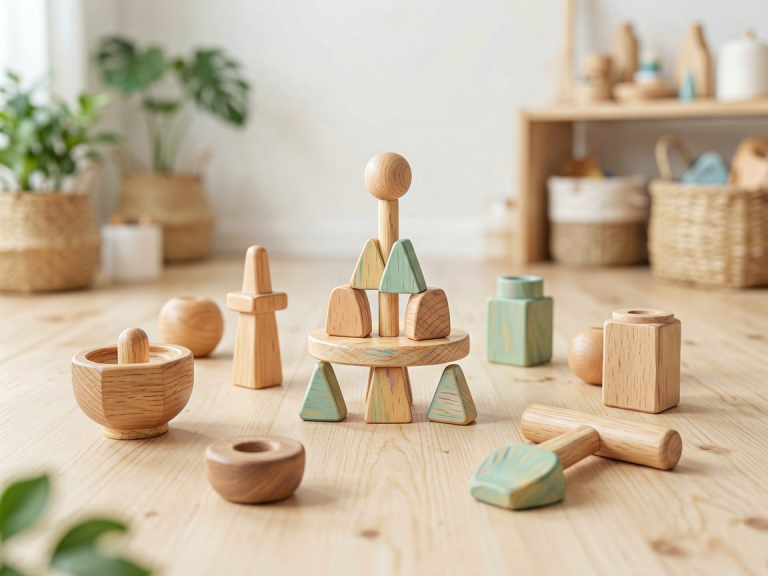
When you strip away the motors and sensors, the core value of many robot toys is the opportunity to build and control. But classic construction sets offer that same thrill—and more. Building blocks, magnetic tiles, and interlocking systems like LEGO Classic or DUPLO (still age-appropriate for six-year-olds who enjoy complex builds) empower children to design their own worlds rather than assemble a predetermined robot.
A six-year-old can spend hours constructing a castle with drawbridges, a spaceship with removable wings, or a zoo for their stuffed animals. Unlike a robot that follows a fixed script, a pile of blocks invites infinite iteration. When a tower falls, the child learns gravity, balance, and resilience—without a screen to blame. Magnetic tiles, in particular, introduce concepts of geometry and polarity in a hands-on, intuitive way. The child becomes an engineer, architect, and storyteller all at once. Moreover, these sets are social: siblings or friends can collaborate on mega-structures, negotiating roles and sharing pieces. This cooperative play builds communication and empathy in ways that competing with a robot’s pre-programmed dance moves never could.
For parents seeking a structured challenge, construction kits with gears, pulleys, and simple mechanics (like K’NEX or Engino) provide a gentle introduction to physics. Children can build a working crane or a car that actually rolls, understanding cause and effect through their own trial and error. These alternatives foster the same logical thinking that robot toys promise, but they do so with tangible, tactile feedback and no software glitches.
—
Art and Craft Kits: Where Imagination Takes the Lead
Robot toys often limit creativity to the functions programmed by the manufacturer. In contrast, art and craft supplies place the child firmly in the driver’s seat. For a six-year-old, the best alternative to a robot is a box of high-quality markers, clay, watercolors, or a simple sewing kit.
Why? Because art is the ultimate open-ended activity. A child can draw a robot that looks exactly like the one in their mind—complete with rainbow wings and a cupcake-powered engine—without needing to code a single line. Modeling clay (air-dry or reusable) lets them sculpt three-dimensional figures, developing fine motor skills and spatial awareness. Paper mâché projects, while messy, teach patience and the joy of transforming simple materials into something extraordinary.
Craft kits that include instructions—like making a friendship bracelet or a felt animal—provide a gentle scaffold for learning to follow sequential steps, a skill often touted by robot toy marketers. Yet here, the child is the maker, not the observer. They choose colors, modify designs, and fix mistakes with their own hands. The sense of accomplishment after finishing a painting or a clay dinosaur is far more profound than watching a robot complete a choreographed routine. Additionally, art activities can be done independently or in groups, and they require zero batteries, making them eco-friendly and cost-effective.
—
Board Games and Puzzles: Social Strategy Over Solo Screens
At age six, children are beginning to understand rules, turn-taking, and strategy. Robot toys, especially those marketed as “interactive,” often isolate the child in a one-on-one relationship with a machine. Board games, however, are arguably the best alternative because they connect children with family and peers while sharpening cognitive skills.
Classic games like *Candy Land* (for younger six-year-olds) or *Sorry!* reinforce number recognition and counting. *Jenga* teaches patience and hand-eye coordination. More sophisticated options like *Robot Turtles* (yes, it has “robot” in the name, but it’s actually a board game that teaches programming logic without a screen) or *Outfoxed* encourage deductive reasoning and cooperative problem-solving. The key difference: a board game creates a shared experience. Laughter, friendly competition, and the thrill of drawing the right card happen in real time with real people.
Puzzles are another powerful alternative. A 100-piece jigsaw puzzle demands focused attention, pattern recognition, and perseverance. When a six-year-old fits a tricky piece into place, they experience a dopamine hit that no robot’s blinking lights can match. Puzzles also teach children that mistakes are temporary—you simply try another piece. Unlike a robot that might frustrate a child with a frozen screen or a confusing instruction manual, a puzzle is forgiving and silent, allowing the child to work at their own pace.
—
Outdoor and Active Play: Moving Beyond the Charging Dock
A six-year-old’s body craves movement. Robot toys, by their very nature, encourage sedentary indoor play. The best alternatives to robot toys for this age group are those that get kids running, jumping, balancing, and exploring the physical world.
Consider a balance bike or a scooter—these tools teach coordination and risk assessment in a way no app can. A simple jump rope, a set of sidewalk chalk, or a foam soccer ball can spark hours of active, imaginative play. Obstacle courses made from pillows and chairs (or playground equipment) improve gross motor skills and problem-solving as children figure out the fastest way to crawl under a table or hop over a cushion.
Nature also offers the ultimate robotic alternative. A magnifying glass and a bug-catching kit turn a backyard into a laboratory. Collecting leaves, building a fort from sticks, or splashing in puddles provides sensory-rich experiences that develop observation skills and a sense of wonder. These activities require no programming, no screens, and no instruction manuals—just curiosity and a bit of dirt under the fingernails.
—
Imaginative Role-Play: Costumes and Props Over Capacitors
Perhaps the most underrated alternative to robot toys is dress-up and pretend play. At six, children are fascinated by stories and characters. A set of doctor’s tools, a chef’s apron, a firefighter hat, or a simple cape can transport a child into a universe of their own making. Unlike a robot that repeats the same five phrases, role-play is infinitely variable. One day the child is a vet treating stuffed animals; the next, an astronaut exploring a cardboard-box spaceship.
This type of play accelerates language development, emotional regulation, and empathy. When a child pretends to be a parent putting a doll to bed, they practice nurturing behaviors. When they act out a conflict between superheroes, they learn negotiation and storytelling. No robot can offer the depth of human emotion that a child invents on the fly.
Even simple puppets (sock puppets or hand puppets) encourage dialogue and character creation. Children often use puppets to express feelings they cannot yet put into words—a therapeutic benefit that far exceeds any educational claims of robot toys.
—
Science and Nature Kits: Real Experiments, Not Scripted Reactions
While many robot toys claim to teach STEM, their “science” is often limited to pressing a button to see a pre-programmed response. Hands-on science kits for six-year-olds offer genuine discovery. Consider a growing crystal kit, a volcano eruption set (using baking soda and vinegar), or a simple microscope for examining leaves and feathers.
These kits teach the scientific method: a child forms a hypothesis (“If I add more vinegar, will the volcano erupt higher?”), tests it, and observes the result. The learning is messy, unpredictable, and thrilling. There is no right answer programmed by a manufacturer—only the child’s own observations. Similarly, gardening kits (a small pot, soil, and seeds) teach patience and biology. Watching a bean sprout day by day is a slow-motion miracle that no robot can replicate.
For a more structured STEM alternative, coding board games (like *Code Master* or *Cubetto* for younger children) introduce programming logic without screens. These games use physical tokens and a sequence of moves to solve puzzles—teaching cause, effect, and sequencing in a tangible way that many robot toys attempt but often miss because of technical distractions.
—
Conclusion: The Richness of Unplugged Play
The best alternatives to robot toys for 6 year olds are not just substitutes—they are upgrades. They honor the way children naturally learn: through their hands, through social interaction, through movement, and through imagination. Construction sets teach engineering without a single line of code. Art supplies unlock creativity without constraints. Board games build social bonds and patience. Outdoor play strengthens bodies and connection to nature. Role-play cultivates empathy and storytelling. And science kits offer authentic discovery.
None of these alternatives require Wi-Fi, app updates, or replacement parts. They are durable, inexpensive (often free if you repurpose household items), and most importantly, they put the child in control. Instead of watching a robot perform, the child becomes the robot—they design, build, test, fail, and try again. That is the kind of learning that sticks. So before you add another flashing, beeping gadget to the cart, consider the humble block, the forgotten game, and the open sky. They are, and always will be, the original—and best—toys of childhood.