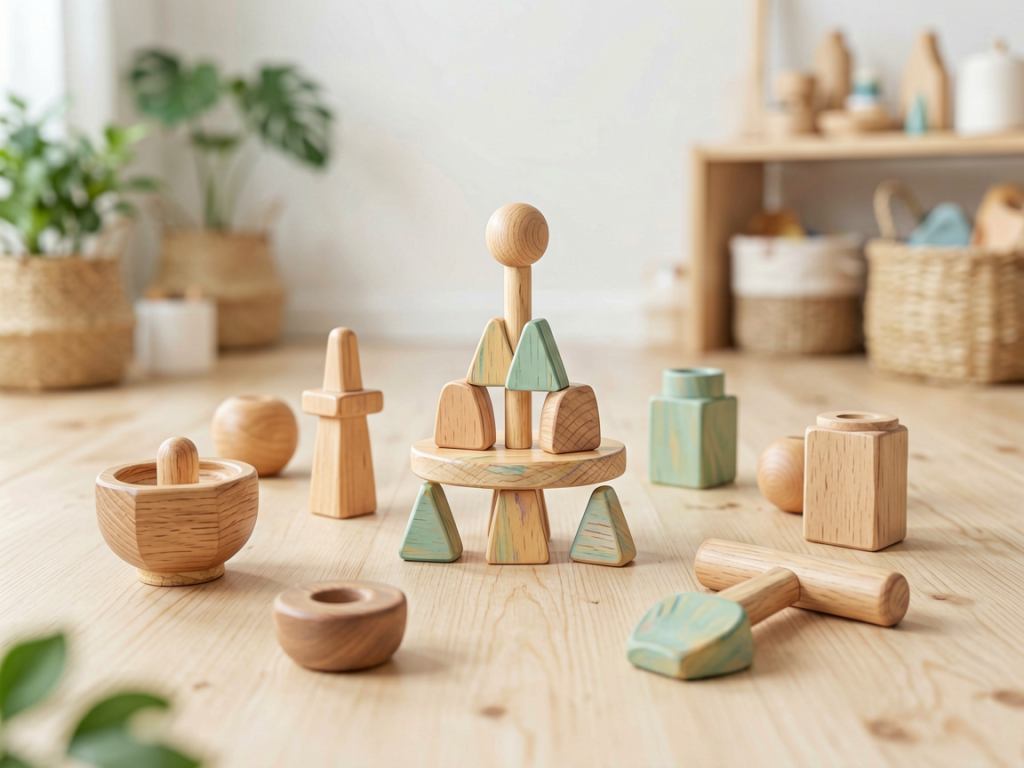
Block sets are sold by piece count, but a child does not build with a count. They build with walls, and walls need a specific mix of long blocks, half blocks and enough squares to close a gap. This is a practical guide to how many blocks a child actually needs at each age, why two sets with the same number on the box behave differently, and the point where adding more stops changing what gets built.
First, decide which toy you are counting
“Building blocks” covers at least four different toys, and the numbers do not transfer between them:
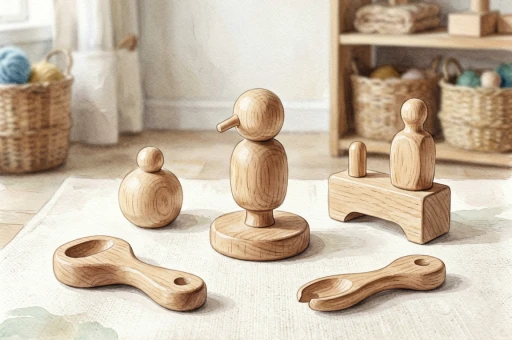
- Unit blocks (wooden, unpainted, rectangular): the classic classroom block. Sold in named shapes – unit, half unit, double, quadruple, pillar, ramp, cylinder. Counted in the low hundreds for a full classroom set.
- Coloured wooden cubes: usually 2 cm or 1 inch cubes. Cheap, good for patterns and early stacking, terrible for building anything with height.
- Plastic brick sets: interlocking, counted in the hundreds and thousands. A different decision entirely, because the connection does the work that gravity does with wooden blocks.
- Large cardboard or foam blocks: for children under two, where the block is closer to furniture than to a construction toy.
Everything below assumes wooden unit blocks or their close equivalents, because that is the format where piece count genuinely decides what is possible. If you are choosing between the formats rather than sizing one, start with the factors to consider before buying building blocks.
The four build thresholds
What a child can build changes at roughly four points, and each one needs a different order of magnitude:
- Around 20 blocks: a tower, a train, a line of blocks with a block on top. This is the two-year-old stage, and 20 is genuinely enough.
- Around 50 blocks: an enclosure – a wall with two corners, a pen for toy animals, a “house” that is really a box with one side open. This is where block play becomes pretend play.
- Around 100 blocks: a structure with a roof, a bridge with supports, a building with an inside. The jump from 50 to 100 is the biggest single jump in what block play looks like.
- 200 blocks and up: a city, a castle with towers, two children building adjacent structures. This tier is about scale and collaboration, not about a single child’s skill.
Counts by age
| Age | Useful count | Block type | What gets built |
|---|---|---|---|
| 1 to 2 years | 10 to 20 | Large, lightweight, rounded edges | Stacking, filling, knocking down |
| 2 to 3 years | 30 to 50 | Large unit blocks | Towers, rows, simple bridges |
| 3 to 4 years | 50 to 80 | Standard unit blocks | Walls, enclosures, garages |
| 4 to 6 years | 100 to 150 | Standard unit blocks | Buildings with roofs, ramps, bridges |
| 6 years and up | 150 to 200 | Standard unit blocks | Multi-part structures left standing |
These are counts of usable blocks, not of pieces in the box. That distinction matters more for blocks than for almost any other toy, and the next two sections explain why.
The shape mix decides whether a set works
A set of 100 identical cubes is far less useful than a set of 100 mixed blocks, because cubes cannot span a gap. A workable mix for a home set looks roughly like this:
- Unit blocks: 40 to 50 percent. The workhorse. Walls, floors, pillars.
- Half units and half pillars: 20 to 25 percent. These are what let a child close a wall to an exact length instead of leaving a gap.
- Double and quadruple blocks: 10 to 15 percent. Roofs, bridges, long spans.
- Ramps, cylinders and small triangles: 10 to 15 percent. Movement, doors, decoration.
If a set is mostly cubes, the child will build towers and nothing else, and the set will be outgrown in months rather than years. When you are comparing two sets at the same price, check the shape list before the total.
Why “200 pieces” often behaves like 120
Three things inflate block counts:
- Decorative pieces. Little people, trees, signs and doors are counted as pieces and are useless as structure.
- Tiny filler blocks. A bag of 1-inch cubes adds to the count and adds almost nothing to what can be built.
- Storage containers. Occasionally counted. Always check.
The practical test is weight and volume rather than count: a genuine 100-block set of unit blocks is heavy and fills a decent-sized bin. A 200-piece set that fits in a shoebox is a set of small cubes with a large number on the label.
How to buy without rebuying
- Buy one good mixed set at the size the child needs now, not the size they will need at six. A three-year-old with 60 well-mixed blocks builds more than a three-year-old with 150 blocks and no half units.
- Buy the same brand and the same nominal unit size when you expand. Unit blocks from different makers are frequently a few millimetres apart, which is enough to make walls wobble.
- Add shapes, not just quantity. The second purchase should fill the gap in the mix – usually more half units and doubles, not more cubes.
- Cap the collection at what fits in one bin. Blocks that do not fit in the bin live on the floor, and blocks on the floor stop being played with.
This is the same failure we describe in buying toys with too many pieces: past a certain count, more pieces reduce play rather than extend it, because setup and cleanup eat the session.
When the bin stops emptying
Three signals that the collection is already big enough:
- The child builds the same three structures every time, regardless of how many blocks are available.
- Most of the bin has not been touched in a month, and the same 30 blocks are always the ones in use.
- Cleanup takes longer than the build.
At that point the useful purchase is a different shape, or a different toy, not more of the same. Blocks are one of the few toys where a modest set used daily beats a large set used weekly, and buying accordingly is the cheapest decision available.
Common questions
How many blocks does a 2-year-old need?
Around 20 to 30 large blocks. At two, the play is stacking, lining up and knocking down, and a bigger set does not change any of those. Large, lightweight blocks with rounded edges are more useful than a big count of small ones.
Are 100 blocks enough for a 5-year-old?
Yes, if the mix is right. A hundred blocks with enough half units and doubles will build a house with a roof and a bridge. A hundred cubes will not, which is why the shape list matters more than the number.
Are expensive wooden blocks worth it over cheap ones?
Usually yes, for two reasons that show up in use rather than on the box: consistent dimensions, so walls actually stack, and sanded edges, so the blocks do not splinter. Our comparison of expensive versus cheap building blocks covers where the extra money does and does not buy anything.
Can a 1-year-old play with unit blocks?
Only with the large, lightweight versions, and with supervision, because small blocks are a choking risk and heavy ones hurt when dropped on a foot. The right age to introduce building blocks covers the transition from large blocks to standard unit blocks.
Related reading
- Are building blocks worth it? – the value case before the quantity question.
- Are cheap building blocks worth it? – where the savings go wrong.
- Safe alternatives to building blocks – if the count or the mess is the problem.
- Age-by-age toy guide – where blocks sit next to everything else.
- How to choose a toy: a 10-minute decision framework – the site’s general method.