The Power of Play: How to Choose Toys for 2-Year-Olds That Boost Language Development
Introduction: Why Toy Choice Matters at Age Two
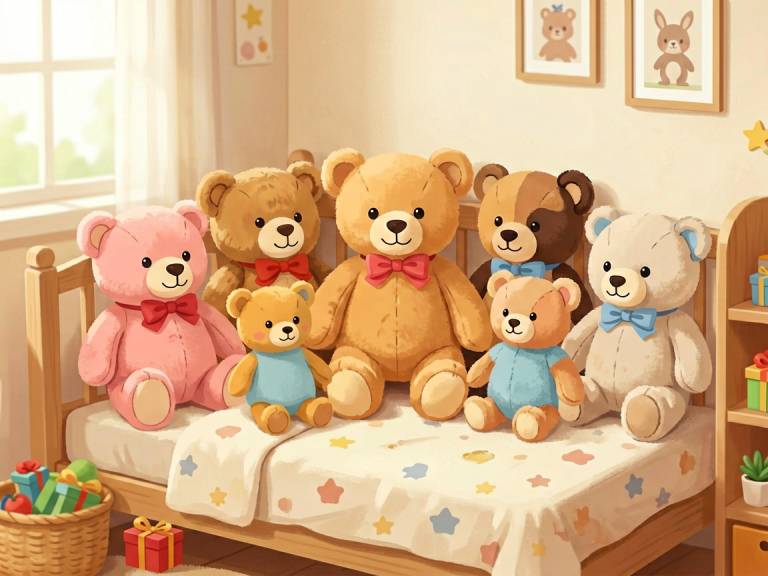
At two years old, a child’s brain is developing at an astonishing rate. They are moving from single words to short sentences, absorbing vocabulary at a pace that will never be matched again. During this critical window, language development is not just about being read to or spoken with—it is also deeply influenced by the objects children interact with every day. Toys are not mere distractions; they are tools for thinking, talking, and connecting. The right toy can spark conversations, introduce new words, and encourage back-and-forth exchanges between a child and their caregiver. The wrong toy—often flashy, passive, or overly complicated—can actually stifle verbal engagement. So how do parents, grandparents, and educators choose toys that genuinely support language growth for a two-year-old? This article offers a practical, research-inspired guide, focusing on six key principles: open-endedness, real-world relevance, auditory richness, social interaction, sensory variety, and age-appropriate challenge.
Principle One: Choose Open-Ended Toys That Invite Conversation
Open-ended toys are those that can be used in multiple ways, with no single “correct” outcome. For a two-year-old, blocks, stacking cups, simple dolls, and play silks are perfect examples. Why are these so powerful for language? Because they require the child to invent scenarios, narrate actions, and assign meanings. When a child stacks a block and says, “Up!” or knocks it down and shouts, “Fall down!” they are practicing verbs and prepositions in a meaningful context. A cardboard box can become a car, a boat, or a cave—and each transformation demands words: “I go fast!” “The boat is wet!” “Bear is sleeping.”
Crucially, open-ended toys also invite adults to ask questions. With a closed-ended toy—like a battery-operated toy that lights up and plays a fixed song—there is little to say beyond “Wow, it’s red.” But with a set of wooden blocks, a caregiver can ask, “What are you building?” “Should we put the blue block on top?” “Who lives in this tower?” These questions elicit responses, expanding the child’s vocabulary and sentence structure. Open-ended toys place the child in the driver’s seat, making language a necessity rather than an afterthought.
Principle Two: Prioritize Real-Life and Pretend Play Toys
At two, children are beginning to understand that objects represent other things. A plastic banana becomes a phone; a toy broom becomes a guitar. This symbolic thinking is the foundation of language, because words themselves are symbols. Toys that mimic real-life objects—kitchen sets, tool benches, baby dolls, grocery carts, and dress-up clothes—give children the chance to act out familiar routines. As they play “cooking dinner” or “putting the baby to sleep,” they naturally rehearse the language they hear at home: “More soup?” “Baby is crying.” “Time for bath.” This is not just cute; it is essential practice for using language in social situations.
When choosing real-life toys, look for ones that are durable, safe, and appropriately sized. A two-year-old does not need a toy with hundreds of tiny food pieces. Instead, choose larger items that are easy to grasp and manipulate. Also, remember that the best “real-life” toys are often the real objects themselves—child-safe kitchen utensils, empty boxes, old hats, or a silicone spatula. Watching a caregiver do dishes while handing the child a plastic cup to “wash” creates a shared moment full of words: “splash,” “bubble,” “dry,” “clean.” These everyday interactions are richer than any store-bought toy.
Principle Three: Seek Toys That Encourage Sound and Listening
Language development is not only about speaking; it is also about listening. The ability to discriminate between sounds, to notice rhythm and tone, and to anticipate patterns all support vocabulary acquisition. Therefore, toys that engage the ears are invaluable. Musical instruments designed for toddlers—shakers, drums, xylophones, and maracas—are wonderful choices. When a child shakes a shaker fast and slow, they learn about tempo; when they hit a drum loud and soft, they learn about volume. Pair these actions with words: “That’s loud! Let’s play soft now.” Singing songs with instruments, like “Twinkle, Twinkle” while tapping a xylophone, reinforces syllables and rhyme.
But musical toys are not the only auditory options. Simple cause-and-effect toys that make animal sounds—like a toy cow that moos or a duck that quacks—can help a two-year-old learn animal names and the sounds associated with them. The key is to choose toys where the sound is intentional and controllable, not random and annoying. Avoid toys that produce constant electronic noise, because they tend to dominate the auditory environment and reduce the child’s motivation to use their own voice. A good rule of thumb: if the toy can be played with silently and still be fun, and also can be played with while making sounds, it is a better choice than a toy that simply emits pre-recorded phrases.
Principle Four: Look for Toys That Promote Turn-Taking and Social Interaction
Language is inherently social. A two-year-old learns to talk because talking gets results—attention, help, or shared joy. Toys that are designed for two people, or that naturally encourage back-and-forth, are especially effective. For instance, a simple ball is a phenomenal language toy. Rolling a ball back and forth requires saying “Ready, set, go!” and “My turn!” and “Catch!” Each exchange is a mini-conversation. Similarly, a toy telephone (whether a real broken phone or a vintage play phone) invites a child to have “calls” with a caregiver. The child speaks, pauses, listens, responds—practicing the basic structure of dialogue without pressure.
Puzzles are another great social toy when done together. A two-year-old may not solve a jigsaw puzzle alone, but with a caregiver saying, “Try this piece,” “Where does the bunny go?” “You did it!” the child hears directional language, spatial words, and positive reinforcement. Even large floor puzzles with a few pieces are enough to stimulate discussion. The golden rule is to avoid handing a child a toy and walking away. The most language-rich toy in the world is useless without a loving adult who talks, listens, and responds. So choose toys that give you a natural reason to sit down and play *with* your child, not just watch them play alone.
Principle Five: Embrace Sensory-Play Toys That Spark Descriptive Language
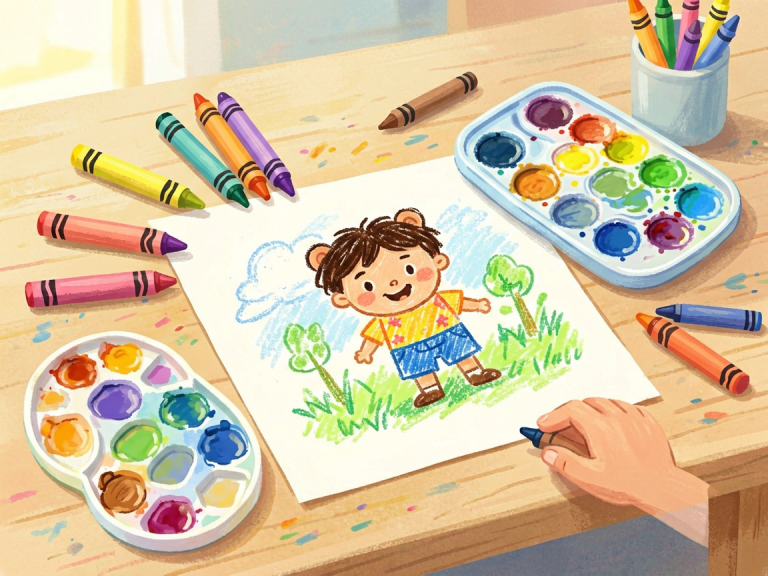
Sensory play—playing with materials that stimulate touch, smell, sight, and even taste—is a powerhouse for language development. When a child squeezes playdough, runs fingers through dry rice, or paints with water on a sidewalk, they experience a flood of sensations. These experiences create the need for descriptive words: “squishy,” “smooth,” “sticky,” “wet,” “cold,” “soft,” “rough.” A two-year-old who has played with kinetic sand is much more likely to understand and say “grainy” or “mold” than one who has only seen pictures. Sensory toys can be simple: a tray of shaving cream, a bin of uncooked beans, a set of textured balls, or water squirters in the bathtub. Even better, when you narrate the experience—“Oh, the beans are pouring! They are making a pitter-patter sound”—you are modeling rich vocabulary in a natural, engaging way.
When choosing sensory toys, prioritize safety. Items should be large enough not to be swallowed, nontoxic, and easy to wash. Supervise all sensory play, especially with materials like water or small objects. But do not underestimate the value of mess. A little mess is a small price for a child who learns to say “slippery” or “crunchy” with delight. You can even make your own sensory toys: a plastic bottle filled with beads and glue becomes a “calm-down bottle” that invites words like “float,” “sink,” and “sparkle.” The possibilities are endless, and every new texture is a new vocabulary lesson.
Principle Six: Keep It Age-Appropriate, Not Overstimulating
Finally, the best toys for language development are those that match a two-year-old’s cognitive and physical abilities. Toys that are too advanced—such as complex board games, building sets with tiny pieces, or electronic tablets with educational apps—often lead to frustration or passive staring. A two-year-old’s attention span is short, but their curiosity is deep. Choose toys that require a bit of problem-solving but are not frustratingly difficult. For example, a shape sorter with four or five large shapes is perfect; one with twenty shapes is overwhelming. Simple wooden puzzles with chunky knobs are excellent; puzzles with many interlocking pieces are not. A toy phone with buttons that say numbers is fine; a tablet full of games encourages solitary screen time, which is known to be less beneficial for language than interactive play with a person.
Also, be mindful of the number of toys available. Research suggests that too many toys can actually reduce the quality of play. When a child is surrounded by dozens of options, they tend to flit from one to another, talking less and exploring less deeply. Instead, rotate toys: keep out five or six carefully chosen items, and swap them every week or so. This keeps each toy “new” again, inviting renewed interest and more sustained conversation. A rotating toy collection also helps you observe which types of play most inspire your child’s language, so you can buy or borrow more of those.
Conclusion: The Best Toy Is You
No toy, no matter how perfectly chosen, can replace a responsive, talkative, and playful caregiver. The toy is the catalyst; the adult is the conversation partner. So when you select toys for your two-year-old, ask yourself: Will this toy make my child curious? Will it encourage them to make sounds, ask questions, or invent stories? Will it give me a reason to sit close, make eye contact, and talk with them? If the answer is yes, then you have found a language-building gem. And remember, the most powerful “toy” in your child’s life is your own voice—warm, patient, and full of wonder. Play with your child, follow their lead, and let the words flow naturally. In the end, the best gift you can give a two-year-old is not a shiny object, but the shared joy of discovery, spoken aloud in the language of love.