Remote Control Cars or Robot Toys for 8 Year Olds? A Parent’s Guide to Choosing the Right Gift
Choosing the perfect gift for an 8-year-old is no easy task. At this age, children are no longer toddlers who are happy with a cheerful rattle, but they are not quite teenagers who can handle complex gadgets either. They are curious, energetic, imaginative, and eager to explore cause and effect in the world around them. Two of the most popular gift categories at this stage are remote control cars and robot toys. Both are exciting, interactive, and educational, but they offer very different experiences. If you are standing in a toy store or scrolling through online listings, wondering whether remote control cars or robot toys for 8 year olds are the better choice, this guide will help you decide.
The Thrill of Remote Control Cars
Remote control cars have been a beloved toy category for decades, and for good reason. There is something magical about holding a controller in your hands and sending a car speeding across the floor, down a path, or over a small ramp. For an 8-year-old, the appeal is immediate: speed, control, and action. The child is in charge. With the flick of a thumb, the car responds, spins, reverses, and accelerates. This sense of agility and command is deeply satisfying and boosts confidence.
Remote control cars also encourage outdoor play. Many 8-year-olds have an abundance of physical energy, and an RC car is a wonderful way to channel that energy away from screens. Off-road buggies, monster trucks, and stunt cars can be driven on grass, dirt, gravel, and pavement. Children learn to navigate obstacles, judge distances, and practice spatial awareness without even realizing it. Moreover, RC cars are naturally social. A group of friends can race their cars, build ramps, and invent obstacle courses. This helps develop teamwork, communication, and healthy competition.
From a developmental standpoint, operating a remote control car sharpens hand-eye coordination and reaction time. The wireless connection between the controller and the car means the child must think ahead, anticipate the vehicle’s momentum, and correct its path quickly. This is not mindless entertainment; it is real-time problem solving through physical play.
The Wonders of Robot Toys
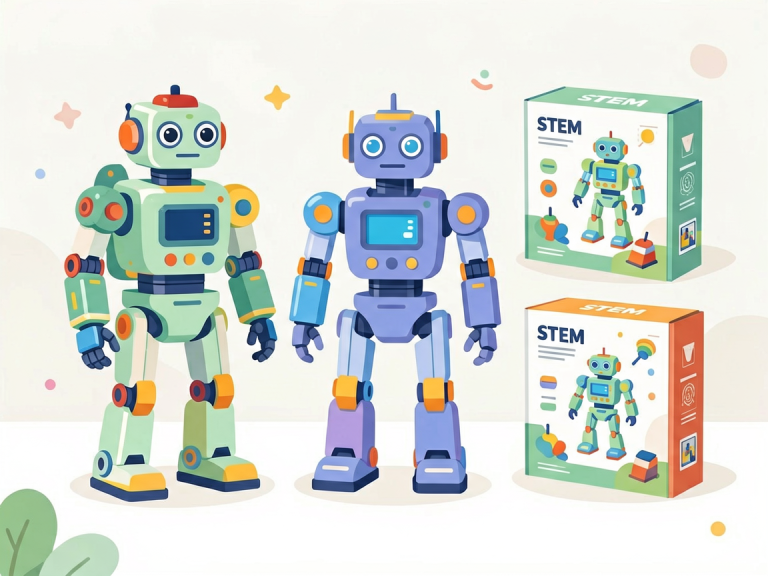
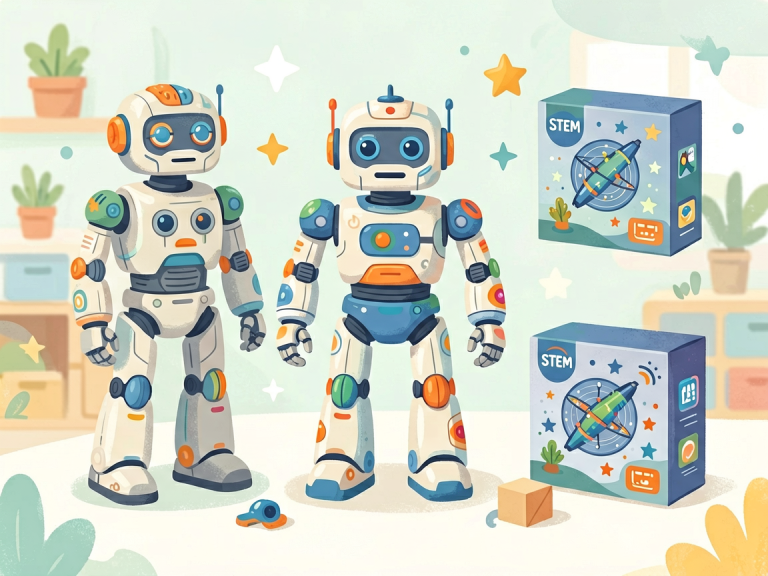
Robot toys, on the other hand, appeal to a slightly different spark: curiosity about how things work. At age 8, many children are fascinated by science, technology, and building. A robot toy can be a smart robotic pet that responds to touch, a programmable rover with sensors, or a build-it-yourself kit that snaps together into a moving machine. Unlike remote control cars, which are mostly about direct control, robot toys often introduce the concept of instructions, logic, and sequencing.
One of the greatest strengths of robot toys is their educational value. Many modern robot toys for 8-year-olds come with simple coding apps or button-based programming. A child can input a sequence of commands—move forward, turn left, play a sound, stop—and then watch the robot execute those commands. This teaches computational thinking, how to break a larger task into smaller steps, and how to debug when the robot does not behave as expected. It is a gentle and playful introduction to coding, making the child an active creator rather than a passive viewer.
Robot toys also tend to be more versatile in terms of play styles. Some are interactive companions that express emotions, sing, or tell stories. Others are modular kits that can be rebuilt into different forms, such as a robot that transforms into a vehicle or an animal. This encourages creativity and open-ended exploration, because there is often more than one way to play. A robot toy can be a science experiment, a friend, a performer, or a challenge to be mastered.
Key Differences: Play Style and Skills
To make the right choice, it helps to understand the fundamental differences between these two categories.
Immediate action vs. exploratory learning. Remote control cars offer immediate, high-energy gratification. The child grabs the controller and instantly has fun. Robot toys may require more reading, setup, or planning before the fun begins, but the reward is often a deeper sense of accomplishment. If your child has a short attention span or loves physical thrills, an RC car is the safer bet. If your child loves puzzles, instructions, and figuring things out, a robot toy will likely be more satisfying.
Motor skills vs. cognitive skills. Remote control cars primarily develop fine motor control, reaction time, and spatial tracking. Robot toys, especially programmable ones, strengthen logical reasoning, planning, patience, and problem-solving. Ideally, a child should experience both, but if you must choose one, consider which skill you want to encourage more right now.
Indoor vs. outdoor environment. Remote control cars are best used outdoors or in large indoor spaces. Robot toys can work equally well indoors, which is helpful during bad weather. If you want a toy that will get your child outside and moving, an RC car is the winner. If you need an engaging indoor activity, a robot toy is a fantastic choice.
Screen involvement. It is important to note that many robot toys require a smartphone or tablet for programming. While this is educational, it does add screen time. Remote control cars typically use a separate controller, so no screen is required. If you are trying to limit screens, an RC car may be the better option. Some robot toys, however, can be operated with buttons and voice commands, so be sure to read the product details.
Matching the Toy to the Child
Ultimately, the best choice depends on the unique personality and interests of the 8-year-old in your life.
Ask yourself: What does the child actually enjoy doing? If they love running, riding a bike, playing soccer, or building ramps and tracks, then remote control cars are the natural match. The physical, fast-paced nature of RC cars will satisfy their urge for speed and movement. They will likely spend hours racing down the sidewalk, jumping over obstacles, and showing their friends.
If the child is more into drawing, building with LEGO, solving riddles, or asking “how does that work?” questions, then robot toys will feel like a dream. These children appreciate the process as much as the result. They will enjoy figuring out how to make the robot do what they want, and they will feel proud when they successfully program their first sequence. Many robot kits also allow rebuilding, which gives the child a sense of ownership and creativity.
Consider the social side, too. If the child has siblings or friends nearby, an RC car can be shared and raced. A robot toy can also be social, but it is often more satisfying as a solo activity or with an adult helping. If you want to bond with the child and engage in collaborative play, a robot toy might create richer opportunities for conversation coaching and shared problem-solving.
Safety, Durability, and Budget
No matter which route you choose, keep practical factors in mind.
For remote control cars, look for sturdy construction, good shock absorption, and a reasonable speed. A car that is too fast for an 8-year-old can be frustrating and potentially dangerous. Many cars come with multiple speed modes, which is ideal. Check the battery life too; nothing kills the joy faster than a car that needs recharging after ten minutes.
For robot toys, think about small parts. Some buildable robots contain tiny screws and connectors that could be tricky for small fingers. Choose a kit with pieces that are easy to handle. Also, check the age rating on the packaging. Many robot toys are marketed as “6+” or “8+,” and these labels are useful indicators for difficulty and safety.
Budget is also a factor. Remote control cars can range from twenty dollars for a basic toy to over a hundred for a high-performance hobby-grade model. Robot toys are similar, but educational coding robots often sit in the mid-to-high range. If your budget is limited, look for hybrid options—remote control cars that also function as basic coding robots, or robot toys that come with a remote control. These crossover toys give the best of both worlds and are very popular for 8-year-olds.
A Final Recommendation
So which should you buy? Honestly, you cannot make a bad choice. Both remote control cars and robot toys offer valuable experiences that help an 8-year-old grow physically, mentally, and socially. If you want a gift that will bring instant joy and get the child outdoors, choose a remote control car. If you want a gift that will challenge their mind and spark a love for technology, choose a robot toy. If your budget allows, consider getting one of each—or ask the child directly. At age 8, many children already know exactly what they want, and giving them a voice in the decision is part of the fun.
The most important thing is not the toy itself, but the joy, curiosity, and confidence it creates. Whether the gift has four wheels and a remote or a body full of sensors and a microprocessor, the real magic happens when a child’s eyes light up and their imagination takes over. Choose based on their personality, and you will absolutely nail the perfect gift.