Remote Control Cars vs. Robot Toys for 10-Year-Olds: Which One Sparks the Best Kind of Play?
Introduction: Why This Choice Matters More Than You Think
At ten years old, a child stands at a fascinating crossroads of development. They are no longer toddlers who marvel at flashing lights and simple sounds, nor are they teenagers who demand hyper-realistic graphics and complex social gaming. A ten-year-old possesses a unique blend of curiosity, physical coordination, logical thinking, and a growing desire for autonomy. When it comes to choosing a gift or a personal purchase, few categories are as compelling—or as confusing—as remote control cars and robot toys. Both promise fun, but each cultivates different skills, encourages different types of play, and even shapes how a child views technology. This article dives deep into the comparison, helping parents, relatives, or even the 10-year-old themselves decide which toy truly delivers the best value for this golden age of childhood.
The Allure of Remote Control Cars: Speed, Control, and Physical Mastery
The Thrill of Instant Reaction
There is something primal about gripping a controller, pulling the trigger, and watching a small machine blast across the floor or over a dirt ramp. Remote control (RC) cars appeal to a 10-year-old’s need for speed and immediate feedback. Unlike passive entertainment, RC cars put the child in the driver’s seat—literally. The cause-and-effect relationship between thumb movement and the vehicle’s response is instantaneous. For a 10-year-old, this is not just fun; it is a lesson in physics, reflexes, and spatial awareness. They learn to judge distances, anticipate obstacles, and adjust speed without even thinking about it. Over time, a child who plays regularly with an RC car develops better hand-eye coordination and faster reaction times than one who spends equal hours on a tablet.
Types of RC Cars for Different Interests
Not all RC cars are created equal. For a 10-year-old, the market offers several subcategories, each with a unique flavor.
- Off-road buggies and trucks are the most popular because they can handle grass, gravel, and even small jumps. These encourage outdoor play and exploration, turning a park visit into an impromptu racecourse.
- On-road drift cars glide over smooth surfaces and teach children about momentum and friction. Drifting is visually spectacular, and mastering a slide feels like a genuine achievement.
- Rock crawlers move at snail’s pace but offer a different kind of satisfaction: problem-solving. Navigating a rocky terrain requires careful throttle control, angle planning, and patience—qualities that are often overlooked in fast-paced digital games.
The Social and Competitive Angle
Remote control cars also have a strong social dimension. Ten-year-olds love to race against friends or siblings. A simple parking lot becomes a battleground of skill, strategy, and occasionally, good-natured crashes. Unlike video games, RC racing is physical and outdoors, which means fresh air, exercise (chasing after a runaway car counts!), and real-world social negotiation. Kids learn how to win gracefully, lose without tantrums, and even repair minor damage with adult supervision—a subtle introduction to basic engineering.
The Downsides: Durability, Space, and Cost
However, RC cars are not without flaws. Cheap models break easily, and a broken wheel or snapped antenna can lead to tears and frustration. Quality RC cars that survive crashes cost more, often upwards of $50–$100. They also require space. A small apartment with hardwood floors is not ideal, and racing outdoors is weather-dependent. Additionally, the play pattern is fairly repetitive: drive, crash, repeat. After a few months, a child may crave something more mentally stimulating.
The Magic of Robot Toys: Programming, Creativity, and Personalized Play
A Toy That Grows With the Child
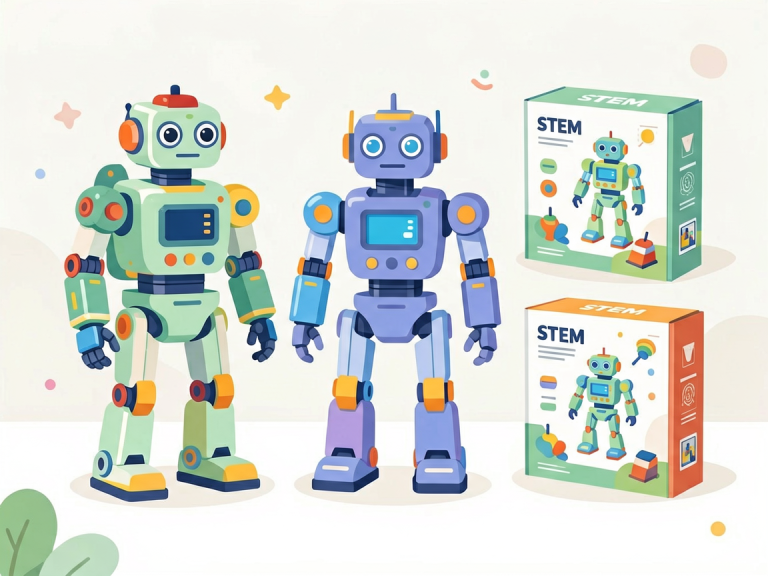
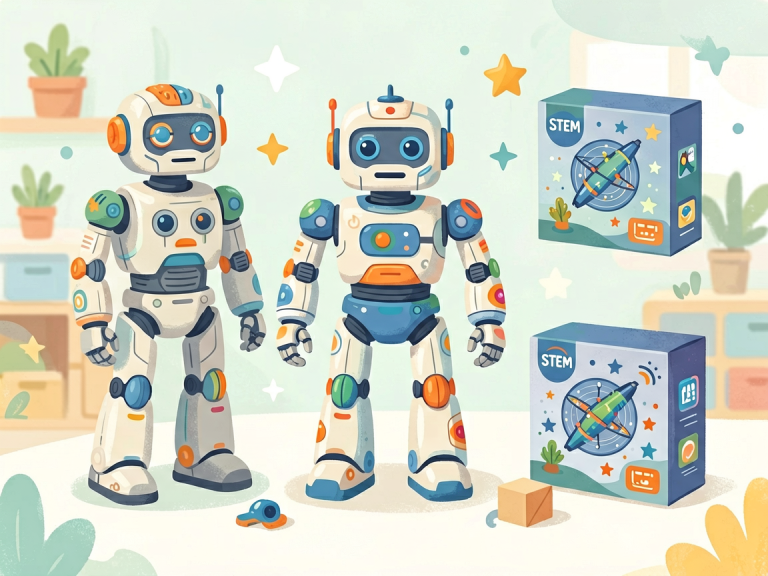
Robot toys offer a completely different kind of engagement. Instead of merely controlling movement, a 10-year-old can often *command* behavior. Many modern robot kits—such as LEGO Boost, Sphero BOLT, or Wonder Workshop Dash—come with block-based coding interfaces. A child can program the robot to follow a line, navigate a maze, respond to voice commands, or even create custom light shows. This transforms the toy from a simple plaything into a platform for endless modification. A ten-year-old is at the perfect age to grasp basic coding logic. They understand sequencing, loops, and conditionals intuitively, even if they have never written a line of code. Robot toys harness this cognitive growth and turn it into play.
STEM Learning in Disguise
The educational benefits of robot toys are substantial and well-documented. When a child builds a robot (especially from a kit), they practice spatial reasoning, fine motor skills, and following instructions. When they program it, they develop logical thinking, debugging skills, and perseverance. For example, if a child wants the robot to dance, they must break that task into small steps: move forward, turn left, wait, move backward. If the robot does not perform as expected, the child must revisit their code—an early and painless lesson in troubleshooting. This is far more powerful than any worksheet or educational app because it is inherently motivating. The child wants the robot to succeed, so they willingly engage in problem-solving.
Creativity and Personal Expression
Robot toys also encourage creativity in ways that RC cars cannot. Many robots are designed to be hacked, customized, or even combined with art supplies. A child might attach a drawing pen to their robot to create geometric art, dress it in cardboard armor, or build a new body out of LEGO bricks. Some advanced robot toys feature sensors and can respond to the environment, allowing the child to set up treasure hunts or create obstacle courses for their pets. This kind of open-ended play is rare and precious. It gives the child a sense of authorship: *I made this happen.* With an RC car, the only authorship is in the driving. With a robot, the authorship is in the very rules of its behavior.
Social and Emotional Dimensions
While RC cars involve racing against others, robot toys often involve collaborating with others. Kids can work in pairs to solve a programming challenge or show off their robot’s new trick to family members. There is also a nurturing aspect: a robot, no matter how mechanical, becomes a companion. Ten-year-olds are on the cusp of adolescence; they still need imaginative play but are embarrassed by babyish toys. A clever robot, especially one that responds to touch or sound, satisfies that need for connection without being childish. It feels more like a futuristic pet than a doll.
The Downsides: Screen Dependency and Frustration Curve
Robot toys are not perfect either. Many require a smartphone or tablet to program, which means screen time is inherent. While the screen is used for constructive purposes, some parents worry about the slippery slope toward more passive device use. Moreover, the learning curve can be steep. A child who struggles with logic or lacks patience may feel defeated when their robot does not work. Unlike an RC car, which is instantly fun, a robot can be temporarily frustrating. Also, the cheaper robot toys are often gimmicky, offering only pre-programmed moves that get boring quickly. Truly programmable and buildable robots are more expensive, often $150 or more.
A Head-to-Head Comparison: Which Is Better for a 10-Year-Old?
| Aspect | Remote Control Cars | Robot Toys |
|——–|——————–|————|
| Instant fun | High – immediate driving from the first second | Medium – requires setup and learning |
| Skill development | Hand-eye coordination, reflexes, spatial awareness | Logic, coding, problem-solving, perseverance |
| Physical activity | Moderate – moving around, chasing, racing | Low – mostly sitting or standing |
| Outdoor play | Excellent – built for outside terrain | Limited – many robots are indoor-only |
| Creative expression | Low – driving is exciting but predetermined | High – programmable behaviors and custom builds |
| Longevity | Medium – can lose novelty after crashes or wear | High – can be reprogrammed with new challenges |
| Price | $30–$150 depending on quality | $50–$300 depending on complexity |
| Screen involvement | Minimal – controller only | High – app-based programming required |
| Social interaction | Great for racing and friendly competition | Great for cooperation and show-and-tell |
So, What Should a 10-Year-Old Choose?
The honest answer is: it depends on the child’s temperament and the parent’s goals. There is no universal winner. Let’s break it down.
Choose a Remote Control Car If…
- The child loves speed, sports, and physical action.
- The family has access to outdoor spaces like parks, driveways, or empty lots.
- You want a toy that can be unpacked and played with in under two minutes.
- The child already spends too much time on screens, and you want to pull them outside.
- The child prefers competitive, adrenaline-driven play over problem-solving.
Choose a Robot Toy If…
- The child is naturally curious about how things work, enjoys building, or asks “why” constantly.
- You want a toy that quietly teaches coding and engineering without feeling like homework.
- The child enjoys creating stories, inventing games, or modifying rules.
- The child prefers solo or small-group projects over high-energy races.
- You are willing to invest time—your own or the child’s—in learning the app and troubleshooting.
The Hybrid Option: Best of Both Worlds
For families who want to cover every base, there is a growing category of programmable RC vehicles—cars that you can both drive manually and code to move autonomously. Products like the Sphero RVR, the LEGO Technic RC cars, or the Makeblock mBot Ranger combine the physical fun of a remote control car with the brain-building power of robotics. A 10-year-old can race the car in the park in the morning, then code it to follow a colored tape path in the afternoon. This hybrid approach is arguably the most developmentally valuable, but it comes with a higher price tag. If budget allows, a hybrid vehicle is the perfect bridge.
Making the Final Decision: A Practical Guide for Grown-Ups
When you stand in the toy aisle (or scroll through an online store), remember these simple rules:
- Observe the child’s play style. Do they enjoy destroying block towers just to rebuild them? That’s a robot kid. Do they ride scooters full-speed and jump off curbs? That’s an RC kid.
- Check the age rating and build quality. For a 10-year-old, avoid “toy-grade” RC cars under $20—they break in a day. For robots, avoid anything with only three buttons and no app connection; it will bore them in a week.
- Consider replacement parts and battery life. RC cars with easily replaceable batteries and spare tires win. Robots with rechargeable internal batteries and clear charging indicators win.
- Involve the child in a small way. Show them YouTube videos of both an RC car stunt jump and a robot navigating a maze. Their eye glint will tell you everything.
- Remember the ultimate goal. The best toy is not the one with the most features. It’s the one that the child returns to again and again, sometimes with a friend, sometimes alone, occasionally with a parent kneeling beside them. Both remote control cars and robot toys can achieve this—in startlingly different ways.
Conclusion: Two Roads, Both Worth Taking
At the age of ten, a child is building the mental and physical foundations for the rest of their life. Remote control cars teach them that the physical world responds to their actions, that reflexes matter, and that practice improves performance. Robot toys teach them that systems can be understood, that failure is a step toward success, and that their own minds have the power to make inanimate objects come alive. Neither is inferior; they simply speak to different parts of a child’s developing personality.
The most thoughtful gift-giver will not ask, “Which is objectively better?” but rather, “Which will light up *this* child’s eyes?” Sometimes the answer is a dusty, mud-crusted RC truck that scrapes against driveway concrete. Other times, it’s a glowing little robot humming a tune the child coded that very afternoon. Both belong in a 10-year-old’s world. Both are toys of wonder. And both, in the hands of a curious child, are tools that turn play into growth. So whether you choose the roar of a motor or the blink of an LED, know this: you are not just buying a toy. You are buying a memory—and, with any luck, a spark that lasts far beyond the box.