The Ultimate Guide to Remote Control Cars and Robot Toys for 6-Year-Olds
Introduction: Why the Right Toy Matters at Age Six
At six years old, children stand at a fascinating crossroads of development. They have outgrown simple push-and-pull toys, yet they are not quite ready for complex adult-grade gadgets. Their fine motor skills are improving rapidly, their imagination is boundless, and their curiosity about how things work is insatiable. This is precisely why remote control cars and robot toys become such powerful playthings. These toys are not just about having fun; they are gateways to understanding cause and effect, spatial awareness, and even basic engineering principles. For parents, choosing between a remote control car and a robot toy can feel daunting, especially with the overwhelming variety on store shelves. However, when selected thoughtfully, either option can provide hours of meaningful play that supports a child's growth. This article will explore the unique benefits of remote control cars and robot toys for six-year-olds, offer practical guidance on selection, and highlight the crucial skills these toys help develop.
The Classic Appeal of Remote Control Cars
Remote control cars have delighted children for generations, and for good reason. For a six-year-old, the ability to command a small vehicle with a handheld transmitter feels nothing short of magical. The instant feedback – press the trigger to go forward, release it to stop, turn the wheel to steer – teaches children about directional control and reaction timing. Unlike real cars or ride-on vehicles, remote control cars offer a safe but exciting sense of speed and maneuverability.
For this age group, the best remote control cars are typically those with simple two-channel controls (forward, backward, left, right). Cars with proportional steering or adjustable speed settings are excellent because they allow a child to start slowly and gradually build confidence. Off-road trucks and buggies are particularly popular because they can handle grass, gravel, and bumps, making them versatile for both indoor and outdoor play. Additionally, many modern remote control cars feature LED lights, realistic sounds, and rugged bodies that endure crashes – a natural part of the learning curve.
What makes remote control cars especially valuable at age six is the development of hand-eye coordination. The child must watch the car while simultaneously manipulating the controller, which requires visual tracking and fine motor precision. Over time, they learn to anticipate the car's trajectory, reverse out of tight spots, and navigate obstacle courses. This is not trivial; it is a form of spatial problem-solving that lays the foundation for tasks like driving, sports, and even surgery later in life. Moreover, remote control cars encourage social play. Two children racing their cars together must learn about taking turns, respecting boundaries, and even good-natured competition. The sheer joy of making a car zip across the floor and then crash safely into a pillow wall never seems to fade.
The Modern Magic of Robot Toys
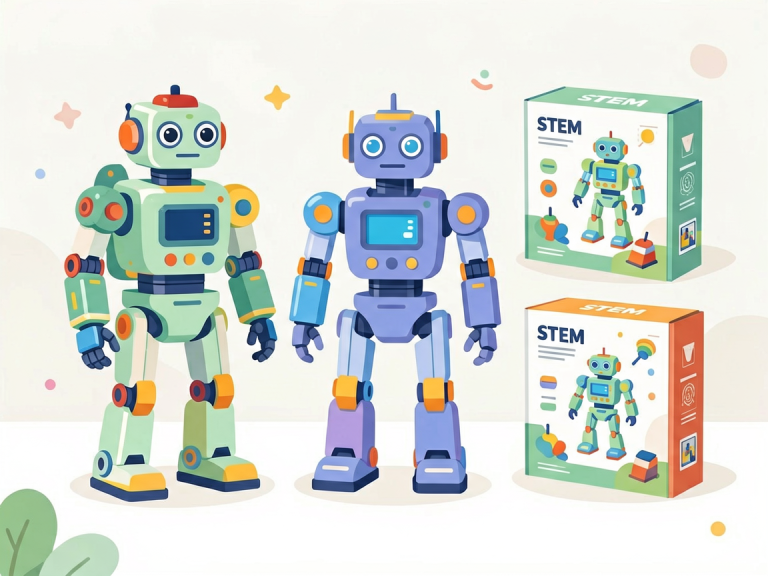
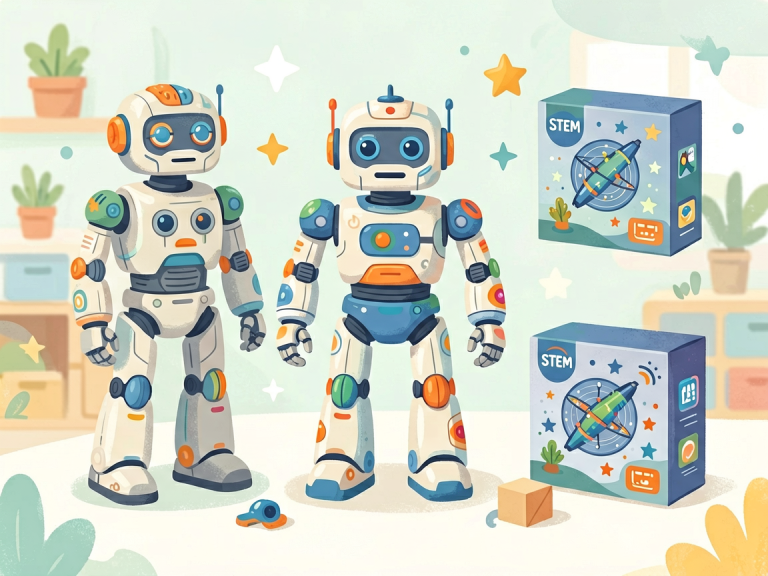
Robot toys, on the other hand, offer a different but equally compelling experience for six-year-olds. At this age, children are deeply interested in pretending, building, and exploring the "who" and "why" of things. A robot toy can be an interactive friend, a programmable challenge, or a mechanical companion that responds to voice, touch, or remote control. The range of robot toys available today is staggering – from simple line-following bots to gesture-controlled drones and coding robots designed for early learners.
One of the greatest strengths of robot toys is their ability to grow with the child. Many programmable robots for young children use block-based coding interfaces where a child can press buttons to create a sequence of commands. For example, a child might program a robot to move forward three steps, turn left, play a sound, and then stop. This is an incredibly early introduction to computational thinking and logic. The sense of accomplishment when the robot executes their sequence correctly is monumental. Even non-programmable robot toys often have captivating features like motion sensors, voice commands, and obstacle-avoidance capabilities. A six-year-old can ask a toy robot to dance, tell a joke, or follow them around the room. This nurtures imaginative play and often leads to children inventing stories and scenarios involving their robotic friend.
Robot toys also address a different developmental domain than remote control cars. While cars primarily enhance motor skills and spatial awareness, robots engage a child's reasoning, problem-solving, and creativity. When a robot doesn't do what the child expected, they must investigate why. Is the sensor blocked? Did they input the wrong command? This trial-and-error process is fundamental to scientific thinking. Furthermore, robot toys often have a more social, interactive quality. Some react to a child's touch by giggling or moving, which encourages empathy and social responsiveness. For children who are shy or introverted, a robot toy can become a comforting companion that facilitates communication without pressure.
Key Developmental Skills: Comparing the Two Options
To decide between remote control cars and robot toys, it helps to examine the specific skills each one fosters. Below, we break down six crucial developmental areas.
Fine Motor Skills and Hand-Eye Coordination: Both toys excel here, but in different ways. Remote control cars require continuous adjustment of joysticks or trigger controls, demanding steady hands and rapid visual feedback. Robot toys, especially those with buttons, touch panels, or gesture controls, require precise small movements and sequencing. A child programming a robot must press exact buttons in a correct order, which is excellent for fine motor development.
Spatial Awareness and Navigation: Remote control cars heavily emphasize spatial reasoning. Children learn to judge distances, avoid obstacles, and understand angles as they steer around objects. Robot toys also contribute, especially those that can be directed to follow paths or explore rooms. When children design a route for their robot or anticipate where it will collide, they are engaged in mental mapping.
Problem-Solving and Logical Thinking: Robot toys take the lead in this area. When a child must figure out why their robot is not moving or how to make it complete a specific task, they are practicing cause-and-effect analysis. Many robot toys include troubleshooting elements – for example, finding a better surface for the robot to travel on or adjusting the brightness of a sensor. Remote control cars offer simpler problem-solving, such as figuring out how to steer out of a stuck position, but this is less complex.
Language and Communication: Robot toys that respond to voice commands or have built-in dialogue can boost vocabulary and conversational skills. A child talking to their robot and hearing a reply engages in back-and-forth exchange. Remote control cars do not typically promote language, but they can encourage social language when children play together. However, interactive robots are superior for linguistic development.
Creativity and Imaginative Play: Robot toys often resemble characters or are customizable, allowing children to invent personalities and narratives. Some robots can be dressed up, disassembled, or built in different configurations. Remote control cars are more literal; they are vehicles, and imaginative play comes primarily through racing, crashing, or pretending to be on a mission. Both are beneficial, but robots tend to offer greater creative flexibility.
Physical Activity and Outdoor Engagement: Remote control cars strongly encourage outdoor play, as children will run after their cars, create ramps, and traverse different terrains. This is important for gross motor skills and overall physical health. Robot toys, unless they are specifically designed for outdoor navigation, tend to be used more indoors. Some robots do roll around on the floor, but they rarely inspire the same level of running and chasing that cars do.
Clearly, neither toy is inherently "better." The ideal choice depends on your child's personality and interests. A calm, detail-oriented child who loves puzzles and construction might thrive with a robot toy. An energetic, action-loving child who enjoys racing and sports might prefer a remote control car. Of course, owning both is also a wonderful option, as they complement each other perfectly.
How to Choose the Right Toy: A Practical Checklist
Selecting a remote control car or robot toy for a six-year-old can be simplified by asking a few targeted questions. Here is a helpful checklist for parents and gift-givers.
1. Consider the child's current skill level. A six-year-old who has never used a remote control device should start with a simple two-button car or a robot with large, easy-to-press buttons. Children with more experience can handle proportional steering, multiple speed modes, or robots with basic coding features.
2. Look for age-appropriate labels. The packaging usually indicates the recommended age range. For six-year-olds, look for toys marked "ages 5–7" or "6+". These toys have been designed with safety and motor skill requirements in mind. Avoid toys labeled for older kids, as they may have small parts or require fine motor movements that are too advanced.
3. Prioritize durability. Six-year-olds are not graceful. They will drop the controller, crash the car into walls, and make the robot tumble down stairs. Choose toys with robust construction, rubberized bumpers, and no sharp edges. Read reviews to see if a particular model is known for breaking easily. For remote control cars, those with full-function steering and suspension are often more rugged.
4. Check battery life and charging methods. Nothing frustrates a child more than a toy that dies after ten minutes. Look for cars and robots that offer at least 20 minutes of play per charge, ideally more. Rechargeable batteries via USB are convenient and economical. Also, consider whether the included controller uses AA batteries or is rechargeable; having spare batteries on hand is always wise.
5. Evaluate the learning value. Does the toy offer more than just moving? For robot toys, check if it has a programming feature, even a simple one. Some robots have a "follow the path" function where children draw a line and the robot follows it. Others have coding cards or a mobile app. For remote control cars, look for models that allow different speed modes or have obstacles to navigate, which enhance spatial skills.
6. Think about indoor vs. outdoor use. If the toy will be used mostly inside, choose a compact car that can maneuver around furniture, or a robot that won't easily knock over vases. If outdoor use is planned, select a long-range car (at least 50 meters) with good ground clearance and all-terrain tires. Robot toys meant for outdoor use should have sturdy wheels and sensors that work in bright sunlight.
7. Assess noise levels. Some remote control cars and robots produce loud engine sounds, beeps, or musical effects. While children may love this, parents may not. If you are sensitive to noise, look for models with volume control or a mute function.
8. Read the instructions yourself. Before giving the toy to your child, take time to understand how it works. This allows you to help your child if they get stuck and to model the correct usage. For programmable robots, this is essential, as you will be guiding their first coding attempts.
Safety and Durability: What Parents Must Know
Safety is always the top priority when introducing battery-powered toys to young children. For remote control cars, make sure the car's speed is reasonable. Some hobby-grade cars can reach speeds of 30 mph, which is far too fast for a six-year-old. Stick to toy-grade vehicles with a maximum speed of 5–8 mph. Also, inspect the controller for small parts or removable buttons that could be choking hazards. As for robot toys, many feature sensors and moving parts that could pinch small fingers. Choose robots that are closed, smooth, and have no exposed gears.
Additionally, ensure that any batteries are securely enclosed and that the charging process is supervised by an adult. Lithium-ion batteries, while commonplace, require careful handling. A rechargeable toy should not be charged on a flammable surface. Also, be cautious of laser lights in some toy robots or cars – direct eye contact can be harmful. Finally, remember that these toys are not indestructible. Even the most rugged remote control car will not survive being thrown or stomped on. Teach your child to treat their toys with respect. With proper care, a good remote control car or robot toy can provide several years of enjoyment.
Conclusion: Encourage Play, Learning, and Wonder
At age six, the world is a place of endless possibilities. Remote control cars and robot toys are more than just gifts; they are tools that help a child make sense of that world. A remote control car gives a child the exhilarating feeling of control and mastery, teaching them the physics of motion and the art of steering. A robot toy opens the door to logic, programming, and the wonder of artificial intelligence. Both types of toys foster crucial cognitive and motor skills while offering pure, unadulterated fun.
So, which should you choose? If your child loves speed, the outdoors, and immediate physical reactions, opt for a high-quality remote control car. If your child is more curious about how things work, loves to hear stories, and enjoys a challenge, a robot toy may be the perfect companion. And if budget allows, consider buying both – they complement each other beautifully. Watching your six-year-old master the controls of a tiny car or successfully program a robot to perform a little dance is a truly special moment. These toys do not just entertain; they teach persistence, patience, and the joy of discovery. In a world increasingly dominated by screens, remote control cars and robot toys offer a tangible, hands-on experience that ignites a lifelong love for learning and innovation. Choose wisely, play together, and watch your child grow one exciting leap at a time.