Remote Control Cars and Robot Toys for 5-Year-Olds: A Parent’s Guide to Play That Builds Big Skills
Five years old is a magical age for play. Children are no longer unsteady toddlers, but they are not quite independent school kids either. They can follow instructions, remember rules, and concentrate on a favorite activity for much longer than they could just a year ago. They are also full of curiosity, energy, and a deep desire to control their world. This is exactly why remote control cars and robot toys for 5-year-olds are such brilliant choices. These toys offer the perfect mix of fun, learning, and confidence-building. But with so many options on the shelves, how do parents choose? This guide explores the benefits, safety considerations, and differences between the two, helping you pick a gift that will not only entertain your child but also help them grow.
Why Age Five Is the Sweet Spot for Remote Control Play
At age five, a child’s brain is developing at an astonishing rate. They are learning to coordinate their eyes, hands, and fingers in increasingly precise ways. Remote control cars and robot toys demand exactly this kind of coordination. Pushing a trigger, turning a wheel, or pressing a button to make a robot move in a certain direction trains the brain to plan an action, execute it, and observe the result. This process is called cause and effect, and it is one of the most important cognitive skills for a five-year-old to master.
Additionally, five-year-olds are becoming more social. They love playing alongside friends, negotiating turns, and inventing imaginary worlds. A remote control car can become a race car in a backyard derby, while a robot toy can become a friendly alien or a helpful robot chef. At this age, children are also more patient than younger toddlers. They can wait for a toy to charge, they can attempt a tricky maneuver multiple times, and they can even troubleshoot why a robot is not doing what they expected. This persistence is a wonderful life skill, and toys that provide gentle challenges are perfect for encouraging it.
Remote Control Cars: Speed, Spatial Awareness, and Simple Joy
There is something timeless about a remote control car. For a five-year-old, the thrill of making a vehicle zoom across the floor, spin in circles, or crash gently into a wall is pure joy. But beyond the fun, RC cars offer a wide range of developmental benefits.
First, they greatly improve hand-eye coordination. A child must watch the car, judge its distance, and simultaneously move the controller in the right direction. This sounds simple, but it requires the brain and body to work together in real time. Over time, this improves the child's reaction times and spatial awareness. They begin to understand concepts like distance, speed, direction, and obstacles. When the car gets stuck under a chair, the child must reverse, turn, and find a new path. This is problem-solving in action.
Second, remote control cars are excellent for outdoor play. In an era when children spend so much time indoors, an RC car is an excellent excuse to go outside. Whether it is a gravel path, a grassy yard, or a smooth driveway, the outdoors offers a rich environment for exploration. Racing the car down a small slope, avoiding puddles, or creating a ramp from a piece of wood all encourage physical activity and creative thinking.
For a five-year-old, the best remote control cars are not the fast, expensive hobby-grade models. Look for vehicles with simple controls, maybe two or three buttons on a handheld remote, and a maximum speed that is manageable. Some RC cars are designed specifically for young children, with soft bumpers, easy-to-use controllers, and durable bodies that can withstand crashes. These are ideal because they offer fun without frustration. A car that is too fast will be impossible to control, and a child may lose interest. A car that is too slow may not be exciting enough. The sweet spot is a medium speed, with a remote that fits comfortably in small hands.
Robot Toys: Coding, Curiosity, and Cause and Effect
Robot toys are a different kind of magical. They do not just move; they seem to think. Many robot toys for five-year-olds are designed to introduce early coding and problem-solving skills without screens or complex apps. Some robots respond to voice commands, follow paths that the child draws or builds, or can be programmed with simple push-button sequences. For example, a child might press a button to tell the robot to go forward, turn left, then go forward again. The robot then performs the sequence, teaching the child about sequencing, planning, and debugging. If the robot does not reach the target, the child can "fix" the program and try again.
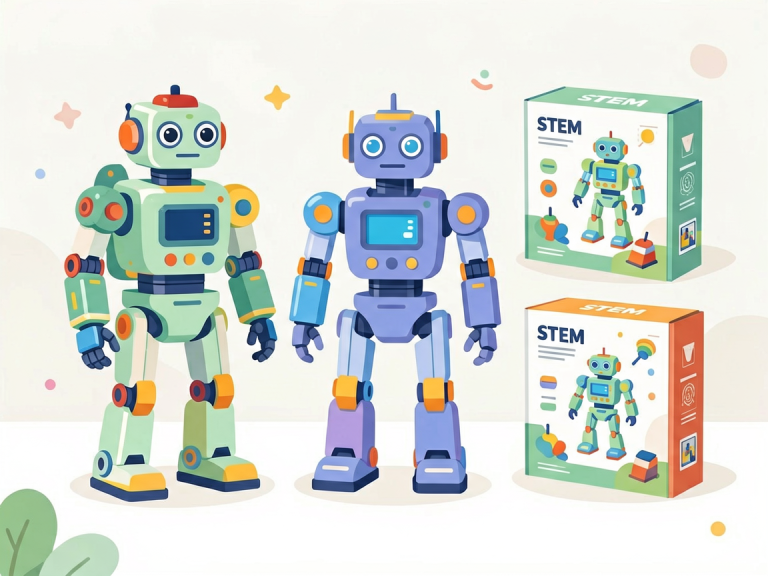
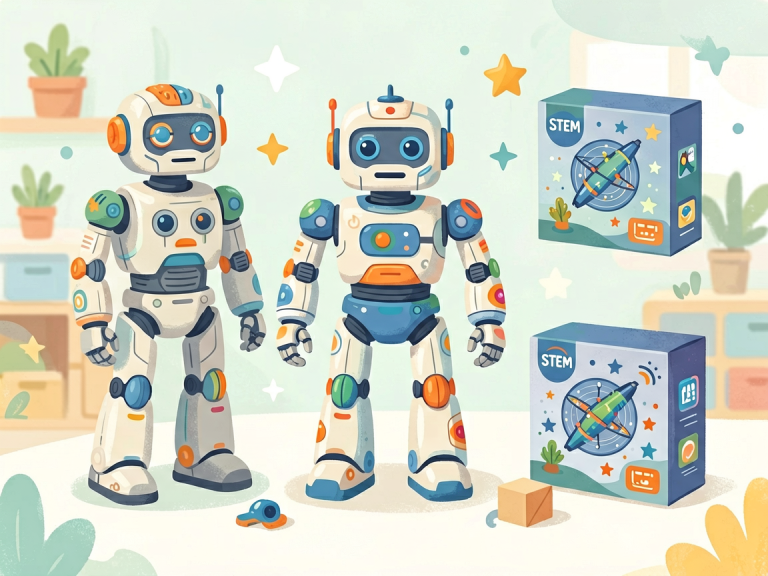
This kind of play is incredibly valuable. It introduces STEM concepts, which stands for science, technology, engineering, and mathematics, in a playful, hands-on way. But it also develops patience and logical thinking. A five-year-old may not understand the word "algorithm," but they certainly understand "I need to press these buttons in the right order to make the robot reach the treasure." This is the foundation of coding.
Robot toys also spark imagination and language development. Many robots have expressive eyes, sounds, and movements. A child will naturally talk to the robot, give it a name, and invent adventures for it. This kind of pretend play is essential for social and emotional development. The robot becomes a companion, a friend, and a partner in problem-solving.
When choosing a robot toy for a five-year-old, avoid complex robots that require a smartphone app or advanced programming. Instead, choose one with large, tactile buttons, clear instructions, and a playful personality. Some excellent options include robots that can be controlled with a remote, robots that follow a color-coded path, or simple robots that are actually screen-free coding games. The goal is not to teach real coding yet, but to build a positive association with technology and logical thinking.
What to Look For: Safety, Durability, and Usability
Safety is always the first consideration. For toy recommendations for a five-year-old, check the age rating on the box. Many remote control cars and robot toys are marked as suitable for ages 5 and up, which is a reliable guideline. Avoid toys with small parts that can break off and become choking hazards. Batteries are another concern. Some toys use small lithium-ion batteries. Ensure that the battery compartment is secure and requires a screwdriver to open. This prevents a child from accessing the battery. For rechargeable toys, use the charger that comes with the toy, and supervise charging so it does not overheat.
Durability is also key. Five-year-olds are not gentle. They will crash the car into walls, drop the remote, and possibly throw the robot. Look for toys made of sturdy, non-toxic plastic. Cars with flexible bumpers or shock-absorbing frames are excellent. Robots with reinforced joints and simple designs are less likely to break. Read reviews from other parents to see how well a toy holds up to real-world play.
Usability means that the toy should be challenging enough to be interesting, but easy enough to be satisfying. The controls should be intuitive. A remote with too many buttons can overwhelm a child. A robot that requires reading a manual before playing is not a good fit. The best toys allow a child to get started within minutes, then offer progressively more advanced features as the child gains skill. This is sometimes called "low floor, high ceiling" design. It is a hallmark of excellent educational toys.
How to Choose Between an RC Car and a Robot Toy
If you are torn between a remote control car and a robot toy, consider your child’s personality and play style. Does your child love motion, speed, and physical activity? Do they enjoy playing outside, running around, and competition? If so, a remote control car is probably the safer choice. It encourages active, outdoor play and provides immediate, thrilling feedback.
Does your child love asking "why" and "how"? Do they enjoy puzzles, building blocks, and figuring out how things work? Do they treat their toys as characters rather than objects? A robot toy might be the better fit. It offers more mental stimulation, a more complex set of interactions, and a stronger sense of companionship.
That said, you cannot really go wrong. Many five-year-olds will love both, and having one of each can balance their play experiences. An RC car on Saturday afternoon and a robot toy on a rainy day is a beautiful combination. If budget is a concern, there are many affordable options for both categories. It is more important to focus on the toy's quality and age-appropriateness than on its category.
Making the Most of Playtime Together
The value of these toys increases dramatically when parents and caregivers join the fun. Sit on the floor and race the car with your child. Take turns driving, and talk about what you are doing. Say things like, "I am going to turn the wheel left so the car goes around the shoe. You try it!" This kind of guided play helps children understand language and concepts while they play.
With robot toys, ask open-ended questions. "How can we make the robot go to the kitchen?" "What happens if we press this button first?" Encourage your child to experiment and make mistakes. A mistake is not a failure; it is a clue. When the robot bumps into the wall, ask, "Why do you think that happened? What should we try next?" This builds a growth mindset.
Also, set some simple rules to keep play positive. Remote control cars should not be driven at people or pets. Robots should not be stepped on or thrown. These rules are not just about safety; they teach respect for objects and living things. When a child knows the boundaries, they can play with confidence and creativity.
Final Thoughts
Remote control cars and robot toys for 5-year-olds are more than just birthday gifts. They are tools for learning, growth, and connection. An RC car teaches coordination, spatial thinking, and the joy of active play. A robot toy teaches logic, sequencing, and the thrill of controlling a tiny intelligent machine. Both types of toys offer something essential: they let a child feel powerful and capable. At age five, when so much of the world is big and confusing, a toy that responds instantly to a child’s commands is deeply reassuring.
The best gift you can give is not necessarily the most expensive or the most advanced. It is the one that matches your child’s interests, suits their current skills, and leaves room for them to grow. Watch your child as they play. Do they light up when things move fast? Choose the car. Do they stare when something beeps and blinks? Choose the robot. Or choose both, and then get ready to watch your child’s imagination and abilities roar to life. After all, play is how five-year-olds learn the biggest lessons of all.