Robot Toys for Kindergarteners: A Worthy Investment or Just a Gimmick?
Introduction
Walk into any toy store today, and you will likely see shelves lined with blinking, beeping, whirring robotic companions. From programmable bee-bots to interactive puppy robots and voice-activated smart dolls, these high-tech playthings promise to make your child smarter, more creative, and better prepared for the digital future. For parents of kindergarteners, the pressure is real: everyone seems to have a robot toy at home, and the marketing claims are hard to ignore. But before you empty your wallet, it is worth asking a basic question: are robot toys genuinely beneficial for five- and six-year-olds, or are they just expensive distractions? The answer is not a simple yes or no. Robot toys can offer unique learning opportunities, but they also come with significant drawbacks that parents must weigh carefully. This article examines the educational value, developmental impact, and practical considerations of robot toys for kindergarteners, helping you decide whether these gadgets deserve a place on your child’s toy shelf.
The Educational Promise: What Robot Toys Can Teach
At their best, robot toys are not just entertainment; they are hands-on learning tools designed to introduce young children to foundational concepts in science, technology, engineering, and mathematics (STEM). For instance, programmable robots like Botley or Code-a-Pillar allow kindergarteners to arrange cards or press buttons to create a sequence of moves, teaching basic coding logic without requiring reading skills. When a child tells the robot to go forward, turn left, and then stop, they are practicing sequencing, pattern recognition, and problem-solving. These are exactly the cognitive skills that support early mathematics and reading comprehension. Moreover, robot toys often respond instantly to a child’s commands, providing immediate feedback. This cause-and-effect relationship helps kindergarteners understand that their actions can influence the world around them, a critical component of cognitive development.
Beyond coding, many robot toys are designed to teach specific academic content. Interactive robot characters can sing alphabet songs, quiz children on phonics, or count along with them. Some advanced models even adapt their difficulty level based on the child’s performance, offering personalized practice that a traditional flashcard cannot match. For example, a robot that encourages a child to say the number of dots on a screen and then rewards correct answers can reinforce counting skills in a playful, low-pressure way. This kind of repetitive, gamified learning can be highly engaging for young children, who often have short attention spans and benefit from novelty. In a controlled setting, a robot toy can function as an enthusiastic tutor, patiently repeating lessons without ever getting frustrated—something we cannot always say for busy parents.
However, it is important to note that the educational value of robot toys depends heavily on the child’s level of active engagement. If a child simply watches the robot move or listens to it speak, the learning effect is minimal. The real magic happens when a child is actively manipulating the robot, experimenting with different inputs, and observing the results. Therefore, when evaluating a robot toy, parents should ask: Will my child need to think, press, or plan, or will they just be a passive observer? Toys that require construction, sequencing, or creative problem-solving offer far more educational worth than those that merely deliver audio or visual content. A robot that can be taken apart and rebuilt, for instance, teaches spatial reasoning and fine motor skills simultaneously. In contrast, a robot that only talks when you hug it provides a emotional response but little cognitive challenge.
Beyond Academics: Social and Emotional Implications
Kindergarten is not only about learning numbers and letters; it is a crucial period for developing social skills, empathy, and emotional regulation. How do robot toys fit into this picture? Surprising as it may seem, robots can actually support certain emotional competencies. Many interactive robot toys are designed to mimic living pets or companions. They respond to touch, show facial expressions, and sometimes even express “feelings” like happiness or sadness. For a kindergartener, caring for a robot pet can nurture a sense of responsibility and empathy. The child learns to treat the robot gently, to comfort it when it makes a sad sound, and to understand that his or her behavior affects another “being.” This kind of pretend play is already common with dolls and stuffed animals, but robots add an extra layer of realism that can make the experience more compelling.
Moreover, robot toys can serve as a safe bridge for children who are shy or have difficulty interacting with peers. A child who struggles with social anxiety might find it easier to practice conversation or role-playing with a robot that does not judge or interrupt. Some educational robots are even used by speech therapists to encourage reluctant children to speak, because the robot feels less intimidating than a human adult. In this way, robot toys can become tools for building confidence and communication skills. At the same time, however, there is a real risk that children become overly attached to a robotic companion at the expense of human relationships. A kindergartener who spends hours talking to a robot may miss out on the messy but essential experience of negotiating, sharing, and resolving conflicts with real friends. Unlike humans, robots do not require empathy; they never have a bad mood; they always respond predictably. This simplicity can be comforting, but it can also make actual human interaction seem difficult and unrewarding by comparison.
Another emotional concern is the potential for frustration. Robot toys, especially cheaper models, often malfunction, respond slowly, or do not perform as the child expected. For a five-year-old, this can be deeply upsetting. A robot that repeatedly fails to follow a simple instruction can trigger tantrums or a sense of failure, undermining the very confidence the toy was supposed to build. Moreover, many robots have batteries that die quickly or require complex setup, leading to disappointment. Parents should therefore manage expectations and choose age-appropriate, durable products. But more importantly, they should remember that the emotional value of a robot toy is not automatic; it depends on how the child and parent use it together. When a parent plays alongside the child, commenting on the robot’s actions, asking questions, and modeling caring behavior, the experience becomes rich and meaningful. Without that adult involvement, a robot toy is just a glowing object that eventually gets tossed aside.
The Hidden Costs: Screen Time, Attention, and Creativity
Despite their physical presence, many robot toys are functionally tied to screens. Some require a smartphone or tablet app to operate, while others feature built-in screens or project videos. This blurs the line between traditional toys and digital media. The American Academy of Pediatrics recommends that children aged 2 to 5 have no more than one hour of high-quality screen time per day. Robot toys that demand constant app usage can quickly push a child past this limit, and the interactive screen elements may be just as addictive as a cartoon or a game. Parents need to ask whether the robot’s screen-based content is educational or merely flashy. A robot that simply shows flashing lights and repetitive sounds may overstimulate the nervous system, making it harder for a child to focus on calm, imaginative play.
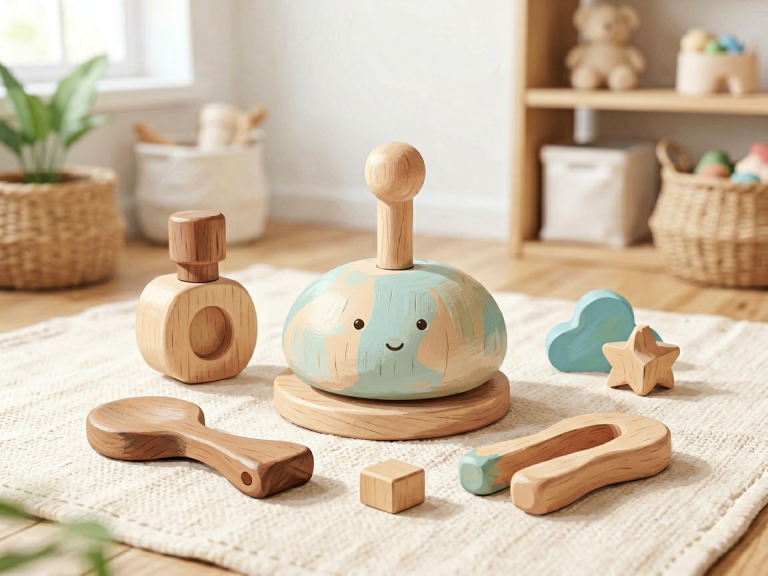
Moreover, robots are often built for specific, predetermined functions. They move a certain way, make certain sounds, and follow certain rules. This is the opposite of open-ended toys like blocks, clay, or even simple wooden figures, which allow children to invent their own scenarios and rules. Creativity thrives in ambiguity. A child can turn a cardboard box into a spaceship, a castle, or a race car; a robot toy, in contrast, usually cannot be anything other than what it is. While some advanced robots can be programmed to perform custom behaviors, that programming itself requires a level of abstract thinking that is rare among kindergarteners. For most five-year-olds, the robot’s predetermined actions become repetitive after a few days, and the toy ends up in the closet. The novelty wears off precisely because the robot does not leave enough room for imagination. In contrast, a simple doll or a set of building blocks can be played with in countless ways for years.
There is also a subtle but important issue regarding attention span. Robots are designed to be highly stimulating, with bright lights, loud sounds, and immediate feedback. This can condition a child’s brain to expect constant external excitement, making ordinary, quieter activities like drawing or reading appear boring by comparison. Several studies have suggested that excessive use of interactive electronic toys is associated with shorter duration and lower quality of play in young children, compared to traditional toys. For a kindergartener who is already struggling to develop sustained attention, a robot toy that demands fast reactions and frequent rewards may not be the best choice. Furthermore, because robots often act autonomously—they move and speak whether the child is actively engaged or not—they can reduce the child’s own initiative. Instead of being the one who makes things happen, the child becomes a spectator. Over time, this passive relationship with technology can undermine the “I can do it myself” attitude that true play should foster.
Making the Right Choice: Guidelines for Parents
So, are robot toys worth it? The answer depends on how you choose them and how you use them. For kindergarteners, a well-designed robot toy can be a valuable addition to a diversified toy collection, but it should never replace traditional toys and human interaction. Here are some practical guidelines to help you decide.
First, look at the toy’s features in relation to your child’s current skills. For a kindergartener, the best robot toys are those that require physical manipulation and simple logical thinking. Avoid robots that are primarily content-delivery devices (e.g., a robot that just reads stories or plays music) because your child already has you for that. Choose a robot that can be assembled, taken apart, or programmed with a few simple commands. This will provide the open-ended, hands-on experience that fosters genuine learning. Also, check the age rating. A robot designed for older kids may have small parts or require complex coding that frustrates a five-year-old, while a robot too simple may bore them.
Second, consider the role of the robot in your child’s daily routine. Limit technology-based play to specific time slots, such as 20–30 minutes after school, and ensure the rest of the day includes plenty of physical activity, outdoor play, art, and social time. Use the robot together with your child at least for the first few sessions. Sit on the floor with them, ask questions like “What do you think will happen if we press this button?” or “Can you make the robot go around that chair?” This turns the robot into a tool for conversation and collaborative problem-solving rather than a digital babysitter. You can also extend the play by having the robot act out stories or by combining it with traditional toys. For instance, let your child build a cardboard house for the robot and pretend the robot is a family member. This way, you infuse creativity and narrative into the robot’s predetermined functions.
Finally, be honest about your budget and the toy’s longevity. Many robot toys are expensive, and their novelty often fades within weeks. Instead of buying several cheap robots, consider investing in one high-quality, modular robot that can grow with your child. Some brands offer add-on sensors, wheels, and lights that can be used for years, keeping the toy relevant as your child’s skills advance. Alternatively, look for robot toys that are made from sustainable materials or can be repaired easily, reducing waste. And remember: the simplest “robot” can be made at home from a cardboard box, a few gears, and your imagination. The most essential ingredient in any toy is the loving attention of an adult. A child who plays with an expensive robot alone for ten minutes learns less than a child who plays with a homemade robot while chatting with a parent for twenty minutes.
Conclusion
In the end, robot toys for kindergarteners are neither a miracle nor a menace. They are tools, and like all tools, their value depends on the hands that hold them. The best robot toys can introduce young children to coding logic, enhance problem-solving skills, and even provide comfort and companionship. But they can also steal time from imaginative play, foster passive habits, and create unnecessary frustration if chosen poorly or used excessively. Parents should approach robot toys with the same critical eye they use for any other purchase: ask what the toy truly teaches, how it will be used, and whether it supports your child’s whole development. The answer to “are they worth it?” is ultimately personal. If a robot toy helps your kindergartener grow, brings joy, and strengthens your bond through shared play, then yes, it is worth every penny. If it merely blinks on a shelf or glues your child to a screen, then no amount of programming can make it a good investment. Trust your instincts, keep play diverse, and remember that the best technology often hides in the most human moments—a warm lap, a listening ear, and a story told together.