The Joy of Control: Why Remote-Controlled Cars and Robot Toys Are the Ultimate Birthday Gifts
When a birthday approaches, the search for the perfect gift begins. We want something that sparks genuine excitement, survives the inevitable unpacking ritual, and doesn't end up abandoned in a corner by the end of the week. Among the countless options, remote-controlled cars and robot toys consistently stand out. These aren't just plastic objects with wheels or flashing lights; they are portals into a world of agency, discovery, and pure, unadulterated fun. This article explores the multifaceted reasons why these dynamic toys make exceptional birthday presents, delving into their psychological appeal, developmental benefits, and timeless capacity to enchant both children and adults alike.
The Universal Appeal of Motion and Mechanics
There is something deeply primal about controlling a machine. From the earliest days of wind-up toys to the latest app-controlled drones, humanity has always been fascinated by the ability to command movement. Remote-controlled cars and robots tap into this instinct better than almost any other toy category. When a child (or an adult) holds a transmitter and makes a miniature vehicle accelerate, spin, or reverse, they are not just playing; they are experiencing a moment of mastery over physics and engineering. The immediate, tangible response to every input builds a powerful feedback loop. Push the trigger forward, and the car leaps ahead; turn the wheel, and the robot pivots gracefully. This cause-and-effect relationship is incredibly satisfying, even cathartic.
Moreover, these toys occupy a unique sweet spot between imagination and reality. Unlike a static action figure, a remote-controlled car moves in the real world, generating real dust, real speed, and real obstacles. Unlike a video game that plays out on a screen, a robot toy operates in your physical space, knocking over a pencil cup or navigating under the sofa. This bridge between the digital and the physical is remarkably engaging. It offers a hands-on experience that is both intellectually stimulating and viscerally thrilling. The whir of the motor, the smell of the batteries heating up, the clatter of plastic wheels against pavement — these sensory details create lasting memories that a screen simply cannot replicate.
Cognitive and Developmental Benefits for Children
Beyond the sheer fun, remote-controlled cars and robot toys are stealthy educational tools. They are invaluable for developing fine motor skills and hand-eye coordination. Steering a car through a slalom of chairs or precisely maneuvering a robot arm to pick up a small object requires focus, dexterity, and spatial awareness. Children learn to estimate distances, anticipate trajectories, and adjust their movements based on real-time visual feedback. These aren't abstract exercises; they are practical, engaging challenges that build neural pathways in a joyful way.
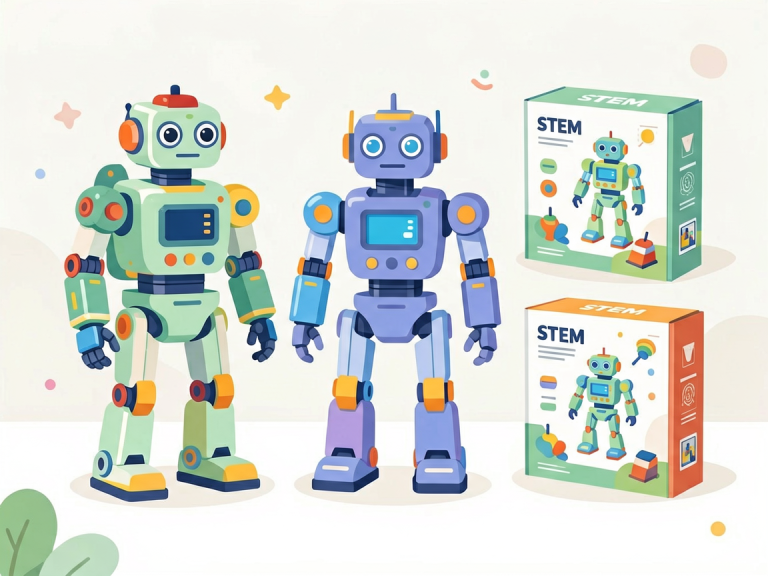
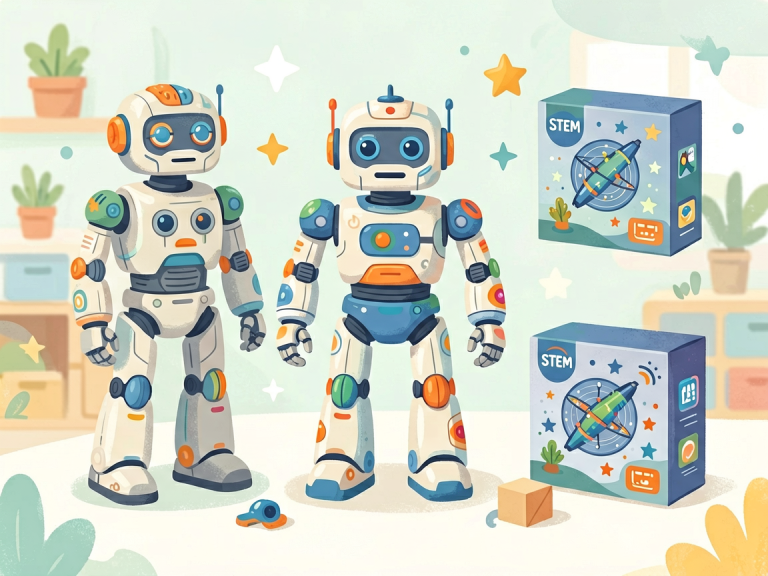
Furthermore, these toys introduce foundational concepts of science, technology, engineering, and mathematics (STEM) without a single textbook. A child who notices that their car goes faster on smooth tile than on carpet is learning about friction. A child who experiments with the robot's programming to make it follow a specific sequence is learning about algorithms and logical sequencing. Many modern robot toys even include basic coding elements, allowing young users to write simple commands and watch the robot execute them. In this sense, a birthday gift can become a catalyst for lifelong curiosity. It transforms the child from a passive consumer of technology into an active director of it. They begin to ask, "How does this work?" and "What happens if I try this?" — questions that lie at the heart of all scientific inquiry.
The Social Dimension: Sharing the Thrill
A birthday gift is often shared in the context of a celebration, and remote-controlled toys excel in social settings. Unlike solitary gaming on a tablet, these toys invite participation. A single car can become the centerpiece of a race between siblings. A robot that throws a ball can trigger a game of catch with friends and family. The act of handing the controller to someone else is an act of generosity and trust. Children learn to take turns, to cheer for each other, and to negotiate the rules of play. They also develop communication skills as they describe what they are doing: "Watch how it jumps over this ramp!" or "Try pressing the blue button to spin it."
Even for adults, these toys can break down generational barriers. Grandparents who once played with tin cars find themselves teaching grandchildren how to change batteries or troubleshoot a tangled wheel. Parents who grew up with basic radio-controlled cars marvel at the gyro-sensor stabilization and high-definition cameras in modern models. This shared experience of discovery — of unboxing, testing, and sometimes failing and retrying — creates a powerful emotional bond. A remote-controlled car is not just a possession; it is a conversation starter, a shared challenge, and a source of collective laughter when it crashes into a wall or spins uncontrollably. In an era where digital isolation is a growing concern, physical toys that facilitate face-to-face interaction are more valuable than ever.
Choosing the Right Gift: Age, Interest, and Technology
The versatility of remote-controlled cars and robot toys is another reason they are such reliable birthday presents. They come in an astonishing range of forms, price points, and complexity levels, meaning there is a perfect match for almost every birthday child. For a younger child, a simple, durable car with a chunky controller that moves forward, backward, and turns is ideal. These are designed to withstand drops and rough handling, and their straightforward operation provides instant gratification. As the child grows, more sophisticated options appear: off-road trucks with independent suspension, stunt cars that flip, or even racing drones (though those might be better for older kids).
For the tech-savvy pre-teen or teenager, robot toys are increasingly compelling. Programmable robots that pair with a smartphone app allow users to code custom sequences, respond to voice commands, and even use artificial intelligence to navigate obstacles. Some advanced models are modular, letting kids rebuild them into different configurations. Choosing the right robot involves considering the child's existing interests. If they love building, a modular robotics kit is perfect. If they love action and competition, a battle-bot that can push objects or a high-speed RC car will hit the mark. The key is to match the toy's complexity to the child's patience and skills, ensuring a challenge that is engaging but not frustrating. Even the choice of power source — rechargeable batteries versus replaceable AAs — can influence the experience, with rechargeables being more convenient for frequent use.
The Enduring Magic of Remote-Controlled Play
In an age of infinite digital distractions, one might assume that physical toys have lost their shine. Yet the popularity of remote-controlled vehicles and robots has not only persisted; it has expanded. This is because these toys offer a form of play that is fundamentally different from passive entertainment. They are about *doing*, not just watching. The joy of watching a small machine obey your commands never gets old. There is a magical alchemy in the rechargeable battery, the circuit board, and the radio signal that transforms plastic and metal into a lively companion, a rival, or a spectacle. For a child receiving this gift on their birthday, the moment of first controlling it is electric. It is a gift of autonomy, a tiny kingdom where their thumb is the sovereign.
Moreover, these toys are remarkably adaptable to different environments. A remote-controlled car can be just as fun in a park, on a driveway, in a living room, or even on a rain-soaked sidewalk (if it's waterproof). A robot can dance on a kitchen table or patrol a bedroom floor. This versatility means the gift keeps giving long after the birthday cake is gone. It encourages outdoor exploration, physical activity, and creative problem-solving. It can be a solitary pursuit for quiet concentration or a group activity for playful competition. This flexibility ensures that the toy remains relevant as the child's interests evolve. A car bought for a seventh birthday can still be thrilling at twelve, especially if it leads to building homemade ramps or modifying the vehicle. A robot toy can spark a passion for coding that lasts a lifetime.
Conclusion
Selecting the perfect birthday gift is a gesture of love and understanding. Remote-controlled cars and robot toys stand out because they are not just objects; they are experiences. They deliver the rush of control, the satisfaction of mastering a skill, and the joy of shared play. They support cognitive development, social interaction, and a hands-on understanding of the world. Whether it is a simple $20 buggy for a five-year-old or a sophisticated, programmable robot for a teenager, the underlying message is the same: "I wanted to give you something that moves, that challenges, and that makes you smile." In a world that is increasingly virtual, these toys bring us back to the physical, to the joy of motion, and to the simple, profound pleasure of being in the driver's seat. So, for your next birthday gift, skip the predictable and give the gift of controlled chaos, mechanical wonder, and unbridled joy. Give a remote-controlled car or a robot toy. It might be the most appreciated, cherished, and remembered present of the year.