Beyond the Screen: The Best Alternatives to Learning Tablets for Two-Year-Olds
Introduction
In recent years, “learning tablets” marketed specifically for toddlers have become a staple in many households. These devices promise early literacy, numeracy, and cognitive development through colorful apps and interactive games. Yet a growing chorus of pediatricians, early childhood educators, and child development researchers—including the American Academy of Pediatrics—strongly advises against screen exposure for children under two, and recommends no more than one hour per day of high-quality programming for children aged two to five. The core concern is not merely about eye strain or sleep disruption; it’s about the profound mismatch between the way a toddler’s brain learns best and the passive, two-dimensional, algorithm-driven experience that a tablet provides.
A two-year-old’s brain is rapidly forming neural connections through sensorimotor exploration, physical movement, and face-to-face social interaction. Learning tablets, even those with “educational” content, often bypass these essential pathways. They replace the rich, messy, unpredictable reality of the physical world with a sanitized, reward-based simulation that can actually hinder the development of attention span, creativity, and emotional regulation.
The good news is that there are far more effective—and often more affordable—alternatives that honor a toddler’s natural way of learning. These alternatives are not “low-tech substitutes” but rather developmentally superior tools that engage the whole child: their hands, their whole bodies, their senses, their emotions, and their relationships with caregivers. Below, I explore the best categories of alternatives, each supported by developmental science and practical, real-world evidence.
—
Sensory Play and Manipulatives: The Foundation of Cognitive Development
A two-year-old is a budding scientist. They learn through tasting, touching, shaking, pouring, stacking, and disassembling. Sensory play—activities that engage touch, smell, sight, sound, and taste—provides the rich, multi-modal input that a flat screen simply cannot replicate.
Why it beats a tablet: When a toddler plays with kinetic sand, they feel the texture change as they squeeze it; they see the shapes collapse; they hear the soft whoosh; they even smell the earthy scent. This multi-sensory experience forces the brain to integrate information from different channels, strengthening neural pathways that support later problem-solving and language development. A tablet game that asks a child to “tap the red triangle” only stimulates the visual and auditory systems in a narrow, pre‑programmed way.
Practical examples:
- Sensory bins: Fill a shallow container with dry rice, beans, or play sand. Add scoops, small cups, and toy animals. Let your child dig, pour, and hide objects.
- Play dough: Homemade or store-bought, play dough allows squeezing, rolling, cutting, and shaping. It strengthens fine motor muscles that will later be needed for holding a pencil.
- Water play: A basin of water with measuring cups, sponges, and floating toys teaches volume, cause-and-effect, and buoyancy—all through hands-on experimentation.
Developmental bonus: These activities require no batteries, no charging, and no Wi‑Fi. They naturally encourage focused, uninterrupted play, which trains the toddler’s ability to sustain attention—a skill that tablets actively erode with their rapid scene changes and instant rewards.
—
Board Books and Early Literacy: The Power of a Shared Story
Learning tablets often claim to teach letters and sounds, but research consistently shows that a human voice reading from a physical book is far more effective for language acquisition in toddlers. Why? Because a book is a shared object. The caregiver points, makes sounds, asks questions, and responds to the child’s babbling. This back-and-forth (what developmental psychologists call “serve and return”) is the very engine of language development.
Why it beats a tablet: An app may say “A is for apple” and show a picture, but it cannot see that your toddler is pointing at the apple and trying to say “appe.” It cannot slow down, repeat the sound with exaggerated facial expressions, or connect the word to a real apple you happen to be eating for snack. The human interaction around a book builds phonological awareness, vocabulary, and narrative comprehension far more efficiently than any digital program.
Practical suggestions:
- Choose thick, chewable board books with bright, realistic photographs or simple illustrations.
- Make it interactive: Ask “Where’s the dog?” and help your child point. Make animal sounds together. Let your child turn the pages (even if they rip one—it’s a learning experience).
- Repeat favorites: Toddlers thrive on repetition. Reading *Brown Bear, Brown Bear* a hundred times is not boring—it’s how their brain cements language patterns.
Caution: Avoid “talking” books with sound buttons; they often distract from the human voice and diminish the need for caregiver engagement.
—
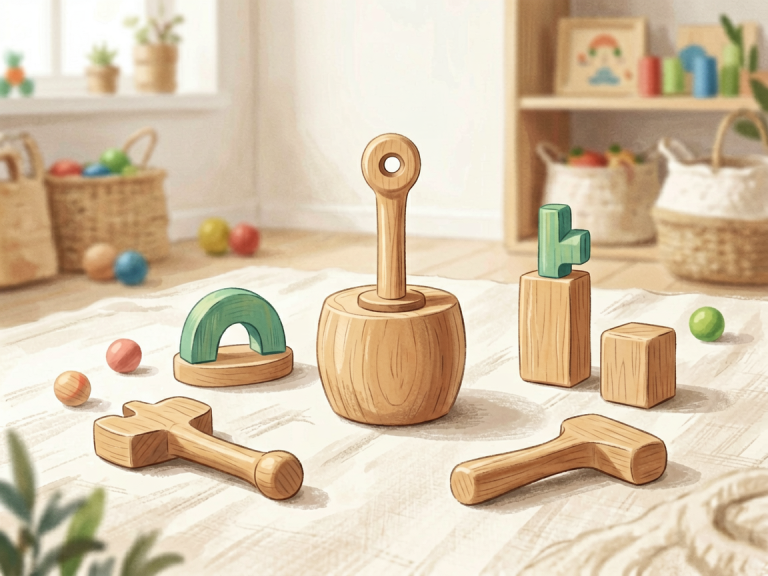
Open-Ended Toys and Loose Parts: The Architects of Imagination
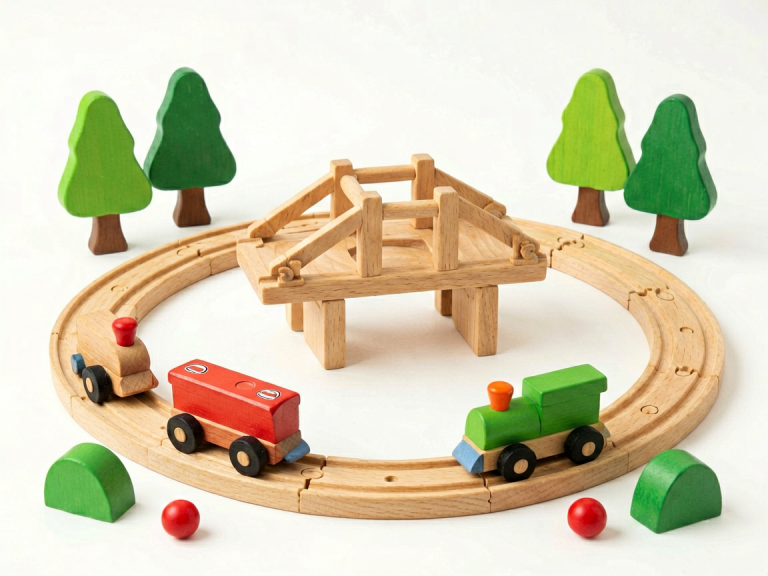
One of the most insidious effects of learning tablets is that they breed passive consumption. A toddler plays a game, receives a reward, and moves on. Nothing is created; the story is already written. Open-ended toys—blocks, stacking cups, wooden train tracks, dollhouses, play silks, and cardboard boxes—have no predetermined outcome. They invite the child to be the creator, the problem-solver, the storyteller.
Why it beats a tablet: When a two-year-old stacks four blocks and the tower falls, they learn about gravity, balance, and frustration tolerance. They try again, adjusting one block. This is active learning. The tablet, by contrast, usually presents a puzzle with one correct answer and a cheerful sound effect when the child taps the right spot. The child learns to follow instructions, not to think for themselves. Open-ended toys foster divergent thinking—the ability to see multiple uses for an object—which is a cornerstone of creativity.
Examples of powerful open-ended toys:
- Unit blocks (simple wooden blocks in various sizes) – can become a tower, a bridge, a road, a bed for a toy bear.
- Loose parts – collections of safe, natural or household items: large wooden rings, fabric scraps, bottle caps (washed), pebbles, pinecones. Let your child sort, stack, line up, and combine them.
- Play silks or scarves – they can be a cape, a blanket, a river, or a picnic cloth.
Key insight: Open-ended play requires no adult direction. The adult’s job is simply to provide the materials, ensure safety, and then step back. This is the opposite of a tablet, where the app dictates every move.
—
Outdoor Exploration and Gross Motor Play: Building Body and Brain
A two-year-old’s brain is physically sculpted by movement. When a child runs, climbs, jumps, and balances, they are not just exercising their muscles—they are building the cerebellum, vestibular system, and proprioception (the sense of where one’s body is in space). These systems are critical for attention, self-regulation, and later academic learning. A child who spends 30 minutes climbing on a playground is actually better prepared to sit still for a story afterward.
Why it beats a tablet: A tablet engages only the visual and auditory systems while immobilizing the rest of the body. This is particularly harmful for two-year-olds because their sensory integration is still developing. Without adequate physical movement, some children develop sensory processing issues that manifest as poor balance, clumsiness, or extreme sensitivity to touch and sound. Nature offers a rich, unpredictable environment that challenges the brain in ways a flat screen never can.
Practical outdoor alternatives:
- Tricycles and push toys: Strengthen leg muscles and teach coordination.
- Playground visits: Slides, swings, and climbing structures develop risk assessment and motor planning.
- Nature walks: Let your child pick up leaves, touch bark, and step on uneven ground. Talk about what you see: “Look at that big, rough rock.”
Important note: Outdoor play does not need to be “educational” in the structured sense. Unstructured, child-led outdoor time—even just 20 minutes a day—is among the most powerful learning experiences for a toddler.
—
Music, Rhythm, and Simple Instruments: The Language of Emotion
Before a toddler can speak fluently, they can feel and respond to rhythm. Music activates both hemispheres of the brain and supports emotional development, social bonding, and early math skills. While some tablet apps claim to teach music, they usually reduce music to a tapping game. Real musical instruments—even very simple ones—allow a child to control the tempo, volume, and timbre themselves.
Why it beats a tablet: When a toddler bangs a drum, they instantly hear the result of their action. They experiment: “What if I hit softer? What if I use a different stick?” This cause-and-effect learning is immediate, tactile, and emotionally satisfying. A tablet app cannot replicate the vibration of a drumhead under the child’s palm or the smell of wood. Moreover, making music together with a caregiver—singing, clapping, or playing a shaker—strengthens attachment and synchronizes brain waves.
Simple instrument ideas:
- Hand drums or tambourines – let the child make noise freely.
- Shakers – fill a small plastic bottle with rice and tape the lid shut.
- Toy xylophones – many are made of metal or wood and produce real tones.
- Singing without instruments – sing nursery rhymes with hand gestures. Let your child join in, even if their version is only “ba-ba-ba.”
Research point: A 2020 study in *Developmental Science* found that toddlers who participated in active music-making (singing and instrument play) showed improved gesture and communication skills compared to those who only listened to recorded music.
—
Social Play and Pretend Scenarios: The Ultimate Classroom
Finally, the most powerful learning alternative to a tablet is another human being. Two-year-olds are wired to learn from imitation, joint attention, and emotional mirroring. A tablet can simulate a friendly voice, but it cannot respond to a child’s unique emotional state, share a genuine laugh, or negotiate a pretend conflict.
Why it beats a tablet: Consider the simple act of “making tea” with a toy teapot and cups. When a child pours imaginary tea for a parent, they are practicing turn-taking, empathy, sequencing (first pour, then stir, then offer), and symbolic thinking. These are the same cognitive skills that later underpin reading comprehension, math story problems, and social relationships. A tablet might offer a “tea party” game, but it eliminates the messy, unpredictable, beautiful back-and-forth of real human interaction.
How to facilitate social play:
- Role-play props: Simple things like a toy phone, a play kitchen, or a doctor’s kit.
- Peer playdates: Even short, supervised interactions with another toddler teach negotiation and sharing.
- Be the play partner: Get on the floor. Let your child lead. If they want to be a cat, be a cat. If they want to “feed” you a block, pretend to eat it and say “yum.”
Warning about tablets: Many “educational” apps offer virtual playmates or animated characters that respond to the child. Despite their design, these digital interactions can actually reduce a toddler’s motivation to interact with real people, because real people are slower, less predictable, and require more effort.
—
Conclusion: Trust the Real World
The best alternatives to learning tablets for a two-year-old are not expensive, high-tech gadgets. They are the commonplace, tactile, social, and physical experiences that humans have used for millennia. Sensory bins, board books, wooden blocks, outdoor rambles, a drum, and a patient adult are far superior to any app because they engage the whole child—hands, heart, brain, and body.
Of course, no parent can completely avoid screens in today’s world. The goal is not to demonize technology but to recognize its proper place. For a two-year-old, the real world is the ultimate learning device—one that, paradoxically, requires no learning mode, no subscription, and no update. It only needs you, a safe space, and the willingness to let your child explore, stumble, and grow.
So before you hand your toddler a tablet, consider offering them a spoon, a bowl of dry beans, and a curious smile. Their brain—and your bond—will thank you.