Are Engineering Kits Worth It for Toddlers? A Comprehensive Analysis for Modern Parents
Introduction
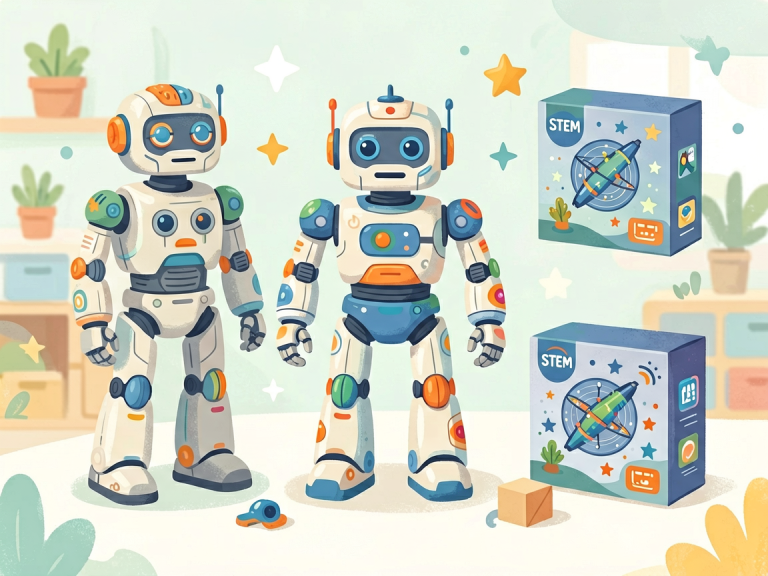
In an era where STEM education is heralded as the cornerstone of future success, parents are increasingly bombarded with marketing claims about educational toys. Among the most touted products are engineering kits designed for toddlers—those colorful boxes promising to transform your 2-year-old into a budding mechanical genius. But beneath the glossy packaging and influencer endorsements, a fundamental question lingers: Are these kits truly worth the investment, or are they merely sophisticated clutter destined for the back of the closet? This article delves deep into the developmental science, practical realities, and hidden costs of engineering kits for toddlers, offering parents a balanced, evidence-based perspective to make an informed decision.
Understanding Toddler Development and Its Implications for Engineering Play
Before evaluating any toy, we must first understand what a toddler’s brain is actually capable of. Between the ages of 1 and 3, children undergo rapid cognitive, motor, and socio-emotional development. Their attention spans are notoriously short—often just 5 to 10 minutes for a single activity. Fine motor skills are still emerging; a 2-year-old may struggle to fit a large peg into a matching hole, let alone snap together intricate plastic gears. Executive functions like planning, sequencing, and cause-and-effect reasoning are in their infancy.
Engineering kits, by definition, are designed to introduce concepts such as structural balance, mechanical movement, simple machines, and spatial reasoning. In theory, these align beautifully with toddlers’ natural curiosity about how things work. However, the key question is whether the specific format of a kit—with its prescribed parts, instructions, and end goals—matches a toddler’s developmental stage or actually stifles the unstructured exploration that is most beneficial at this age.
Jean Piaget’s theory of cognitive development places toddlers in the sensorimotor and preoperational stages. They learn through sensory experiences and physical manipulation, not through following step-by-step plans. A block tower that topples teaches more about gravity than a plastic gear set that only works if assembled correctly. This fundamental mismatch is the first red flag many experts raise.
The Case For Engineering Kits: Potential Benefits for Toddlers
1. Early Exposure to STEM Vocabulary and Concepts
Even if a toddler cannot build a functioning crane, simply handling components like wheels, axles, and connectors introduces them to spatial vocabulary and mechanical principles. Repeated exposure to terms like “balance,” “rotate,” and “interlock” primes neural pathways. Studies in early childhood education suggest that vocabulary-rich environments before age 3 strongly correlate with later academic success. A well-designed kit that includes a parent guide for conversation—asking “What happens if we put this wheel here?”—can transform passive play into active learning.
2. Fine Motor Skill Development
Many engineering kits require grasping, twisting, pushing, and aligning pieces. While these actions are not unique to kits—they can be achieved with Duplo blocks, pegboards, or even kitchen utensils—the variety of motions in a kit (e.g., turning a crank, sliding a dowel through a sleeve) may challenge fine motor skills in different ways. For toddlers with low muscle tone or delayed motor development, the repetitive practice can be beneficial. The key is that the pieces must be appropriately sized and easy to manipulate for small hands—not frustratingly tiny or stiff.
3. Fostering Persistence and Problem-Solving
A two-year-old trying to fit a square peg into a round hole without frustration is a minor miracle. Engineering kits, when introduced with realistic expectations, can teach toddlers that failure is part of the process. The moment a tower wobbles and falls, a child has a spontaneous opportunity to investigate “why.” With patient parental scaffolding, this can blossom into an early understanding of trial and error. However, this benefit hinges entirely on adult involvement. Without a caregiver guiding the emotional response to failure, a toddler may simply cry or abandon the activity.
4. Joint Attention and Parent-Child Bonding
Perhaps the single strongest argument for engineering kits is that they facilitate focused, one-on-one interaction between parent and child. In our distracted world, sitting down with a toddler to build a marble run or a rotating gear mural creates a structured environment for joint attention—a critical precursor to language development and social cognition. The kit becomes a shared language, a reason to point, name, describe, and celebrate together. This relational benefit often outweighs any academic advantage.
The Case Against Engineering Kits: Hidden Drawbacks and Limitations
1. Developmental Mismatch Between Toy Structure and Toddler Needs
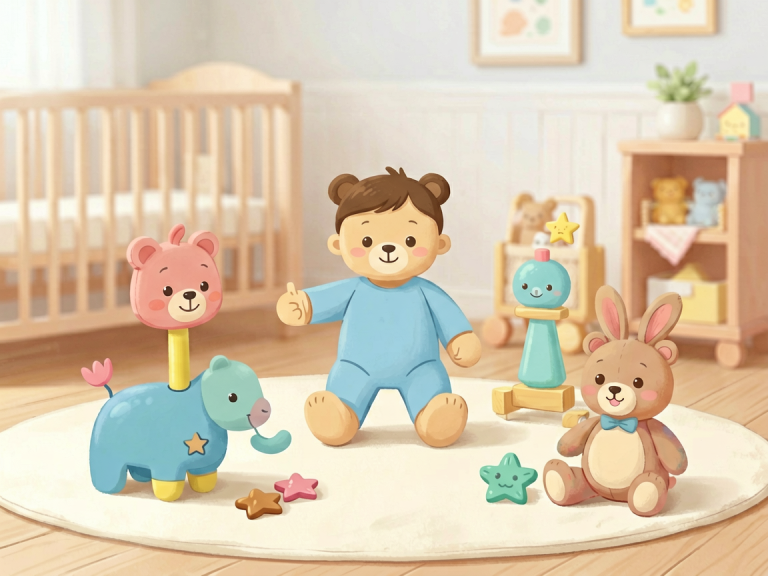
Toddlers are natural-born deconstructors, not constructors. Most engineering kits are designed with an end product in mind—a working winch, a spinning top, a stable bridge. But a toddler’s primary drive is to explore materials in their own way: banging, throwing, tasting, disassembling. The prescribed assembly often feels like a straightjacket. Instead of learning engineering principles, a frustrated toddler learns that playtime is about following instructions—a lesson that runs counter to the open-ended discovery that truly fosters creativity. Many child development experts argue that loose parts (e.g., cardboard boxes, wooden blocks, fabric scraps) are superior because they allow infinite possibilities without a "right" way to play.
2. Cost Per Minute of Play
Engineering kits for toddlers can range from $30 to over $100. Compare this to a set of simple wooden blocks costing $20 that can be used from 6 months to age 6 in countless ways. Because toddlers quickly lose interest in any single activity, the cost-per-engagement ratio of a specialized kit is often poor. Many parents report that after the first two or three builds, the kit pieces are scattered, lost, or ignored. The novelty wears off far faster than the price suggests. Moreover, unlike open-ended toys, kits rarely adapt to the child’s advancing skills—once the toddler outgrows the simple builds, the kit becomes too basic rather than evolving.
3. Potential for Frustration and Negative Associations
Toddlers have limited frustration tolerance. If a kit requires an exact alignment that their fine motor skills cannot achieve, the result is meltdowns, not learning. A child who repeatedly fails to snap a piece together may internalize the message “I’m not good at this.” Early negative experiences with structured problem-solving can actually dampen later interest in STEM. The pressure to “make it work” can also transfer anxiety from parent to child. Many well-meaning parents, after spending money, feel compelled to guide the child toward the “correct” outcome, turning play into a stressful tutoring session.
4. Safety and Choking Hazards
Remember that toddlers explore with their mouths. Even kits labeled “for ages 18 months and up” often contain small parts that can become choking hazards if the child decides to test taste. Magnets, batteries (though seldom in toddler kits), and sharp plastic edges are additional concerns. While reputable brands adhere to safety standards, the risk multiplies when siblings mix sets or when parts wear down. Parents must remain hyper-vigilant during play, which can paradoxically reduce the relaxed, independent exploration toddlers need.
5. The Marketing Myth of “STEM Education” for Infants
There is no credible evidence that playing with an engineering kit at age 2 will make a child an engineer at age 20. The term “STEM” is often co-opted to sell products that are simply toys with a label. A 2021 study in the Journal of Early Childhood Research found that unstructured block play was equally effective at predicting later spatial reasoning as structured engineering kits—and far cheaper. The real driver of later STEM interest is a child’s overall environment: exposure to nature, conversations about how things work, access to diverse materials, and parental modeling of curiosity. A kit is just one tiny piece of that puzzle.
How to Determine If a Specific Engineering Kit Is Worth It for Your Toddler
Given the mixed evidence, the answer is not a blanket yes or no. Instead, consider the following criteria before purchasing:
The “Open-Ended Test”: Can the kit be played with in multiple ways without following instructions? For example, a magnetic tile set(like Magna-Tiles) is worth considering because toddlers can stack, knock down, build shapes, and later create complex structures. In contrast, a kit that only produces one fixed model (e.g., a plastic car with interlocking parts) has limited replay value.
Parental Involvement: Are you willing to sit down with your toddler for 10–15 minutes of guided play at least weekly? If not, the kit will gather dust. Purchase only if you see it as a tool for your own interaction, not as an independent entertainment device.
Piece Size and Durability: Choose kits with large, chunky pieces that are easy for small hands. Avoid sets with dozens of tiny nuts and bolts. Look for robust plastic or wood that can survive being thrown, stepped on, and mouthed.
Age Label: Do not implicitly trust the “3+” label. Actually examine the components. Many “3+” sets are too complex for a typical 3-year-old; a first-child parent might inadvertently frustrate a 2-year-old with a set meant for a 5-year-old. Start with the simplest possible kit.
Alternatives: Before buying a kit, assess if your child already has toys that achieve similar benefits—blocks, stacking cups, Duplo, nesting boxes, or even household items like measuring cups and empty spools. Often, these are superior.
Practical Recommendations: Making the Most of Engineering Kits if You Choose to Buy
If you decide to invest, follow these strategies to maximize value:
- Ignore the instruction booklet. For toddlers, the process is the product. Let them explore the pieces freely. The gears can become necklaces, the wheels can roll across the floor, the connectors can be lined up like a train. Engineering learning happens organically through experimentation.
- Model building, but don’t require replication. Build a simple structure yourself next to your toddler, narrating your actions (“I’m putting this blue gear on top of the yellow one. Oops, it fell! Let me try again.”). Your child may imitate or may not; both are fine.
- Limit duration. Toddler attention is fleeting. Even 5 minutes of focused play is a success. Do not force the child to “finish” anything. End on a positive note, even if the project is incomplete.
- Rotate the kit. Put it away after each session and bring it out again in a week. This preserves novelty and prevents overexposure that leads to disinterest.
- Combine with narrative. Turn the building into a story: “Let’s build a house for the teddy bear.” Or create a problem: “Oh no, the car can’t go up the ramp. What can we change?” This integrates imaginative play with engineering thinking.
Conclusion: A Balanced Verdict
So, are engineering kits worth it for toddlers? The answer is: conditionally yes, but often no. They are not a necessity, nor a magic bullet for future genius. Their true value lies not in the engineering concepts they purport to teach, but in the quality of interaction they facilitate between parent and child. If you have the time, patience, and realistic expectations—and if you choose a high-quality, open-ended kit with large, safe pieces—they can be a fun supplement to a playroom already rich in simple, creative materials. However, if you are looking for a cost-effective, foolproof way to boost STEM readiness, you are better off buying a set of plain wooden blocks, taking nature walks, and asking lots of questions. In the end, the best engineer is not the one who masters a gear set at age 2, but the one who grows up with unbridled curiosity, resilience in the face of failure, and a parent who played alongside them—whether with a million-dollar kit or a cardboard box.
Remember: a toddler’s greatest engineering tool is not plastic gears, but a caring adult who says, “I wonder what happens if we try this?” That question is priceless, and no kit can replace it.