Beyond the Screen: Rediscovering Effective Screen-Free Alternatives to Learning Tablets
Introduction
In the past decade, learning tablets have become ubiquitous in classrooms and homes, promising interactive lessons, adaptive software, and instant access to a universe of information. Parents and educators often turn to these devices as modern educational tools, believing they give children a head start in a digital world. Yet a growing body of research warns that excessive screen time can impair attention spans, disrupt sleep patterns, reduce physical activity, and hinder the development of crucial social and emotional skills. While tablets have their merits, they are not the only—nor necessarily the best—path to meaningful learning. A rich array of screen-free alternatives exists, many of which engage multiple senses, foster creativity, and build deeper cognitive connections. This article explores these alternatives in depth, arguing that returning to tactile, interactive, and analog methods can often produce stronger, more lasting educational outcomes.
The Cognitive Case for Going Screen-Free
Before diving into specific alternatives, it is essential to understand why screen-free learning can be more effective for certain tasks. Human brains evolved in a three-dimensional, physically interactive world. When we read a printed book, handle a physical object, or write by hand, we engage neural pathways that are different from those activated by swiping a glowing screen. For instance, studies show that comprehension and retention are significantly better when reading from paper versus a screen, especially for longer texts. The tactile feedback of turning pages, the spatial memory of where a passage appears on a page, and the absence of distracting hyperlinks all contribute to deeper processing. Similarly, manipulating physical objects—such as building blocks, counting beads, or puzzle pieces—strengthens fine motor skills and spatial reasoning in ways that digital simulations cannot replicate. Moreover, screen-free activities naturally limit the risk of cognitive overload, multitasking, and instant-gratification habits that digital platforms often encourage.
Hands-On Manipulatives: The Power of Tangible Math and Science
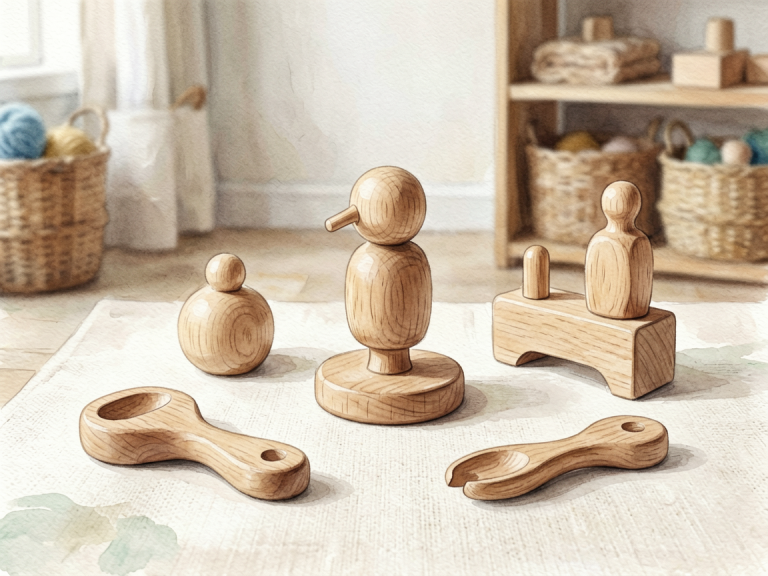
One of the most powerful screen-free alternatives to math and science apps is the use of physical manipulatives. Montessori classrooms have long relied on wooden number rods, bead chains, and fraction circles to teach abstract mathematical concepts. When a child holds a unit cube and compares it to a ten-rod, the relationship between quantities becomes intuitively clear through touch and sight. Similarly, for science, simple hands-on experiments—growing crystals, building a simple circuit with wires and bulbs, or mixing baking soda and vinegar—offer immediate sensory feedback that no simulation can match. These activities encourage hypothesis testing, trial-and-error, and the joy of discovery. They also require patience and focus, as a chemical reaction may take minutes or hours to unfold, teaching children that learning is not always instantaneous. Unlike a tablet app that rewards a correct answer with a cheerful animation, a real experiment may fail, and that failure becomes a valuable lesson in resilience and problem-solving.
The Lost Art of Handwriting: Journals, Letters, and Creative Composition
In the age of keyboards and voice-to-text, handwriting is often dismissed as outdated. Yet research consistently shows that writing by hand activates brain regions associated with memory, language, and motor control far more than typing does. Learning to form letters by hand helps young children develop literacy skills and strengthens the neural connections that underpin reading. For older students, keeping a handwritten journal encourages reflective thinking, emotional regulation, and the ability to organize thoughts sequentially. A screen-free writing practice can take many forms: pen-pal correspondence (even within the same city), story notebooks where children illustrate their own tales, or “one-sentence-a-day” diaries that build a habit of observation. Unlike a digital document that can be edited endlessly, handwriting carries a permanence that teaches careful thought before committing words to paper. This process nurtures a sense of authorship and pride that is often diluted by the ephemeral nature of digital notes.
Board Games, Card Games, and Puzzles: Strategic Thinking Without Blue Light
Board games and puzzles are among the oldest educational tools, yet they remain remarkably effective. Games like chess, checkers, and Go develop strategic planning, pattern recognition, and patience. Card games such as “Set” or “Spot It!” sharpen visual perception and quick mental calculation. Collaborative puzzle-solving, whether with jigsaw puzzles or logic puzzles like Sudoku, encourages teamwork, communication, and the ability to break complex problems into smaller parts. Unlike most learning tablet apps, which often reward speed and provide immediate feedback, board games require players to wait for turns, manage frustration, and accept both victory and defeat gracefully. These social and emotional skills are at least as important as academic knowledge. Furthermore, many modern board games are designed specifically to teach topics like geography (e.g., Ticket to Ride), history (Timeline), or even physics (Gravity Maze). They turn learning into a shared, low-pressure experience that strengthens family bonds and reduces the isolation that can accompany solo tablet use.
Outdoor and Nature-Based Learning: The Classroom Without Walls
Perhaps the most overlooked screen-free alternative is simply stepping outside. Nature offers an endlessly rich, multi-sensory curriculum. A walk in the park can become a biology lesson: identifying tree species by leaf shape, observing insect behavior, or collecting rocks and classifying them by texture and color. Seasonal changes teach cycles and time. Building a fort from sticks and leaves develops engineering and spatial planning skills far beyond any building app. Gardening—planting seeds, watering, weeding—teaches responsibility, patience, and the scientific method (what happens if I water too much? too little?). For older students, orienteering with a physical compass and map develops navigation and geometry skills. These activities not only enhance cognitive abilities but also improve physical health, reduce stress, and foster a sense of wonder that is difficult to replicate on a screen. When children learn about ecosystems by actually kneeling in the soil, they form emotional connections that make knowledge stick.
The Creative Arts: Music, Drama, and Visual Expression Without Screens
Creative arts offer another rich domain for screen-free learning. Learning to play a musical instrument—whether a piano, a ukulele, or a simple recorder—requires coordination, discipline, and the ability to read notation or play by ear. Unlike a tablet app that guides a child through a pre-programmed tune, an acoustic instrument produces immediate, unmediated sound. The child must learn to listen carefully and adjust finger placement, breath, or bow pressure in real time. Drama and role-play, even with simple costumes and props, develop empathy, narrative understanding, and public speaking skills. Children who act out a historical event or a scene from a book internalize the content more deeply than they would by watching a video. Visual arts—drawing, painting, sculpting with clay, or even weaving—engage fine motor skills, color theory, and spatial composition. Importantly, all these activities are self-paced and open-ended. A child can spend an hour perfecting a single brushstroke or improvising a melody, building a capacity for deep focus that is increasingly rare in the digital age.
Oral Traditions: Storytelling, Debate, and Spoken Word
Before the printing press, human culture was transmitted orally. This tradition remains a powerful learning tool. Family storytelling sessions—where grandparents recount memories or parents invent tales—build vocabulary, listening skills, and narrative comprehension. For older children and teenagers, structured debates on current events or historical topics develop critical thinking, research skills, and the ability to construct logical arguments. Spoken word poetry and memorization of speeches or poems strengthen memory and linguistic precision. Unlike reading silently on a tablet, oral activities demand active engagement with an audience. The speaker must modulate tone, pace, and body language; the listener must track ideas without re-reading. This two-way interaction fosters social intelligence and ensures that learning is a shared, communal experience rather than a private, passive one.
Practical Life Skills: Cooking, Sewing, and Woodworking as Curriculum
Learning tablets rarely teach the tactile, problem-solving skills involved in everyday life. Yet activities like cooking offer a natural laboratory for math (measuring ingredients, scaling recipes), science (chemical reactions in baking), and reading comprehension (following instructions). Sewing or knitting develops fine motor control, pattern recognition, and patience. Woodworking with simple tools—hammer, saw, sandpaper—teaches geometry, physics (leverage, force), and safety awareness. These skills not only build independence and confidence but also provide a sense of accomplishment that is more tangible than earning points in a digital game. Moreover, they connect children to real-world processes: where food comes from, how clothes are made, how furniture is constructed. This kind of learning grounds children in the physical reality that screen-based education increasingly abstracts.
Designing a Screen-Free Learning Environment at Home
Transitioning away from tablets does not mean eliminating technology entirely, but rather intentionally integrating screen-free options into a child’s daily routine. A well-stocked shelf of high-quality nonfiction books, a set of building blocks, art supplies, board games, and a few musical instruments can cover an astonishing range of subjects. Parents can designate “no-screen zones” in the house—for example, the dining table and the bedroom—to encourage conversation and reading. Weekly nature walks or scheduled family game nights can become cherished rituals. The goal is not to demonize tablets but to restore balance. For subjects that genuinely benefit from digital tools—such as learning a foreign language through pronunciation apps or coding—limited, purposeful use can be integrated. But for the vast majority of foundational learning, the screen-free alternatives described here offer richer, more human, and often more effective pathways to knowledge.
Conclusion
Learning tablets are powerful tools, but they are not a panacea. The best education engages the whole person: hands, heart, and mind. Screen-free alternatives—from manipulatives and handwriting to board games, nature exploration, music, and practical skills—provide a depth of sensory and social engagement that digital devices cannot replicate. By prioritizing these analog methods, we can help children develop patience, creativity, critical thinking, and emotional resilience. In a world saturated with screens, the ability to learn without one may become one of the most valuable skills of all. It is time to look up from the glowing tablet and rediscover the rich, tactile, and interactive universe of learning that has always been right in front of us.