Should I Buy Science Kits for 7-Year-Olds? A Comprehensive Guide for Parents
Introduction: The Growing Appeal of Hands-On Science
Every parent wants to give their child the best possible start in life. In an era where STEM (Science, Technology, Engineering, and Mathematics) education is increasingly emphasized, the question "Should I buy science kits for 7-year-olds?" has become a common dilemma in many households. Walk into any toy store, browse Amazon, or scroll through parenting forums, and you will find an overwhelming array of colorful boxes promising to turn your child into a junior chemist, biologist, or physicist overnight. But beneath the glossy packaging and exciting promises lies a deeper question: Are these kits genuinely beneficial for a seven-year-old's development, or are they merely expensive distractions? The answer, as with most parenting decisions, is not a simple yes or no. It depends on the child, the kit, and—most importantly—how the kit is used.
Seven-year-olds are at a fascinating developmental stage. They have outgrown the purely imaginative play of toddlers but are not yet ready for abstract scientific theories. Their curiosity is boundless, their attention spans are growing, and they are beginning to understand cause and effect. Science kits, when chosen wisely, can harness this natural curiosity and channel it into meaningful learning experiences. However, a poorly selected kit can lead to frustration, mess, and a lasting aversion to science. In this article, we will explore the pros and cons of buying science kits for seven-year-olds, provide criteria for choosing the right one, and offer practical tips for maximizing the educational value of these kits. By the end, you will have a clear framework to decide whether investing in a science kit is the right move for your family.
The Benefits of Science Kits for 7-Year-Olds
1. Fostering Curiosity and a Love for Learning
At the age of seven, children are naturally inquisitive. They ask endless questions: Why is the sky blue? How do plants grow? What makes a volcano erupt? A well-designed science kit provides concrete answers to these questions through hands-on experimentation. Instead of reading about chemical reactions in a textbook, a child can actually mix baking soda and vinegar and watch the fizzy explosion. This direct, sensory experience creates a powerful memory and a genuine sense of wonder. Research in early childhood education consistently shows that hands-on learning significantly improves retention and engagement compared to passive instruction. When a child sees a seed sprout into a plant or a magnet attract metal objects, the knowledge becomes visceral, not abstract. This early positive association with science can lay the foundation for a lifelong interest in exploration and discovery.
2. Developing Critical Thinking and Problem-Solving Skills
Science kits are not just about following instructions; they are about understanding processes. Most kits require the child to read steps, sequence actions, observe outcomes, and sometimes troubleshoot when things go wrong. For example, if a crystal-growing kit fails to produce crystals, a seven-year-old must ask: Did I add too much water? Was the temperature wrong? This simple act of identifying a problem, forming a hypothesis, and adjusting the experiment is a fundamental scientific skill. Moreover, many modern kits include open-ended challenges that encourage creativity. Instead of merely replicating a preset result, the child is invited to modify variables, test new combinations, and record observations. These activities subtly train the brain to think logically, analyze data, and persist through failure—skills that are invaluable far beyond the science classroom.
3. Building Confidence and Independence
There is a unique satisfaction in creating something tangible through your own efforts. When a seven-year-old successfully assembles a simple circuit that lights up an LED, or grows a colorful crystal, they experience a boost in self-esteem. Science kits often allow children to work independently, with minimal adult supervision, giving them a sense of ownership over their learning. This autonomy is crucial at this age, as children begin to develop a sense of competence and mastery. Furthermore, the clear, step-by-step instructions in many kits help children learn to follow directions carefully—a skill that translates directly to academic success. Over time, successfully completing multiple experiments reinforces the idea that "I can do this," which encourages them to take on more challenging tasks in the future.
Potential Drawbacks and How to Mitigate Them
1. Frustration and Overwhelm from Complexity
Not all science kits are created equal. Some are marketed for ages 6–12 but are far too complex for a typical seven-year-old. Kits that involve fiddly parts, lengthy preparation, or advanced concepts can quickly lead to frustration. A child who cannot make a rocket launch or fails to produce the expected chemical reaction may feel discouraged and lose interest. Moreover, if the instructions are poorly written or ambiguous, the experience becomes a chore rather than a joy. To avoid this, parents should always review the kit's content and recommended age range carefully. Look for kits specifically labeled for ages 5–7 or 6–8, and read customer reviews that mention ease of use. A good rule of thumb: if the kit requires more than 15 minutes of adult setup, it may be better suited for an older child. Additionally, choose kits with visual instructions and minimal text to accommodate early readers.
2. Mess, Cost, and Parental Involvement
Science kits can be messy. Glitter, powders, liquids, and small parts have a way of spreading across the kitchen table, the floor, and even the family pet. Some parents may find this stressful, especially if they have limited time or space. Furthermore, quality science kits are not cheap. A single kit can range from $15 to $60, and many contain only enough materials for a handful of experiments, leading to repeated purchases. Another hidden cost is the requirement for common household items like vinegar, baking soda, or food coloring, which may not always be on hand. Finally, despite the promise of independent play, most seven-year-olds will need some adult guidance. A parent who is tired after a long workday may not have the energy to supervise a bubbling volcano or help measure precise amounts. The key is to set realistic expectations. Prepare the workspace in advance (newspaper on the table, aprons, etc.), schedule kit time when you can be fully present for 20–30 minutes, and consider kits that emphasize simple, low-mess experiments like magnet play or bug observation. Alternatively, look for reusable kits that allow repeated experimentation, such as those involving snap circuits or building blocks.
How to Choose the Right Science Kit for a 7-Year-Old
1. Align with the Child's Interests
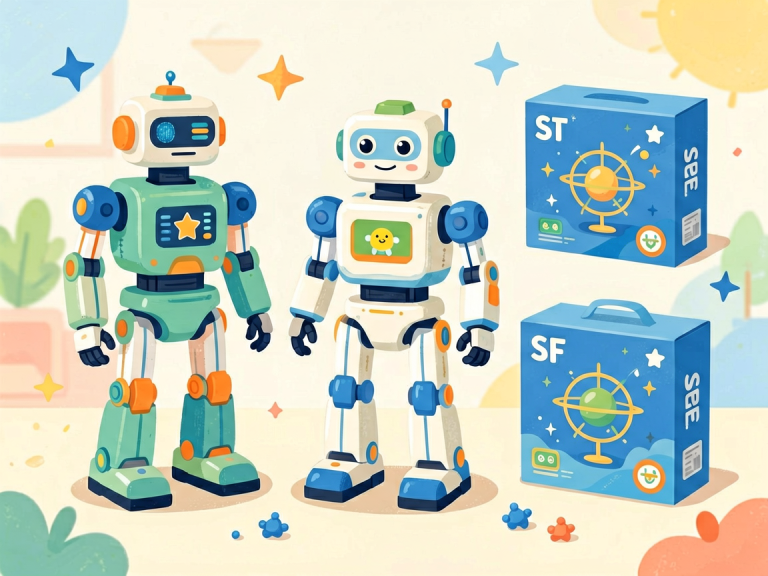
The most effective science kit is one that taps into your child's existing passions. Does your child love dinosaurs? Choose a fossil digging kit or a volcano model. Are they fascinated by the night sky? Opt for a solar system model or a constellation projector. Do they enjoy building? A simple robotics kit or a magnetic building set will be far more engaging than a generic chemistry set. Observe your child’s play patterns and conversations to identify their natural curiosities. When children are intrinsically motivated, they are more likely to persist through challenges and retain what they learn.
2. Prioritize Open-Ended Exploration Over Recipe-Based Experiments
While step-by-step experiments are valuable for learning procedure, the best kits include elements of open-ended play. For example, a kit that provides a set of magnets, iron filings, and a compass allows the child to discover magnetic fields in their own way, rather than just following a single instruction sheet. Similarly, a kit that includes a variety of seeds, soil, and pots encourages the child to test different growing conditions. These kits foster creativity and critical thinking, rather than just leading to a predetermined outcome. When reading product descriptions, look for phrases like "multiple experiments," "design your own," or "explore and discover."
3. Check for Safety and Quality
Safety is paramount when dealing with young children. Avoid kits that contain small parts that could be choking hazards, or chemicals that are toxic or caustic. Look for kits that use non-toxic, washable materials. Also, ensure that the instructions include proper safety warnings and adult supervision guidelines. Additionally, consider the durability of the components. Cheap plastic parts may break easily, leading to frustration. Read reviews to see if parents report that the materials hold up to repeated use. Kits from reputable brands (like Thames & Kosmos, National Geographic, Learning Resources, or KiwiCo) generally have higher quality standards, though they often come at a higher price.
Conclusion: A Strategic Yes, With Caveats
So, should you buy science kits for your 7-year-old? The answer is a qualified yes—provided you choose wisely and engage actively. Science kits can be a fantastic tool for sparking curiosity, developing critical thinking, and building confidence. They offer a tangible, exciting way for children to explore the world around them, laying the groundwork for future academic and personal growth. However, they are not a magic bullet. A poorly chosen kit can lead to mess, frustration, and a wasted investment. The key is to match the kit to your child's interests and abilities, prioritize open-ended exploration, and be prepared to participate in the journey.
Ultimately, the best science kit is not the one with the flashiest packaging or the most famous brand name; it is the one that invites your child to ask "what if?" and then helps them find the answer. If you approach science kits as a shared adventure rather than a solitary activity, you will not only teach your child about science—you will also strengthen your bond, create lasting memories, and perhaps even rediscover your own sense of wonder. So go ahead, buy that kit, clear the kitchen table, put on old clothes, and get ready to explore. The universe is waiting.