Should I Buy Science Kits for an 18-Month-Old? A Comprehensive Guide for Parents
Introduction
The first few years of a child’s life are a whirlwind of rapid growth, curiosity, and exploration. As parents, we are constantly bombarded with products that promise to accelerate development, boost intelligence, or spark a lifelong love of learning. Among these, science kits have gained immense popularity, often marketed as tools to introduce STEM (Science, Technology, Engineering, and Mathematics) concepts from an early age. But when your child is only 18 months old, the question becomes far more nuanced: *Should I buy science kits for my 18-month-old?* At first glance, the answer might seem straightforward—no, because such kits are typically designed for older children. However, the reality is more complex. This article will delve into the developmental capabilities of an 18-month-old, examine what typical science kits offer, weigh potential benefits against genuine risks, and finally provide practical, age-appropriate alternatives that can foster curiosity without compromising safety or developmental appropriateness. By the end, you will have a clear, evidence-based framework to decide whether a science kit is right for your toddler—or whether you should look elsewhere.
—
Understanding the 18-Month-Old Developmental Stage
Before evaluating any product, it is essential to understand what an 18-month-old is cognitively, physically, and emotionally capable of. At this age, children are in what psychologists call the “toddler” stage, a period of immense change. They are typically walking confidently, beginning to run, climbing stairs with assistance, and using their hands to manipulate objects with increasing precision. Their language skills are blossoming—they may know anywhere from 10 to 50 words, understand simple commands, and point to familiar objects or body parts when asked.
Cognitively, an 18-month-old is in the sensorimotor stage (as described by Jean Piaget), which means they learn primarily through sensory experiences and physical actions. They explore the world by touching, tasting, shaking, dropping, and throwing objects. Cause-and-effect relationships are beginning to form, but in a very rudimentary way: for example, they learn that pressing a button makes a sound, or that dropping a toy makes it disappear. However, they cannot yet grasp abstract concepts like gravity, chemical reactions, or magnetism. Their attention span is extremely short—often just a few minutes—and they are easily overwhelmed by complex stimuli.
Emotionally, toddlers are learning to assert their independence, which often manifests as tantrums, resistance, or intense focus on a single activity. They crave routine and predictability, yet they also need novelty to remain engaged. Importantly, safety is paramount at this age: 18-month-olds are notorious for putting objects in their mouths, and their motor skills are still too unrefined to handle small parts or delicate equipment safely.
Given this profile, any toy or activity recommended for an 18-month-old must be: (1) safe with no choking hazards, toxic materials, or sharp edges; (2) simple enough to be understood through direct sensory interaction; (3) durable enough to withstand rough treatment; and (4) engaging for very short bursts of attention. Now, let us contrast this with what commercial science kits typically offer.
—
What Science Kits Typically Offer
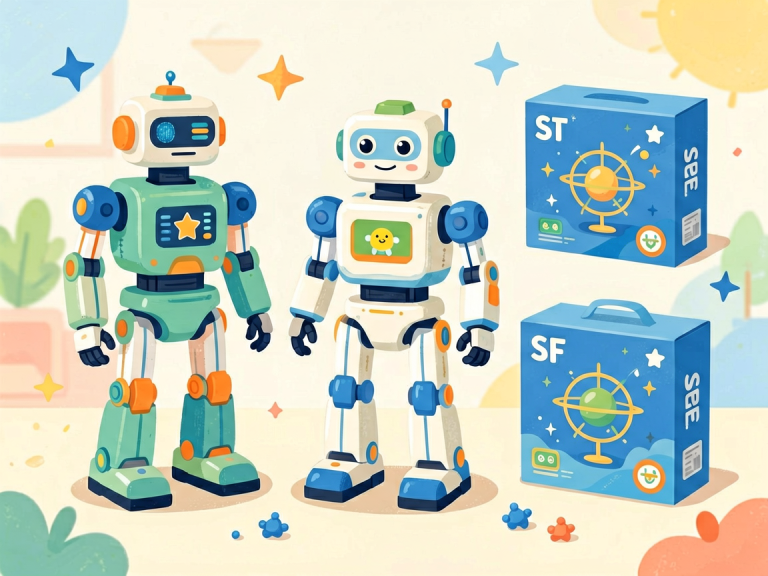
Science kits for children are a diverse category, but they share common characteristics. Most are designed for children aged 3 and up, with many labeled for ages 5–8 or even older. A typical science kit contains multiple components: small test tubes, pipettes, measuring spoons, chemical powders (like baking soda or citric acid), plastic models, magnets, magnifying glasses, and instruction booklets with multi-step experiments. Examples include volcano-building kits, crystal-growing sets, slime-making labs, and physics exploration kits with small gears or pulleys.
The intended use involves following a sequence of instructions, mixing substances, observing changes over time, and discussing scientific principles. This requires fine motor skills (pouring, measuring, twisting caps), cognitive abilities (following multi-step directions, understanding predictions), and language comprehension (listening to explanations, asking questions). Moreover, many kits assume that an adult will actively facilitate the experiment, but the child is expected to participate in a relatively structured way.
For an 18-month-old, most of these characteristics are problematic. The small parts (pipettes, plastic beads, tiny magnets) pose a serious choking hazard. The chemicals, even if labeled “non-toxic,” can be harmful if ingested or rubbed into eyes—and toddlers explore with their mouths. The experiments often produce messy, sticky, or wet results that may be overwhelming for a child who lacks impulse control. The need to follow instructions is virtually impossible for a toddler who cannot yet understand sequential logic. Even a simple activity like mixing baking soda and vinegar to create a fizzy reaction—often touted as toddler-friendly—requires careful supervision to prevent the child from drinking the vinegar or putting baking soda powder into their nose.
In short, most mainstream science kits are not designed for 18-month-olds. But does that mean there are zero benefits? And are there any specialized kits that might work? Let’s examine the potential pros and cons.
—
Potential Benefits of Introducing Science Concepts Early
Advocates of early STEM education argue that even toddlers can benefit from exposure to scientific thinking. The idea is not to teach them the periodic table, but to nurture curiosity, observation skills, and a sense of wonder about the natural world. For an 18-month-old, “science” might simply mean watching a ball roll down a ramp, splashing water in a tub, or feeling the texture of sand. These experiences lay the groundwork for later understanding of physics, biology, and chemistry.
One could argue that a well-designed “science kit” for a toddler would focus on:
- Sensory exploration: Different textures, temperatures, colors, and sounds.
- Cause-and-effect: Simple mechanisms like pressing a button to make a light flash or turning a wheel to spin a pinwheel.
- Nature observation: A magnifying glass (shatterproof) to look at leaves, rocks, or insects, though this requires strong adult supervision.
- Water and sand play: Measuring cups, funnels, and sieves that teach volume and flow.
Some companies do produce “STEM toys” for babies and toddlers, such as stacking blocks with magnets, soft fabric books with crinkle pages and mirrors, or simple shape sorters that introduce basic engineering concepts. These are essentially science kits in disguise—they use scientific principles in a safe, age-appropriate way.
Thus, the benefit of buying a *true* science kit for an 18-month-old is limited unless the kit has been specifically designed for that age group, which is rare. However, the concept of science play is absolutely beneficial. The key is to distinguish between a commercial kit and a thoughtfully curated set of safe exploratory tools.
—
Key Concerns and Drawbacks for Toddlers
Despite the theoretical benefits, there are significant drawbacks to purchasing a standard science kit for an 18-month-old. Let’s break them down systematically.
Safety hazards: This is the most critical concern. Small parts are the leading cause of choking injuries in children under 3. Many science kits contain items like plastic beads, tiny magnets, or even glass vials. Even if the box says “ages 3+”, the reality is that 18-month-olds often still mouth objects. Moreover, some kits include chemical substances that, while non-toxic in small amounts, can cause gastrointestinal distress or allergic reactions if ingested. Batteries used in electronic kits can be swallowed and cause severe internal burns.
Frustration for both parent and child: A toddler cannot follow instructions. If you buy a volcano kit expecting your 18-month-old to help pour baking soda into a container, you will likely end up with baking soda scattered across the floor, vinegar spilled on the rug, and a screaming child who wants to eat the mixture. The mismatch between the toy’s intended use and the child’s developmental reality leads to stress for the parent and disappointment for the child.
Overstimulation: Many science kits involve bright colors, loud noises (like popping or fizzing), and multiple steps. For a toddler, this can be overwhelming rather than educational. Their brains are still developing the ability to filter sensory input. A simple, single-action toy (like a ball that lights up when rolled) is far more effective than a complex kit.
Cost inefficiency: Quality science kits are not cheap. Spending $30–$50 on a kit that your child cannot use safely or meaningfully is wasteful. The money could be better spent on open-ended toys like blocks, stacking cups, or a simple water table that provide hours of exploratory play.
Misleading marketing: Many products labeled “STEM” or “science” are actually just repackaged basic toys with a fancy label. Some may claim suitability for 18-month-olds, but upon inspection, you will find small components or vague instructions. Always check the manufacturer’s age recommendation on the box, but also use your own judgment.
—
Age-Appropriate Alternatives to Science Kits
Instead of buying a formal science kit, consider these alternative activities that align perfectly with your 18-month-old’s developmental stage and natural curiosity.
1. Sensory Bins: Fill a plastic tub with safe, edible materials like cooked spaghetti, dry rice (supervised to prevent ingestion of large amounts), or oatmeal. Add plastic scoops, cups, and a few large, soft toys. This teaches texture, cause-and-effect (scooping and pouring), and fine motor skills. No instructions needed—the child explores freely.
2. Water Play: A shallow basin with water, along with plastic boats, cups with holes, and floating toys, offers endless science lessons in buoyancy, volume, and flow. Always supervise to prevent drowning risk, but this is a classic activity for good reason.
3. Nature Walks: A simple walk outside can be a science lesson. Point out leaves, rocks, ants, birds, and clouds. Let your child touch a smooth stone or feel the bark of a tree. You do not need a kit; just a curious attitude.
4. Simple Cause-and-Effect Toys: Toys like a pop-up toy (where pushing a button makes an animal pop up), a rolling ball tower, or a busy board with latches, switches, and knobs are excellent “science” tools. They introduce concepts of physics and mechanics in a safe, repetitive way.
**5. DIY “Discovery Bottles”: Clear plastic bottles filled with water, glitter, oil, and food coloring (sealed tightly with hot glue) allow a toddler to shake and observe how liquids move. No small parts, no mess, and mesmerizing to watch.
6. Soft Blocks and Sorters: Stacking blocks teaches gravity and balance. Shape sorters introduce spatial reasoning. These are the original STEM toys and are widely available for infants and toddlers.
Each of these alternatives is safer, cheaper, and more developmentally appropriate than a typical science kit. They also allow the child to lead the play, which is crucial for intrinsic motivation.
—
How to Choose Safe and Stimulating Activities for 18-Month-Olds
If you are determined to buy a product that feels “scientific,” here is a checklist to ensure it is suitable for an 18-month-old:
- Age label: Look for products explicitly marked for 12 months+ or 18 months+. Avoid anything labeled 3+.
- No small parts: The toy should have no removable pieces smaller than a toilet paper roll (the standard choke test). Everything should be large or securely attached.
- Non-toxic materials: Ensure BPA-free, phthalate-free, lead-free plastics, and washable fabrics.
- Open-ended play: The toy should not require following instructions. It should invite exploration, manipulation, and repetition.
- Durability: Toddlers drop, throw, and chew toys. Look for sturdy construction without sharp edges.
- Adult involvement: Even the best toy benefits from a parent or caregiver who talks about what the child is doing: “Look, the ball went down!” “The water is cold!” This verbal interaction is where real learning happens.
Remember, the most valuable “science kit” you can give your 18-month-old is your own attention and language. Narrating everyday experiences—the way a spoon clatters when dropped, the way a bubble floats—teaches far more than any packaged product.
—
Conclusion: A Balanced Recommendation
So, should you buy a science kit for your 18-month-old? The short answer is: generally, no. Most commercial science kits are inappropriate for this age due to safety hazards, complexity, and mismatch with developmental abilities. The potential benefits are far outweighed by the risks and frustrations. However, that does not mean you should abandon the idea of introducing science concepts. Instead, reframe your approach: focus on safe, open-ended, sensory-rich activities that encourage exploration, cause-and-effect understanding, and natural curiosity. Use everyday objects, invest in high-quality toddler toys that incorporate basic STEM principles, and prioritize your own interactive presence.
If you come across a kit specifically designed for toddlers (e.g., a set of large, soft plastic test tubes with lids for water play, or a set of safe, jumbo-sized magnetic wands), and it passes the safety checklist above, then it might be a reasonable purchase. But in most cases, your child will learn more—and enjoy more—from a simple bucket of water or a set of stacking cups than from a flashy, packaged science experiment. Science is not a product; it is a mindset. And that mindset begins with you, not with a kit.
So, save your money for a good water table, a sturdy set of blocks, or a field trip to the park. Your 18-month-old will thank you with giggles, discoveries, and a natural love for learning that no store-bought kit can replace.