Should You Buy Science Kits for a 6-Month-Old? A Developmental Perspective
Introduction
The modern parenting landscape is saturated with products promising to accelerate infant development. Among the most eye-catching are “science kits” marketed for babies as young as six months old. These kits often feature bright colors, simple tools, and claims that they will spark a lifelong love of STEM. As a new parent, you may find yourself wondering: *Should I buy science kits for my 6-month-old?* The short answer, grounded in developmental psychology and pediatric safety guidelines, is a resounding no. But the longer answer is far more nuanced—and it reveals important truths about how infants actually learn, what they truly need, and how well-meaning marketers sometimes mislead us. In this article, we will explore why traditional science kits are inappropriate for six-month-olds, examine the developmental milestones that define this age, and offer evidence-based alternatives that support genuine cognitive growth without compromising safety.
The Allure of Early STEM Education
A Cultural Obsession with Acceleration
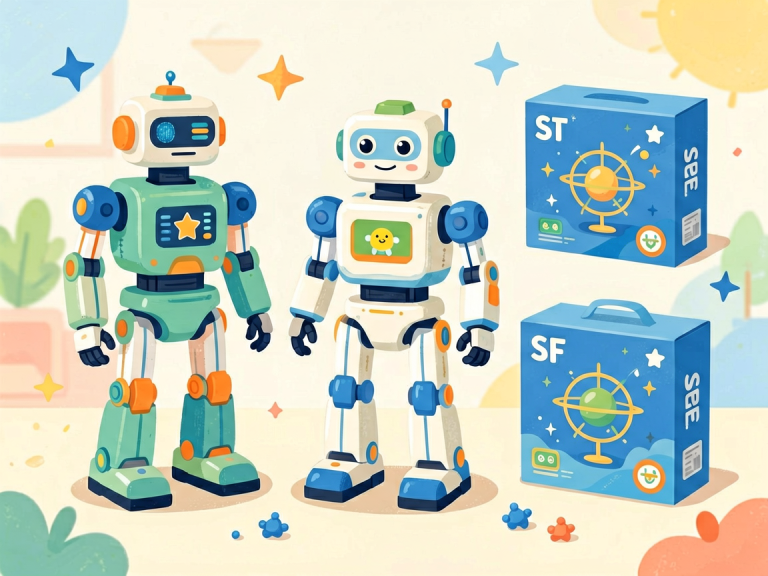
In recent decades, the idea of “early STEM education” has become a cultural phenomenon. Parents are bombarded with messages that the first three years of life are a critical window for brain development, and that any delay in exposing a child to scientific concepts is a missed opportunity. Science kits for infants promise to introduce “cause and effect,” “exploration,” and “problem-solving” in a tidy box. They often include items like textured balls, translucent rattles, simple mirrors, or even “sensory tubes” filled with colored liquid. The packaging typically shows a smiling baby grasping a brightly colored object while a parent looks on proudly.
The Marketing Trap
The problem is that these kits are rarely designed with the actual capabilities of a six-month-old in mind. Instead, they are repackaged versions of general sensory toys, given a scientific-sounding label to justify a higher price tag. A six-month-old does not need a “science kit” to explore gravity—they already drop everything they hold. They do not need a “magnetic exploration set” to learn about attraction—they are far more interested in putting things in their mouths. Marketing preys on parental anxiety, suggesting that without these products your child will fall behind. In reality, six-month-olds are not ready for structured scientific inquiry; they are in the purest, most organic phase of learning through their senses and gross motor actions.
Developmental Realities of a 6-Month-Old
Physical and Sensory Milestones
At six months, most infants have achieved several key developmental milestones. They can typically sit with support, roll over both ways, and reach for objects with increasing accuracy. Their hand-eye coordination is improving, but they still lack the fine motor control to manipulate small parts or perform deliberate actions like turning a knob or pushing a button designed for older children. Their vision has matured to perceive depth and color, but they are still nearsighted and focus best on objects within about eight to twelve inches. Most importantly, the primary mode of exploration at this age is oral—babies learn about an object by putting it in their mouth, feeling its texture with their gums and tongue, and tasting it. A science kit that contains small beads, detachable pieces, or any component that could pose a choking hazard is therefore not just ineffective—it is dangerous.
Cognitive Abilities: Cause and Effect, But Not Scientific Reasoning
Six-month-olds are indeed beginning to understand cause and effect. They learn that shaking a rattle produces sound, or that pushing a ball makes it roll. This is a foundational cognitive achievement, but it is not the same as scientific reasoning. They do not formulate hypotheses, control variables, or draw conclusions. Their “experiments” are random and repetitive—they drop a spoon ten times in a row simply because they enjoy watching you pick it up. A science kit that claims to teach “experimentation” is mislabeling what is actually a natural, unstructured process. The best “science kit” for a six-month-old is an empty cardboard box, a set of wooden blocks, or a simple crinkly fabric—objects that invite open-ended exploration without predetermined outcomes.
Social and Emotional Needs
At this age, infants are deeply attuned to social interaction. They learn best through back-and-forth exchanges with a caregiver—eye contact, vocalizations, facial expressions. Research in attachment theory and early childhood education consistently shows that the most powerful “educational tool” for a six-month-old is a responsive adult. When a baby points at something and you say, “Oh, you see the red ball!” you are building language, attention, and social cognition far more effectively than any science kit. A parent who sits on the floor with their baby, handing them different textures and narrating the experience, is providing a richer learning environment than any box of plastic gadgets.
Safety Concerns That Cannot Be Overlooked
Choking Hazards and Small Parts
The single most compelling reason to avoid science kits for six-month-olds is safety. The U.S. Consumer Product Safety Commission (CPSC) and pediatric organizations emphasize that children under three should not have access to objects smaller than 1.25 inches in diameter or with small detachable parts. Many science kits, even those labeled for “infants,” include items like tiny plastic test tubes, small beads, or miniature measuring spoons. These can easily break or come loose. A six-month-old’s instinct to mouth everything makes these items potential choking hazards. Even if the kit claims to be “age-appropriate,” you must scrutinize every piece. Often, the recommended age on the box (e.g., “6 months+”) is based on vague marketing rather than rigorous safety testing for that specific age.
Chemical and Toxic Material Risks
Some science kits designed for older children include substances like baking soda, vinegar, or non-toxic dyes. For a six-month-old, even “non-toxic” substances can be problematic if ingested in large quantities. Moreover, plastic components may contain BPA, phthalates, or other chemicals that are especially harmful to developing bodies. While reputable brands adhere to safety standards, many inexpensive kits sold online do not. The risk is simply not worth the purported benefit. Remember: a six-month-old does not need to see a baking soda volcano. They need to feel the smoothness of a wooden block, hear the jingle of a bell, and taste a teething ring.
Supervision vs. Practicality
Even with constant supervision, accidents happen. A baby can quickly grab a small part and put it in their mouth before you react. The argument “I will watch them closely” is not a reliable safeguard. Infants are fast, and even the most attentive parent can be distracted for a split second. The only way to eliminate the risk is to keep such items out of reach entirely. Therefore, purchasing a science kit that contains any small or breakable components is an unnecessary gamble.
What to Look for in Infant Toys Instead
Open-Ended Sensory Materials
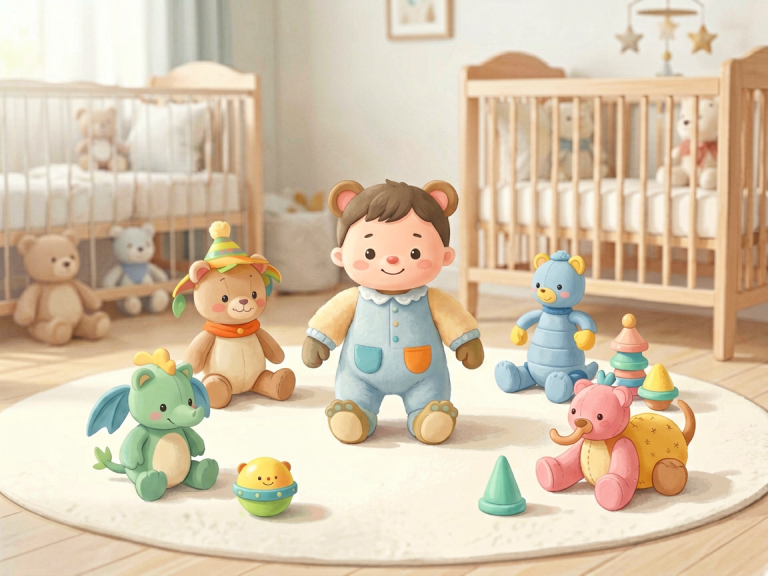
Instead of a pre-packaged science kit, choose toys that are simple, safe, and encourage free exploration. The best toys for a six-month-old include:
- Soft, oversized rattles that are easy to grasp and have no small parts.
- Teething rings made of silicone or natural rubber, which can be chewed safely.
- Crinkle toys or fabric books with contrasting patterns that stimulate vision.
- Stacking cups (large, lightweight) that can be banged together, nested, or dropped.
- Activity gyms or play mats with hanging toys that encourage reaching and batting.
These items promote sensory integration, motor development, and cause-and-effect learning without the safety risks. They also allow for the kind of repetitive, self-directed play that infants naturally engage in.
The Role of Everyday Items
You do not need to buy anything special. A wooden spoon, a stainless steel bowl, a clean sock, or a cardboard tube from a roll of wrapping paper can provide hours of engagement. The key is variation in texture, sound, and weight. A six-month-old learning about the world does not distinguish between a “scientific” toy and a household object; they are equally fascinated by the way a plastic lid clatters when dropped. By using everyday items, you also model creativity and resourcefulness—a far more valuable lesson than anything in a box.
Alternative Sensory Play Ideas That Are Truly Educational
Water and Ice Exploration (with Care)
At around six months, many babies enjoy water play. Fill a shallow tray with lukewarm water and place a few large, floating objects (like a clean plastic cup or a silicone spatula). Let your baby splash and grasp. Never leave them unattended, but this simple activity teaches concepts like wet/dry, floating/sinking, and temperature. For a more intense sensory experience, you can add a large ice cube (too big to swallow) and watch your baby’s reaction to the cold. This is genuine, hands-on “science” that is safe and engaging.
Sound and Music
Babies are natural scientists of sound. Provide a set of safe instruments like a drum, a shaker egg (large and sealed), or a xylophone. Let them bang, shake, and explore. You can also create DIY sound objects: a plastic bottle filled with a few dry beans (tightly sealed with glue) makes a great rattle. Just ensure the cap cannot be removed. Through these activities, your baby learns about vibration, volume, and rhythm—foundational concepts in physics and music.
Light and Shadow
A flashlight can be a magical tool for a six-month-old. In a dim room, shine the light on the ceiling or on a wall. Move it slowly and watch your baby’s eyes track the beam. You can also hold a translucent object (like a red plastic cup) in front of the light to show color changes. This encourages visual tracking, attention, and an early understanding of light and shadow. Again, no special kit required—just a flashlight and your presence.
Conclusion: The Best Science Kit Is You
So, should you buy science kits for a 6-month-old? The answer is clear: no. Not only are they often unsafe, but they also miss the point of how infants learn. A six-month-old does not need a curriculum; they need a responsive, loving caregiver who provides a safe environment full of rich sensory experiences. The most profound “science experiment” you can conduct with your baby is simply to sit on the floor, hand them different objects, and watch their discovery unfold. Talk to them, describe what they are doing, and celebrate their curiosity. That interaction is the foundation of all future learning—and it doesn’t come in a box.
Instead of spending money on a gimmicky kit, invest in a few high-quality, safe sensory toys, or better yet, use what you already have at home. Let your baby explore a wooden spoon, a piece of crinkly paper, or a soft scarf. These experiences, combined with your warmth and attention, will do far more for their development than any commercial product ever could. When your child is older—say, two or three—there will be plenty of time for actual science kits with simple experiments. But for now, let them be babies: tasting, touching, listening, and laughing. That is the truest science of all.