Robotics and Coding Kits
Title: Top 10 Best STEM Kits Under $100: Affordable Tools to Spark a Lifelong Love for Science, Technology, Engineering, and Math
In an era where technology shapes nearly every aspect of our lives, fostering an early interest in STEM (Science, Technology, Engineering, and Mathematics) has never been more important. Parents and educators alike are constantly on the lookout for engaging, hands-on learning tools that don’t break the bank. Fortunately, the market is brimming with high-quality STEM kits priced under $100. These kits transform abstract concepts into tangible experiences, allowing children to build robots, code their own games, conduct real chemistry experiments, and explore the principles of physics—all while having fun. In this article, we’ll explore ten of the best STEM kits under $100, categorized by core disciplines, age ranges, and skill levels. Whether your child is a budding engineer, a curious scientist, or a future programmer, there’s a perfect kit waiting to ignite their imagination.
—
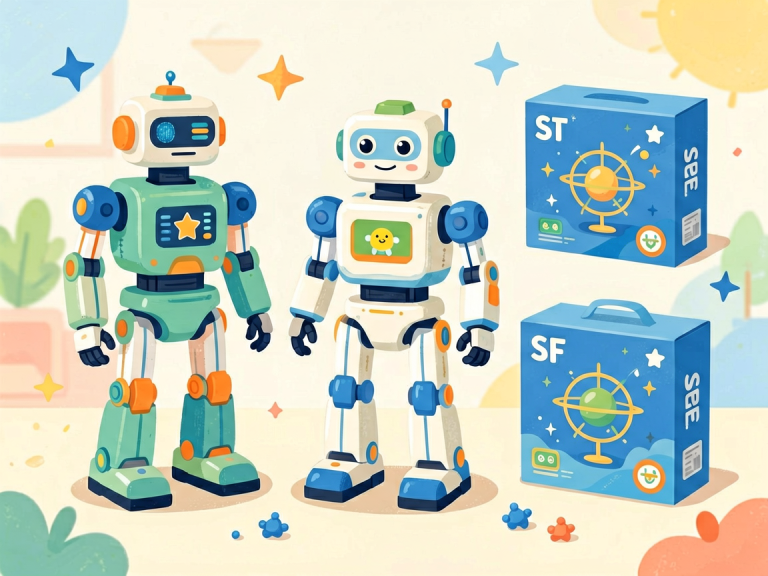
Robotics and Coding Kits
1. Sphero Mini (Approx. $50)
The Sphero Mini is a pocket-sized, app-enabled robotic ball that introduces coding through play. Despite its small size (about the size of a ping-pong ball), it packs impressive capabilities: a gyroscope, accelerometer, and colorful LED lights. Kids can drive the robot using a smartphone or tablet, or they can program it using Sphero’s drag-and-block coding interface, which is based on Scratch. The kit includes a clear shell, micro-USB charging cable, and a set of mini traffic cones and bowling pins for obstacle courses. Ages 8 and up will find hours of entertainment while learning logic, sequencing, and problem-solving. At around $50, it’s an affordable entry point into robotics and coding.
2. Makeblock mBot Robot Kit (Approx. $75)
For slightly older children (ages 8–12) who want a more hands-on building experience, the Makeblock mBot is a fantastic choice. This DIY robot car comes with all the parts needed to assemble a two-wheeled, obstacle-avoiding vehicle. The mBot uses a simple screwdriver-based assembly—no soldering required—and can be controlled via a remote or programmed with mBlock, a graphical programming language based on Scratch. Advanced users can even upgrade to Arduino-based coding. The kit includes sensors for light, sound, and ultrasonic distance, making it perfect for teaching basic robotics, electronics, and coding concepts. At under $80, it delivers exceptional value for budding engineers.
—
Chemistry and Physics Experiment Kits
3. Thames & Kosmos Chem C500 (Approx. $35)
Chemistry sets have come a long way from the messy labs of the past. The Thames & Kosmos Chem C500 is a beginner-level chemistry kit that introduces fundamental concepts through 28 safe, engaging experiments. Kids can create color-changing solutions, grow crystals, build a mini volcano, and explore pH indicators—all using non-toxic chemicals and household items. The 48-page full-color manual explains the science behind each reaction in a clear, kid-friendly way. Designed for ages 8 and up, this kit is an excellent starting point for young chemists. The price, well under $50, makes it one of the most affordable yet comprehensive science kits available.
4. Snap Circuits Classic (Approx. $50)
Snap Circuits is a legendary name in STEM education, and the Classic set (300+ projects) remains a top seller. This kit uses color-coded, snap-together electronic components—resistors, capacitors, switches, motors, and lights—to build working circuits. Children can construct a working AM radio, a doorbell, a burglar alarm, and dozens of other real-world devices. No soldering or tools are required, making it safe for ages 8 and up. The components are durable, and the illustrated manual guides users step by step. Snap Circuits effectively teaches the fundamentals of electricity and electronics, and at around $50, it’s a budget-friendly investment that can grow with the child.
—
Engineering and Construction Kits
5. Engino Discovering STEM: Structural Engineering – Bridges & Skyscrapers (Approx. $30)
Engineering principles come to life with Engino’s thematic kits. This particular set focuses on structural engineering, allowing children to build nine different bridge models (beam, arch, truss, suspension, etc.) and three skyscraper designs. The kit includes over 140 plastic parts, plus a 16-page booklet that explains concepts like load distribution, tension, compression, and stability. A unique feature is the online 3D interactive instructions, which help visual learners understand complex geometries. Designed for ages 8–16, this kit encourages critical thinking and creativity. At under $35, it’s an extraordinary value for a deep dive into civil engineering.
6. K’NEX Education – Intro to Simple Machines: Levers & Pulleys (Approx. $35)
K’NEX has been a classroom staple for decades, and this set focuses specifically on simple machines. Kids build working models of levers, pulleys, wheel-and-axle systems, and inclined planes. The kit includes 198 pieces plus a teacher’s guide with 10 experiments. Students learn about mechanical advantage, force, and work while constructing real mechanisms like a balance scale, a block-and-tackle, and a crowbar. The pieces snap together easily and are compatible with other K’NEX sets. This kit is ideal for ages 8–14 and aligns with national STEM standards. At around $35, it’s an affordable way to teach hands-on physics.
—
Earth and Space Science Kits
7. National Geographic Crystal Growing Lab (Approx. $30)
National Geographic’s Crystal Growing Lab is a crowd-pleaser that combines chemistry with geology. The kit contains everything needed to grow three different types of crystals: a glow-in-the-dark crystal, a geode-like crystal, and a classic colored crystal. The process takes a few days, during which children can observe the formation of crystalline structures and learn about supersaturation, nucleation, and crystal habits. The kit includes a display case and a full-color learning guide. Ages 8 and up will be fascinated by the results. At under $40, it’s a mess-free, visually rewarding science experience.
8. Thames & Kosmos Solar Power Plus (Approx. $55)
Renewable energy is a critical STEM topic, and this kit lets kids build a solar-powered rover, a windmill, a helicopter, and other models using a solar panel and motor. The set includes 130+ pieces and a 36-page manual that explains how solar energy is converted into electricity. Kids can experiment with different angles, light intensities, and weather conditions to see how they affect performance. The kit also introduces concepts like gears, levers, and energy storage. Ages 8–14 will gain practical knowledge about sustainable energy. At under $60, this kit is both educational and eco-conscious.
—
Math and Logic Kits
9. ThinkFun Gravity Maze (Approx. $30)
While technically a logic puzzle, Gravity Maze is a brilliant STEM toy that teaches spatial reasoning, physics, and engineering design. The game consists of a 3D grid, a set of color-coded towers, and a marble. Players must place the towers on the grid to create a path that guides the marble from the starting position to the target. With 60 challenge cards ranging from beginner to expert, this kit provides countless hours of brain-teasing fun. It’s suitable for ages 8 and up and is a favorite in classrooms for developing critical thinking. At around $30, it’s a steal for a game that combines math, logic, and engineering.
10. SumBlox Mini Set (Approx. $80)
SumBlox are wooden building blocks that are also math manipulatives. Each block’s height corresponds to its numerical value (a “1” block is 1 unit tall, a “2” block is 2 units, etc.). When stacked, the total height equals the sum of the numbers, allowing children to visually and kinesthetically explore addition, subtraction, multiplication, fractions, and even algebra. The Mini Set contains 27 blocks (numbers 1–10 and multiple copies) plus activity cards. This kit is particularly effective for children ages 3–10, as it bridges the gap between concrete play and abstract math concepts. While it’s at the higher end of our budget ($80), its durability and educational value justify the price.
—
Conclusion
STEM education doesn’t need to be expensive to be effective. The kits listed above prove that for under $100, parents and educators can provide children with powerful, hands-on learning experiences that build confidence, creativity, and problem-solving skills. From coding robots to growing crystals, from building bridges to mastering math with blocks, the options are diverse and engaging. When choosing a kit, consider your child’s age, interests, and current skill level—and don’t be afraid to start simple. The best STEM kit is the one that gets used repeatedly, sparking curiosity and a desire to learn more. So go ahead, pick one (or two!), and watch your young innovator’s imagination take flight.