The Power of Play: How Puzzle Toys and Board Games Shape the Preschool Mind
Preschool years—typically ages three to five—represent a critical window of cognitive, social, and emotional development. During this period, children’s brains form neural connections at an astonishing rate, laying the foundation for lifelong learning, problem-solving, and interpersonal skills. While many parents and educators focus on structured academic activities, one of the most effective and enjoyable ways to support a preschooler’s growth is through play. Specifically, puzzle toys and board games designed for this age group offer a unique combination of entertainment and education. Far from being mere distractions, these carefully crafted tools engage young minds in ways that formal instruction often cannot. In this article, we will explore the multifaceted benefits of puzzle toys and board games for preschoolers, discuss how to choose age-appropriate options, and offer practical strategies for incorporating them into daily routines. By the end, you will see that a simple cardboard box of colorful puzzle pieces or a brightly illustrated game board can be one of the most powerful investments in your child’s future.
The Cognitive Benefits of Puzzle Toys for Preschoolers
Puzzle toys, from simple wooden shape sorters to more complex jigsaw puzzles with a dozen pieces, are staples in preschool classrooms and homes around the world. Their appeal lies not only in their vibrant colors and tactile satisfaction but also in the rich cognitive workout they provide. One of the most immediate benefits is the development of problem-solving skills. When a preschooler attempts to fit a triangular block into a triangular hole, they are engaging in trial-and-error reasoning, spatial analysis, and logical deduction. They learn that a square piece will not fit into a round slot, and they adjust their strategy accordingly. This iterative process strengthens executive function—the ability to plan, focus attention, and flexibly adapt when a first approach fails.
Beyond basic logic, puzzle toys significantly enhance spatial awareness. Research in developmental psychology suggests that early spatial skills are strong predictors of later success in STEM fields. When a child manipulates a puzzle piece, rotating it in their hands to match the orientation of a missing space, they are building mental rotation abilities. This nonverbal reasoning skill is crucial for everything from reading maps to understanding geometry. Moreover, puzzles that require matching colors, patterns, or images help preschoolers develop visual discrimination and attention to detail. For instance, a floor puzzle depicting a farm scene might require the child to notice that one piece has a red barn door while another has a green tree—a subtle difference that hones observational skills.
Fine motor development is another key area where puzzle toys excel. The act of grasping small pieces, maneuvering them with precision, and pressing them into place strengthens the small muscles in the hands and fingers. This is especially important for preschoolers who are just learning to hold a pencil or use scissors. Chunkier puzzles designed for younger toddlers promote a pincer grasp, while more advanced puzzles with smaller knobs or interlocking edges challenge dexterity. Additionally, completing a puzzle provides a powerful sense of accomplishment. When a child places the final piece and sees the full picture emerge, they experience a dopamine release that reinforces persistence and self-confidence. This intrinsic motivation is far more effective than external rewards in building a love of learning.
Board Games as Social and Emotional Learning Tools
While puzzles tend to be solitary or cooperative activities, board games inherently involve social interaction. For preschoolers, this social dimension is perhaps even more valuable than the cognitive one. In a world where digital screens often isolate children, a simple board game like “Candy Land” or “Hi Ho! Cherry-O” creates a structured environment for learning essential life skills. One of the most fundamental lessons is taking turns. Preschoolers naturally struggle with impulse control; they want immediate gratification. A board game forces them to wait for their turn, watch others play, and manage their excitement or frustration. Over repeated experiences, this builds patience and self-regulation.
Emotional regulation is another critical outcome. Children inevitably lose in board games, and losing can trigger tears, anger, or even tantrums. However, when guided by a caring adult, these moments become teachable opportunities. A preschooler learns that losing is not a catastrophe, that the game can be played again, and that the fun is in the process—not just the outcome. This resilience is a cornerstone of emotional intelligence. Cooperative board games, where all players work together to achieve a common goal (e.g., “Hoot Owl Hoot!”), are particularly effective because they remove the pressure of competition and emphasize teamwork. In these games, children practice communication, sharing ideas, and helping each other, all while having fun.
Furthermore, board games introduce basic mathematical and literacy concepts in a playful context. Rolling dice and counting spaces teaches one-to-one correspondence and number recognition. Reading simple cards or following picture-based instructions builds early literacy skills. Many preschool board games also incorporate color matching, shape identification, and pattern recognition. But perhaps the most overlooked benefit is language development. As children describe their moves, ask questions, and negotiate rules, they expand their vocabulary and practice conversational turn-taking. The social scripts embedded in games—saying “good game,” waiting for instructions, asking for help—are rehearsed naturally, without the pressure of a formal lesson. For shy or anxious preschoolers, board games can be a safe bridge to more complex social interactions with peers.
Choosing Age-Appropriate Puzzle Toys and Board Games
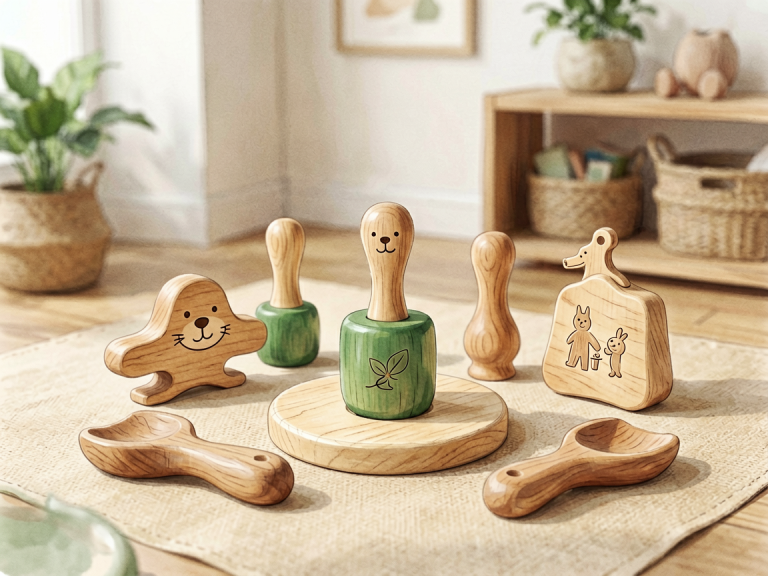
With the myriad of options available in stores and online, selecting the right puzzle toy or board game for a preschooler can feel overwhelming. The key is to match the activity to the child’s developmental stage, interests, and temperament. For children aged three to four, simple puzzles with 4 to 12 large pieces are ideal. These should have clear, familiar images (animals, vehicles, family scenes) and sturdy construction that withstands rough handling. Chunky wooden puzzles with knobs are excellent for developing fine motor skills, while floor puzzles with extra-large pieces encourage gross motor movement as children lean over and reach across the floor. Avoid puzzles with tiny pieces that pose a choking hazard or intricate designs that may frustrate a beginner.
For board games, look for those specifically labeled for ages 3+. Classics like “The Sneaky, Snacky Squirrel Game” focus on fine motor skills (using tweezers to pick up acorns) and simple counting. “Zingo!” is a bingo-style game that builds vocabulary and rapid visual recognition. Cooperative games, such as “Peaceable Kingdom’s Race to the Treasure,” are wonderful for children who struggle with competition. Pay attention to the average playing time: preschoolers have short attention spans, so games that last 10–15 minutes are ideal. Also consider the number of players; many preschool games work well with just two players (parent and child) but can accommodate up to four for small playdates.
When selecting, involve your child where possible. Let them see the box art or a short video of the game in action. Their genuine interest will increase engagement. However, also trust your judgment about complexity. A game that is too easy will bore the child; one that is too hard will lead to meltdowns. Look for “scalable” games that offer variations—for example, a puzzle that can be completed with or without the picture guide, or a board game with simple and advanced rule sets. Finally, prioritize quality over quantity. A handful of well-designed, durable puzzles and games will provide more value than a closet full of throwaway toys. Wooden games often last for years and can be passed down to younger siblings.
Integrating Puzzle and Game Time into Daily Routines
The benefits of puzzle toys and board games are maximized when they are integrated thoughtfully into a preschooler’s daily life, rather than reserved for special occasions. One effective strategy is to create a designated “game corner” in the home—a low shelf or basket where puzzles and games are easily accessible. Preschoolers love autonomy, and allowing them to choose their activity fosters decision-making skills. Set aside a regular time for focused play, such as after lunch or before bath time. Consistency helps children anticipate and look forward to these moments, reducing resistance when it is time to transition away from screens or other activities.
Parental involvement is crucial. While independent play has its merits, guided play during puzzle and game sessions amplifies learning. Sit with your child, model language by narrating your own thought process (e.g., “I think this piece goes here because the sky is blue on both sides”), and ask open-ended questions (“What do you think will happen if we roll a six?”). Praise effort rather than success (“You worked really hard to find that piece!”). If the child becomes frustrated, help them take a break or simplify the task. Remember that the goal is not to complete the puzzle or win the game, but to enjoy the process and learn together.
Another powerful approach is to extend the learning beyond the game itself. After finishing a puzzle depicting a farm, you might visit a real farm or read a book about farm animals. After playing a board game about grocery shopping, you can involve your child in making a simple shopping list or sorting items at the grocery store. These connections reinforce concepts and make learning meaningful. Furthermore, consider rotating games and puzzles every few weeks to maintain novelty. Store away a few options and bring them out later; the “new” discovery will reignite excitement. Finally, model good sportsmanship yourself. When you lose, say “Good game!” with a smile. When you win, avoid gloating. Your behavior sets the strongest example for how your preschooler will handle both victory and defeat for years to come.
In conclusion, puzzle toys and board games are far more than simple pastimes. They are sophisticated tools that nurture a preschooler’s cognitive abilities, social skills, emotional resilience, and fine motor control. By choosing age-appropriate options and integrating them into daily routines with active parental involvement, we give our children the gift of joyful, meaningful learning. The next time you see a child’s face light up as a puzzle piece clicks into place or as they shout “I won!” in a board game, remember that you are witnessing the architecture of a growing mind. And that is the most beautiful puzzle of all.