The Power of Play: Why Puzzle Toys and Board Games Are Essential for Toddlers
From the moment a toddler picks up a chunky wooden puzzle piece or excitedly rolls a colorful die during a board game, a world of learning unfolds. These seemingly simple playthings are far more than mere sources of entertainment—they are powerful tools that shape a child’s cognitive, social, and emotional development. In an age dominated by screens and digital distractions, puzzle toys and board games offer toddlers something invaluable: hands-on, interactive experiences that cultivate patience, problem-solving, and joy. This article explores why these classic toys deserve a central place in every toddler’s playroom, how to choose the right ones, and how parents can maximize their benefits.
Cognitive Development Through Puzzles
Puzzles are often the first introduction to logical thinking for toddlers. When a child attempts to match a shape to its corresponding hole or connect pieces to complete a picture, they are engaging in complex mental processes. Spatial awareness is one of the primary skills honed by puzzles. Toddlers learn how pieces fit together in two-dimensional or three-dimensional space, developing an intuitive understanding of geometry and proportions. For example, a simple shape sorter requires the child to rotate a triangle to align it with the triangular slot—a task that calls for both visual discrimination and motor planning.
Beyond spatial reasoning, puzzles boost memory and concentration. A toddler working on a four-piece farm animal puzzle must remember where the cow’s head goes and recall that the pig’s tail belongs in the bottom right corner. This repeated recall strengthens short-term memory and attention span. Research in early childhood education consistently shows that puzzle play is linked to improved executive function skills, including the ability to focus on a task despite distractions. Moreover, the cause-and-effect feedback loop—when a piece clicks into place, the toddler experiences immediate success—reinforces persistence and self-confidence. Each small victory teaches the child that effort leads to reward, a lesson that ripples into other areas of learning.
Social Skills and Emotional Growth with Board Games
While puzzles often offer solitary concentration, board games open the door to social interaction. For toddlers, board games are not about winning or losing in a competitive sense; they are about turn-taking, sharing, and managing emotions. A simple game like “The Ladybug Game” or a cooperative matching game teaches a toddler to wait for their turn, an essential skill for kindergarten readiness. When a child spins a spinner and moves their token, they practice patience and impulse control—two qualities that do not come naturally at this age.
Board games also provide a safe space for experiencing frustration and resilience. A toddler who does not land on the space they wanted or who draws a “go back” card may feel upset. With a parent’s gentle guidance, this disappointment becomes a lesson in emotional regulation. The parent can say, “I see you’re sad. Let’s take a deep breath and try again.” Over time, toddlers learn that setbacks are temporary and that the joy of playing with someone they love outweighs the sting of losing. Cooperative board games, where all players work together toward a common goal (like “Hoot Owl Hoot!”), further reinforce teamwork and empathy. The child learns to celebrate others’ successes and to offer help when a friend is stuck.
Choosing Age-Appropriate Puzzles and Games
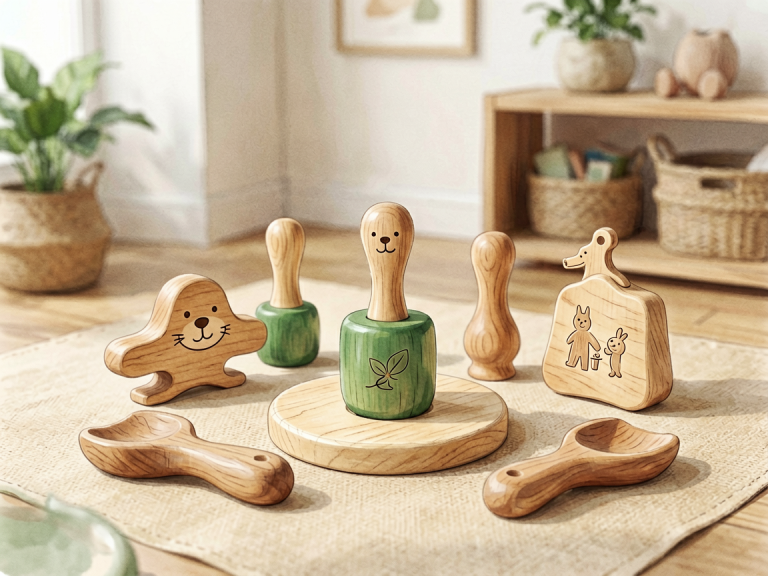
Not all puzzles and board games are suitable for toddlers. The key is to match the toy’s complexity with the child’s developmental stage, typically between 18 months and 3 years of age. For the youngest toddlers (18–24 months), start with chunky wooden puzzles that have large, easy-to-grasp knobs. These puzzles should feature only three to five pieces, with familiar images like animals, vehicles, or fruits. The pieces should be thick enough to prevent choking and durable enough to withstand enthusiastic play. Shape sorters with basic geometric forms—circle, square, triangle—are also excellent choices.
As toddlers approach their third birthday, they can handle puzzles with eight to twelve interlocking pieces. Look for puzzles that tell a simple story, such as a train scene or a garden, as these encourage language development when parents narrate the picture. For board games, avoid those with many small pieces or complex rules. Instead, seek out games designed specifically for preschoolers, such as “My First Orchard” by HABA or “The Sneaky Snacky Squirrel Game.” These games typically involve large, colorful components, simple one-step actions (like picking a fruit from a tree), and cooperative or low-pressure mechanics. Always read the age recommendation on the box, but also consider your child’s individual attention span and fine motor skills.
Safety Considerations for Toddler Toys
Safety is paramount when introducing puzzles and board games to toddlers. Because young children explore the world through their mouths, all pieces must be too large to swallow. A good rule of thumb is that any piece should be larger than a standard toilet paper roll tube. Avoid puzzles with small magnets or loose buttons that could detach. Wooden puzzles should be finished with non-toxic, child-safe paints and sealants—look for certifications like ASTM (American Society for Testing and Materials) or EN71 (European standard). Regularly inspect puzzles for splinters, chipped paint, or broken pieces that could create sharp edges.
Board games often come with dice, pawns, and cards. For toddlers, dice should be oversized and soft (foam or fabric) rather than hard plastic. Cards should be made of thick cardboard with rounded corners to prevent paper cuts. Store all small components out of reach when not in use, and supervise playtime closely. Also consider the weight and stability of the game board itself—a lightweight board that slides around can cause frustration. Non-slip mats or playing on a carpeted floor can help. Finally, check for any strings or cords longer than 12 inches, which pose a strangulation hazard. By prioritizing safety, parents can ensure that playtime remains joyful and hazard-free.
Tips for Parents: Making Playtime Meaningful
Puzzle toys and board games are only as beneficial as the interactions surrounding them. Parents can dramatically enhance the learning experience by engaging actively with their toddler. Narrate the process as you play. When your child struggles to fit a puzzle piece, say, “Let’s look at the shape. That piece has a pointy corner—can you find the spot with a pointy corner?” This verbal scaffolding builds vocabulary and introduces comparative language (bigger, smaller, same, different). Praise effort rather than outcome: “You worked so hard on that puzzle! Keep trying!” This fosters a growth mindset.
For board games, prioritize fun over rules. Bend the rules if needed to keep the game enjoyable. If your toddler wants to mix up all the cards or play with the pieces as little toys, let them. The goal at this age is not to enforce strict gameplay but to cultivate a positive association with structured play. You can introduce simple counting by having your child count the spaces their pawn moves. Songs and silly voices can make each turn feel like a celebration. Lastly, repetition is your friend. Toddlers thrive on predictability; they will want to play the same game hundreds of times. Each repetition deepens their understanding of sequences, patterns, and social cues. Embrace the monotony—it is a sign of deep learning.
Conclusion
Puzzle toys and board games are not just pastimes for toddlers; they are foundational pillars of early development. Through puzzles, children sharpen their cognitive abilities, learn to persist through challenges, and discover the satisfaction of solving problems. Through board games, they acquire the social graces of turn-taking, emotional resilience, and cooperative teamwork. When chosen with care and played with intention, these simple tools lay the groundwork for school readiness and lifelong learning. In a world that often rushes toward the next digital trend, returning to the tactile, human-centered joy of puzzles and board games is one of the best gifts we can give our toddlers. So clear the coffee table, set out a chunky wooden puzzle, and roll the oversized die—the most powerful classroom in the world is right in your living room.