The Sound of Danger: A Critical Examination of Toy Noise Levels in Preschoolers Toys
Introduction: The Unseen Risk in the Playroom
Walk into any preschool classroom or a toddler's bedroom, and you will be greeted by a symphony of beeps, buzzes, melodies, and roaring engines. Toys for preschoolers are designed to engage, educate, and entertain—and sound is one of the most powerful tools manufacturers use to capture a child's attention. From musical keyboards that play "Twinkle, Twinkle, Little Star" to plastic fire trucks that blast sirens, these auditory features are ubiquitous. Yet beneath the cheerful cacophony lies a hidden hazard that many parents and educators overlook: excessive noise levels. The World Health Organization (WHO) has identified noise as an environmental health threat, and young children are particularly vulnerable. Their developing auditory systems, smaller ear canals, and inability to self-regulate exposure mean that what seems like harmless fun can, over time, lead to irreversible hearing damage, behavioral issues, and even delays in language acquisition. This article explores the science, regulations, and practical implications of toy noise levels for preschoolers, offering a comprehensive guide for caregivers who want to protect the most precious sense of their little ones.
Why Toy Noise Levels Matter: The Physiology of a Developing Ear
The Fragile Machinery of Hearing in Early Childhood
To understand why toy noise is a pressing concern, one must first appreciate how a preschooler's ear works—and how it differs from an adult's. The ear is divided into the outer, middle, and inner sections. Sound waves enter the ear canal, vibrate the eardrum, and are transmitted via tiny bones to the cochlea in the inner ear, where hair cells convert mechanical vibrations into electrical signals sent to the brain. These hair cells are delicate and do not regenerate. In children, the ear canal is shorter and narrower than in adults, which means that sound pressure is amplified more efficiently. Research from the National Institute on Deafness and Other Communication Disorders (NIDCD) shows that a sound measured at 85 decibels (dB) in an adult's ear may be perceived as 90–95 dB in a child's ear due to resonance effects. Furthermore, children's protective reflexes—such as the acoustic reflex that dampens loud sounds—are not fully developed until around age six. Consequently, a toy that seems moderately loud to a parent can actually be dangerously loud to a preschooler.
The Cumulative Nature of Noise-Induced Hearing Loss
Hearing loss from noise is often cumulative and insidious. Unlike a sudden traumatic event—like an explosion—chronic exposure to moderately high noise levels slowly destroys hair cells. A preschooler playing with a noisy toy for 30 minutes a day may not show immediate symptoms, but over weeks, months, or years, the damage accumulates. The American Academy of Pediatrics (AAP) warns that even brief exposures to sounds above 110 dB can cause permanent hearing loss. Many electronic toys on the market today produce sounds in the range of 90 to 120 dB when held close to the ear—an extremely common behavior among young children, who naturally bring toys up to their faces to explore. A study published in the journal *Pediatrics* tested 25 popular toys designed for children under three and found that 15 of them emitted sounds exceeding 85 dB when measured at ear level. Some peaked at over 115 dB, equivalent to a chain saw or a rock concert. This data underscores a frightening reality: the very objects meant to foster development may be undermining one of the key senses required for learning.
Regulatory Standards and Gaps: What the Law Says and What It Misses
Existing Guidelines Around the World
Governments and standards organizations have long recognized the risk of toy noise. In the United States, the Consumer Product Safety Commission (CPSC) enforces the ASTM F963-17 standard, which mandates that toys for children under 14 months must not produce continuous sounds above 80 dB, and impulse sounds (like a bang or click) must not exceed 90 dB. For older preschool children (14 months to 3 years), the limits are 90 dB continuous and 100 dB impulse. In the European Union, the EN 71-1 standard sets similar thresholds: 80 dB for close-to-ear toys and 90 dB for other toys. The International Electrotechnical Commission (IEC) also provides testing protocols. These regulations appear robust on paper, but several critical gaps exist.
The Testing Discrepancy: Lab vs. Real-World Use
One major issue is that official testing procedures measure sound at a standardized distance—typically 50 centimeters (about 20 inches) from the toy, and often under laboratory conditions with ambient background noise filtered out. However, preschoolers do not play at that distance. They hold toys directly against their ears, place them on their shoulders, or press them against their faces while pressing buttons. A toy that passes regulatory tests at 50 cm may still be dangerous at the closer distances typical of real play. For example, a toy that emits 85 dB at 50 cm can produce 95 dB or more at 2 cm. Moreover, many toys have multiple sound modes; a parent may buy a toy that appears quiet in the store, but the "high" volume setting or a malfunctioning speaker can push levels far beyond the limit. The regulations also do not account for cumulative exposure from multiple toys used simultaneously. A child playing with a noisy robot, a musical book, and a talking doll in the same room may experience combined noise levels exceeding safe thresholds.
Lack of Enforcement and Consumer Awareness
Even when standards exist, enforcement is inconsistent. The CPSC recalls toys for lead paint or choking hazards much more frequently than for noise violations. Most parents do not own a decibel meter, and the packaging for toys rarely displays noise-level information. A 2018 survey by the American Speech-Language-Hearing Association (ASHA) found that 72% of parents had never considered noise as a safety issue when buying toys. Meanwhile, manufacturers often market "loud" as a feature—think of toy sirens, roaring dinosaurs, or electronic drums—without any warning about hearing risks. This regulatory and informational vacuum leaves preschoolers vulnerable.
The Developmental and Behavioral Consequences of Excessive Toy Noise
Hearing Loss and Speech-Language Delays
The most obvious consequence of high toy noise is hearing loss, but its effects ripple through a child's entire development. Hearing is the primary gateway for language acquisition. Between the ages of two and five, children learn thousands of words, phonemes, and grammatical structures primarily through listening. Even a mild hearing loss—defined as 15 to 25 dB—can cause a child to miss subtle speech sounds like "s," "sh," or "f," leading to articulation problems, reduced vocabulary, and difficulties with reading readiness later in school. A longitudinal study in the *Journal of Pediatrics* tracked children who were exposed to loud toys frequently; they showed significantly lower scores on language comprehension tests at age five compared to a control group. Furthermore, children with undiagnosed hearing loss may be mislabeled as inattentive, disruptive, or even autistic, because they fail to respond to verbal cues or seem to ignore instructions. The tragedy is that this damage is entirely preventable.
Impact on Attention, Behavior, and Sleep
Beyond hearing, toy noise affects the developing brain's ability to regulate attention and emotion. Preschoolers are still building the neural pathways responsible for filtering irrelevant stimuli. Constant exposure to loud, unpredictable sounds from toys can overstimulate the nervous system, leading to irritability, difficulty focusing, and increased cortisol levels—the stress hormone. A study conducted at the University of California, Irvine, found that children who played in classrooms with high background noise levels (including from toys) were more likely to exhibit hyperactive behaviors and had shorter attention spans during structured tasks. Additionally, noisy toys can disrupt sleep routines. Many preschoolers like to bring toys to bed; a doll that suddenly emits a loud giggle at 10 p.m. can startle a child awake and interfere with the deep sleep cycles critical for memory consolidation and growth. The cumulative effect of poor sleep and chronic overstimulation can mimic symptoms of attention-deficit/hyperactivity disorder (ADHD), leading to unnecessary diagnoses and medication.
Practical Guidance for Parents and Educators
How to Assess Toy Noise Without a Decibel Meter
While professional sound-level testing is ideal, caregivers can take several practical steps. First, use the "arm's length" rule: if a toy sounds uncomfortably loud to you when held at arm's length, it is almost certainly too loud for a child. You can also download a free decibel meter app on your smartphone. Though not as accurate as professional equipment, these apps can provide a reasonable estimate. Hold the phone's microphone at the same distance the child's ear would be—typically 2 to 5 cm from the speaker—and test each sound mode. If the reading exceeds 85 dB, consider returning the toy or covering the speaker with clear tape to muffle the sound. Another simple trick: if the toy has a volume control, set it to the lowest level and test again. Many toys do not have volume control, which is a significant design flaw; parents should prioritize buying toys with adjustable sound.
Choosing Quieter Alternatives
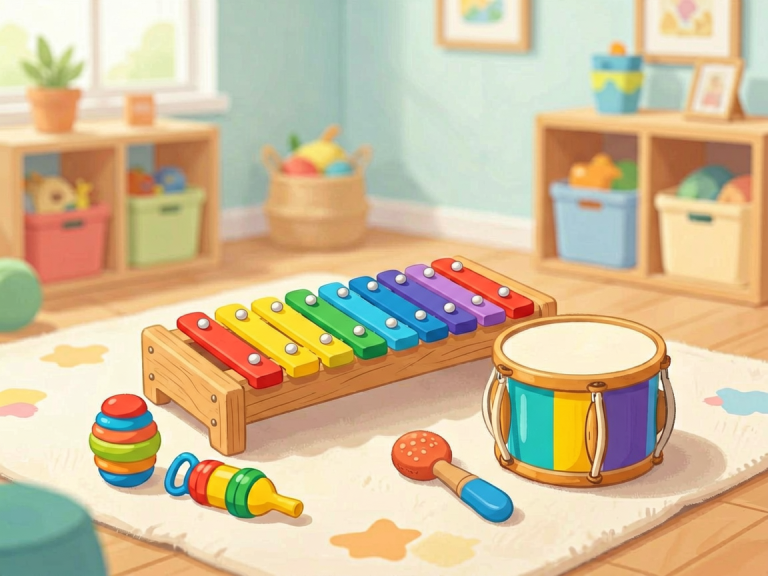
When shopping for toys, look for those that emphasize auditory variety rather than pure loudness. Rattles, bells, and wooden chimes produce gentle, pleasant sounds that are naturally lower in decibels. Musical instruments designed for children—like xylophones, rain sticks, or small drums—are often made to be played by the child, not to blast pre-recorded sounds. Electronic toys that sing or talk should be tested in the store. Also, avoid toys that have a "siren" or "alarm" feature unless you are certain it is muffled. Many educational apps and tablet games now offer headphones with volume limiters, but be cautious: headphones themselves can be dangerous if the child cranks up the volume. Invest in child-safe headphones that cap the output at 75 dB.
Creating a Healthy Sound Environment
Beyond individual toy choices, consider the overall acoustic environment of the play area. Soft furnishings like carpets, curtains, and upholstered furniture absorb sound, reducing overall noise levels. Limit the number of electronic toys that are active at the same time. Encourage quiet play periods—reading, puzzles, drawing—to balance the naturally louder moments. Most importantly, talk to your child about hearing. Even preschoolers can understand simple concepts like "this toy is too loud for your ears; let's cover it up" or "let's play with the quiet toy now." Building awareness early sets the stage for lifelong protective behaviors.
Conclusion: Listening to the Future
Toy noise levels are not an abstract concern reserved for audiologists and regulators. They are a daily reality in the lives of millions of preschoolers, and the consequences—hearing loss, language delays, behavioral challenges, and disrupted sleep—are tangible and lasting. The good news is that solutions exist: stronger regulations that require real-world testing distances, mandatory labeling of decibel levels on packaging, and a cultural shift among parents and educators toward prioritizing protective quiet. As a society, we celebrate toys that stimulate the senses, but we must remember that the sense of hearing, once damaged, cannot be restored. The next time you pick up a cheerful musical toy or a roaring truck for your preschooler, pause. Listen carefully. Then ask yourself: is this sound truly worth the risk? By making informed choices, we can ensure that the soundtrack of childhood remains not just joyful, but safe.