Beyond Screens: The Best Alternatives to Coding Toys for 2-Year-Olds
In the age of digital everything, it’s tempting to hand a two-year-old a flashy coding toy that promises to turn them into a future programmer. But the truth is, toddlers at this age are not developmentally ready for screen-based coding or even most programmable robots. Their brains are wired for hands-on, sensory, and open-ended exploration. The best “coding” education for a two-year-old isn’t about algorithms or syntax—it’s about building the foundational skills that coding later depends on: sequencing, cause-and-effect reasoning, pattern recognition, problem-solving, and spatial awareness. This article explores the best alternatives to coding toys for 2-year-olds that nurture these essential abilities through concrete, joyful play.
Why Coding Toys Fall Short for Toddlers
Before diving into alternatives, it’s important to understand why typical coding toys aren’t ideal for two-year-olds. Most coding toys, even those marketed as “toddler-friendly,” rely on abstract symbols, buttons, or digital feedback. A two-year-old’s cognitive development is still deeply rooted in the sensorimotor stage. They learn by touching, moving, and manipulating physical objects—not by pressing buttons on a plastic block that lights up in response to a sequence they can’t yet understand. Moreover, many coding toys require adult guidance to set up and maintain interest, which can frustrate both parent and child. Instead of pushing digital literacy too early, we should prioritize unstructured, imaginative play that builds the neural pathways for logical thinking.
1. Wooden Building Blocks: The Original Coding Language
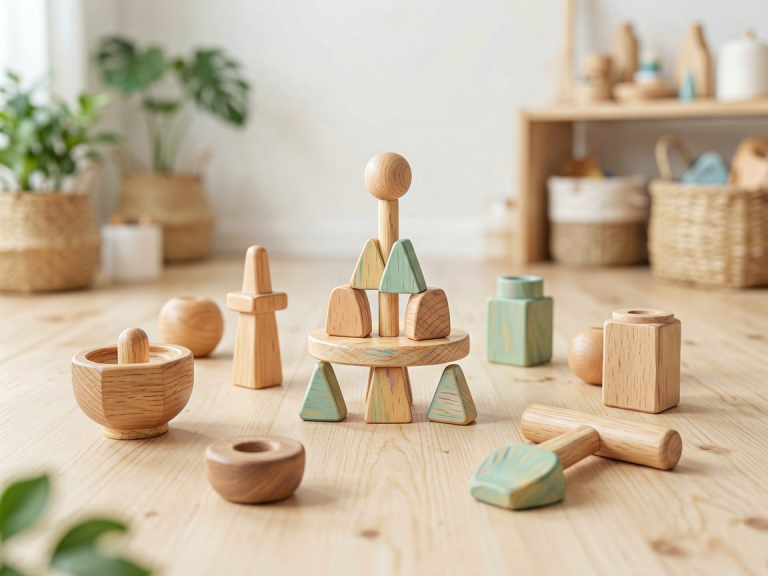
Blocks are the ultimate coding toy alternative. When a toddler stacks a tower, they are engaging in a rudimentary form of sequencing: “First I place the large block, then the medium one, then the small one on top.” They experiment with cause and effect (“If I put this block too far to the edge, the tower falls”), balance, and spatial relationships. Unlike a digital toy that gives an immediate correct/incorrect response, blocks invite trial and error without pressure. A two-year-old can spend twenty minutes stacking, knocking down, and restacking, internalizing concepts of order, symmetry, and problem-solving. For an extra layer of learning, choose blocks of varying shapes, sizes, and colors. Encourage your child to “build a tower with three blocks, then add two more.” This introduces basic counting and early math, which are precursors to coding logic. The open-ended nature of blocks also fosters creativity—the same pile can become a house, a bridge, or a robot. No screen required.
2. Shape Sorters and Puzzles: Introducing Pattern Recognition
Classic shape sorters are excellent alternatives to coding toys because they teach matching, categorization, and logical deduction. A two-year-old must identify the shape (circle, square, triangle) and then determine the correct orientation to fit it through the hole. This is pure algorithmic thinking: “If this triangle doesn’t fit here, try rotating it. If it still doesn’t fit, try a different hole.” Similarly, simple wooden puzzles with 2–6 pieces reinforce the concept that pieces must go in a specific order to complete the whole picture. For coding readiness, look for puzzles that have a clear sequence—for example, a train puzzle where each car must be placed in order from engine to caboose. This builds an understanding of sequential steps, a core component of programming. You can also create your own shape-sorting game at home: gather a few containers and lids of different sizes, and ask your toddler to match them. The process of trying, failing, and trying again is where the real learning happens.
3. Cause-and-Effect Toys: Understanding “If-Then” Logic
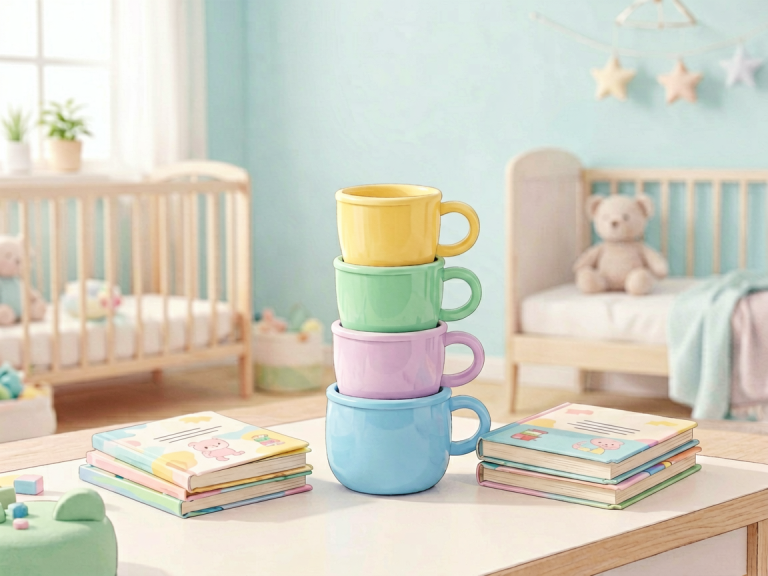
The heart of coding lies in conditional statements: “If this happens, then do that.” Two-year-olds can grasp this concept through simple cause-and-effect toys that don’t involve a screen. A classic example is a ball ramp or marble run. When your child places a ball at the top of the ramp (“If I place the ball here”), it rolls down and rings a bell or hits a block (“Then it makes a sound”). They can experiment with different starting positions, slopes, and obstacles, learning that changing one variable changes the outcome. Another fantastic option is a set of nesting cups or stacking rings. If your toddler tries to stack the large ring on top of the small one, the tower wobbles and falls. The feedback is immediate and physical. You can also use simple household items: a cardboard tube as a ramp for toy cars, or a set of dominoes to knock down. Each time your child predicts what will happen and tests their prediction, they are practicing the scientific method and logical reasoning—both essential for later coding.
4. Simple Board Games and Turn-Taking Activities
Coding is not just about individual problem-solving; it’s also about following rules and sequences in a social context. Simple board games designed for two-year-olds, such as “The Sneaky, Snacky Squirrel Game” or “First Orchard,” teach turn-taking, basic counting, and following a sequence of actions. These games require a child to understand “My turn, then your turn,” which is a form of procedural thinking. They also involve simple rules: “First you spin the spinner, then you pick the fruit that matches the color.” This mirrors the step-by-step instructions used in programming. For an even simpler option, play a game of “Simon Says” with physical actions (touch your nose, then clap, then stomp). The child must remember and execute a sequence in order. Memory games with cards (matching pairs) also strengthen pattern recognition and recall. All of these activities are screen-free, low-cost, and highly social—building both cognitive and emotional skills.
5. Story Sequencing Cards and Picture Books
Reading is a powerful way to introduce sequencing, which is fundamental to coding. Instead of a coding toy, give your two-year-old a set of story sequencing cards (available at educational stores or homemade with printed images). These cards show a simple three- or four-step sequence, such as a child waking up, brushing teeth, eating breakfast, and going to school. Your toddler can arrange them in order, telling the story from start to finish. This directly parallels writing a program: you need to put steps in the correct order for the story (or code) to make sense. Picture books with clear cause-and-effect plots also serve the same purpose. Books like *Brown Bear, Brown Bear, What Do You See?* have repetitive patterns that children can anticipate and “read” along. Pause and ask, “What do you think happens next?” Encouraging prediction builds the habit of logical deduction. You can also act out the story with puppets or toys, reinforcing the sequence through physical play.
6. Musical Instruments and Rhythm Games
Pattern recognition is not limited to visual shapes—it also exists in sound and rhythm. Simple percussion instruments like drums, shakers, or xylophones allow a two-year-old to create and repeat patterns. “First I hit the drum twice, then I shake the rattle three times.” This is a pattern, and reproducing it requires memory and sequencing. Play a game where you clap a simple rhythm (clap-clap-pause-clap) and ask your child to copy it. This auditory processing is directly linked to the logical structuring of code. You can also use songs with repetitive verses, like “Old MacDonald Had a Farm,” where each verse follows a predictable sequence. Singing and dancing to these songs reinforces the idea that events happen in a fixed order. Much like debugging a program, if your child gets the rhythm wrong, they can adjust until it matches. The best part: no batteries, no screens—just pure, joyful sound.
7. Lacing Cards and Bead Stringing: Fine Motor Sequencing
Lacing cards—thick cardboard shapes with holes and a shoelace—are an excellent alternative to coding toys for developing fine motor skills and sequential thinking. To “code” a lacing card, a child must follow a route: the lace goes up through one hole, down through the next, over and under. This is a physical algorithm. Similarly, threading large beads onto a string requires a sequence: “First I pick a red bead, then a blue one, then a red one again.” You can introduce simple patterns (“red, blue, red, blue”) that your child can replicate. This hands-on activity teaches order, repetition, and following a rule set. It also strengthens the hand muscles needed for later writing and keyboard use—but in a completely analog way. For extra fun, use beads of different shapes and sizes, and let your child create their own patterns. They become the “programmer” of their own necklace.
8. Outdoor Play and Obstacle Courses
Never underestimate the coding potential of a simple obstacle course in the backyard or living room. Set up a sequence of actions: “First crawl under the table, then jump over the cushion, then put the ball in the bucket, then ring the bell.” Your toddler must remember and execute each step in the correct order. This is a real-world program! You can vary the sequence each time, encouraging your child to “recode” their movements. Outdoor activities like digging in sand, building with mud, or arranging sticks and stones also involve planning and sequencing. Even a game of “follow the leader” where you walk in a pattern (step, step, hop) builds the same neural connections used in coding. The physicality of these activities is crucial for two-year-olds, who learn through whole-body movement. Screens simply cannot replicate the depth of sensory feedback from running, climbing, and manipulating real objects.
Conclusion: The Real Code Is All Around
The best alternatives to coding toys for 2-year-olds are not “toys” at all in the traditional tech sense—they are everyday objects and activities that encourage exploration, logic, and creativity. From wooden blocks to rhythm games, from obstacle courses to story cards, each of these alternatives builds the core cognitive skills that underpin coding: sequencing, pattern recognition, cause-and-effect understanding, and problem-solving. More importantly, they do so in a way that is developmentally appropriate, socially engaging, and infinitely more fun. Instead of worrying about giving your toddler a head start on programming languages, give them blocks, balls, books, and beats. Let them build towers that fall, sort shapes that fit, and create rhythms that repeat. That is where the true foundations of coding—and lifelong learning—begin.