Should I Buy STEM Kits for Tweens? Unlocking Potential or Adding Clutter?
Introduction: The Rise of the STEM Kit Phenomenon
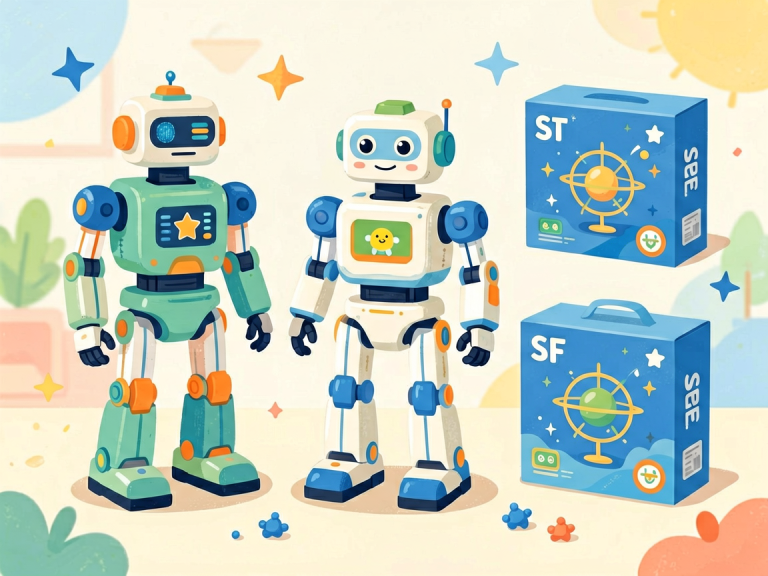
In an era where technology evolves faster than a teenager’s social media feed, parents face an increasingly common dilemma: Should I buy STEM kits for my tween? STEM—an acronym for Science, Technology, Engineering, and Mathematics—has become a buzzword in education, with kits promising to turn curious kids into junior engineers, coders, or chemists. The market is flooded with colorful boxes filled with circuit boards, crystal-growing solutions, and programmable robots, all claiming to boost creativity, problem-solving skills, and future career readiness. But beneath the glossy packaging lies a nuanced question: Are these kits genuinely beneficial for children aged 8 to 12, or do they simply add to the ever-growing pile of half-used educational toys gathering dust in the closet?
This article delves deep into the pros and cons of investing in STEM kits for tweens, offering practical guidance based on developmental psychology, educational research, and real-world parenting experiences. By the end, you will have a clearer framework to decide whether a particular kit is a wise purchase or a fleeting trend.
Why Tweens? The Unique Developmental Window
Tweens occupy a critical developmental stage—old enough to grasp abstract concepts, yet still young enough to retain a sense of wonder. Between ages 8 and 12, children experience rapid cognitive growth: they begin to understand cause-and-effect relationships more logically, develop metacognitive skills (thinking about their own thinking), and show increased interest in how the world works. This is precisely the window where hands-on exploration can cement foundational scientific thinking.
Moreover, tweens are notoriously susceptible to peer influence and media messages. STEM kits tap into this by offering “cool” activities—building a working radio, coding a video game, or creating a homemade volcano that actually erupts. If done right, these kits can transform a passive consumer of technology into an active creator. However, if mismatched to the child’s interests or ability level, they risk becoming just another source of frustration.
The Case for Buying STEM Kits: Tangible Benefits
1. Fostering Genuine Curiosity and Engagement
The most compelling argument for buying STEM kits is their ability to spark intrinsic motivation. Unlike traditional textbooks that present science as a collection of dry facts, a good kit invites tweens to ask “what if?” and “how does that work?” through trial and error. For example, a snap-circuit kit that lets a child build a working doorbell or alarm system provides immediate, satisfying feedback. This kind of active learning has been shown to improve long-term retention compared to passive instruction.
Dr. Megan Thomas, an educational psychologist, notes: “When a tween sees a light bulb illuminate because they correctly connected wires, it’s not just a victory—it’s a neural reward that reinforces the desire to explore further.” That dopamine hit can be a powerful gateway to deeper interest in science and engineering.
2. Developing Executive Function and Problem-Solving Skills
STEM kits rarely work perfectly on the first try. A motor might not spin, a program may crash, or a chemical reaction may fizzle out. These failures are not setbacks but learning opportunities. Tweens who use STEM kits must plan, troubleshoot, and iterate—skills that fall under the umbrella of executive function. Research consistently shows that hands-on problem-solving during preadolescence strengthens cognitive flexibility and perseverance, qualities that predict academic success in all subjects, not just STEM.
For instance, a robotics kit that requires debugging a line of code teaches patience and logical deduction far more effectively than a worksheet ever could. Parents often report that their tweens develop a “growth mindset” after repeated experiences of overcoming kit-related challenges.
3. Building Confidence and a Sense of Agency
Many tweens struggle with feeling powerless in a world dominated by adult rules. STEM kits give them a domain where they are the expert. When a 10-year-old successfully programs a small robot to navigate a maze, that accomplishment translates into tangible self-esteem. This is especially beneficial for children who may not excel in traditional academic settings like reading or writing; a STEM kit can be an alternative avenue for validation.
Furthermore, kits often come with enough complexity to allow for open-ended creativity. A chemistry set, for example, might include recipes for different crystal formations, but a curious tween can modify temperature or concentration to see what happens. That sense of authorship—“I made this happen”—is a profound developmental boost.
4. Screen-Free Learning in a Digital Age
While many STEM kits incorporate digital elements (e.g., coding apps), a significant number are primarily physical. Building bridges with popsicle sticks, constructing a working pulley system, or growing bacteria cultures in petri dishes gets tweens away from screens. Given rising concerns about screen time and its impact on attention spans, a well-chosen STEM kit offers a tactile, three-dimensional learning experience that complements—rather than replaces—outdoor play and social interaction.
The Case Against Buying STEM Kits: Hidden Pitfalls
1. The Dangers of Overpromising and Underdelivering
Not all STEM kits are created equal. Many are cheaply made, poorly designed, or require adult supervision so intensive that the parent essentially ends up doing the project. The result: a frustrated child and a wasted weekend. Worse, some kits promise “hours of fun” but are essentially one-and-done activities—once the volcano erupts, there’s nothing left to do. For the price, which can range from $20 to over $100, parents rightfully expect sustained engagement.
A 2023 survey by the Toy Association found that nearly 40% of STEM kits purchased for tweens were used fewer than three times. The primary reason cited was either “too difficult for child alone” or “too simple to hold interest.” This suggests that careful selection is crucial.
2. The Risk of Pushing Too Hard, Too Early
Educational psychologist Dr. Amanda Herring cautions against using STEM kits as a form of “academic acceleration.” She explains: “When parents buy a kit with the explicit goal of making their child ‘smarter’ or ‘more competitive,’ it can unintentionally create anxiety. Tweens are acutely aware of parental expectations. If a kit feels like homework, they may resist it.” The joy of discovery can be extinguished by pressure to perform.
Moreover, some kits are marketed at a “advanced” level that actually aligns with middle school or high school curricula. A tween who lacks prerequisite knowledge—say, basic algebra or understanding of electronic circuits—may give up in frustration. This not only erodes confidence but can create a lasting aversion to STEM topics.
3. Mess, Cost, and Storage Issues
Let’s be honest: many STEM kits are messy. A crystal-growing kit might leave blue stains on the kitchen table; a chemistry set could generate odors that linger; a robotics kit often involves tiny screws and wires that inevitably end up under the couch. For parents already juggling busy schedules, the cleanup burden can outweigh the benefits. Additionally, the cost of multiple kits can add up quickly, especially if the tween loses interest after the first project.
Storage is another consideration. Tweens’ rooms are often already cluttered with toys, books, and electronics. A bulky kit that requires a dedicated workspace may be impractical for families living in smaller spaces.
4. The Gender and Interest Gap
Despite efforts to make STEM kits gender-neutral, marketing often skews toward boys—think rockets, robots, and dinosaurs. Girls may be more drawn to kits that integrate art (STEAM), biology, or environmental science. A parent who buys a generic “engineering” kit for a tween who loves animals may find it ignored. Knowing your child’s specific interests is essential; a one-size-fits-all approach rarely works.
Furthermore, some children simply prefer non-STEM activities—drawing, writing, sports, or music. Forcing a kit on a child who has no curiosity about how things work is unlikely to foster a love for science. In fact, it might backfire.
How to Make the Right Choice: A Practical Framework
1. Assess Readiness, Not Just Age Labels
Age recommendations on boxes are a starting point, but not a rule. A 9-year-old who has already played with simple circuits may be ready for a more advanced robotics kit, while a 12-year-old who has never done a hands-on project might need a simpler, more guided experience. Look for kits that offer adjustable difficulty levels or multiple projects.
2. Prioritize Open-Ended Kits Over Single-Use Ones
The best STEM kits are those that allow for repeated use and variation. A building block set with motors and sensors, like a modular electronics kit, can be reconfigured dozens of ways. A chemistry set with refill packs extends its lifespan. Avoid kits that result in a single, predetermined outcome—they offer little long-term value.
3. Involve Your Tween in the Selection Process
Take your child to a store or browse online together. Ask: “What kind of project sounds interesting to you?” Let them watch a video of the kit in action. When tweens have ownership over the choice, they’re far more likely to follow through. Also, consider collaboration: some kits are designed for two people, which can be a wonderful parent-child bonding activity.
4. Set Realistic Expectations—for Both of You
Before buying, acknowledge that the kit may not be used immediately. That’s okay. Don’t pressure your tween to finish it within a certain timeframe. Instead, create a relaxed environment where exploration is its own reward. If the kit remains untouched after a month, it’s not a failure—it’s a learning experience for you as a parent about your child’s preferences.
5. Look for Reviews from Other Parents
Online reviews from other parents (especially those with similar-aged children) are invaluable. Pay attention to comments about durability, clarity of instructions, and actual engagement time. Steer clear of kits that receive consistent complaints about missing parts or confusing assembly steps.
Conclusion: A Balanced Verdict
So, should you buy STEM kits for tweens? The answer, predictably, is: it depends. When chosen thoughtfully and aligned with the child’s interests and developmental stage, STEM kits can be powerful catalysts for curiosity, creativity, and confidence. They offer a rare opportunity for tactile, screen-free learning that complements school education and builds real-world skills. However, when purchased impulsively, without consideration of the child’s personality or the kit’s quality, they can become expensive clutter that generates frustration rather than inspiration.
Ultimately, the best approach is to treat STEM kits as tools, not solutions. A single kit will not turn your tween into the next Einstein or SpaceX engineer, but a carefully curated selection, paired with parental encouragement and freedom to fail, can plant seeds that bloom years later. Ask yourself: Will this kit invite my child to ask their own questions, or simply provide answers? If it’s the former, it’s likely a worthy investment. If the latter, save your money—and your child’s enthusiasm—for something better.
In the end, the most important variable isn’t the kit itself, but the mindset you cultivate around it. Talk to your tween about what they discovered, celebrate their struggles as much as their successes, and let them lead the journey. That approach, far more than any boxed product, will unlock their potential.