The Perils of Piece-Heavy Play: Why Toys with Too Many Small Parts Are Unsuitable for 18-Month-Olds
Introduction
The first years of a child’s life are a whirlwind of sensory exploration, motor development, and cognitive leaps. For parents and caregivers, choosing the right toys can feel both exciting and overwhelming. Among the countless options lining store shelves, one particular category often catches the eye: toys with dozens, sometimes hundreds, of tiny components—puzzles with many interlocking pieces, building sets with miniature blocks, or craft kits that demand precise assembly. To an adult, these toys appear stimulating and educational. Yet when the recipient is an 18-month-old toddler, the allure of “more pieces” can quickly transform from a promise of learning into a recipe for frustration, danger, and developmental mismatch. This article explores why purchasing toys with too many small pieces for an 18-month-old is ill-advised, addressing safety risks, developmental appropriateness, emotional impact, and offering practical guidance for better alternatives. Understanding these factors helps parents make informed decisions that truly support their child’s growth rather than simply following marketing trends.
Developmental Readiness and Safety Concerns
At 18 months, a child is typically in the midst of a rapid motor development phase. Most toddlers can walk independently, climb onto low furniture, and use their hands with increasing dexterity—but this dexterity is still quite limited. Their pincer grasp (the ability to pick up small objects between thumb and forefinger) is emerging but not fully refined. While a toy with many small pieces might seem like an opportunity to practice fine motor skills, the reality is that most 18-month-olds lack the hand-eye coordination and patience to manage dozens of tiny components. For instance, a puzzle with 24 separate pieces requires a level of spatial reasoning, memory, and manual control that is far beyond the typical toddler. Attempting such a task can lead to repeated failures, tears, and a quick loss of interest. More importantly, safety is the paramount concern. The American Academy of Pediatrics and pediatric safety organizations consistently warn that toys for children under three years old should not contain small parts that can fit inside a choke tube (a cylinder approximately 1.25 inches in diameter and 2.25 inches in length). An 18-month-old is at peak risk for mouthing objects—they explore the world by putting things in their mouths. A toy with many small pieces inevitably includes components that are choking hazards. Even if a parent supervises closely, a single moment of distraction can lead to a swallowed piece, a lodged object, or an emergency room visit. The risk is not theoretical: according to the U.S. Consumer Product Safety Commission, thousands of children under three are treated each year for choking incidents involving small toy parts. Thus, buying such toys is not merely a misjudgment of developmental readiness; it is an avoidable safety hazard.
The Overstimulation and Frustration Factor
Beyond physical danger, toys with excessive pieces can overwhelm an 18-month-old’s developing sensory and cognitive systems. At this age, children thrive on simplicity and repetition. They enjoy cause-and-effect play, such as pushing a button to hear a sound or stacking a few large rings. Their attention span is short—often only a few minutes per activity. A toy that spreads 50 small plastic pieces across the floor creates a chaotic visual field. The toddler may become distracted, unable to focus on any single piece, and instead scatter them, throw them, or become distressed by the sheer number. This overstimulation can lead to irritability, crying, and even tantrums. Moreover, when a toddler attempts to engage with the toy and fails to snap pieces together or align them correctly, the resulting frustration can be intense. Emotional regulation is still rudimentary at 18 months; a child who cannot achieve a goal—like connecting two small blocks—may react with anger or helplessness. Repeated frustrating experiences can negatively shape a child’s attitude toward play, making them less willing to attempt new challenges. Research in early childhood development emphasizes that play should be “just right”—challenging enough to promote growth but not so difficult that it causes persistent distress. Toys with too many pieces miss this Goldilocks zone entirely. They demand skills—such as sorting, counting, pattern recognition, and sustained focus—that align more with a three- or four-year-old’s capabilities. For an 18-month-old, the mismatch can turn a potentially joyful activity into a source of anxiety.
The Hidden Hazards of Choking and Scattering
Let’s delve deeper into the hidden hazards, which extend beyond the immediate choking risk. When a toy has many small pieces, the probability of loss and dispersal skyrockets. A toddler may knock over a bin of 30 small plastic animals, sending them rolling under furniture, into heating vents, or onto stairs. These scattered pieces become tripping hazards for adults and younger siblings. Moreover, once a piece is lost, the toy’s function is often compromised—a puzzle missing one piece is frustrating for everyone, and a building set with a critical missing connector cannot be completed. The parent then faces the onerous task of hunting down tiny objects, often unsuccessfully. This leads to cluttered homes and potentially dangerous environments where a stray piece could be found by a crawling infant or a curious pet. Another subtle danger is that small pieces can be easily mistaken for food. Many tiny toy components are brightly colored and shaped like candies or berries. An 18-month-old’s mouth is a primary sensory organ, and they lack the cognitive ability to differentiate a plastic block from a snack. Even “non-toxic” labels do not guarantee safety; ingesting several small pieces can cause intestinal blockages requiring surgery. Furthermore, the act of breaking or biting small pieces can create sharp edges that pose laceration risks to delicate gums and fingers. In short, a toy with many small pieces does not just sit quietly on the shelf—it actively creates a constellation of hazards that require constant vigilance, often exceeding what any parent can reasonably provide.
Better Alternatives for This Age Group
Fortunately, there is a wealth of developmentally appropriate and engaging toys for 18-month-olds that do not rely on hundreds of tiny components. The key is to look for toys that encourage open-ended, sensory-rich play with larger, safer parts. Excellent choices include:
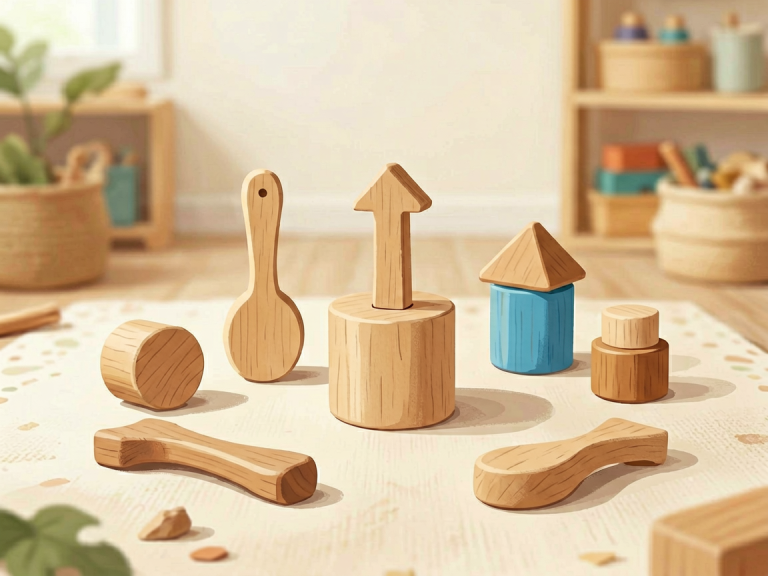
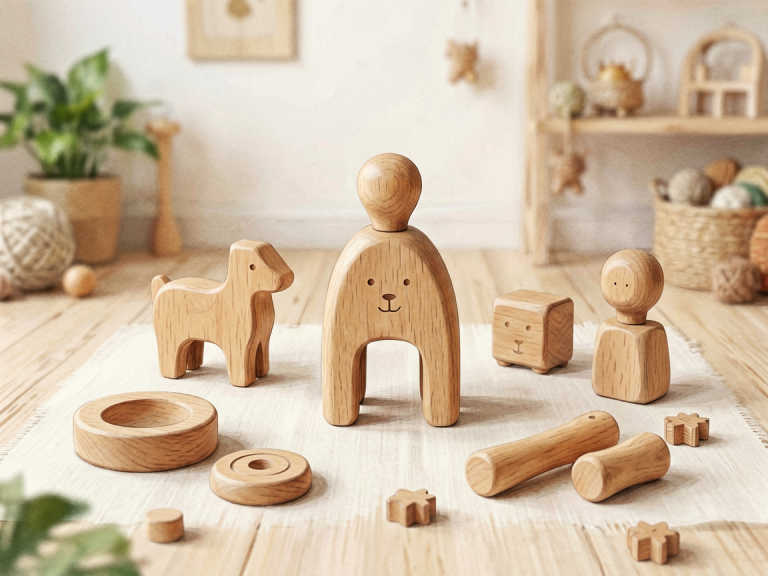
- Large wooden blocks or chunky plastic interlocking bricks. These blocks are big enough to be grasped and stacked, promoting fine motor control and spatial awareness without choking risk. A set of 10 to 20 large blocks is far more beneficial than a set of 100 tiny ones.
- Push-pull toys and ride-ons. Toys that encourage gross motor movement, such as a wooden cart to push or a small ride-on car, help toddlers develop balance and coordination. These require no small parts and provide hours of physical fun.
- Shape sorters with large pieces. A classic shape sorter that has three or four large, chunky shapes (e.g., a circle, square, triangle) is ideal. The child can practice matching without the frustration of many pieces.
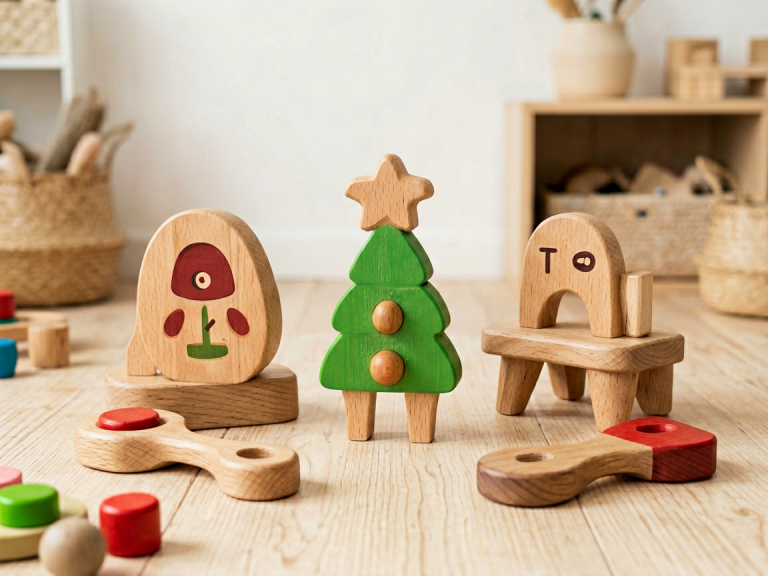
- Simple puzzles with knobs. Peg puzzles with a few large wooden pieces and easy-to-grasp knobs allow toddlers to succeed in placing each piece, building confidence.
- Sensory bins with safe materials. Instead of small plastic pieces, consider a bin filled with large dried beans, soft fabric scraps, or plastic eggs (opened). These provide tactile exploration without tiny choking hazards.
- Musical instruments like drums, shakers, or xylophones. These encourage rhythm and cause-and-effect learning. Choose shakers that are sealed and large enough not to fit in the mouth.
- Soft dolls or stuffed animals with no detachable parts. These promote pretend play and emotional bonding, offering comfort without risk.
When shopping, parents should always check the manufacturer’s age recommendation on the packaging—these are not arbitrary but based on safety and developmental testing. The label “3+” is a clear warning that the toy contains small parts. For an 18-month-old, always look for toys labeled “0+,” “6+,” or “12+,” but even then, inspect for any small components that might have been overlooked. Additionally, consider the “toilet paper roll test”: if any piece can fit inside a standard cardboard toilet paper roll, it is too small for a child under three.
Conclusion
The allure of buying toys with many pieces is understandable: they promise complexity, longevity, and educational value. However, for an 18-month-old toddler, the reality is starkly different. Such toys pose serious choking and ingestion hazards, overwhelm the child’s developing sensory and cognitive systems, create clutter and frustration, and fail to match the child’s actual motor and emotional capabilities. By choosing simpler, larger, and developmentally appropriate alternatives, parents can foster safe, joyful, and meaningful play experiences. Play is not about quantity of parts; it is about quality of engagement. A single soft block that a toddler can hold, toss, and chew may provide more learning and bonding than a hundred plastic pieces scattered across the floor. In the delicate landscape of early childhood, less is truly more—and in the case of small parts, it can be a matter of safety. The next time a brightly packaged toy with dozens of components catches your eye on the shelf, remember: the best toy for an 18-month-old is one that invites exploration without inviting risk. Choose wisely, and let play be the safe, joyful adventure it was meant to be.