Too Many Pieces, Too Little Sense: Why Buying Complex Toys for One-Year-Olds Is a Mistake
—
Introduction: The Lure of the “Educational” Toy Box
Walk into any toy store today, and you will be overwhelmed by shelves bursting with brightly colored boxes promising cognitive leaps, sensory stimulation, and hours of independent play. Many of these boxes feature images of smiling toddlers surrounded by dozens of tiny pieces—puzzle fragments, plastic animals, interlocking gears, and miniature tools. For new parents, especially those eager to give their child a head start, the appeal is almost irresistible. Yet beneath the glossy packaging lies a troubling truth: toys with too many pieces are often completely unsuitable—and even harmful—for one-year-olds. This article explores why buying such toys for a child who has just learned to walk is a misstep, examining developmental mismatches, safety risks, overstimulation, and the overlooked value of simplicity.
—
The Developmental Mismatch: Why One-Year-Olds Can’t Handle Complexity
A one-year-old is a marvel of rapid growth, but their cognitive and motor skills are still in a very early stage. At this age, children are primarily exploring the world through their senses—touching, tasting, shaking, and dropping objects. They are just beginning to understand object permanence and cause-and-effect relationships in the most basic forms. A toy with twenty, thirty, or even fifty separate pieces asks for skills that a one-year-old simply does not possess.
Consider fine motor control. While a 12-month-old may be able to pick up a large block with a pincer grasp, manipulating tiny puzzle pieces or threading beads requires precise finger coordination that typically emerges around 18 to 24 months. When a child cannot successfully snap together two plastic gears or fit a small peg into a hole, frustration quickly sets in. Instead of fostering a sense of mastery, the toy becomes a source of irritation. The child may throw the pieces, cry, or lose interest altogether. Worse, the parent, seeing the child’s struggle, may misinterpret it as a lack of intelligence or interest, leading to pressure that is neither healthy nor developmentally appropriate.
Moreover, the concept of “following instructions” is nearly meaningless for a one-year-old. Many multi-piece toys come with suggested assembly patterns, sorting tasks, or step-by-step play scenarios. Yet toddlers learn best through open-ended, repetitive actions—like banging a block on the floor or rolling a ball back and forth. They do not understand rules, sequences, or goals set by adults. A toy that demands a specific outcome—such as completing a 12-piece puzzle—is essentially a failure for a child who wants only to mouth the pieces and scatter them across the room.
—
The Hidden Hazards: Safety Risks That Go Beyond Choking
The most urgent concern with toys containing many small pieces is, of course, choking. The American Academy of Pediatrics warns that any toy or part small enough to fit inside a toilet paper roll is a potential choking hazard for children under three. Yet many toys marketed for “1+ years” include pieces that easily satisfy this dangerous size criterion. But the danger does not end with choking. Small pieces can also be inserted into ears, nostrils, or even swallowed whole, leading to emergency room visits that could have been entirely avoided.
Sharp edges and brittle materials are another hidden threat. When a toy is assembled from many separate components, each part may have seams, corners, or flash (excess plastic left over from molding). One-year-olds have a habit of throwing things, banging them against furniture, and even biting them. A piece that breaks off easily can create a jagged edge that cuts a tender gum or a small finger. Batteries, magnets, and tiny hinges found in complex electronic toys pose additional risks—lithium coin batteries, for instance, can cause severe internal burns if swallowed.
Even when the pieces are large enough to be safe individually, the sheer number of them can create a cluttered play environment. Parents know the feeling: you spend ten minutes picking up scattered puzzle pieces, only to find three more under the sofa. For a crawling or toddling child, this clutter can cause tripping hazards. A one-year-old learning to walk is already unsteady on their feet; stepping on a hard plastic piece can lead to a painful fall and a bruised ego. In short, the more pieces a toy has, the more opportunities it creates for accidents—both the dramatic, choking type and the small, cumulative mishaps that erode a child’s sense of security.
—
The Overstimulation Trap: When More Is Less for the Developing Brain
One-year-olds are wired to focus on one thing at a time. Their attention spans are measured in minutes, and they thrive on repetition and predictability. A toy that offers a dizzying array of colors, sounds, textures, and pieces can overload their sensory system. Instead of engaging with the toy in a meaningful way, the child may become agitated, scattered, or simply shut down. Pediatric occupational therapists often refer to this as “sensory overload,” and it can lead to meltdowns, refusal to play, or even difficulty sleeping.
Consider research on infant attention: studies show that too many choices can actually hinder learning. When a one-year-old is presented with a single, simple object—like a wooden block—they will explore it thoroughly: turning it over, mouthing it, dropping it, and watching it fall. This repetitive exploration builds neural pathways linked to cause-and-effect, spatial awareness, and motor planning. In contrast, when surrounded by a sea of tiny, unrelated pieces, the child may flit from one to another without deep engagement. They may learn that every problem is solved by grabbing something new, rather than by persisting with a challenge. This fragmented pattern of play does not support the development of sustained attention—a skill that is foundational for later learning in school.
Furthermore, many multi-piece toys are designed with bright flashing lights and electronic sounds to “stimulate” the child. But for a one-year-old, these constant stimuli can actually suppress natural curiosity. The toy does the work for the child, offering instant gratification rather than requiring active problem-solving. A simple wooden pull-toy, by contrast, requires the child to coordinate their body, feel the resistance, and understand that their own movement causes the toy to follow. This is genuine learning, not passive entertainment.
—
The Lost Potential of Simple Play: What One-Year-Olds Actually Need
If multi-piece toys are so problematic, what should parents offer instead? The answer is surprisingly simple: toys that encourage open-ended exploration, that have few or no small parts, and that promote interaction with a caregiver. One-year-olds are not yet ready for independent, rule-based play; they learn best through social interaction and repetitive, hands-on experiences.
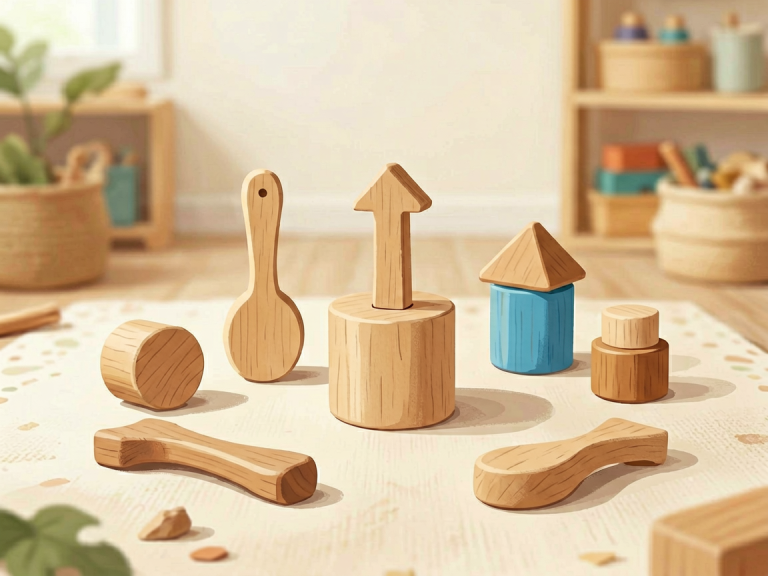
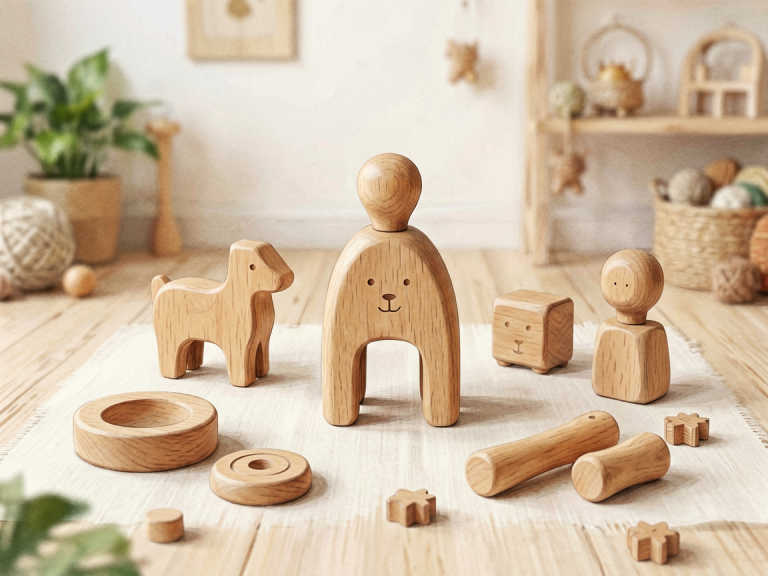
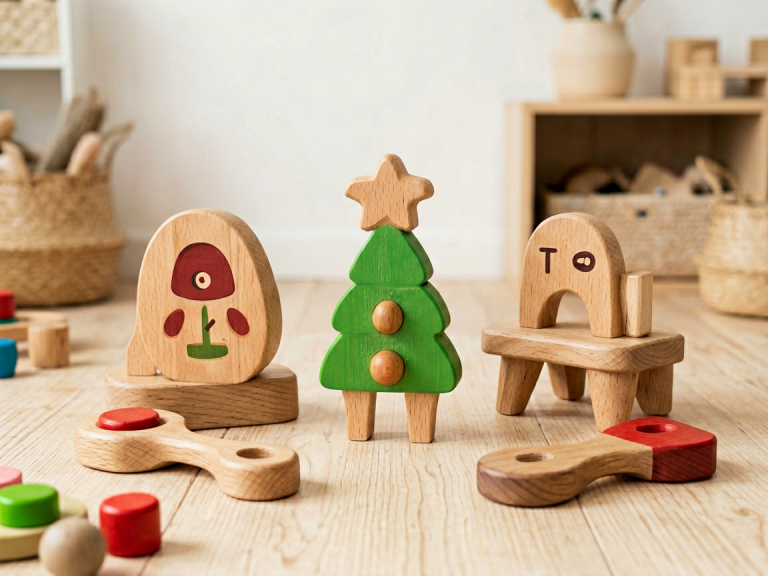
Consider a set of four or five large, soft blocks. They can be stacked, knocked down, carried, mouthed, and thrown. They teach gravity, balance, and cause-and-effect without any instructions. A single, sturdy ball can be rolled back and forth with a parent, building eye-tracking skills and social reciprocity. A wooden shape sorter with just three large shapes (circle, square, triangle) challenges the child without overwhelming them. Board books with simple pictures and textures invite shared reading and language development. Musical instruments like a drum or a shaker (one piece, child-safe) allow for joyful noise-making.
These toys are not only safer but also more economical. Instead of buying a $50 playset with dozens of tiny pieces that will be lost within a week, parents can invest in a few high-quality, durable items that grow with the child. A one-year-old who plays with simple toys is not being deprived; they are being given the gift of deep concentration, creative problem-solving, and the joy of mastery.
—
Practical Guidelines for Toy Selection: How to Choose Wisely
To help parents navigate the overwhelming toy market, here are some concrete guidelines when shopping for a one-year-old:
- Count the pieces before you buy. If the number exceeds five or six, ask yourself whether each piece serves a clear, age-appropriate purpose. If the answer is no, put the box back on the shelf.
- Apply the toilet-paper-roll test. Any piece that can fit inside a standard cardboard tube is a choking hazard. If you cannot easily see that all pieces are larger than that, do not purchase.
- Prioritize multipurpose items. A single object that can be used in many ways—a scarf, a cardboard box, a set of stacking cups—is far more valuable than a specialized gadget with a single function.
- Look for the “one-piece challenge.” The best toys for a one-year-old often have no loose parts at all: a push-along walker, a stuffed animal, a cloth book, a simple rattle.
- Remember the caregiver’s role. No toy replaces the interaction of a loving adult. The best “toy” is a parent who talks, sings, and plays alongside the child. A toy with too many pieces actually pulls the parent away—into picking up, organizing, and worrying—rather than connecting.
—
Conclusion: Less Is More for the First Year
In a culture that constantly equates “more” with “better,” choosing a simple toy for a one-year-old requires courage. It means resisting the marketing hype, ignoring the pressure from other parents, and trusting the child’s natural developmental timeline. A one-year-old does not need a 50-piece puzzle, a 30-piece tool set, or an electronic dashboard with a hundred buttons. What they need is a safe, calm environment where they can explore at their own pace, with a few carefully chosen objects that invite discovery without causing confusion or harm.
Buying toys with too many pieces for a one-year-old is not just a waste of money—it is a missed opportunity. It steers the child away from the deep, meaningful play that builds the foundation for lifelong learning. Next time you reach for that shiny box full of tiny wonders, pause. Ask yourself: Is this for my child, or for my own fantasy of what a “smart” child should have? Then walk over to the shelf with the wooden blocks and the simple balls. Your one-year-old will thank you—with a smile, a coo, and a block that they bang on the floor for the hundredth time, learning exactly what they need to learn.