Following Toy Trends for 3-Year-Olds: A Parent’s Guide to Meaningful Play in 2025
Introduction
The world of toys for three-year-olds has never been more dynamic—or more bewildering. As a parent or caregiver, you may find yourself scrolling through endless product listings, bombarded with buzzwords like “STEM,” “Montessori,” “sensory,” and “eco-friendly.” Meanwhile, your child is at a magical developmental crossroads: they are no longer a toddler, but not yet a preschooler; their language is exploding, their imagination is taking flight, and their need for active, hands-on exploration is at an all-time high.
Following toy trends for 3 year olds is not about keeping up with the latest fads. It is about understanding how play evolves at this age and what kinds of toys genuinely support cognitive, social, emotional, and physical growth. In this article, we will unpack the most significant trends shaping the toy industry for three-year-olds in 2025, explain why each trend matters, and offer practical advice for choosing toys that will delight your child and stand the test of time—both in terms of durability and developmental relevance.
—
Trend 1: Open-Ended and Loose-Part Play
One of the most enduring trends in early childhood development—now firmly embedded in the toy market—is the shift toward open-ended toys. Unlike single-purpose toys that dictate exactly how to play (think a battery-operated singing bus with one button), open-ended toys invite children to create their own rules, scenarios, and structures.
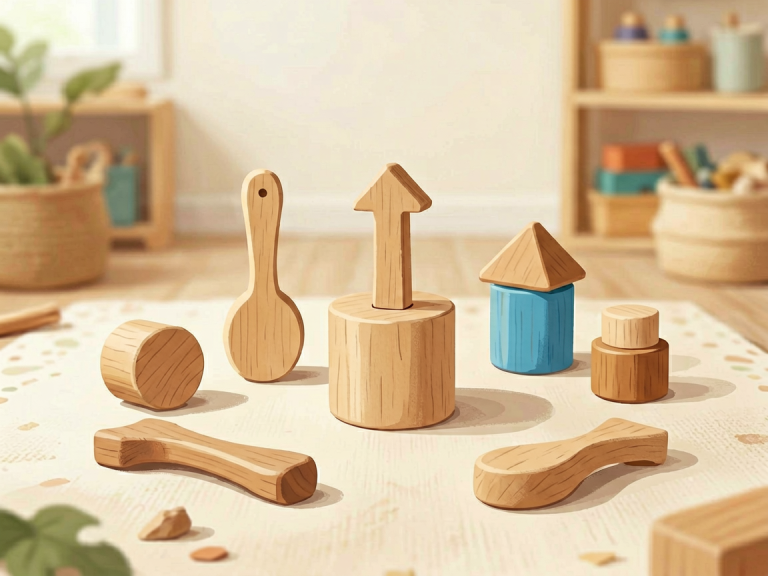
For a three-year-old, this category includes simple wooden blocks, magnetic tiles, play silks, stacking stones, and collections of natural objects such as pinecones or seashells. These toys sustain interest far longer because they can be reinvented every day: the same set of blocks might become a castle, a garage, a rocket ship, or a fence for imaginary animals.
Open-ended play is critical for developing executive functions—planning, flexibility, and self-control—because it forces a child to hold an idea in their mind, adapt when a tower falls, and persist through small frustrations. Retailers have responded by releasing more minimalist, aesthetically pleasing sets that appeal to parents who value both play value and living-room decor.
Why this trend matters:
- Encourages creativity and divergent thinking.
- Supports language development as children narrate their play.
- Reduces clutter and encourages deeper engagement with fewer toys.
—
Trend 2: STEM and Early Science Exploration
The STEM (science, technology, engineering, and mathematics) movement has trickled down all the way to the three-year-old aisle. But don’t expect microscopes or chemistry sets—for this age group, STEM toys are hands-on, sensory-rich, and focused on cause-and-effect relationships.
Current popular items include simple marble runs, water tables, light-up construction kits, and “dig and discover” fossil sets (with oversized, break-resistant tools). Another standout is the category of coding toys that do not require screens: think programmable wooden robots that follow a sequence of cards or buttons. These introduce the logic of sequencing and problem-solving long before a child can read code.
Three-year-olds are natural scientists. They ask “why” constantly, push objects to see what happens, and love to mix, pour, and dump. A well-designed STEM toy channels that curiosity without frustration. For example, a magnetic building set with strong, easy-to-snap magnets allows a child to experiment with balance and polarity while feeling a sense of accomplishment when their structure stands.
Why this trend matters:
- Builds foundational math and science vocabulary (bigger/smaller, heavier/lighter, cause/effect).
- Develops fine motor skills through precise manipulation.
- Cultivates a growth mindset—children learn that “failures” (like a tower collapsing) are part of the learning process.
—
Trend 3: Sensory and Calming Toys
The past few years have seen a surge in toys designed specifically to meet sensory needs, partly because parents and educators have become more aware of sensory processing differences and the benefits of regulation. For three-year-olds, sensory play is not a niche trend; it is a core developmental need.
Sensory toys at this age include kinetic sand, water beads, slime, play dough, textured balls, weighted lap pads, and “fidget” items like pop-it silicone shapes or fidget spinners adapted for small hands. Many brands now market “calm-down kits” that combine a visual timer, a breathing board, and a few tactile tools.
The science behind this trend is robust. Sensory play helps children integrate information from their environment and their own bodies (proprioception). For a child who is overstimulated, squeezing a stretchy ball or pushing fingers into dough can lower stress hormones and improve focus. Conversely, a child who is understimulated might benefit from vibrating pillows or crunchy, noisy fabrics.
Crucially, these toys can also foster independence in emotional regulation. A three-year-old who knows they can grab a squishy toy when they feel upset is learning a powerful self-soothing skill that will serve them for life.
Why this trend matters:
- Supports emotional regulation and reduces meltdowns.
- Enhances fine motor strength and hand-eye coordination.
- Accommodates a wide range of sensory preferences and developmental needs.
—
Trend 4: Screen-Free Interactive Toys
In an age of tablets and educational apps, there is a growing counter-trend: battery-powered toys that deliberately avoid screens. These toys use lights, sounds, and movement to create an interactive experience without a display. Examples include talking storybooks that read aloud as a child turns pages, singing robots that respond to physical gestures, and musical instruments that light up when played correctly.
For three-year-olds, the key is that the interaction remains physical. A toy that flashes and plays a melody when a child inserts the correct shape into a sorter reinforces shape recognition and problem-solving, all while the child’s eyes are on the physical object, not a screen. Pediatricians consistently recommend limiting screen time for this age group to no more than one hour per day of high-quality programming, so screen-free interactivity fills a valuable niche.
Why this trend matters:
- Provides multisensory feedback without passive screen time.
- Encourages active participation rather than passive consumption.
- Often incorporates cause-and-effect learning that feels magical to a three-year-old.
—
Trend 5: Eco-Friendly and Sustainable Materials
Environmental consciousness is reshaping toy manufacturing at a rapid pace. More parents are reading labels to avoid plastics with phthalates and BPA, and they are gravitating toward toys made from bamboo, recycled ocean waste, FSC-certified wood, and organic cotton.
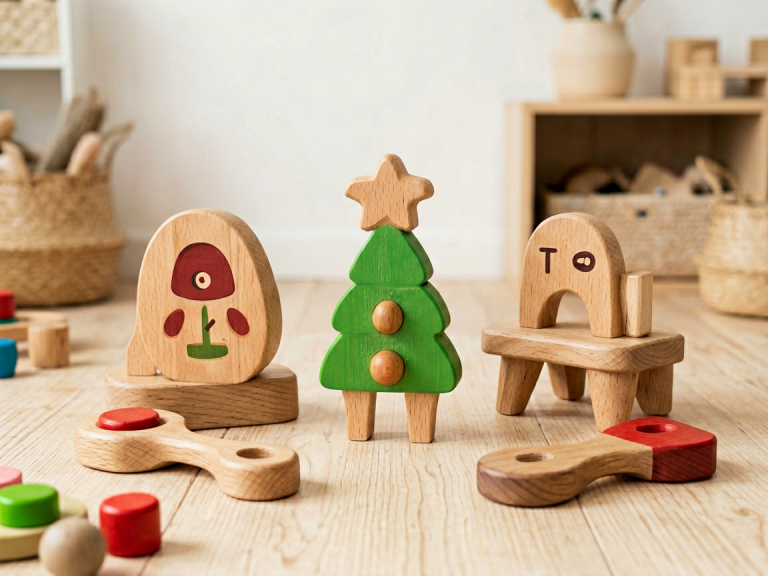
For three-year-olds, this means a wider range of beautifully crafted wooden vehicles, nesting dolls with non-toxic paints, and plush animals stuffed with recycled fibers. Companies that previously relied on single-use packaging now offer refill systems—for example, refill pouches for play dough or paint that reduce plastic waste.
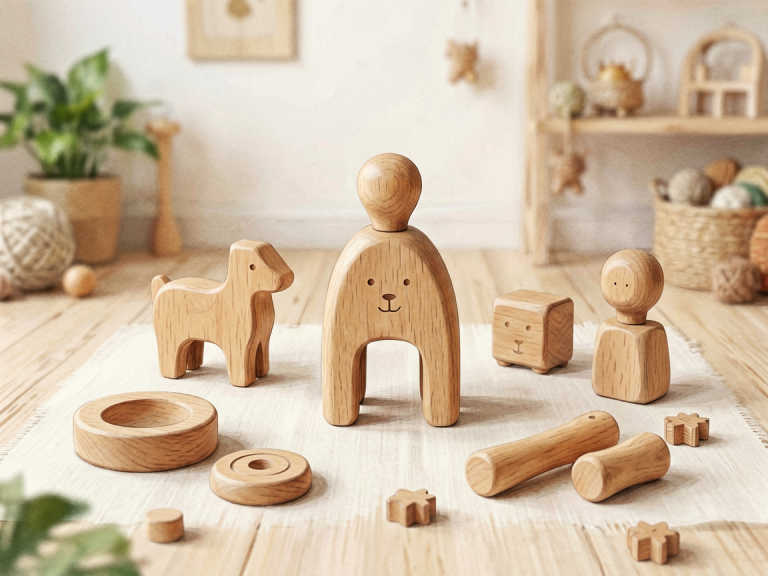
Sustainability is not just about materials; it is also about design. Toys that are “timeless” in appeal (like classic wooden trains) tend to be passed down or donated rather than thrown away. This trend aligns perfectly with the open-ended play movement because high-quality, durable toys often double as heirlooms.
Why this trend matters:
- Reduces exposure to harmful chemicals.
- Teaches environmental stewardship through everyday objects.
- Encourages a “less but better” approach to toy purchases, which can save money in the long run.
—
How to Choose the Right Toy: A Practical Framework
With so many trends, the question remains: how do you choose? Here is a simple, four-question framework to apply whenever you evaluate a potential purchase for your three-year-old.
1. Does it invite multiple kinds of play?
A toy that only does one thing—like a plastic car that only rolls forward—will lose its appeal quickly. Look for toys that can be used in building, pretend play, sorting, and even as props for social games.
2. Is it within the child’s zone of proximal development?
A toy should be challenging enough to hold interest but not so difficult that it causes repeated failure. For a three-year-old, a 20-piece puzzle is just right; a 100-piece puzzle will frustrate. Similarly, a marble run with simple tracks is ideal; a complex system with ramps and flippers is best saved for age five or six.
3. Does it support social or independent play?
At age three, children are beginning to play together, though parallel play still dominates. Toys that can be used in pairs—like a large floor puzzle or a set of matching vehicles—encourage cooperation, while solitary toys like a pounding bench help with independent focus. Balance is key.
4. Is it safe and durable?
Check for choking hazards (small parts), sharp edges, and toxic paints. Three-year-olds still put objects in their mouths occasionally, so any toy with small components should be used only with supervision. Also, look for sturdy construction that will survive drops, throws, and energetic play.
—
Conclusion
Following toy trends for 3 year olds is not about chasing the newest influencer picks or the hottest Instagram ads. It is about understanding that a toy is a tool for development—one that can spark curiosity, build skills, and strengthen relationships. The trends we have explored—open-ended play, STEM exploration, sensory support, screen-free interaction, and sustainability—all point in the same direction: children need toys that respect their natural way of learning through hands-on, joyful, and repeated experiences.
As you select toys for the three-year-old in your life, remember that the best toy is often the simplest. A set of wooden blocks can teach physics, language, art, and social skills all at once. A handful of silk scarves can become rivers, capes, tents, and tails. And a parent who sits on the floor and follows the child’s lead—without any toy at all—remains the most powerful playmate of all.
Let the trends guide you, but let your child’s wonder lead the way.