Wooden Blocks for Tweens: An Unexpected Investment in Cognitive Growth and Creativity
Introduction
When most people think of wooden blocks, they picture toddlers stacking simple towers on a nursery floor. Tweens—children aged roughly eight to twelve—are often considered too old for such basic playthings. Their worlds are increasingly filled with smartphones, video games, social media, and the complex social dynamics of preadolescence. Parents and educators alike may wonder: *Are wooden blocks worth it for tweens?* The instinctive answer might be a quick “no,” but a closer look reveals that high-quality wooden blocks offer surprising and profound benefits for this age group. Far from being a nostalgic relic, wooden blocks can serve as a powerful tool for developing spatial reasoning, creative problem-solving, emotional resilience, and even collaborative social skills. In an era of digital saturation, the tactile, open-ended nature of wooden blocks provides a unique counterbalance that is especially valuable for tweens. This article explores the cognitive, emotional, and practical reasons why wooden blocks deserve a place in a tween’s life—and why investing in them might be one of the wisest decisions a parent can make.
—
The Developmental Relevance of Play for Tweens
Many adults assume that play is primarily for young children, and that by the tween years, structured learning and formal activities should replace unstructured play. This assumption overlooks a critical truth: tweens are still in a stage of rapid brain development, and play—especially open-ended, hands-on play—remains essential for their growth. Neuroscientific research shows that the prefrontal cortex, responsible for planning, decision-making, and impulse control, undergoes significant remodeling during preadolescence. This is precisely the age when children benefit most from activities that challenge their executive functions.
Wooden blocks, unlike many screen-based games or pre-designed toys, demand that tweens plan, visualize, and execute complex constructions entirely from their own imagination. A tween building a multi-level castle, a functioning bridge, or a cantilevered tower must engage in advanced spatial reasoning, geometry, and physics. They must estimate weight distribution, anticipate structural weaknesses, and adjust their plans in real time. This is not “baby play”—it is sophisticated engineering thinking disguised as fun. Moreover, because wooden blocks are simple and non-prescriptive, they do not dictate a right or wrong outcome. This freedom is especially important for tweens, who are often under increasing pressure from school, tests, and comparisons with peers. The blocks offer a low-stakes environment where failure is not punished but becomes a stepping stone to discovery.
—
Beyond Child’s Play: Cognitive Benefits of Wooden Blocks for Older Children
The cognitive benefits of wooden blocks extend far beyond what meets the eye. When a tween sits down to build, they are not just stacking wood—they are exercising a range of mental faculties that have direct applications to academic subjects and real-world problem-solving.
First, there is spatial visualization and mental rotation. Studies have repeatedly shown that children who engage in block play score higher on spatial reasoning tests, which in turn predict success in Science, Technology, Engineering, and Mathematics (STEM) fields. Tweens who build complex structures must mentally rotate pieces, estimate angles, and understand how shapes fit together in three dimensions. This skill set is directly transferable to geometry, trigonometry, architecture, and even surgery.
Second, planning and executive function are heavily engaged. A tween designing a replica of the Eiffel Tower or a functioning marble run must break down a large project into manageable steps, allocate resources (how many blocks of each size are available), and maintain focus for extended periods. This is the same cognitive process used in writing an essay, managing a science fair project, or learning a new musical instrument. The block builder learns to prioritize and sequence, skills that are notoriously difficult for many tweens to master.
Third, mathematical concepts become concrete. Tweens can directly experiment with symmetry, fractions (a half block versus a full block), ratios, and even basic algebraic concepts like “if this side is twice as long as that side, the structure will tip over unless I add a counterweight.” These hands-on experiences make abstract math tangible and memorable.
Compared to screen-based alternatives like Minecraft, wooden blocks offer a distinct advantage: they are physical and kinesthetic. The sensation of weight, texture, and balance provides sensory feedback that a screen cannot replicate. The act of physically adjusting a block that has fallen teaches the brain about cause and effect in a visceral way. For tweens who already spend hours staring at screens, this physical engagement is not merely beneficial—it is therapeutic.
—
Creativity and Open-Ended Exploration
One of the most compelling arguments for wooden blocks with tweens is their unparalleled capacity for open-ended creativity. Unlike jigsaw puzzles, which have a single correct solution, or video games, which (even sandbox games) impose coded constraints, wooden blocks are infinitely flexible. A tween can build a spaceship one day and a Greek temple the next. They can combine blocks with household items like paper, string, or fabric to create entire worlds.
This open-endedness is especially valuable during the tween years, when children are beginning to explore their own identities and express their unique perspectives. The blocks become a medium for personal storytelling. A tween who loves fantasy might construct a fortified castle with secret passages; another who is fascinated by machines might build a set of gears and levers. There are no instructions, no “level goals,” and no external rewards except the satisfaction of creation itself.
Moreover, wooden blocks encourage divergent thinking—the ability to generate multiple solutions to a problem. This is a hallmark of creativity and innovation. When a tween’s tower collapses, they must ask: *What can I do differently?* Perhaps they need a wider base, or heavier blocks at the bottom, or a different interlocking pattern. Each failure sparks a new iteration of creative thinking. In an educational culture that too often rewards convergent thinking (one correct answer), wooden blocks offer a sanctuary for the messy, nonlinear process of invention.
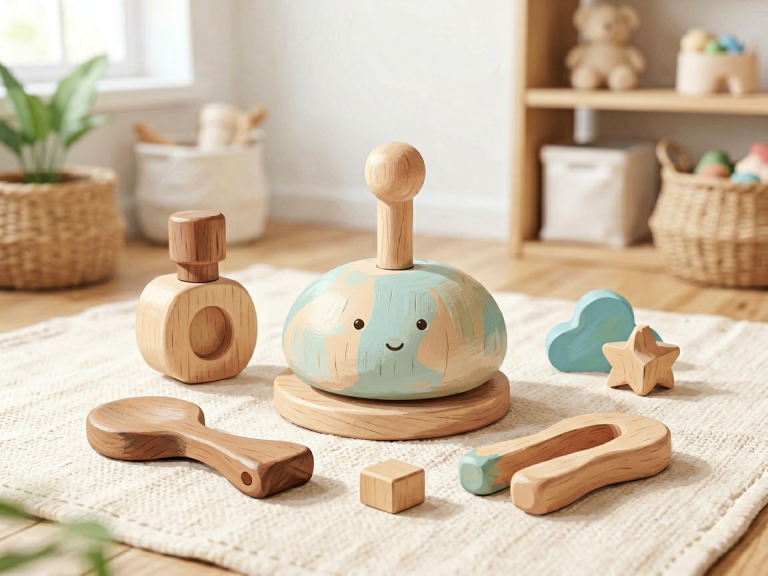
It is also worth noting that wooden blocks are visually and tactilely appealing. High-quality blocks made from natural hardwood have a warmth and grain that plastic cannot imitate. They feel substantial in the hand, and the sound they make when stacked or knocked down is satisfying. This sensory richness can be calming for tweens who are often overstimulated by digital noise. Many tweens report that building with blocks helps them “zone out” in a positive way, reducing anxiety and allowing their minds to wander creatively.
—
Social and Emotional Development Through Collaborative Building
While solitary block play is beneficial, wooden blocks truly shine in social settings. Tweens are at an age when peer relationships become increasingly complex and important. Collaborative block building offers a natural, low-pressure context for developing key social and emotional skills.
When two or three tweens work together on a large structure, they must negotiate, compromise, and communicate. One might want to build a fortress with a drawbridge, while another envisions a flying tower. They must share resources (there are only so many long blocks), assign roles, and resolve disagreements without adult intervention. This process teaches patience, empathy, and the value of seeing another person’s perspective. For shy tweens, block building can be a non-verbal way to connect; for argumentative ones, it provides a concrete consequence of poor collaboration (the structure collapses because they didn’t coordinate).
Additionally, wooden blocks help tweens practice frustration tolerance. Every builder knows the agony of watching a half-finished project topple. For a tween, especially one who is used to immediate gratification from screens, this can be a powerful lesson in emotional regulation. They learn that frustration is temporary, that persistence pays off, and that dismantling and rebuilding is part of the creative process. These are life skills that cannot be taught through lectures—only through experience.
Furthermore, block building can be a bridge between generations. Tweens often enjoy building alongside parents, grandparents, or younger siblings. This shared activity creates opportunities for bonding without the need for conversation; it also allows older generations to pass on building wisdom (for example, how to create an arch or a stable platform). In an age of fragmented family time, a set of wooden blocks on the living room floor can be a powerful invitation to connection.
—
Screen Time Alternative and Digital Balance
Perhaps the most timely argument for wooden blocks for tweens is their role as a screen-time alternative. The average tween spends between four and six hours per day on screens for entertainment alone, not counting schoolwork. Excessive screen time has been linked to sleep disturbances, attention issues, and increased anxiety. Yet simply banning screens often backfires. What tweens need are equally engaging alternatives that pull them away from devices naturally.
Wooden blocks offer exactly that. The challenge of building a stable, complex, and aesthetically pleasing structure can grab a tween’s attention for an hour or more—without the addictive dopamine loops of video games or social media. There are no notifications, no “likes,” no pressure to perform. The blocks exist in the physical world, which means the tween is using their whole body, not just their fingers and eyes. After building, they feel a genuine sense of accomplishment that comes from creating something tangible.
Moreover, blocks promote mindfulness. Tweens often report that building puts them in a “flow state,” where time seems to disappear and they are fully absorbed in the moment. This is the opposite of the fragmented, multi-tasking mode that screens encourage. For tweens struggling with focus or anxiety, even 20 minutes of block play can serve as a reset button, improving their mood and concentration for subsequent tasks like homework.
Of course, no sane parent would suggest that wooden blocks replace all screen time. But as part of a balanced mix of activities—sports, reading, music, socializing—blocks fill a unique niche. They are quiet, portable, and require no electricity. They can be used indoors on a rainy day or outdoors in the garden. They are robust and unlikely to break. In a world of planned obsolescence and disposable toys, a well-made set of wooden blocks is a durable, sustainable investment.
—
Practical Considerations: Cost, Durability, and Space
No discussion of “worth it” is complete without addressing practicalities. High-quality wooden blocks are not cheap. A large set from brands like Grimm’s, Melissa & Doug, or custom hardwood manufacturers can cost anywhere from $50 to $200 or more. For parents on a budget, that price tag can seem steep, especially when the tween might already have a closet full of toys they have outgrown.
However, there are several factors that tip the scale toward “worth it.” First, durability. Unlike plastic toys that crack or break, wooden blocks can last for decades. They can be passed down to younger siblings, cousins, or even the next generation. The initial cost, when averaged over years of use, becomes quite reasonable. Second, versatility. A good set of blocks grows with the child. A three-year-old uses them for simple stacking; a ten-year-old uses them for structural engineering. Third, resale value. Gently used wooden blocks from premium brands retain significant value and can be sold or donated.
Space is another concern. Blocks require a flat surface for building, and they need storage. But they are easily stored in a bin, basket, or drawer. Many families keep them in the living room or playroom, where they serve as a visual invitation to build. For tweens with small bedrooms, a compact set of small blocks can still provide hours of engagement.
Parents may also worry that their tween will reject blocks as “babyish.” This is a legitimate concern. The key is presentation. Rather than buying a set that looks like a preschool toy, choose blocks with natural finishes, interesting shapes (arches, triangles, cylinders), and larger sizes. Involve the tween in selecting the set. Introduce blocks not as a “toy” but as a “building resource” or “creative tool.” For tweens who enjoy architecture, engineering, or art, wooden blocks can be framed as a medium for their interests. One might also pair blocks with challenge cards or books on structural design to add intellectual depth.
—
Conclusion: A Surprising “Yes” with Caveats
So, are wooden blocks worth it for tweens? The evidence overwhelmingly points to yes—but with important caveats. They are not a magical solution that will automatically engage every tween. Some tweens will prefer Lego, digital design, or drawing. That is fine. Wooden blocks are not meant to be a universal replacement for all other play. However, for tweens who are curious, hands-on, or in need of a screen break, wooden blocks offer a unique combination of cognitive, creative, social, and emotional benefits that few other toys can match.
They are worth the investment if you choose quality blocks, present them as a tool for sophisticated creation, and give your tween the time and space to explore without pressure. They are worth it if you value durable, sustainable toys that grow with your child. They are worth it if you want to cultivate patience, spatial intelligence, and resilience in a tween who is navigating the turbulent waters of preadolescence.
In a culture that constantly pushes tweens to grow up too fast, wooden blocks invite them to slow down, use their hands, and imagine. They are a quiet rebellion against digital noise—and that may be precisely what tweens need. So the next time you see a set of wooden blocks on a store shelf, do not dismiss them as toys for toddlers. They are tools for thinkers, creators, and future engineers. And that makes them worth every penny.