The Trap of Instant Gratification: Why Low-Play-Value Toys Fail Our Six-Year-Olds
The Hidden Problem Behind the Bright Packaging
Walk into any toy store today, and you will be assaulted by a cacophony of flashing lights, electronic beeps, and movie-themed plastic. For a six-year-old, this is paradise. For a parent, it is a minefield. The keyword that should guide every purchase is “play value” — yet it is the most ignored and least understood concept in children’s retail. Toys with limited play value are those that offer a narrow range of activities, exhaust their novelty within days, and require no imagination, problem-solving, or physical engagement. They are the battery-powered singing robots that repeat the same five phrases, the licensed superhero figurines that can only strike one pose, and the plastic playsets that are already “complete” right out of the box. For six-year-olds — children at a critical stage of cognitive, social, and emotional development — choosing such toys is not merely a waste of money; it is a missed opportunity for growth, a quiet erosion of their attention spans, and a subtle lesson in passive consumption. This article explores why we keep falling for these gimmicks, how they harm our children, and what to choose instead.
What “Limited Play Value” Actually Means
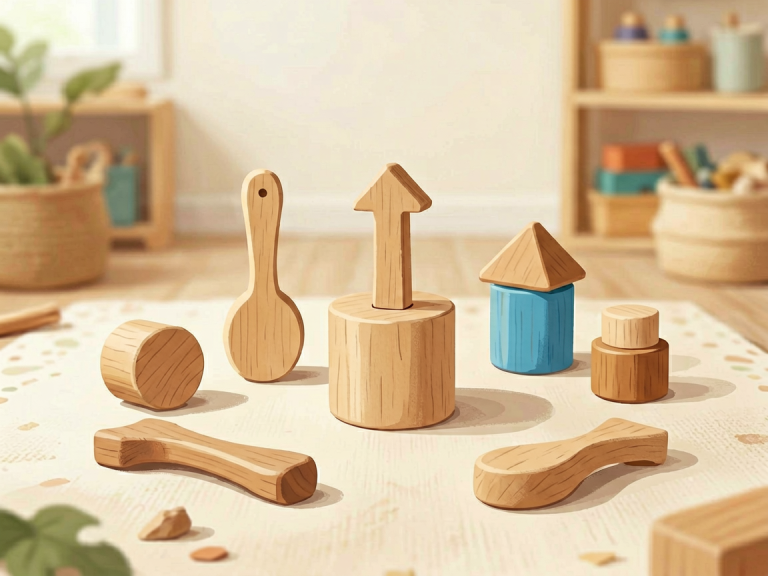
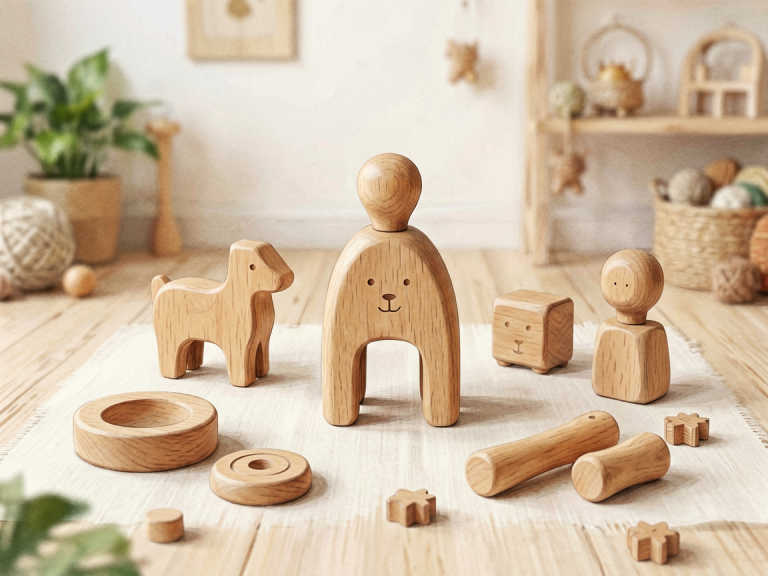
Play value is not measured by how many buttons a toy has or how loud it can beep. It is the capacity of a toy to sustain open-ended, evolving play over time. A simple set of wooden blocks has immense play value: it can become a tower, a bridge, a spaceship, a zoo, or a family of robots. The child creates the rules, changes the narrative, and practices persistence when the tower falls. In contrast, a plastic dinosaur that roars and moves its tail when you press a button has very limited play value. After the third roar, the child has seen everything. The toy does not invite the child to imagine; it simply performs. The child becomes a spectator, not an actor.
For a six-year-old, the developmental stakes are particularly high. At this age, children are shifting from parallel play to cooperative play. They are developing theory of mind, improving fine motor skills, and beginning to understand abstract concepts like time, rules, and fairness. Toys that support these developments allow for repetition, modification, and social interaction. Limited-play-value toys, however, are typically linear: press a button, get a result. There is no variation. There is no collaboration. There is no “what if.” A child might play with such a toy for twenty minutes on day one, but by day three it is abandoned in the corner, covered in dust, contributing nothing but clutter and a vague sense of dissatisfaction.
Why We Keep Buying Them
If these toys are so poor, why are they everywhere? The answer lies in sophisticated marketing designed to exploit both children and their parents. Six-year-olds are highly susceptible to advertising for licensed characters — they see a Paw Patrol truck or a frozen-themed princess wand and feel an urgent, visceral desire for it. This is not a failure of parenting; it is a biological reality. Children at this age do not yet have the executive function to evaluate long-term value. They see the shiny box, the familiar face, and their brains release dopamine. And parents, exhausted by pleading and tantrums, often capitulate. We tell ourselves that at least the child is happy. But the happiness is as shallow as the toy.
Moreover, the toy industry has become increasingly reliant on “collectible” junk — blind bags, tiny figurines, trading cards with no purpose beyond ownership. These objects have near-zero play value. The “play” is the act of ripping open the packet and seeing which item you got. That momentary thrill lasts maybe thirty seconds. Then the child asks for another packet. The cycle is deliberate: it is gambling disguised as entertainment, and it teaches children, at age six, that satisfaction comes from acquisition, not from engagement. We as parents are not just buying a toy; we are buying a behavioral loop that breeds dissatisfaction and consumerism.
The Real Cost to a Six-Year-Old’s Development
When a toy does all the work, the child’s brain does none. This is not a metaphor; it is neuroscience. The act of pretend play, of building, of inventing stories, activates prefrontal cortex regions responsible for planning, flexibility, and self-regulation. A limited-play-value toy is the mental equivalent of a junk-food diet: it fills the time but starves the mind. Consider the child who receives a battery-operated guitar that auto-plays a melody when a button is pressed. After a week, they have not learned to strum, to feel rhythm, or to create a song. They have learned to press a button. In contrast, a cheap, non-electronic tambourine or a set of plastic pipes can be used in a hundred different ways — it can be a drum, a steering wheel, a banjo made of rubber bands. That child is developing auditory discrimination, motor planning, and a basic sense of musical creativity.
Socially, limited-play-value toys isolate children. Many electronic toys are designed for solitary use — they hang in front of the child, demanding attention, not negotiating with peers. A six-year-old playing with a screen-based “educational tablet” learns little about turn-taking, empathy, or reading body language. But a simple set of cardboard blocks with three friends requires them to agree on a building plan, resolve a dispute when the tower falls, and jointly design a fort. That is the bedrock of social intelligence. When we choose a toy that only “works” for one child at a time, we inadvertently discourage cooperative play. In a classroom or family home, this can lead to more conflict, not less, because children do not develop the skills to share a single open-ended resource.
Emotionally, toys with limited play value can also frustrate a six-year-old. Because their range of actions is finite, the child quickly masters them and then feels bored — not the productive boredom that sparks imagination, but the hollow boredom of having exhausted all options. This can lead to irritability and a constant demand for new toys, a cycle that parents know all too well. On the other hand, a toy with high play value — such as a set of magnetic tiles — offers just enough challenge to be interesting but never completely solved. A six-year-old can spend an afternoon building a castle, then a crane, then a maze. When it falls, they rebuild differently. This productive frustration builds resilience. The cheap electronic toy, however, never falls and never changes. It offers no resistance. And without resistance, there is no growth.
How to Spot Low-Play-Value Toys Before You Buy
The next time you are shopping for a six-year-old, run the toy through a simple mental checklist. Ask: “After the first day, what can the child do with this that they couldn’t do on day one?” If the answer is “nothing,” walk away. Look at the packaging. If the box features a cartoon character rather than the toy’s actual play patterns, the toy is likely short-lived. Be especially suspicious of toys that come with their own recorded voice or sound effects; these usually dictate the play scenario. For example, a toy firetruck that automatically shouts “Wee-woo-wee-woo!” when you press a button has already written the script. A plain red truck of the same size allows a child to decide what it is — a firetruck today, a delivery van tomorrow, a race car on Saturday, a submarine after a bath. That is the difference between closed and open play.
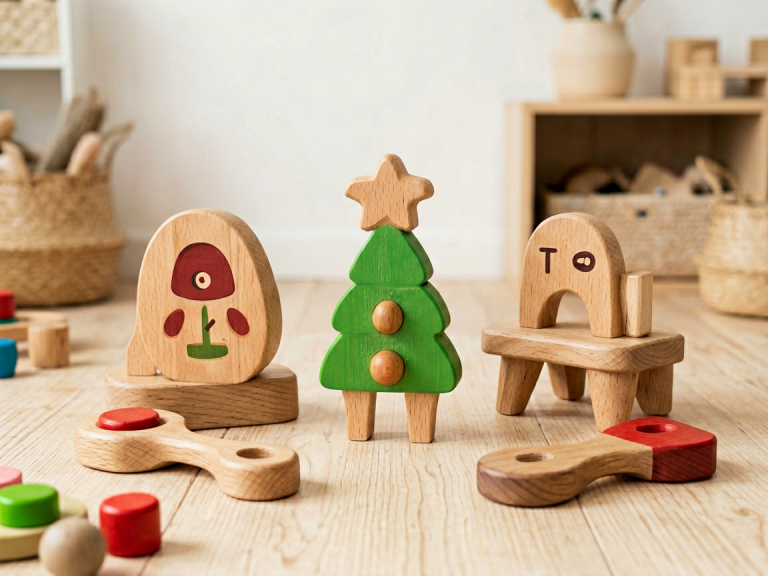
Also consider the number of pieces that are fixed versus movable. Toy sets that snap together only one way — like a puzzle with a predetermined picture — are limited. Toys that can be assembled, disassembled, and recombined in multiple configurations have high play value. Lego is the obvious classic, but there are many variations: wooden train tracks, magnetic rods, building logs, and even simple plastic cups and clothespins. Moreover, do not underestimate the value of non-toy items. A six-year-old can spend an hour playing with cardboard boxes, blankets, and string. These materials have infinite play value and cost almost nothing. Ironically, households full of expensive limited-play-value toys often lack these simple treasures.
The Best Alternatives: What Six-Year-Olds Actually Need
Six-year-olds need toys that support their emerging literacy and numeracy, but directly, not through a screen. Letter magnets on a fridge, a simple board game like Snakes and Ladders, a set of dominoes for building patterns — these all engage the child actively. They need toys that allow for pretend role-playing: a kitchen made of cardboard, a doctor’s kit with blank checklists, a dollhouse that can be rearranged. They need physical movement: a jump rope, a balance bike, a soccer ball. The play value of a ball is almost infinite — it can be thrown, kicked, rolled, bounced, caught, or just dropped. It responds differently each time, depending on the child. That unpredictability is invaluable.
Most importantly, we should remember that toys are not a substitute for presence. A six-year-old will always prefer a parent’s attention over any object. A game of catch with a parent is a toy in itself — one whose play value is immeasurable. So when we choose toys, we should also choose to sit down and play alongside our children, showing them how to extend a story, how to build a bridge that holds, how to lose a board game with grace. The best toys are simply tools for connection. Limited-play-value toys are anti-tools: they sever connection, replacing conversation with beeps and imagination with pre-recorded animations.
A Call for Mindful Choosing
It is not necessary to ban all electronic or licensed toys. A six-year-old may genuinely love a figurine of their favorite hero, and there is nothing morally wrong with buying it. The problem arises when such items dominate the toy box, crowding out open-ended materials. The solution is balance and intentionality. Before every purchase, ask: “Will this be used next month? Next year? Will it survive the child’s creativity, or will the child survive it?” Many parents are startled to discover that the toy their child treasures most is not the expensive one with batteries, but the cardboard tube from a wrapping paper roll — that humble cylinder that becomes a telescope, a sword, a magic wale, a ramp for cars, or a talking tube for whispering secrets to a grown-up. That cardboard tube delivers everything the flashing plastic toy never could: the chance for the child to be the author, the inventor, the boss of their own play.
Choosing toys for six-year-olds is not a trivial decision. It is a choice between encouraging a child who creates and a child who consumes. When we buy the limited-play-value toy, we are saying, “You don’t need to imagine — here is the imagination for you.” Is that the message we want to send? Let us instead pick toys that whisper a different truth: “You are full of ideas. Let me help you put them into the world.” Only then will the toy box become what it should be — not a graveyard of half forgotten plastic, but a launching pad for growing minds.